

Ami Vitale
Well, Jaipur, Rajasthan, India;
Photographic print
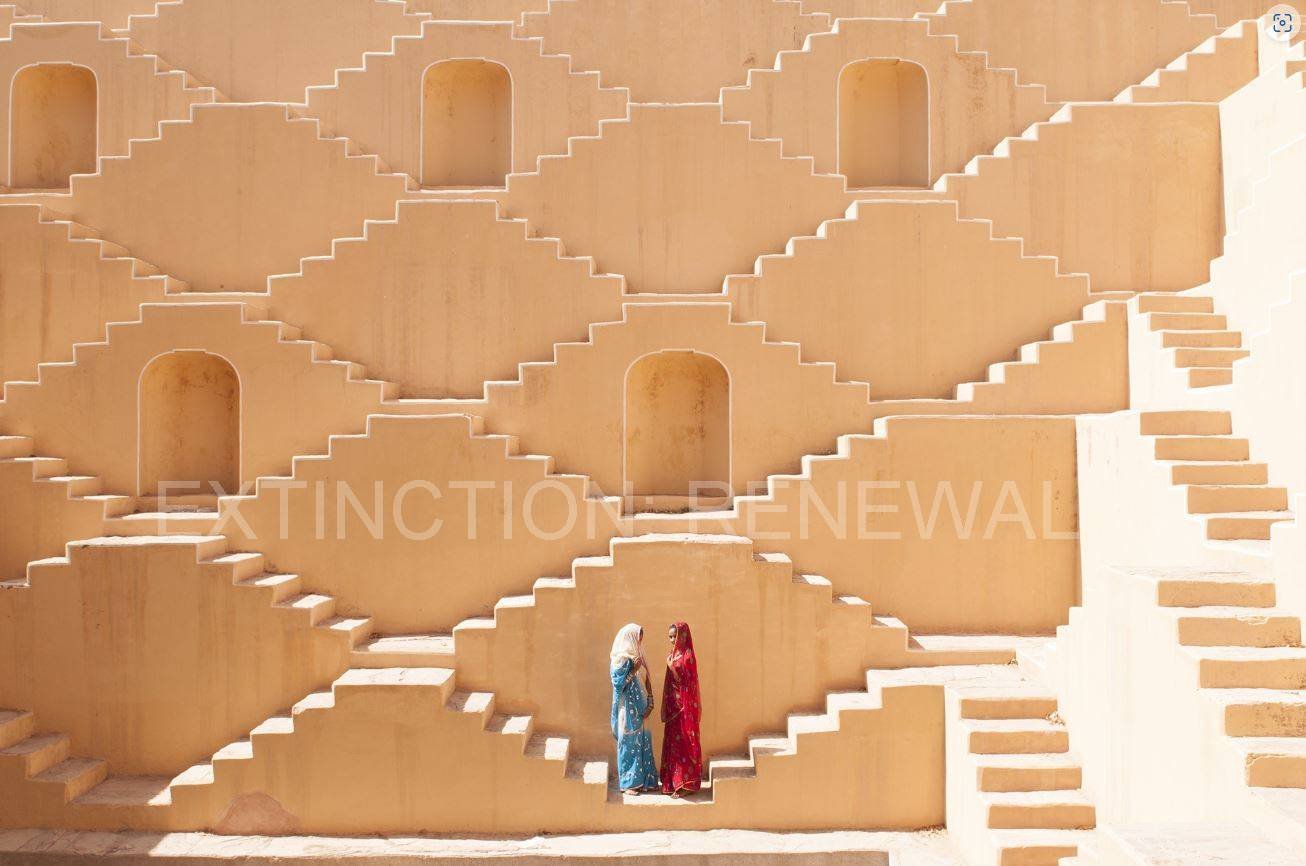
Jasmin and Manisha Singh pause within a baoli, or stepwell, an underground water store reached by descending flights of steps. Built to capture monsoon rain and provide water throughout the long dry season, these remarkable structures also became important centres of community life.
Ami Vitale is an award-winning American photographer, filmmaker and National Geographic Explorer at Large whose work explores the connections between people, wildlife and the natural world. Her career began in conflict zones, but increasingly shifted towards conservation as she recognised the close relationship between environmental degradation and human wellbeing. Working in more than 100 countries, Vitale has documented some of the world’s most threatened species, including northern white rhinos, elephants, pandas and giraffes, while highlighting the communities working to protect them.
She is a six-time World Press Photo award recipient and founder of Vital Impacts, a non-profit using photography and visual storytelling to support conservation and inspire environmental action.
Water Wisdom
For centuries, India has adapted to heat, drought and highly seasonal rainfall. Today, rising temperatures, less predictable monsoons and growing demand are placing water supplies under pressure. Reviving traditional rainwater-harvesting systems can help capture intense rainfall, replenish groundwater and strengthen resilience to a changing climate.
RENEWAL IN ACTION
Reviving Ancient Water Systems
In Hyderabad, the 17th-century Bansilalpet Stepwell lay buried beneath around 2,000 tonnes of waste after decades of neglect. Led by architect Kalpana Ramesh and The Rainwater Project, its six levels were cleared and restored over approximately 500 days. Today, the revived stepwell can harvest around 2.2 million litres of rainwater, replenishing groundwater while restoring an important historic community space.