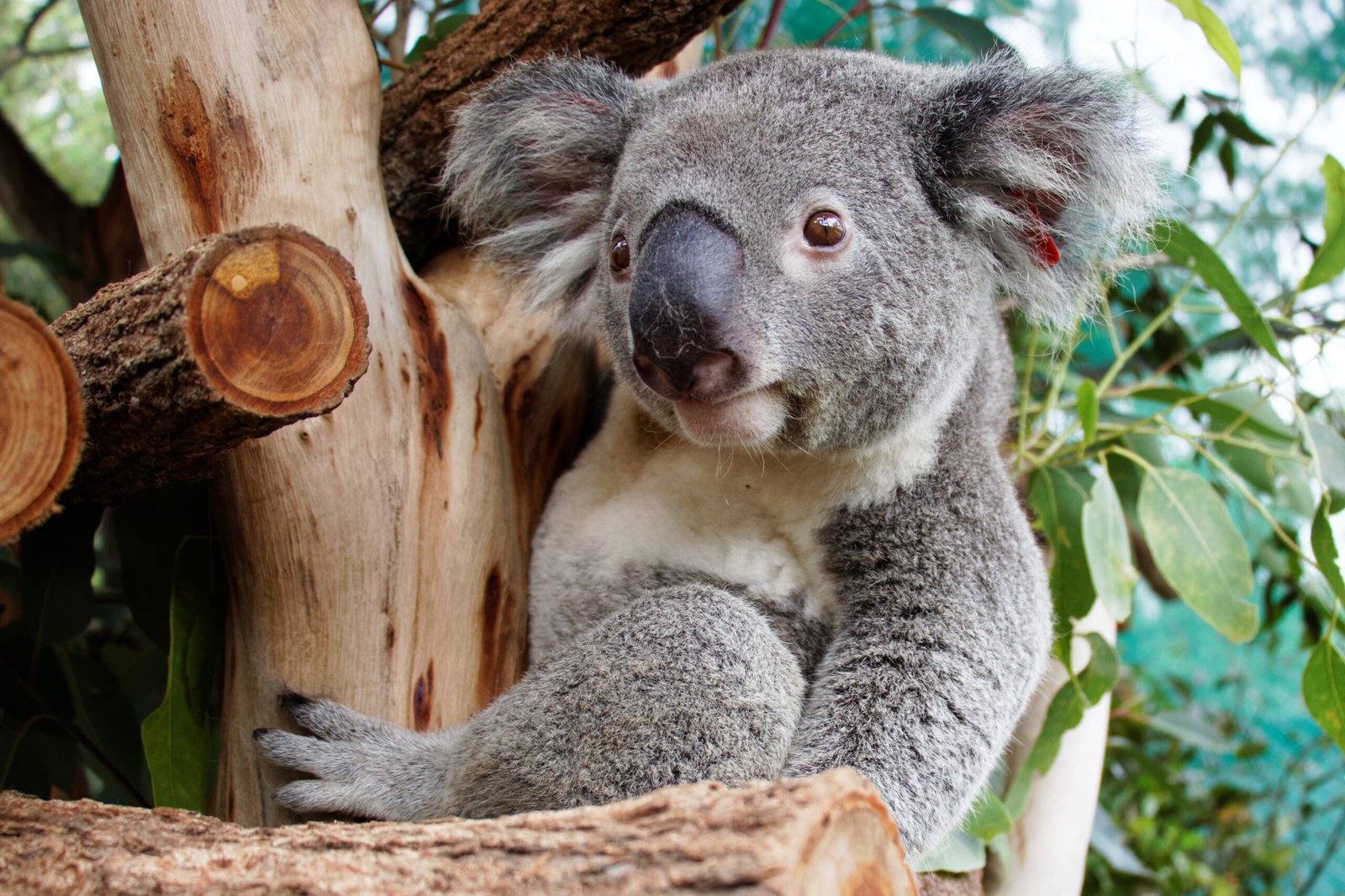
Australia has just taken a big step forward in the fight to save its koalas. A single-dose vaccine against chlamydia, a disease responsible for infertility, blindness, and death in wild koala populations, has been approved for use nationally.
What’s New
- Developed over more than a decade by Professor Peter Timms and his team at the University of the Sunshine Coast, the vaccine is the first of its kind.
- In some wild populations in Queensland and New South Wales, chlamydia infection rates reach 50–70%.
- The vaccine has shown that it can:
- reduce the likelihood of infection,
- prevent progression of the disease, and
- in some cases, reverse symptoms in animals already infected.
- Early trials suggest it could reduce mortality in wild populations by at least 65%.
Koalas in Crisis – More Than Disease
Chlamydia is devastating, but it is not the only threat koalas face. Other pressures include:
- Habitat loss from land clearing, logging, agriculture and urban expansion.
- Fragmentation, leaving small, isolated populations more vulnerable to cars, dogs, and environmental shocks.
- Climate change impacts, with extreme heat, droughts, and bushfires destroying habitat and compounding stress and disease.
These combined threats pushed the Australian government in 2022 to list koalas as endangered in parts of Queensland, New South Wales, and the Australian Capital Territory.
Friends of the Koala & the Northern Rivers
During the pandemic, Explorers Against Extinction supported Friends of the Koala in the Northern Rivers, NSW, funding tree planting to help rebuild koala habitat.
- Friends of the Koala’s Native Plant Nursery Northern Rivers grows and distributes food trees and other native plants to local landholders.
- Hundreds of thousands of trees have been planted to date, helping to create vital corridors and safe habitat.
- The Northern Rivers is recognised under the NSW Koala Strategy as a stronghold for koalas, making this work especially important.
Vaccine + Habitat Restoration = The Only Way Forward
The single-dose vaccine is a breakthrough, but it is not a silver bullet. Vaccination requires capture, handling, and monitoring of wild animals – a process that is labour-intensive, costly, and reliant on significant funding.
That’s why the vaccine must be part of a wider conservation strategy:
- Vaccine – reduces disease burden and mortality.
- Habitat restoration – ensures koalas have food, shelter, and safe movement corridors, reducing stress and risk.
- Community engagement & policy protection – from limiting land clearing to reducing roadkill and dog attacks.
Together, these efforts can turn the tide.
What This Means Going Forward
Rolling out the vaccine in wildlife hospitals and eventually to wild populations will be critical, but it will take time and money. Every habitat corridor restored, every tree planted, every koala rescued helps strengthen the species’ future alongside the medical breakthrough.
How You Can Help
- Support habitat restoration – donate to or volunteer with groups like Friends of the Koala.
- Advocate for policy change – push for stronger protection of koala habitats.
- Spread awareness – share this hopeful vaccine news alongside the message that habitat still matters most.
Conclusion
The single-dose vaccine offers hope against one of the biggest threats to koalas. But it cannot work in isolation. Only by pairing vaccination with habitat restoration, community action, and political will can we shift the koala’s story from decline to recovery.
Image: Friends of the Koala