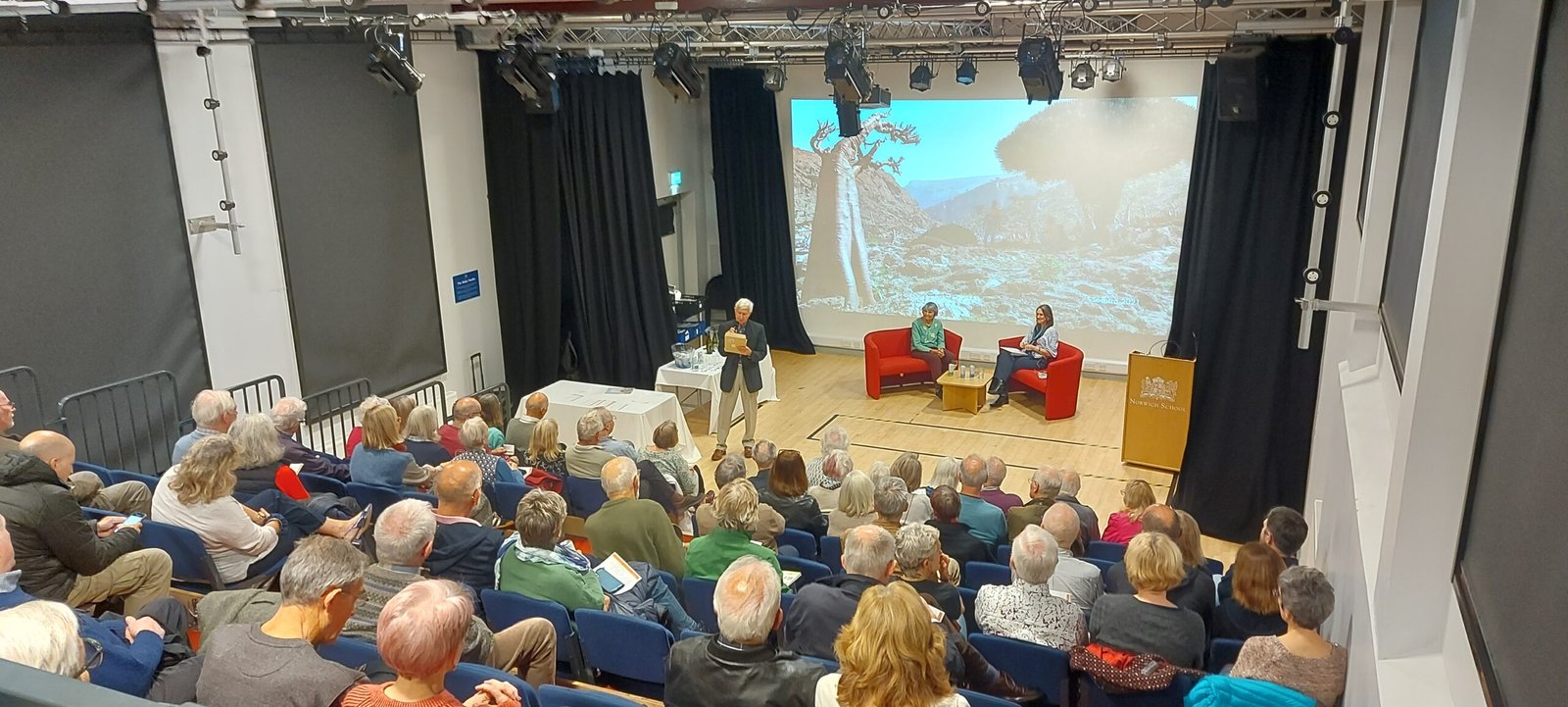
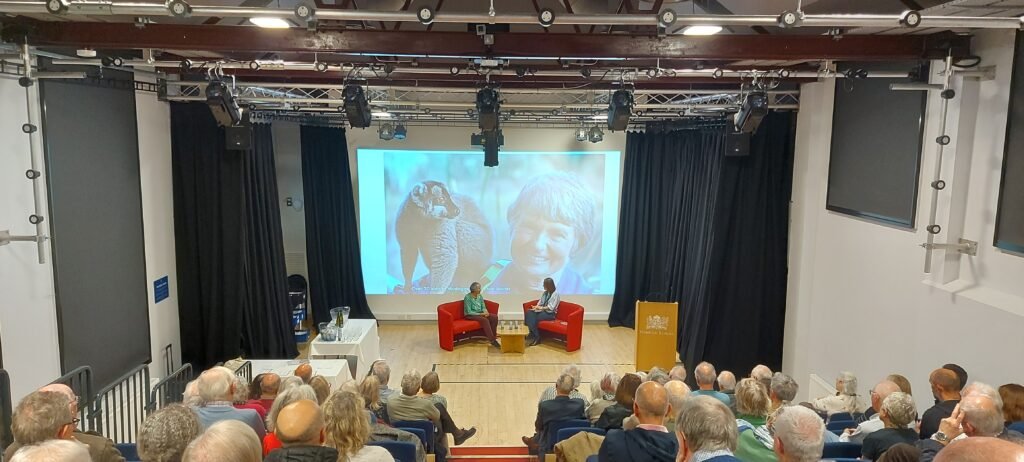
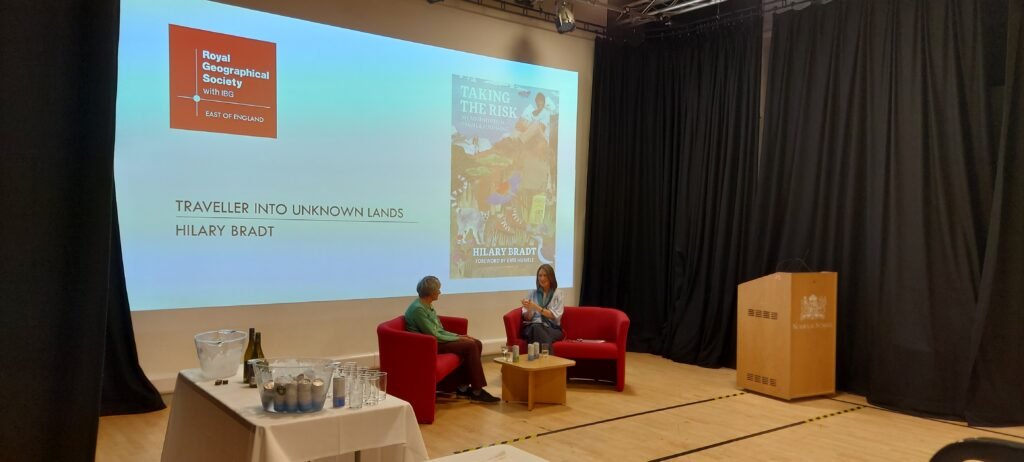
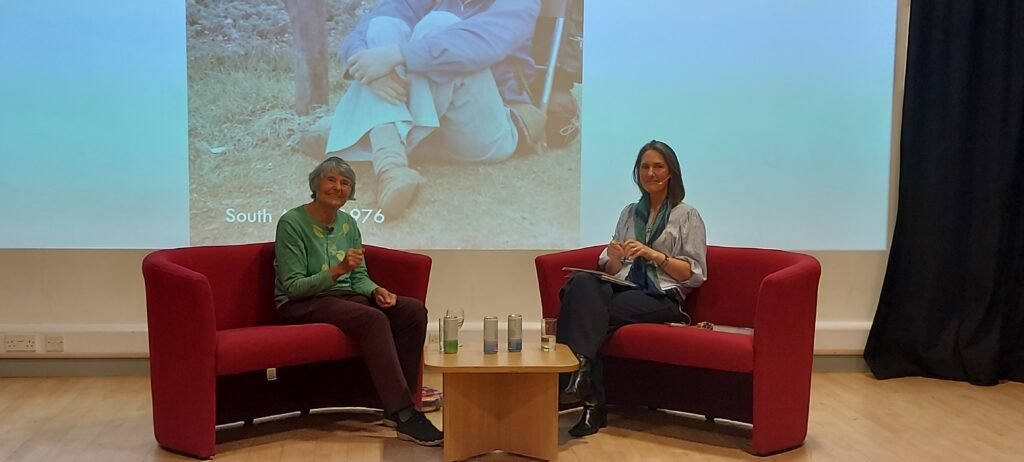
It was a full house for this special Royal Geographical Society (East of England) event with travel pioneer Hilary Bradt, founder of Bradt Guides. I’ve used Bradt Guides for many of my own travels, including Mali in 2000 and Albania in 2024, so it was a particular pleasure to meet Hilary in person. It was also a great privilege to be asked to conduct the interview and find out more about her extraordinary life in travel and publishing.
Just back from walking 21 miles in Cornwall over a long weekend, Hilary – now in her 80s – remains as energetic and curious as ever. She shared stories from more than six decades of exploration, taking us all around the world, from her first independent travels in Greece in 1961 to a journey to Socotra some 60 years later. The 2021 Socotra visit fulfilled a lifelong ambition to experience the island’s unique landscapes and remarkable endemic species such as the Dragon’s Blood Tree.
Hilary’s deep connection with Madagascar, where she has led more than 30 specialist group tours, led to a thoughtful conversation about responsible tourism. She told the story of Bedo, a young and gifted Malagasy guide whose friendship, and sad demise some years later, helped shape her understanding of the complex relationships between tourists and local communities.
The 2000 Bradt Travel Guide to Rwanda is the edition Hilary says she is most proud of. Co-authored by Philip Briggs and Janice Booth, it was researched in the years following the 1994 atrocities. Tourism has played an important role in Rwanda’s post-genocide reconstruction, and to have contributed in some small way to that recovery is something Hilary and Bradt Guides remain proud of to this day.
She also reflected on her solo 1,000-mile horseback journey through Connemara, western Ireland, which she describes as her “most adventurous trip,” later turned into a book of the same name.
Away from her travels, we talked about the challenges of establishing Bradt Guides, and I asked Hilary about the Ernest Hemingway quote in her autobiography Taking the Risk:
“The world breaks everyone, and afterward, many are strong at the broken places.”
Resilience is a theme that runs throughout her book. Hilary writes candidly about personal challenges, including the painful breakdown of her marriage, and reflected that she probably wouldn’t have achieved all she has without that heartbreak.
Taking the Risk is dedicated to Hilary’s parents, who “never told their adventurous daughter to take care.” The evening was a reminder of why Hilary remains such an inspiring voice in travel writing – thoughtful, unfiltered, and adventurous.
Images: Jonathan Pearson, Norwich School