Most people imagine Frankfurt am Main as a city of bankers, conferences, and glass towers. The place where you fly in for a business trip or just to catch a connecting flight. But if you give this city more than a passing glance, it starts to reveal a completely different personality. Behind the skyline of steel and glass lies a softer, livelier world filled with the smell of coffee, the taste of apple cider, and the sound of street musicians echoing along the river.
Frankfurt doesn’t try to impress. It lives its own rhythm, calm, confident, and surprisingly warm. Once you stop rushing and start looking closer, you begin to see that this city has a lot more heart than its reputation suggests. Business and everyday life blend here so naturally that it feels effortless and that’s exactly what makes Frankfurt so easy to fall in love with.
First Impressions
When you first arrive in Frankfurt am Main, the city feels organized and deliberate. The Hauptbahnhof (main train station) runs like clockwork, clean and efficient, everything exactly where it should be. But the moment you step outside, the atmosphere changes. Someone rides past on an e-scooter holding a cup of coffee, an old lady knits quietly on a park bench, and somewhere nearby a street musician starts to play.
Frankfurt is a city of contrasts: glass towers mirrored in the river next to half-timbered houses, quiet side streets a few blocks from the financial district. There’s something deeply human about it. Despite its reputation as a corporate hub, the city breathes at its own pace; steady, calm, and grounded. Life here doesn’t rush; it flows, like the Main River itself.
When Glass Meets History
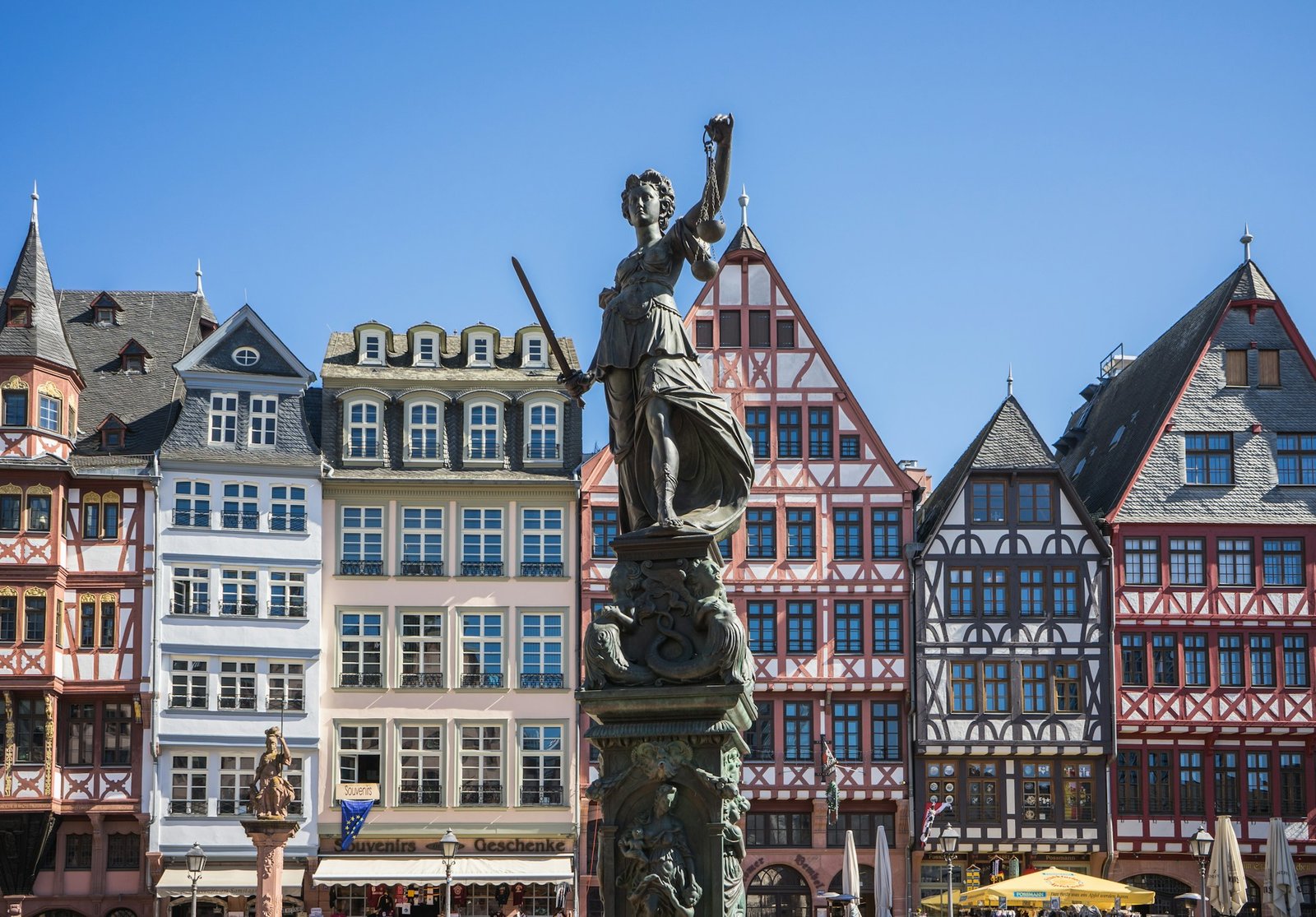
The Old Town – the Altstadt – feels like a small village tucked inside a big city. It’s not a museum; people actually live and work here. On the Römerberg Square, rows of colorful timber-framed houses glow in the evening light. As the sun sets, the windows begin to shine with a warm golden hue, and suddenly the whole place feels alive.
Look up, and just behind these medieval rooftops you’ll see the mirrored façades of the financial quarter. That’s the beauty of Frankfurt am Main; old and new are not in competition. They coexist, side by side. Tradition and progress, history and modern design, all folded into one landscape that somehow makes sense.
The Main – The City’s True Heart
If Frankfurt had a heartbeat, it would be the Main River. From dawn till dusk, it draws people in; joggers, cyclists, families, friends sharing pizza and wine by the water. On warm days, you’ll see locals stretched out on the grass, reading or chatting as boats drift by.
As evening falls, the city becomes almost cinematic. The glass towers reflect the sunset, the bridges glow softly, and the hum of life slows down to a peaceful rhythm. This isn’t a tourist performance, it’s just everyday Frankfurt, honest and unfiltered.
Sachsenhausen: Where Frankfurt Loosens Its Tie
Cross the river to Sachsenhausen and you’ll find the city’s relaxed, down-to-earth side. Narrow cobblestone streets, timber houses, and the smell of grilled sausages fill the air. This is where people come after work to unwind over a glass of Apfelwein, the local apple cider that’s practically a symbol of Frankfurt.
It’s not fancy or polished and that’s exactly why it’s perfect. You can walk into a bar like Zum Gemalten Haus, sit down at a shared table, and be part of the conversation within minutes. Nobody cares who you are or where you’re from. It’s all about the atmosphere, loud, warm, and authentic.
Coffee, Art, and the Everyday Life Between Streets
Frankfurt am Main has a creative pulse that hides in plain sight. Behind the strict architecture of the financial district lies a different world — small cafés, art studios, and neighborhoods where everyone knows each other by name.
The Bornheim district is often called “the heart of old Frankfurt.” Life moves slower here: bakeries open early, people greet the same barista every morning, and the smell of bread mixes with freshly roasted coffee on Berger Straße. Stop by Kaffeewerk Espressionist, and you’ll see how seriously locals take their espresso — brewed with precision, served with a smile.
A short walk away, Nordend is another favorite area among locals. It’s full of leafy streets and quiet courtyards, with cozy spots like Café Karin on Großer Hirschgraben, where you can sip your coffee while watching the morning city wake up. Just a few blocks away, Palmengarten — the city’s botanical garden — offers an oasis of calm where palm trees and glass domes replace office towers.
Art and Culture by the River
Frankfurt is more than finance — it’s a city of ideas. Along the riverbank lies Museumsufer, literally “the museum embankment.” More than a dozen museums stretch along both sides of the Main. The Städel Museum holds masterpieces by Rembrandt and Monet, while the Museum für Moderne Kunst showcases bold contemporary installations. For something classical, Liebieghaus displays ancient sculptures inside a 19th-century villa surrounded by gardens.
Climb the Main Tower for a panoramic view, and you’ll see Frankfurt in full — a city that balances modern ambition with quiet charm. From up there, skyscrapers and church spires share the same skyline, reflecting a city that has learned to live between eras.
Nightlife Without Pretension
Frankfurt doesn’t turn off when the workday ends. If you want to experience the real evening vibe, head back to Kleine Rittergasse in Sachsenhausen. Locals fill the traditional cider pubs, and the air buzzes with laughter and conversation.
For a more modern twist, the Bahnhofsviertel district near the main station has become one of the city’s trendiest spots. Hidden among old façades are some of the best bars in Germany. Kinly Bar is small, exclusive, and famous for its craft cocktails. A few streets away, Maxie Eisen serves whiskey and sandwiches in a sleek, industrial setting that feels more Brooklyn than Germany.
Frankfurt doesn’t try to copy anyone. It simply offers whatever mood you’re looking for — old or new, loud or quiet.
Beyond the City: Freedom on the Road
One of the best things about Frankfurt am Main is how easy it is to explore beyond it. Within an hour or two, you can reach dozens of incredible destinations: the romantic university town of Heidelberg, the rolling vineyards of the Rhine Valley, or the peaceful spa town of Bad Homburg with its historic baths and parks.
To make it even easier, consider using a service like Car rental Frankfurt, a practical and flexible way to explore Germany on your own schedule. You can pick up your car right in the city, book online, and head wherever the road takes you. Visit Eltz Castle, one of the most picturesque fortresses in Europe, or drive to Rüdesheim am Rhein, a small wine town where the air smells of grapes and roasted coffee.
With a car, you’re not tied to train timetables, you travel at your own pace, just the way Frankfurt itself lives.
The City That Stays With You
When you finally leave, you realize Frankfurt never tried to be “the best.” It doesn’t need to. It’s real, balanced, and confident in its own quiet way. Frankfurt am Main doesn’t demand admiration, it earns it gradually. First with order and light, then with the smell of rain on cobblestones, the sound of music drifting over the river, and the warmth of people who don’t pretend to be anyone else.
It’s not a city of grand gestures, it’s a city of moments. And that’s what makes it so easy to miss once you’ve been here. Frankfurt doesn’t try to be cool. Somehow, it just is.
Photo by Leonhard Niederwimmer on Unsplash