Tracking mountain gorillas in the wild is one of the most powerful wildlife experiences available anywhere in the world.
I was fortunate to visit the Mucunguzi gorilla family in the Rushaga sector of Bwindi Impenetrable Forest in Uganda in August 2019. We were in Uganda meeting with Uganda Wildlife Authority and Dr. Gladys Kalema-Zikusoka, founder of Conservation Through Public Health.
The guidance below is based on my own experience. Conditions, rules and permit costs vary between Uganda, Rwanda and the Democratic Republic of Congo, and may change over time, so always check with your operator before travelling.
What does not change is this: gorilla trekking works because it funds conservation. Permit revenue supports ranger patrols, veterinary care, habitat protection and local communities living alongside the forest.
Planning and Permits
Gorilla permits are strictly limited to protect the gorillas and to minimise human impact. It is essential to plan well in advance and book through a reputable operator.
At the time of my visit, permits in Uganda were significantly less expensive than in Rwanda.
Rwanda has a reputation for offering shorter, less strenuous gorilla treks (on average), with Volcanoes National Park offering more open habitat and shorter direct trails to areas frequented by gorilla families. In Uganda the groups are spread over a very wide and rugged area so there is a real range in trek length and difficulty depending where in Bwindi you have a permit for, and which gorilla family you are allocated and their location on the given day. If stamina is a concern, this may influence your choice of destination.
Either way, group sizes are small and tightly controlled.
What to Wear
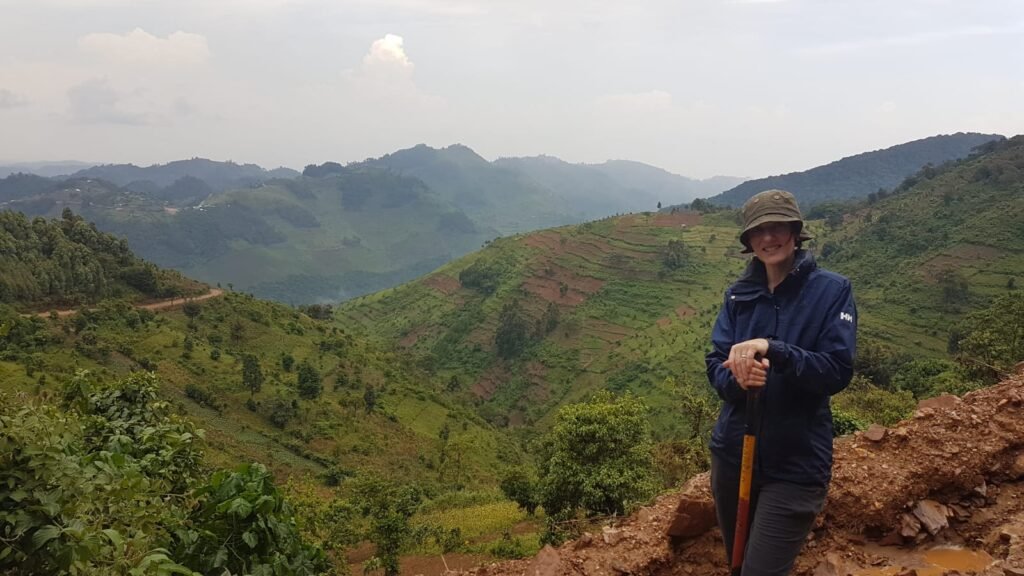
Dress for all seasons. Mountain weather changes quickly.
- Layers in light, breathable fabrics
- Long trousers
- Worn in hiking boots suitable for mud and uneven slopes
- Long sleeved top to protect against scratches and insects
- Wide brimmed hat or cap
- Waterproof jacket
- Gardening gloves to protect hands in dense vegetation
Some travellers wear gaiters to guard against ants, though I did not find them necessary in Uganda.
What to Take
- Photocopy of your passport. Rangers use this during the briefing to help allocate groups.
- Daypack
- Camera and spare batteries
- Waterproof cover or dry bag for camera equipment
- Two to three litres of drinking water
- Snacks (most lodges provide a packed lunch)
- Sunscreen, insect repellent, lip balm, hand sanitiser
- Face masks if required under current health guidelines
Cash is important.
You can hire a porter at the start point for approximately 15 USD (at the tme of my trek). Porters carry your backpack during the trek and look after it while you are with the gorillas. This service directly supports the local community and is strongly recommended, even if you feel physically capable of carrying your own bag.
Tipping guidelines (in 2019) were approximately 15 to 20 USD per person for the head guide and 5 to 10 USD per tracker. Tips are discretionary and given at the end of the trek, but they are greatly appreciated.
The Briefing
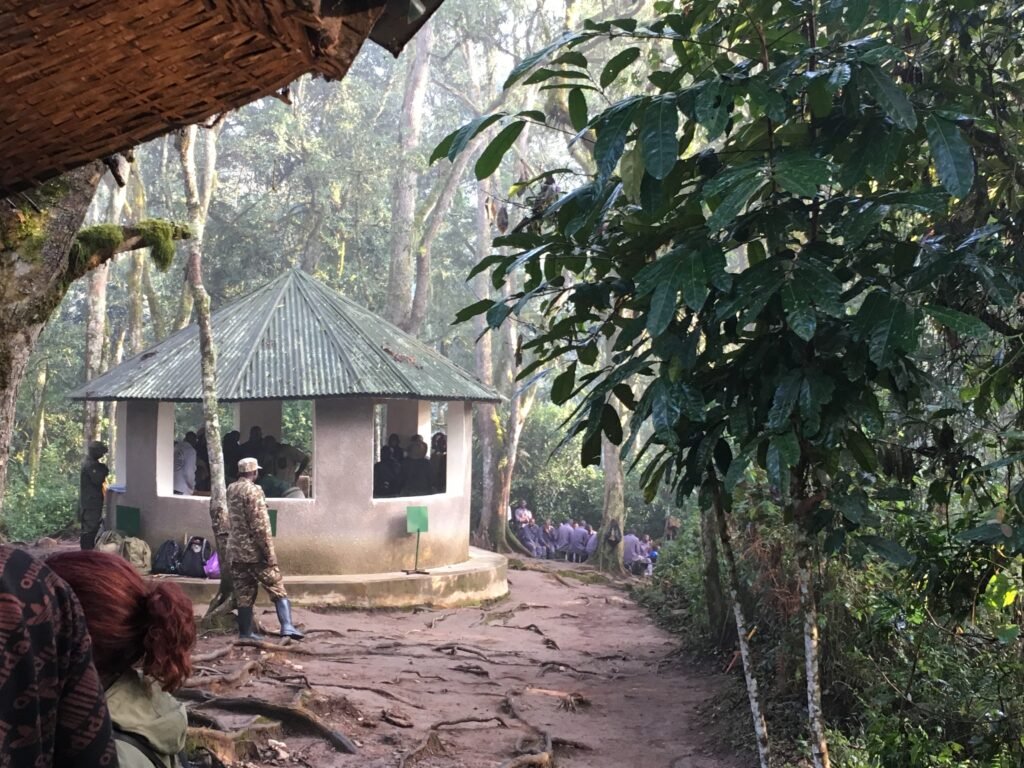
Our morning began with a short uphill walk to the briefing centre.
The head guide covered the history of the park, safety rules and what to expect. Trekking time can range from two to six hours in total. Time with the gorillas is strictly limited to 60 minutes. Rest stops are managed by the guides, and toilet facilities are only available at park headquarters or trek start points.
Groups are often allocated based on birth year, with the intention of balancing stamina levels. In reality, this does not always work perfectly. Despite being told the system aimed to group people of similar ages and abilities, I somehow ended up trekking with a group of energetic twenty year olds!
Each guide stands beneath a sign naming a gorilla family. Once allocated, you join your group. Walking sticks are available and genuinely helpful on steep and slippery ground.
Timings From My Trek
- We left the lodge at 7am.
- The briefing ran from around 8am until approximately 8.45am.
- Some groups started their gorilla trek from the briefing point, but we had to drive about 30 minutes to a nearby village to begin our trek.
- Our trek began at approximately 9.30am.
- We reached the gorillas at midday and spent time with them from 12pm to 1pm.
- We then trekked back to the village to meet our driver, stopping for a quick picnic lunch in the forest on the way back down to the village.
- We were back at the lodge between 4pm and 4.30pm that afternoon.
Every trek differs. Some groups walk a short distance. Others spend most of the day in the forest.
The Trek Itself
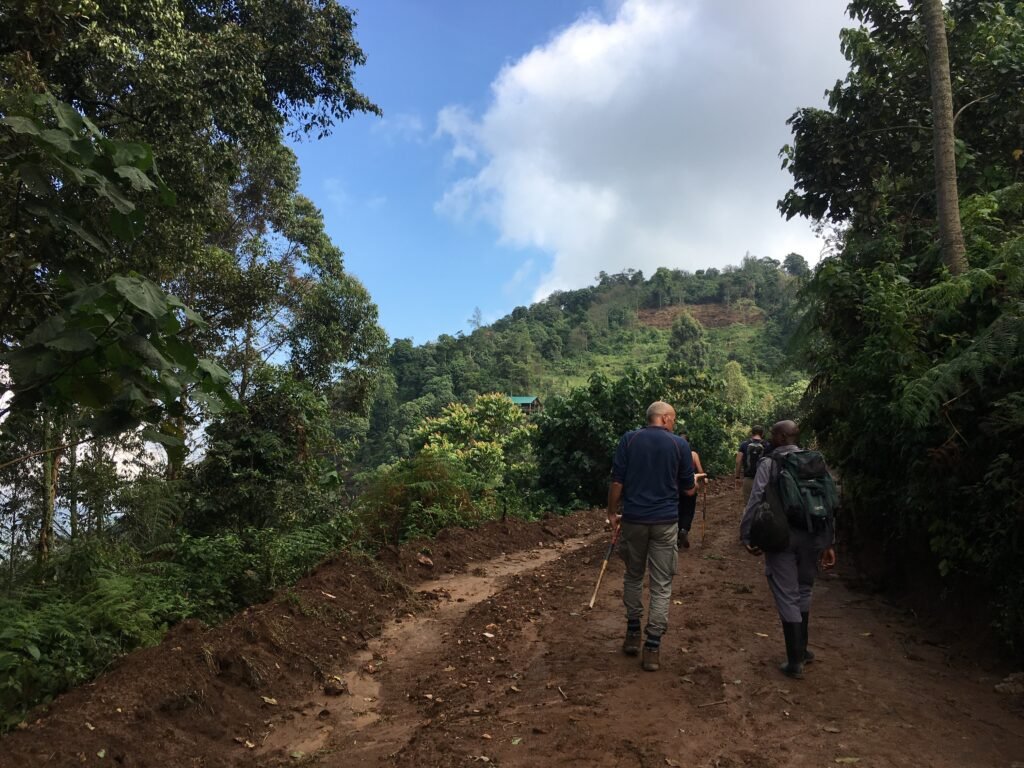
Our round trip was approximately 15 kilometres. It took around two and a half hours of walking each way, including rest stops.
It is worth mentioning that the southern sector of Bwindi around Rushaga, where I was, is known to have especially steep and dramatic terrain, but further north in the Buhoma sector at lower altitude, the trekking is not as challenging. This is where most people will trek to see gorillas. Everyone’s trekking experience will be different. What follows is an overview of how my day unfolded.
The first section of our trek followed a rough village track climbing steadily uphill for an hour or so in full sun. The altitude of around 2,850 metres was noticeable. I live at sea level and found it better to go slow and steady rather than try to match the guides’ pace (which was fast). There were 10 in our trekking group along with several porters, the head guide and two trackers. We formed a long straggling line. The team stops every now and again so that everyone can regroup.
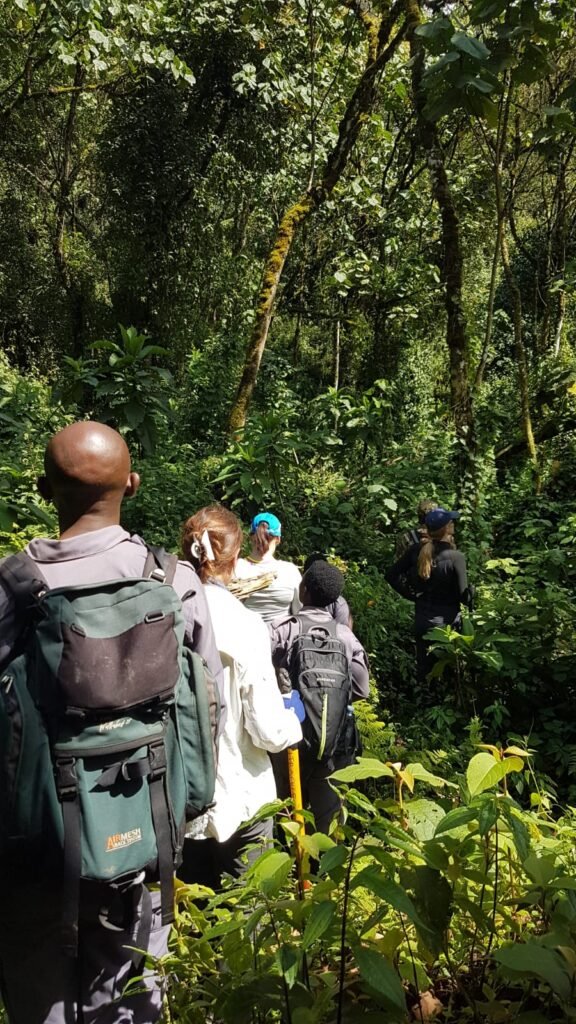
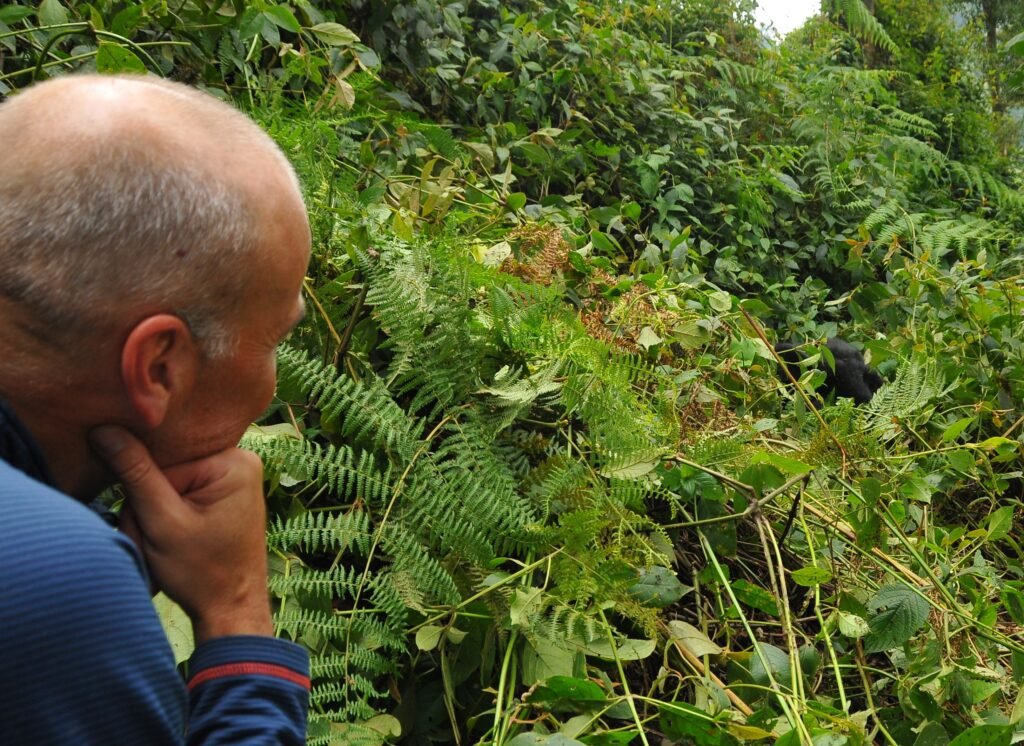
Eventually we left the track and entered the forest. Before doing so, we put on long sleeves and gloves. The vegetation was dense and the path muddy and uneven. Birdlife was remarkable, and we saw forest elephant tracks in the mud. You could hear the trackers up ahead of us calling to the gorillas. Every now and again we would all stop and listen and the trackers would alter our direction. Our gorilla family was on the move so we had to try and keep up with them.
Time With the Gorillas
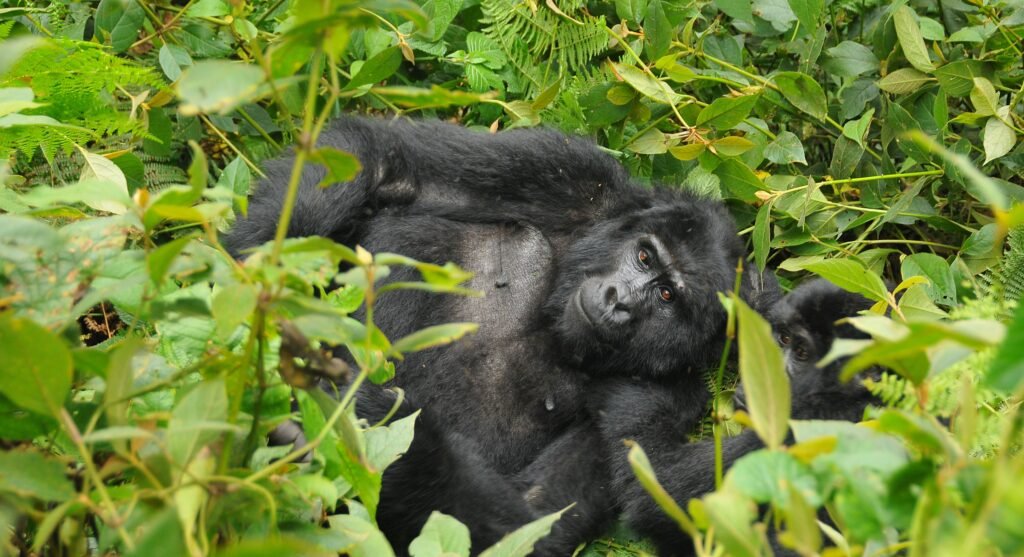
Eventually the gorilla family stopped moving through the forest.
We were asked to leave our bags with the porters and carry only cameras.
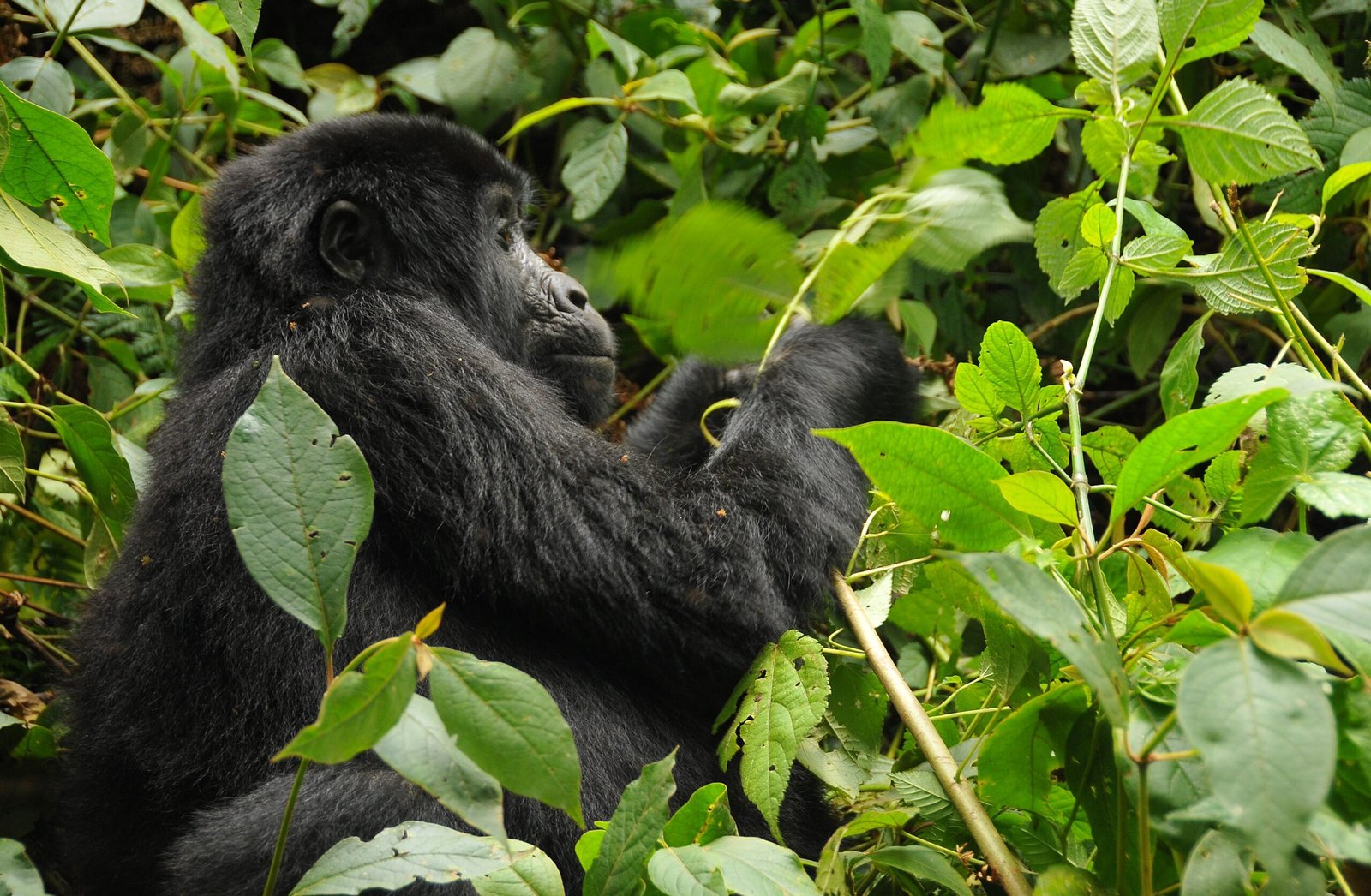
The silverback, Mucunguzi, sat just metres away in a small clearing. I did not have my camera ready and in hindsight I am glad. My clearest memory is simply being present standing on the hillside and seeing this incredibly impressive and intimidating figure sat in the open.
Mucunguzi got up within moments of us arriving and positioned himself in a deep thicket. However, other members of the family were more active and visible.
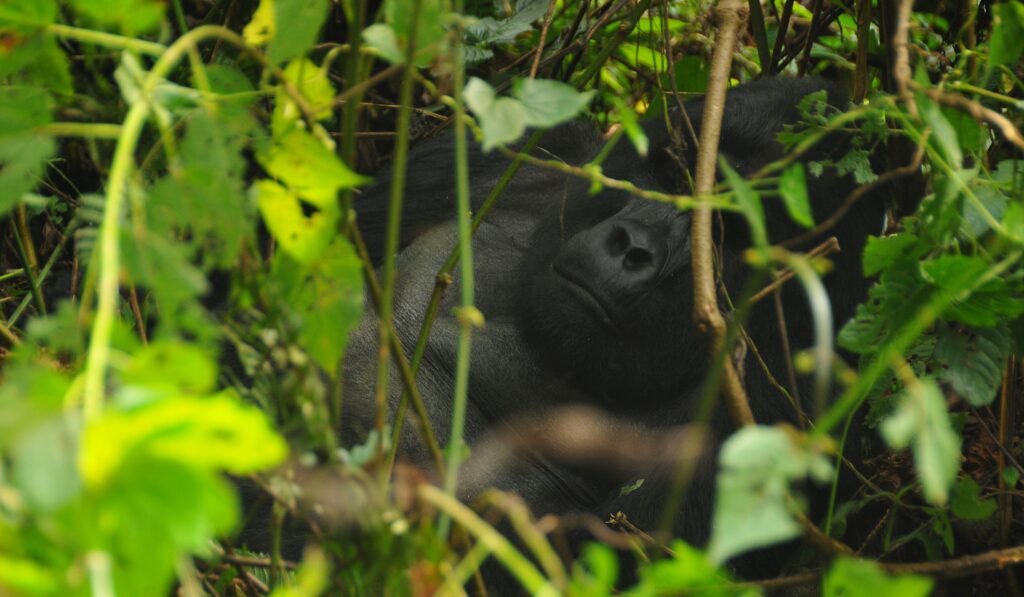
The guides positioned us carefully, ensuring everyone had a chance at some point to see the gorillas clearly during our 60 minute visit. The terrain was steep, with thick vegetation and uneven footing so you were constantly shifting position, giving others a chance at the front.
Young gorillas played in low branches. A mother groomed her infant further up the slope. Some family members were audible but hidden in foliage.
At one point two juvenile gorillas charged downhill towards us at full pelt, and we had to step aside quickly as they went screaming past us in to the bushes. The guides remained calm and used their pangas to clear some vegetation away.
The hour passes extraordinarily quickly. The head guide let us know when there was 5 minutes remaining and at the 60th minute, we were asked to retreat.
The Return
We followed roughly the same path back to the village.
Moments after leaving the gorillas, heavy rain began and lasted two hours. Trails became streams. Mud clung to boots. We sheltered briefly to eat lunch beneath a thick canopy. The sound of rain in the forest and the amount of water was unbelievable.
Back in the village, we were presented with trekking certificates before returning to our lodge at around 4pm to 4.30pm.
Back At the Lodge
Tea and biscuits were waiting for us on our return, before a lovely hot shower. Fires had been lit in our rooms – perfect for drying our soggy kit. Muddy boots left outside the cottage door were taken away to be cleaned overnight. Some of my kit was totally sodden in the deluge, and was still damp the following morning, so I’m glad I had spare footwear, and bags to pack damp things.
Why Gorilla Trekking Matters
Mountain gorilla numbers have increased in recent decades. This is a rare conservation success story, and responsible tourism has played a vital role.
Permit fees fund ranger salaries, anti poaching patrols, veterinary interventions and community development. Local people benefit directly from tourism income, strengthening incentives to protect habitat.
Gorilla trekking is tightly regulated and conservation led.
When done responsibly, it is one of the clearest examples of tourism working for wildlife.
All bookings made through our expert network support Explorers Against Extinction at no additional cost to you.