Max White reviews his time on a research volunteer placement in Malawi
Making a difference, learning new skills and living in the bush was exactly what I wanted from a volunteering experience. I settled on a placement in Liwonde National Park in Malawi with the Lilongwe Wildlife Trust. The focus of the placement was monitoring species of special concern.
I spent three weeks on the programme, and I wasn’t ready to leave when the day finally rolled around.
I had the chance to be ‘on safari’ daily, observing the species of Liwonde whilst also learning about data entry, camera trapping and finding out how these help to inform conservation strategy.
It was a real privilege to spend time in Liwonde – the animals are beautiful, the scenery is mind-blowing and the people made the whole experience even more special.
Nature is, of course, unpredictable and I did not know what would be in store, but the programme exceeded my expectations.
To anyone out there, at any age and career stage or path, who might be tempted, I would highly encourage you to go ahead and book on!
- Max is reading biological sciences at the University of Exeter. He joined the Research Volunteer programme for 3 weeks in June/July. A review of his experience follows below.
The Lilongwe Wildlife Trust is Malawi’s leading conservation charity.
It offers three different placements:
Sanctuary Volunteer
Research Volunteer
Wildlife Vet
On arrival into Malawi the friendly LWT team met me at the airport and transferred me to the wildlife sanctuary in the capital city, Lilongwe. The centre is a key part of conservation in Malawi. It has resident hyenas, multiple monkey species, servals and more. The focus is rehabilitation and rewilding and many people choose to volunteer here.
Sanctuary volunteers partake in feeding and enrichment of the animals whilst also becoming immersed in local culture and building tight bonds with the local team. In my experience there was always upwards of five volunteers at the centre – some veterinary students on the extern programme, and some keen volunteers without a vet background. The sanctuary volunteer programme is for everyone.
I only spent two nights total here as I opted to join the research volunteer programme in Liwonde National Park, however the time in Lilongwe provided a good insight to the work of the trust, while also being really practical – including a chance to sort out some Malawian Kwacha and a local SIM card for my phone.
The next day I set off early from the centre along with a Belgian volunteer, Peter Deman, for the 4 hour drive to Liwonde. It was certainly eventful with a few police stops along the way, and the journey kept interesting by the Malawian roads.
Our driver was knowledgeable and I enjoyed the chance to step into Mozambique as one of the roads splits the border!
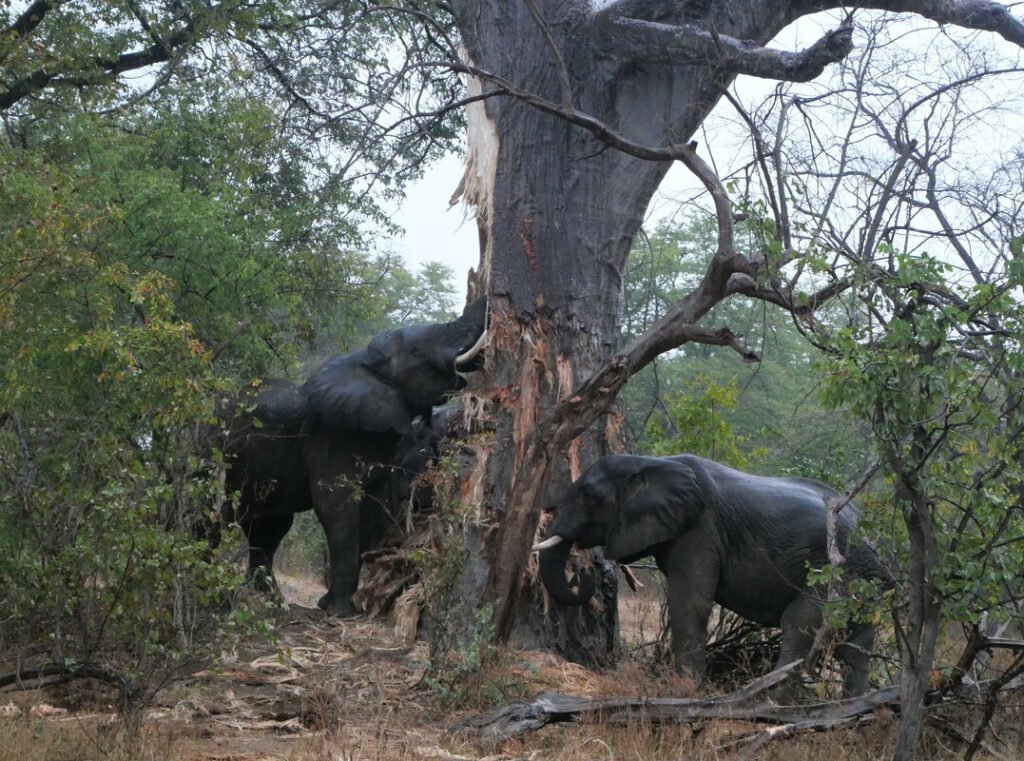
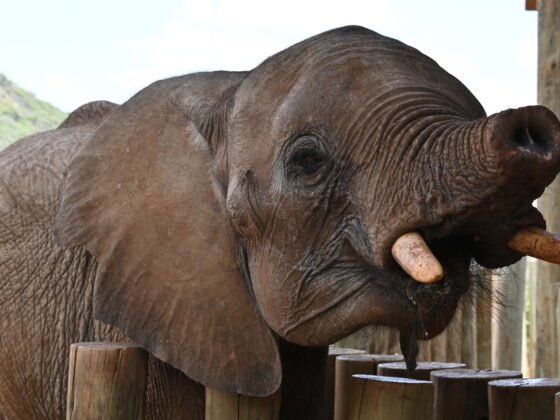
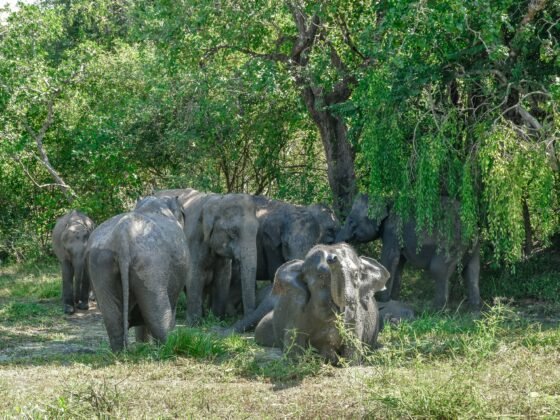
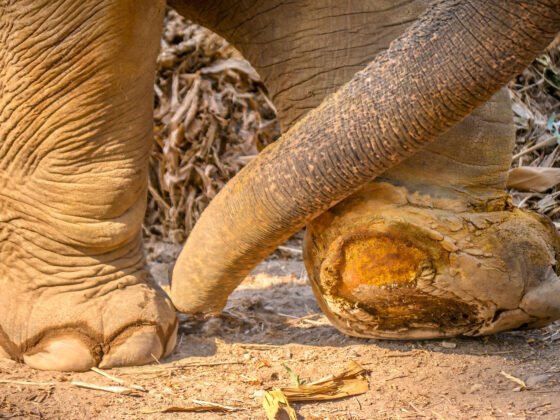
Some of Liwonde’s beautiful elephants
The Camp
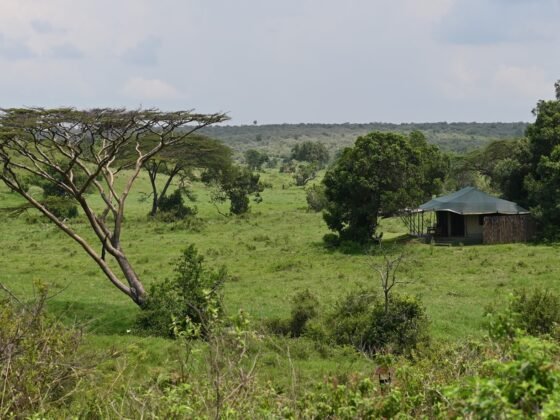
The research camp itself is very near the park entrance. It can accommodate 6 volunteers at a time in 3 tents, a double room and a single room. The team endeavour to make sure everyone has their own space if possible, but in the peak volunteering months of July & August sharing is part of the experience.
We were welcomed and shown around by a Malawian researcher based at the camp. Although Peter & I were the only two research volunteers at the camp initially, new people arrived each week. Volunteers ranged in age and background.
I spent limited time in my room due to the busy days and found all the volunteers I met were like-minded and easy to get along with which was a bonus. I had a roomie for just 1 of my 3 weeks.
The camp is basic and takes a little getting used to, but after a few days I felt right at home. The lovely hot shower (with the occasional frog visitor) was a welcome luxury. 4G coverage was pretty good so I was able to keep in touch easily with home. The hammock was a favourite spot!
Your stay at the camp on a self-catering basis, with provisions for making vegetarian meals provided. We had fresh fruit and vegetables and a basic pantry with things like eggs, pasta, rice, porridge oats and a few spices. The Monday food shop was a great experience. Venturing into the bustling Liwonde markets was slightly overwhelming, but unforgettable. I found cooking to be a great bonding experience and for the 3 weeks I spent in Liwonde I cooked and ate together with the other volunteers.
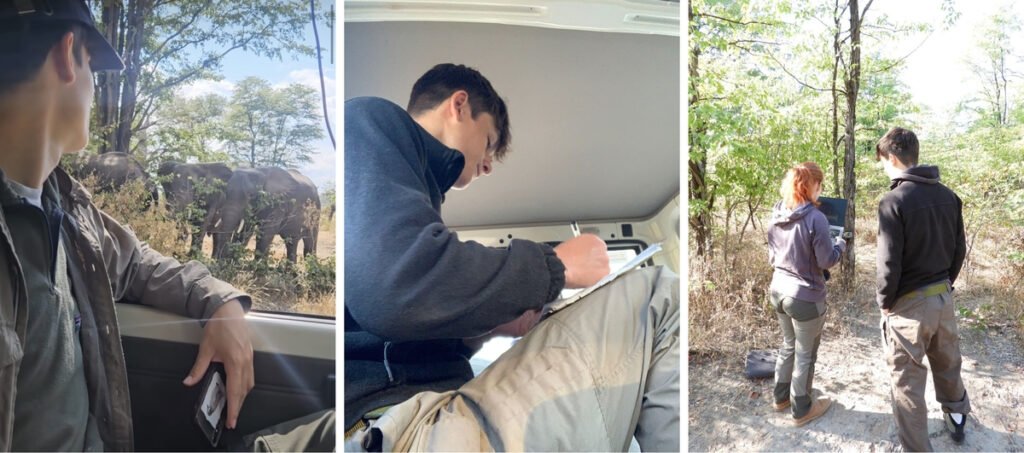
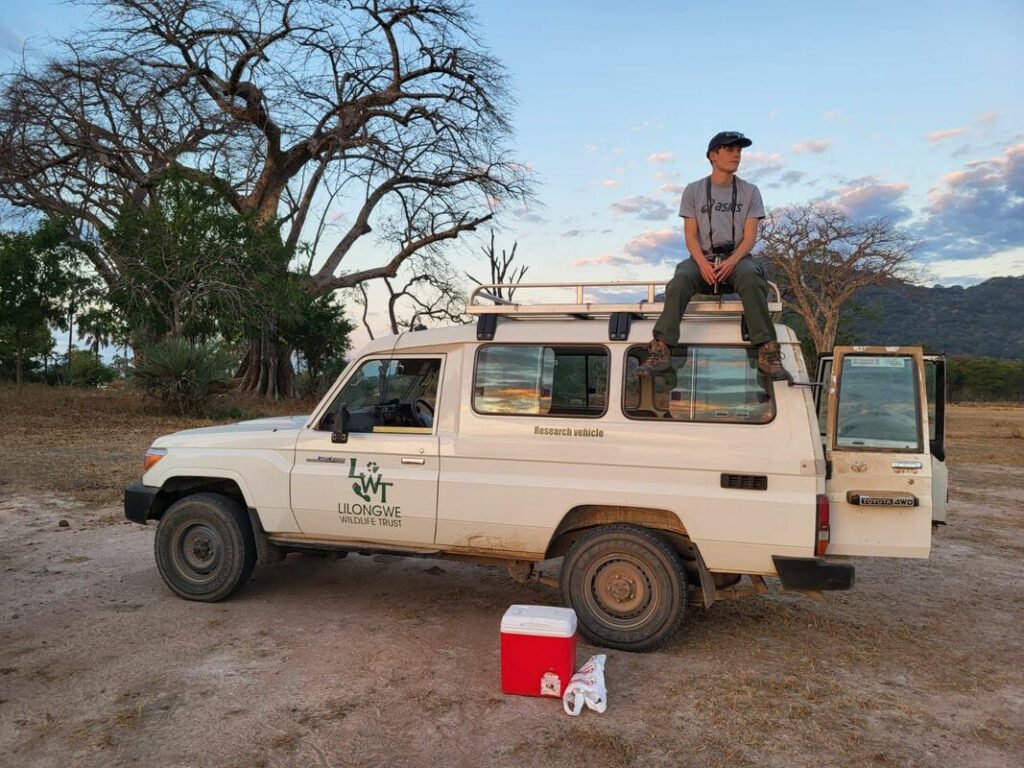
Max in the field

In the field
The average day in Liwonde is varied but will often start around 5am for a quick snack and some coffee to help you wake up and stay alert – the brave ones take extra time in bed and skip this part! Departure for the morning drive is at 6’o’clock sharp, in order to be out in the park for the early morning sun – this is the time of day when many animals are on the move.
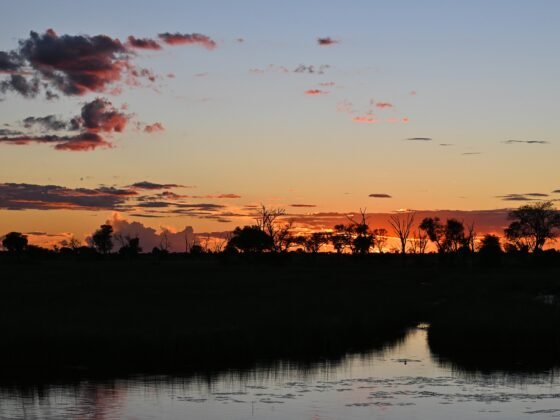
The scenery in Liwonde is particularly pretty and at the time of my visit the landscape was still flooded following cyclone Freddie in March. Although this meant there was limited access to some parts of the park it also made for stunning vistas.
In the middle of the day between drives it is a time to rest, eat, learn data entry skills and sort through camera trap photos to identify individuals. This helps to build up a picture of movements.
Identifying the individual cats is certainly a skill so you need some patience. I found it rewarding to dedicate time to this part of the programme, adding to my overall understanding and experience (as well as helping the researchers with their reports.)
The afternoon drive leaves at 3pm and ends when the sun goes down. On morning and afternoon drives you are taught to use the telemetry to pick up signals from Liwonde’s collared individuals. If you are lucky, you get a visual on the animal. If the elusive cats are not about there is plenty of other wildlife to look at, including a thriving elephant population, along with sable, kudu, eland, waterbuck, buffalo, impala, crocodile, hippo and you might even spot a black rhino if you’re really lucky.
Drives are flexible – particular highlights included an early 5am departure with a spotlight that led us to our only hyena find, evening sundowner sessions by the water with a cold beer, and on my last day a night drive with spotlights which was thrilling.
Even when the cats are hiding, the birdlife is exceptional and I learnt a great deal. To show interest in the birds adds an extra focus to the drives and it is a good challenge to learn as much as possible in the time available.
Fridays are camera trap days and here you collect in SD cards and set new traps to cover the areas the monitoring team can not always get to.
During my time with the team, monitoring efforts focused on lions, cheetahs and pangolins. When sighted or picked up on telemetry, coordinates are noted and logged. Vultures and specific antelope species are also logged. Working as part of a research team does not guarantee sightings, especially due to the dense nature of the bush! Some days you may not see any cats (or a pangolin) but when you do find them it is really rewarding, and makes up for the long hours in the field.
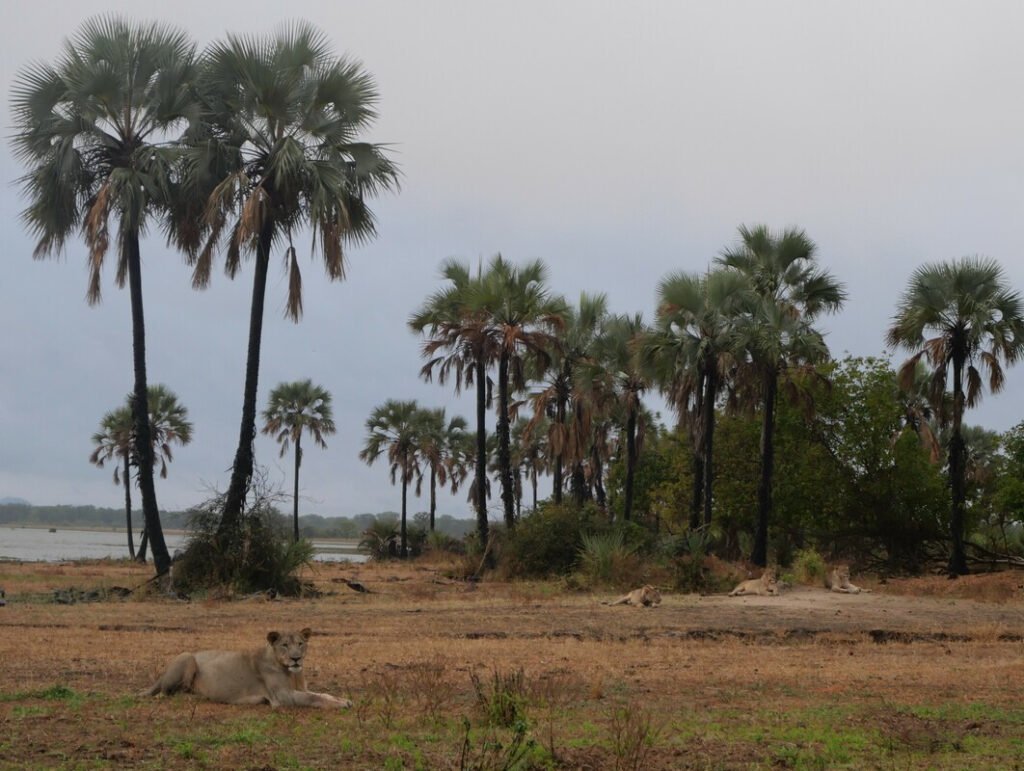
Li08 with his family
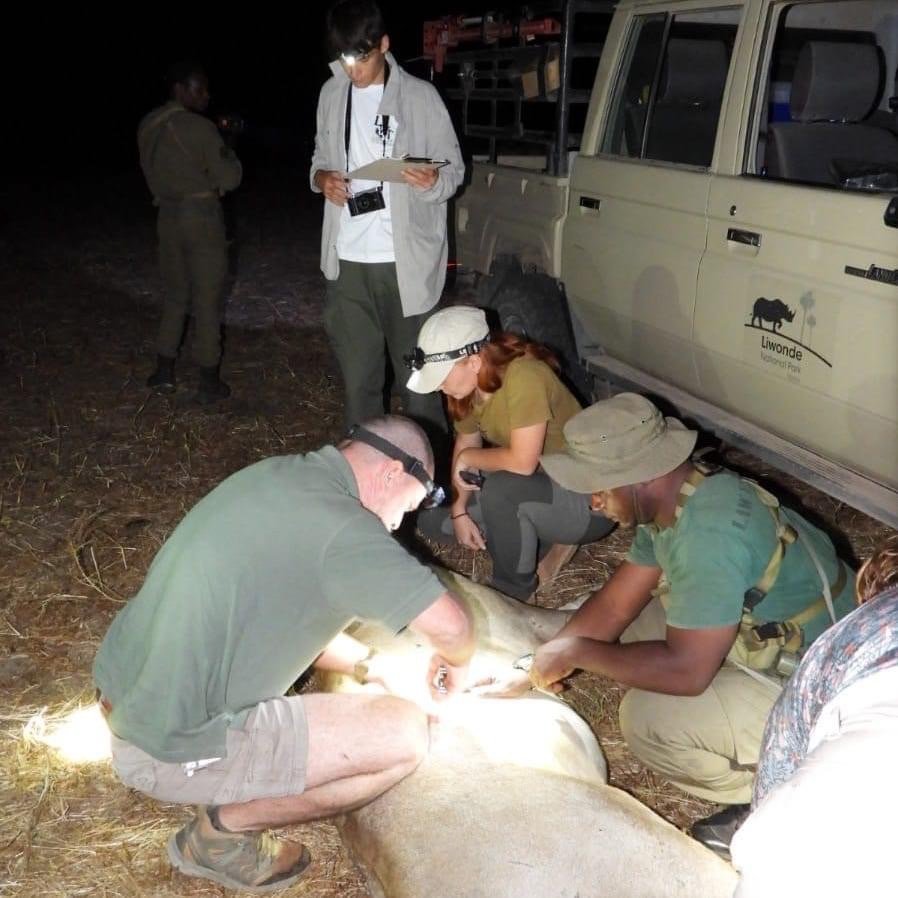
Team at work. Image courtesy of Peter Deman
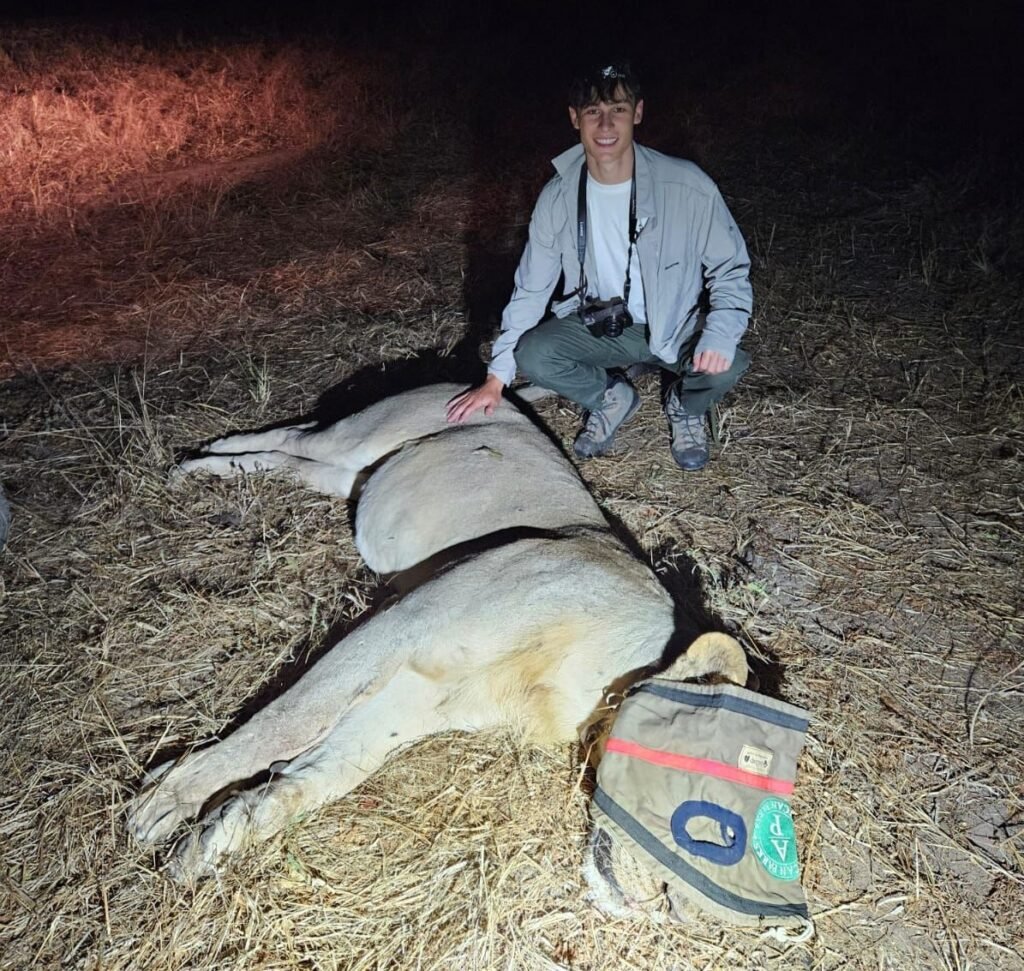
Max with Li08

Li08 welfare check and collar re-fit
Highlights
Here are my top 5 moments:
1.Lion collaring
A lifetime goal of mine was to be part of a lion collaring. When Li08, a 2 year old lion, needed a routine welfare check and collar refit I was brimming with excitement. The operation was long, with many days spent searching for the elusive lion who decided he would hide from us at the top of a hill. When we finally found him we did what’s known as a ‘call up’. Using animal distress noises played through speakers and the smell of fresh water buck we soon got Li08’s attention.
The lion was darted and we then worked quickly to check him over and refit his collar before waking him back up. He had grown 10cm since his collar was fitted in November last year!
To be that close to a wild lion and to work within and learn from a large team comprising Lilongwe Wildlife Trust and African Parks staff was extremely special.
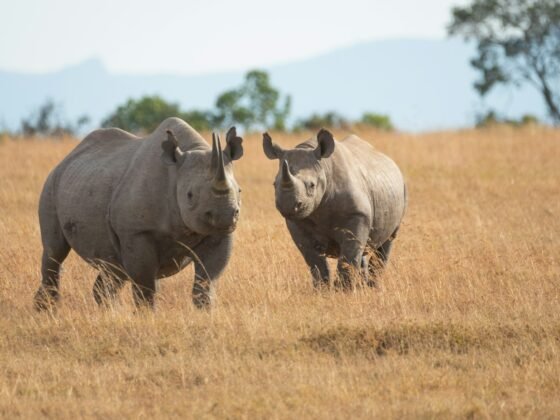
2.Black rhino sightings
Seeing two black rhinos (back-to-back) after giving up all hope of finding them, has to make the highlights list. I thought I would leave without catching a glimpse of the black rhinos since they are extremely elusive and very skittish. Although the sightings were fleeting, to see these giants out in the bush was really magical.
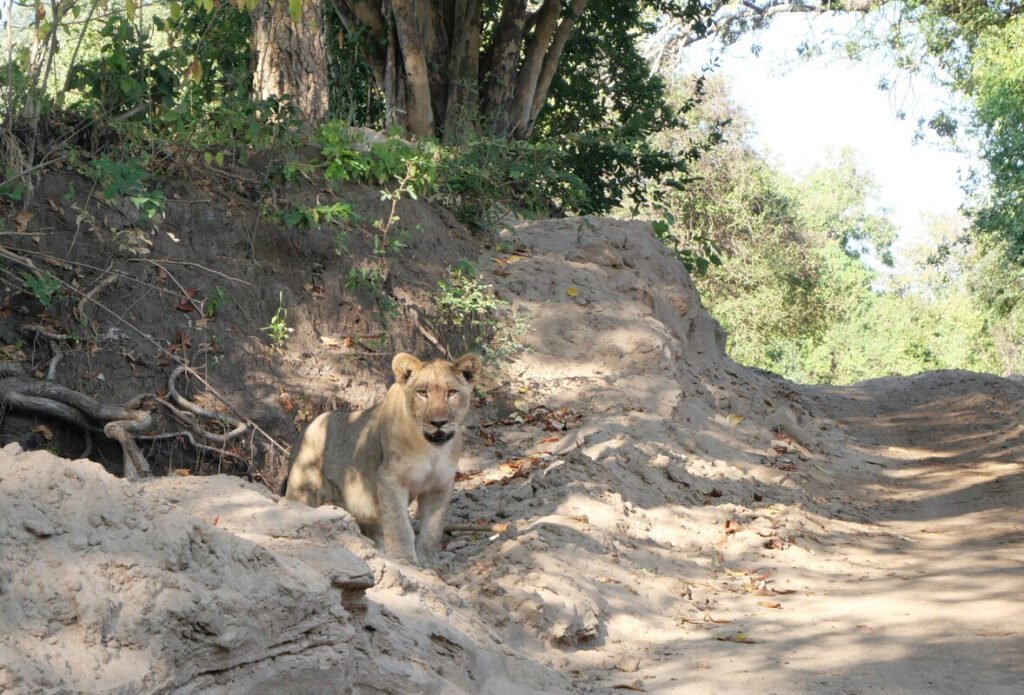
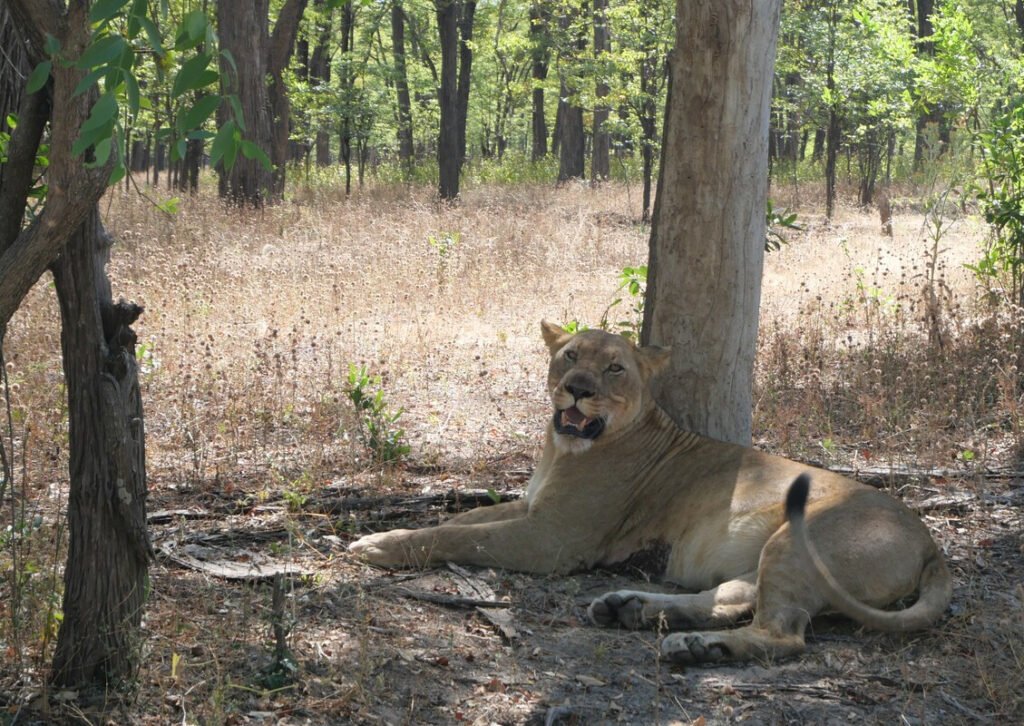
One of LF6’s cubs
3.LF6 and her cubs
LF6 is one of Liwonde’s collared lionesses and I had picked her up on telemetry on multiple occasions but was yet to get a visual until one very obliging young cub came bouncing out of the bush which led us to two more cubs and two females! This was perhaps my favourite sighting and the only time I managed to see these cubs.
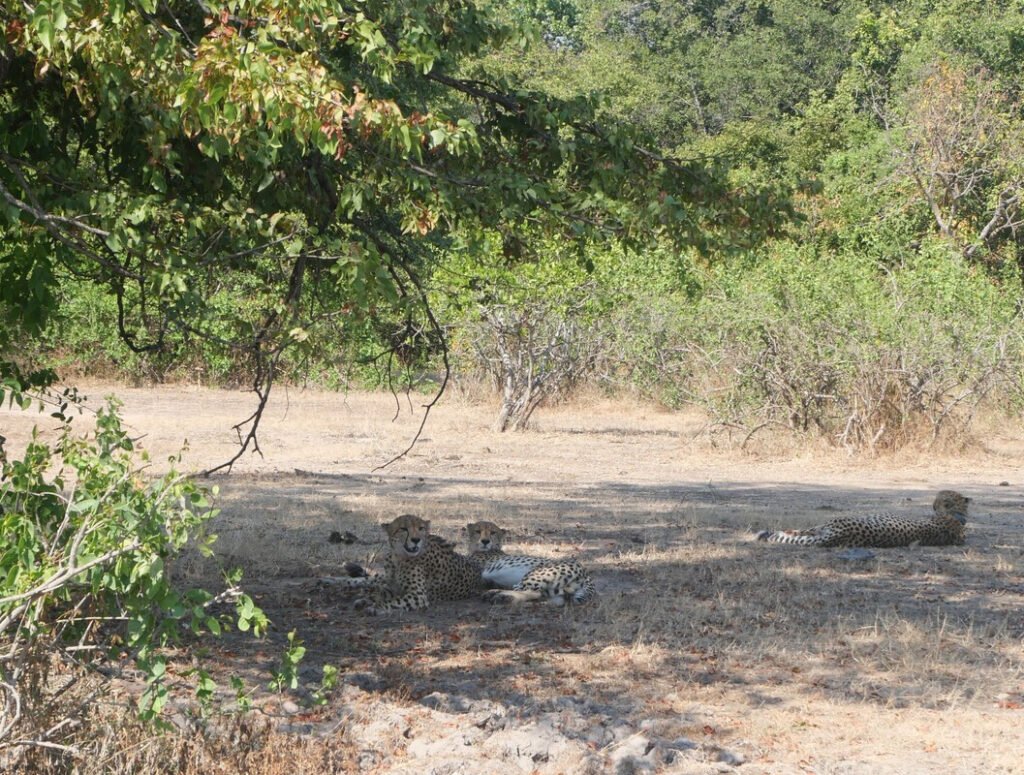
Cheetah Thursday
4.Cheetah Thursdays
Due to the extensive lion movements in Liwonde, the cheetahs can be hard to find but there is a particular band of five boys that I was lucky enough to see twice, on consecutive Thursdays, both times on kills. To see them so close and so healthy left me in awe. You build a bond with these animals in a relatively short space of time, and to see them thriving was incredibly satisfying.
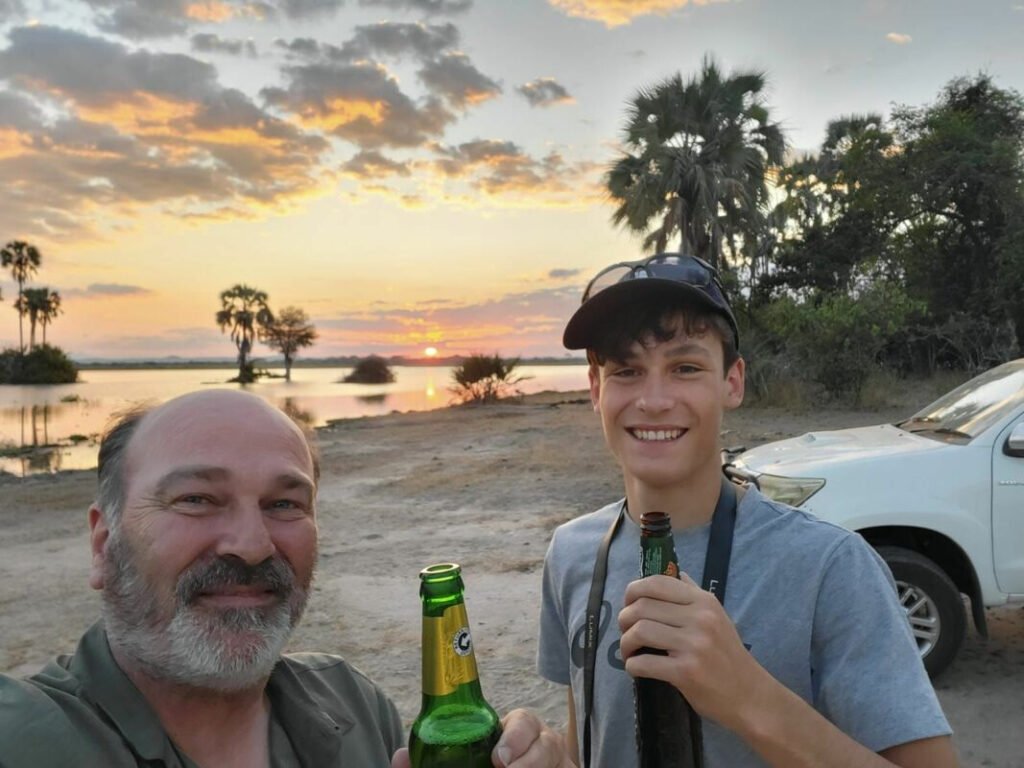
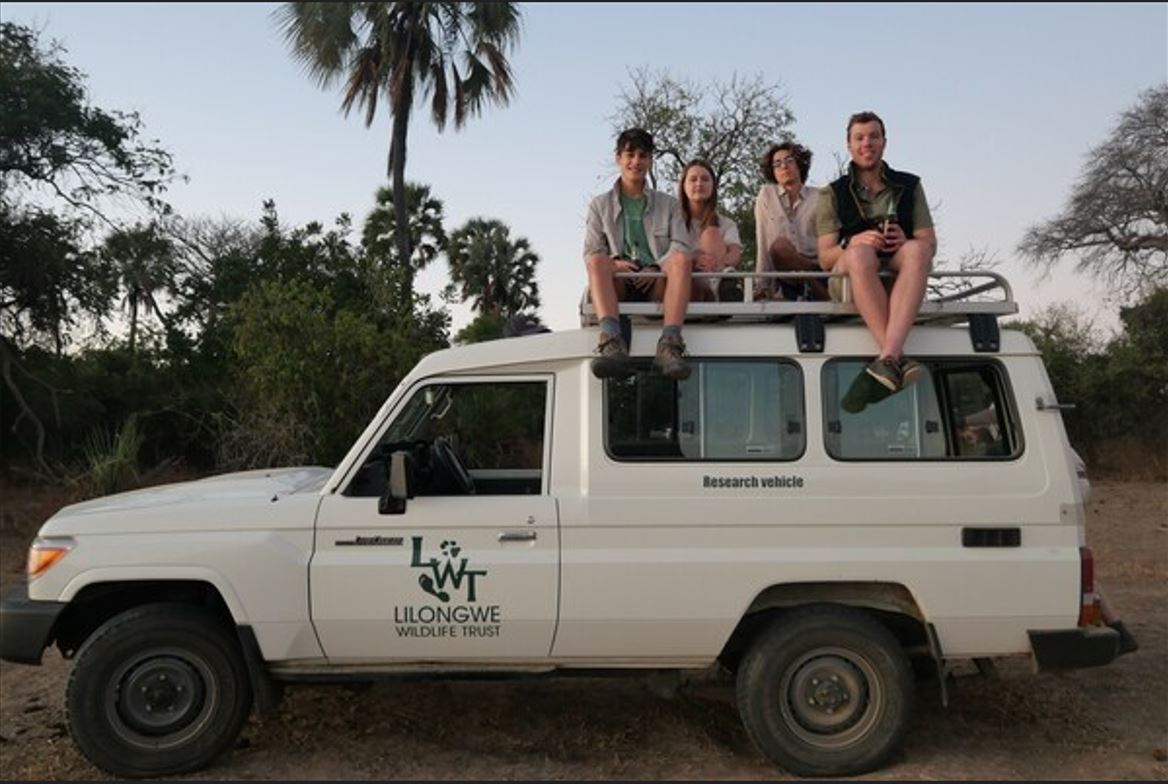
Sundowners – Max with fellow volunteer, Peter (courtesy of Peter Deman)
5.Sundowners
Sundowners with the team on top of the truck after a long day was a lovely way to wind down and catch some of the best sunsets I have ever seen. The soundtrack of hippos splashing about added to the atmosphere.
Max
>>If you’re planning, or know a young person planning a gap year or research placement then we may be able to support their journey in some way – please see further details at Young Explorer Programme.
If you are interested in travelling to Malawi on holiday please do get in touch – we have an expert travel network which focuses on wildlife experiences and supports on-the-ground conservation.
You can see a sample itinerary here>>>, along with additional travel information.