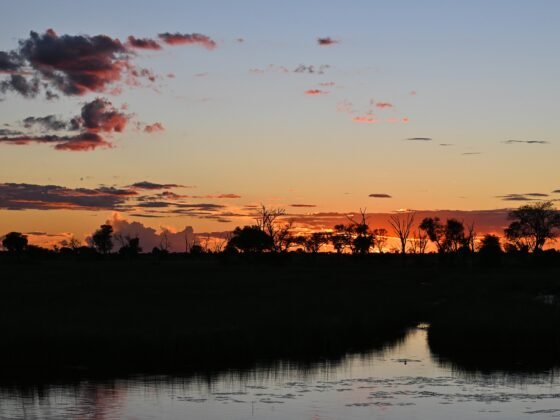
Sundowners are a great safari tradition, especially in private reserves and concessions where you can enjoy this moment out in the bush, surrounded by spectacular scenery as the sun dips below the horizon and the soundtrack of the wilderness subtly shifts. It’s as much a part of the safari experience as the morning game drive.
Once, the bush bar might have stocked familiar international names like Gordon’s. Today, however, the best safari camps celebrate small, local brands – spirits and wines that tell a story of the land and its people. From Elephant Gin in Kenya, which funds elephant conservation, to Painted Wolf Wines in South Africa, which supports wild dog protection, the safari bar has become a reflection of place and purpose.
Zambia is no exception.
Alvearium Gin: Honey, Habitat, and Heritage
Distilled in Lusaka, Alvearium Gin is a small-batch spirit made entirely from mead – the world’s oldest honey-based drink. Its name, taken from the Latin for beehive, is a nod to its origins in sustainable beekeeping. In 2025, Alvearium earned international recognition, receiving both the International Sustainability Award and a Master Medal at the Global Gin Masters – accolades that highlight not just its refined, complex flavour but also its conservation impact.
The Craft of Alvearium Gin
The journey of Alvearium begins with wildflower honey sourced from Miombo woodland beekeepers. The honey is diluted with pure water and fermented naturally into mead, using only wild yeasts to maintain its unique character. This mead is then double-distilled in small copper stills, allowing the natural honey notes to shine.
A carefully balanced blend of locally sourced botanicals – including African juniper, wild herbs, and citrus peel – is added during distillation, creating a gin with a smooth, aromatic finish and subtle layers of spice, fruit, and floral tones.
Each stage of production is designed to minimise environmental impact:
- The distillery is powered by solar and hydro energy,
- Uses closed-loop water systems to recycle cooling water,
- And composts all spent botanicals to enrich local soils.
The result is a spirit that not only tastes of Zambia’s landscapes but actively supports them.
A Model for Conservation and Community
- 180 local beekeepers and their families supply the raw honey that forms the foundation of Alvearium Gin.
- The honey is produced through the African Parks Honey Project, which trains communities in sustainable beekeeping, providing an alternative income that reduces reliance on deforestation, illegal charcoal production, and poaching.
- This initiative has already protected 900 trees from being cut down for charcoal.
- By aligning local livelihoods with conservation, the project offers economic incentives for communities to actively protect wildlife and forest habitats.
By linking livelihoods to forest health, Alvearium helps protect Zambia’s Miombo woodlands, a critical ecosystem for elephants, wild dogs, and an array of rare bird species.
Travel and Taste
A safari is as much about people as it is about wildlife. Increasingly, it’s the small details that make a difference – from the provenance of what’s in your glass, to the craftsmanship behind the camps you stay at. We focus on recommending high-quality, low-density experiences in largely owner-run properties where staff are drawn from the local community and where the camp or lodge has been built, furnished, and provisioned locally (where possible). This not only gives you a true sense of place but also ensures your safari supports local livelihoods and conservation.
Visit our Zambia travel pages to start planning your journey.
Image: Alvearium Gin, Zambian Meadery