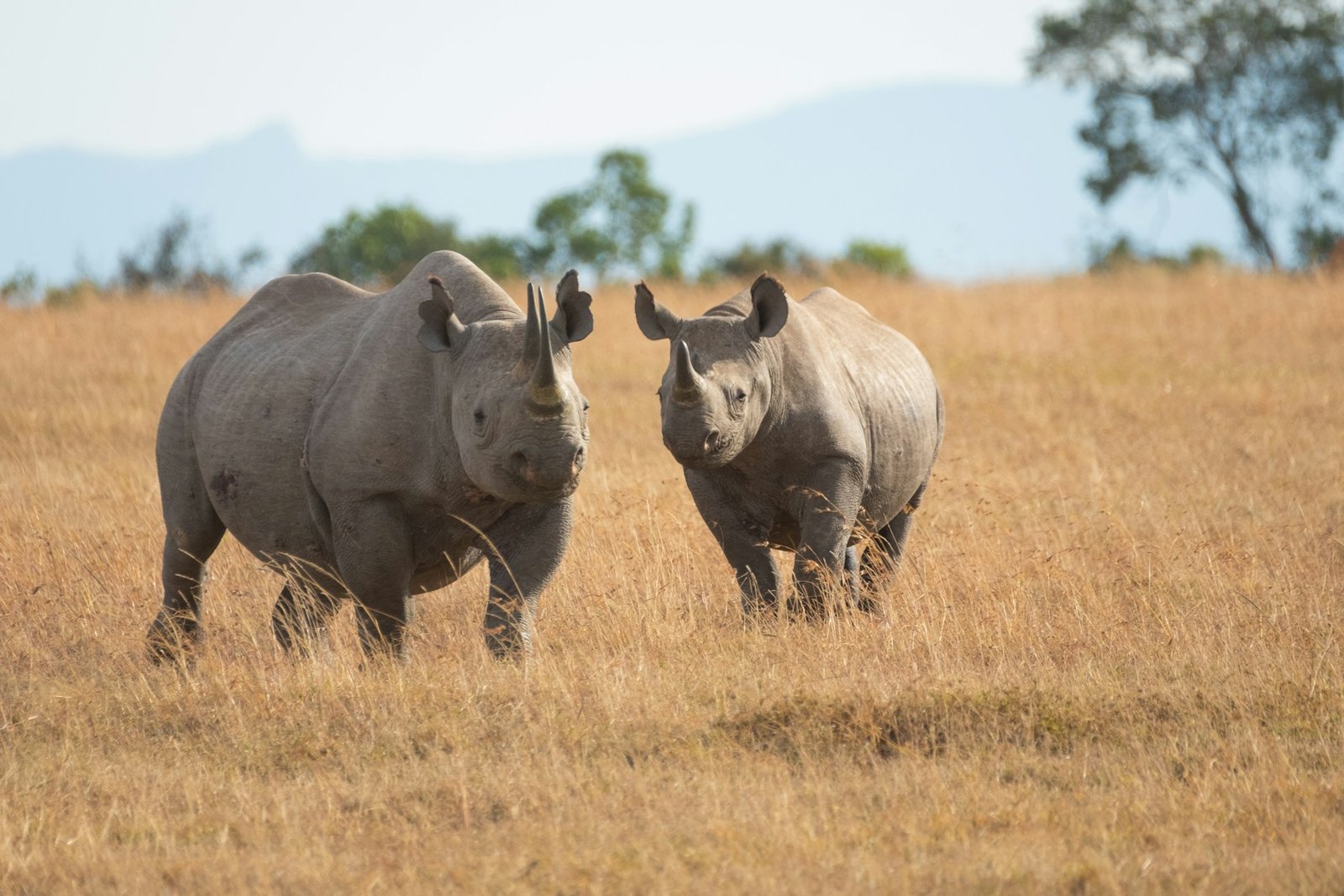
After more than four decades, rhinos have finally returned to one of Uganda’s most remote and beautiful national parks. This historic move marks a new chapter for wildlife conservation in the country and brings hope for the future of a species that once disappeared from the area due to heavy poaching.
Rhinos had not been seen in Kidepo Valley National Park since 1983. During the late 1970s and early 1980s, insecurity and illegal hunting wiped them out completely. For many years, the park remained without these powerful animals, leaving a gap in its natural ecosystem. Today, that story is changing.
The journey to restore rhinos in Uganda began in 2005 at the Ziwa Rhino Sanctuary. At that time, rhinos were already extinct in the wild across the country. Through careful breeding, protection, and strong management, the sanctuary slowly increased the number of rhinos. Over the years, this effort has been successful, making it possible to reintroduce some of them back into protected areas like Kidepo.
Recently, Uganda Wildlife Authority began relocating southern white rhinos from Ziwa to Kidepo, a distance of over 400 kilometers. The animals were carefully transported in secure crates to ensure their safety. The plan is to move a total of eight rhinos in phases, with more expected to be added in the future, including some from neighboring Kenya.
According to James Musinguzi, the Executive Director of UWA, this is not just a simple relocation, but the start of rebuilding a lost population. He described the moment as the beginning of a new rhino story for Kidepo. The goal is to slowly grow a stable and healthy population that can survive for generations.
Before bringing the rhinos, a lot of preparation was done inside the park. A special sanctuary was set up with strong fencing, access roads, water systems, and ranger stations. Fire management systems were also put in place to protect the habitat. These measures are important to keep the animals safe, especially from poachers.
Conservation groups such as Global Conservation, along with other partners, worked closely with local authorities to make this project possible. Their support included funding, technical knowledge, and logistics. This kind of teamwork shows how powerful partnerships can be when it comes to protecting wildlife.
Experts also carried out detailed studies to ensure that Kidepo is suitable for rhinos. They looked at factors like food availability, water sources, security, and the general environment. The results confirmed that the park is one of the best places in Uganda where rhinos can survive.
The return of these animals is not only about increasing numbers. Rhinos play an important role in maintaining the balance of the ecosystem. Their presence helps shape vegetation and supports other wildlife. Bringing them back helps restore the park to what it used to be.
Tourism is also expected to benefit. Kidepo is already known for its untouched beauty and unique wildlife. Adding rhinos makes it even more attractive to both local and international visitors. It also sends a strong message Uganda is serious about protecting its natural heritage.
However, challenges still remain. Poaching in Uganda’s national parks continues to be a threat because of the high demand for rhino horns on illegal markets. In some cases, these horns are sold at prices even higher than gold. Because of this, security in protected areas has been strengthened, with more rangers and better monitoring systems in place.
Today, Uganda has over 60 rhinos, a big improvement from zero just a few years ago. This progress shows that conservation efforts can work when there is commitment and cooperation.
The return of rhinos to Kidepo Valley National Park is more than just a wildlife story. It is a symbol of recovery, resilience, and hope. It reminds us that even species that have disappeared from an area can come back if the right steps are taken. For Uganda, this is a proud moment and a strong step toward protecting its wildlife for future generations.
Photo by David Cashbaugh on Unsplash