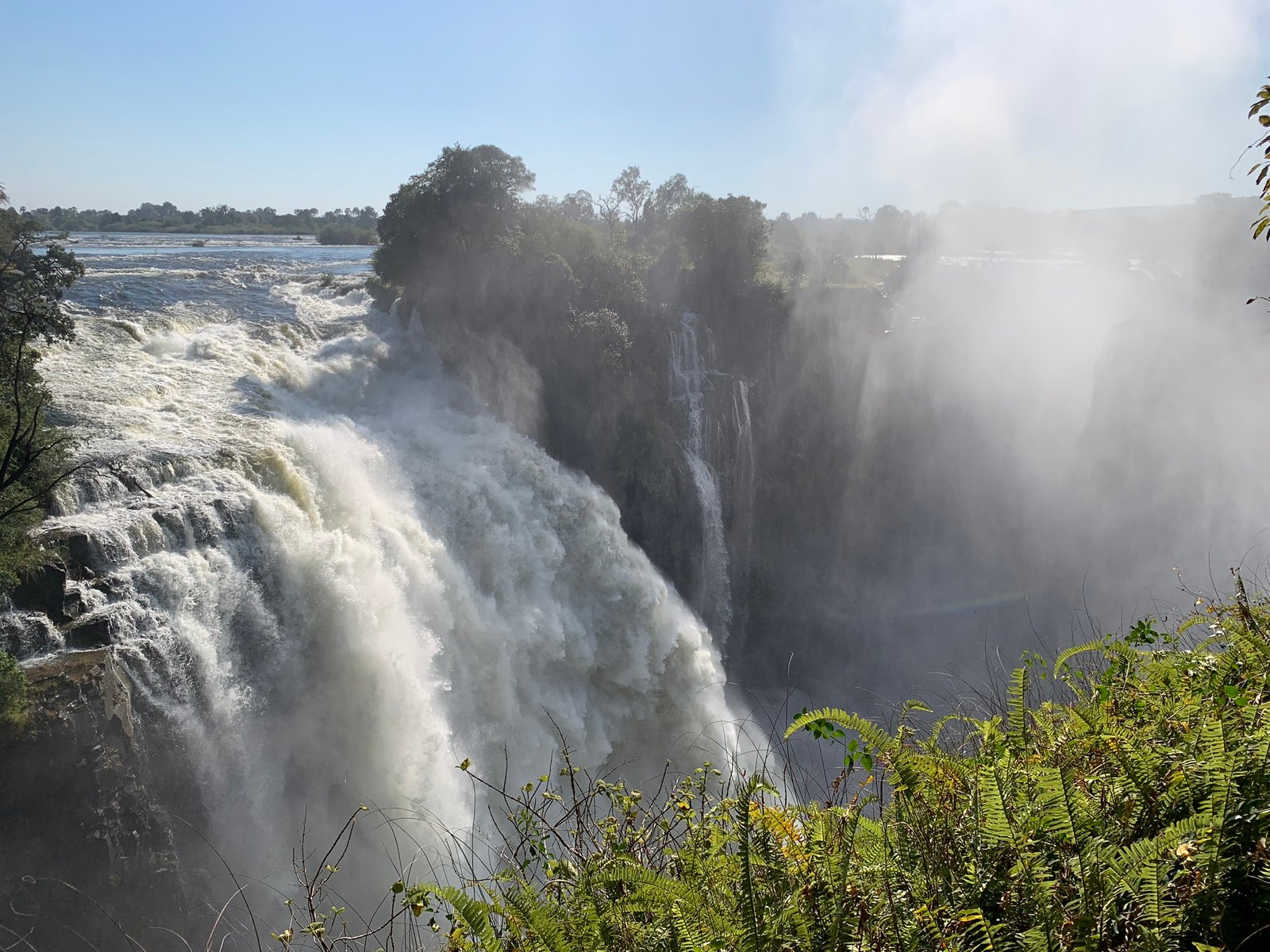
Victoria Falls, on the border between Zimbabwe and Zambia, is one of Africa’s greatest natural wonders and a UNESCO World Heritage Site. Known locally as Mosi Oa Tunya – “the smoke that thunders” – it is the largest curtain of falling water on Earth, with the mighty Zambezi River plunging 100m into a basalt gorge across a 1.7km span.
At full flood, the time of year when I was lucky enough to visit, more than 500 million litres of water per minute cascade over the edge, creating plumes of spray, rainbows, and a thunderous roar that can be heard for miles.
Why Visit Victoria Falls?
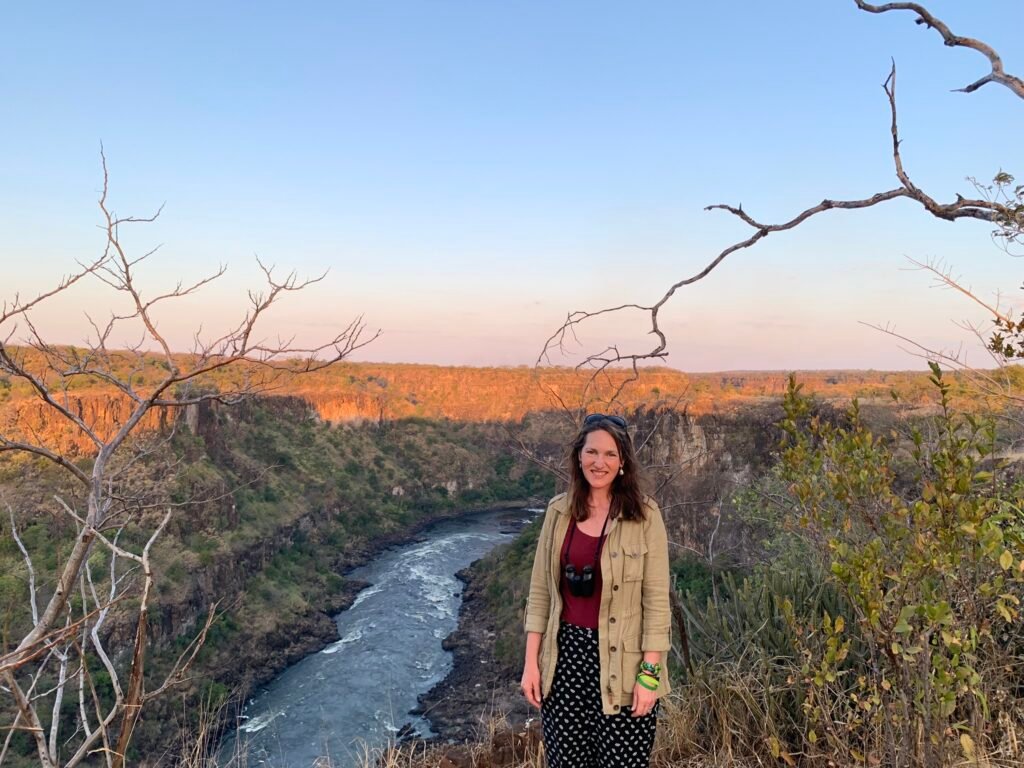
Victoria Falls is a perfect place to start or end a safari. It’s not just about seeing the Falls themselves: there are wonderful riverside lodges perfect for relaxation, and the town itself offers a lively base for activities such as boat trips on the Zambezi, rafting, ziplining and guided walks.
It combines easily with a safari in:
- Botswana – Chobe National Park is just over an hour’s drive away.
- Zambia – onward travel to South Luangwa or the Lower Zambezi.
- Zimbabwe – safari extensions to Hwange or Mana Pools.
- South Africa – direct flights to Johannesburg (and Cape Town).
Good to know: If you’d like to experience both sides of the Falls, the KAZA UniVisa (currently $50 USD) allows entry into both Zimbabwe and Zambia with a single visa, valid for 30 days.
Visiting the Falls
You can view the Falls from both countries:
- Zimbabwe offers the most comprehensive panorama via the Victoria Falls Rainforest Walk (16 viewpoints). Entry fee: $50 USD for international visitors.
- Zambia provides unique perspectives including the Knife-Edge Bridge and seasonal access to Devil’s Pool on Livingstone Island. Entry fee: $20 USD.
For the Rainforest Walk, allow around 2 hours.
- Morning – best for dramatic spray and mist.
- Afternoon – best for rainbows.
- Facilities – cafés and washrooms at entry points.
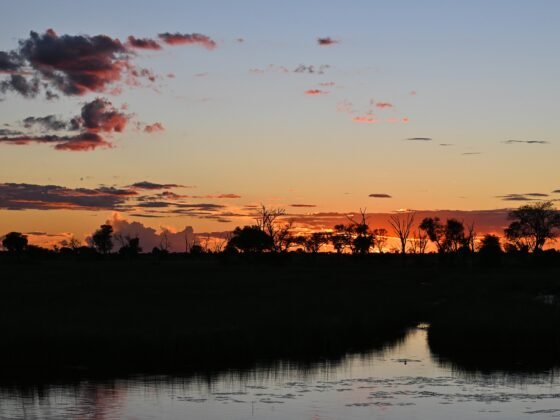
- Sunset – try the Lookout Café (Zimbabwe) or riverside spots along the Zambezi (Zambia).
Key Viewpoints on the Zimbabwe Side
- Viewpoints 1–5: Devil’s Cataract and Cataract Island.
- Viewpoints 6–9: Main Falls – the most dramatic section.
- Viewpoint 10: View of Devil’s Pool (swimmable in the dry season).
- Viewpoints 11–13: Horseshoe Falls – expect to get drenched in April.
- Viewpoint 14: Rainbow Falls, the deepest at 108m.
- Viewpoint 15: Danger Point, a dry-season highlight.
- Viewpoint 16: Victoria Falls Bridge (built in 1905), popular with bungee jumpers.
Best Time to Visit Victoria Falls
- Full Flood (March–April): Most powerful flow, though heavy spray can obscure views of the gorge. Best clarity at Viewpoints 1–9 (Zimbabwe).
- Optimum (June–September): Excellent balance of flow and visibility, best for photography.
- Low Water (Nov–Dec): Zambian side may run dry; Zimbabwe side still offers dramatic views deep into the gorge.
Where to Stay at Victoria Falls
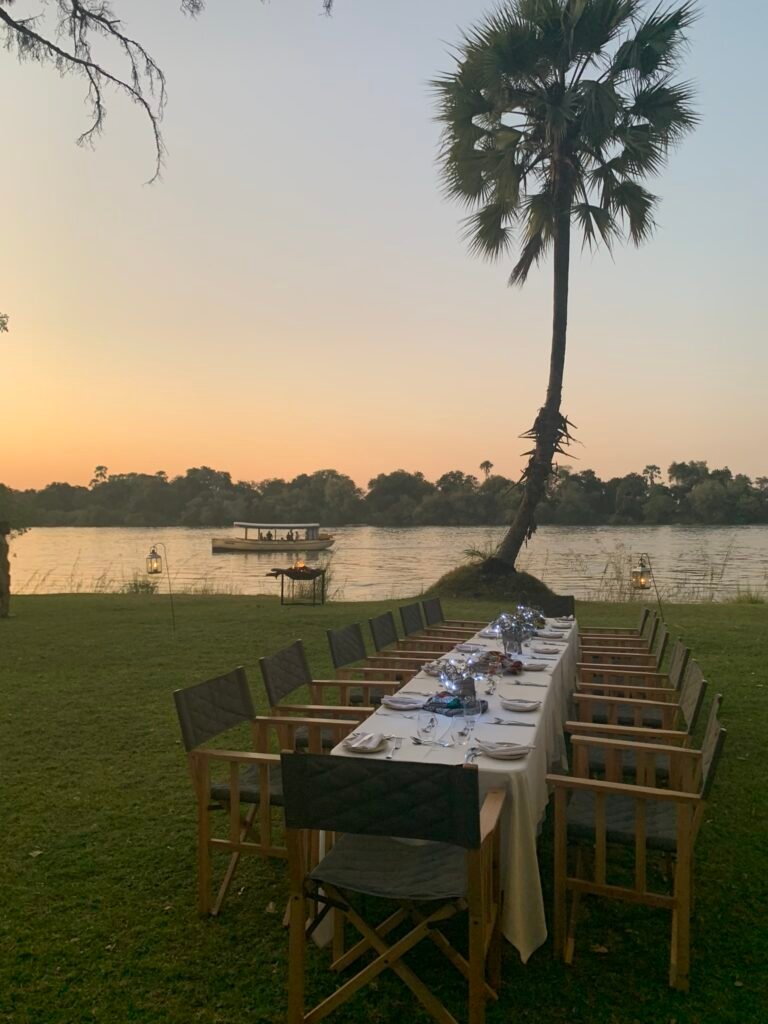
Choosing where to stay depends on the style of experience you’re after:
Zimbabwe – Bustling Town & Classic Hotels
The town of Victoria Falls offers lots of choice, with easy access to the Rainforest Walk and a lively atmosphere with restaurants, craft markets, and activities all close by. Perfect for a couple of nights.
- Batonka Guest Lodge – good value boutique charm with eco-credentials.
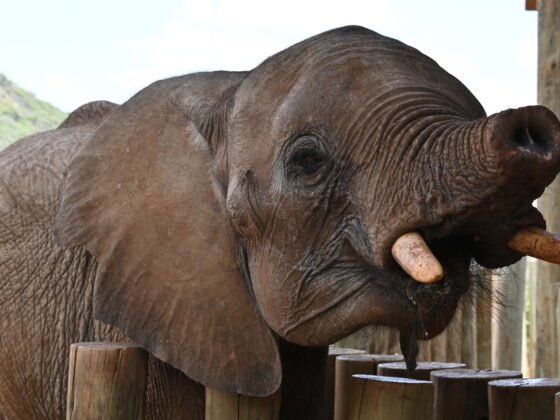
- Ilala Lodge – comfortable, central, with views of the spray (and an elephant in the garden when I visited). This is one of the closest properties to the Falls.
- Victoria Falls Hotel – the “grand old lady” of the Falls, steeped in history.
- Matetsi Victoria Falls – a luxury retreat on a private stretch of the Zambezi, with more of a safari feel.
- 528 Victoria Falls – stylish boutique property with personal service and a rooftop bar.
- Palm River Hotel – elegant riverside property; elephants were on the lawn eating marula fruit when I stayed.
- Mpala Jena Camp – an exclusive safari-style camp within Zambezi National Park.
Zambia – River Lodges & Relaxed Vibes
Staying on the Livingstone side feels more laid-back and as a result many guests tend to linger longer. Many lodges are spread out along the Upper Zambezi. Perfect if you want to combine the Falls with a peaceful riverside stay. All the properties offer visits to the Falls.
- Waterberry Zambezi Lodge – homely, friendly, and ideal for families. One of our favourites.
- Tongabezi Lodge – romantic and unique, with hand-crafted chalets on the river.
- Thorntree River Lodge – contemporary luxury with a conservation focus.
- Tintswalo at Siankaba – secluded island luxury between Livingstone and Chobe.
Practical Travel Tips
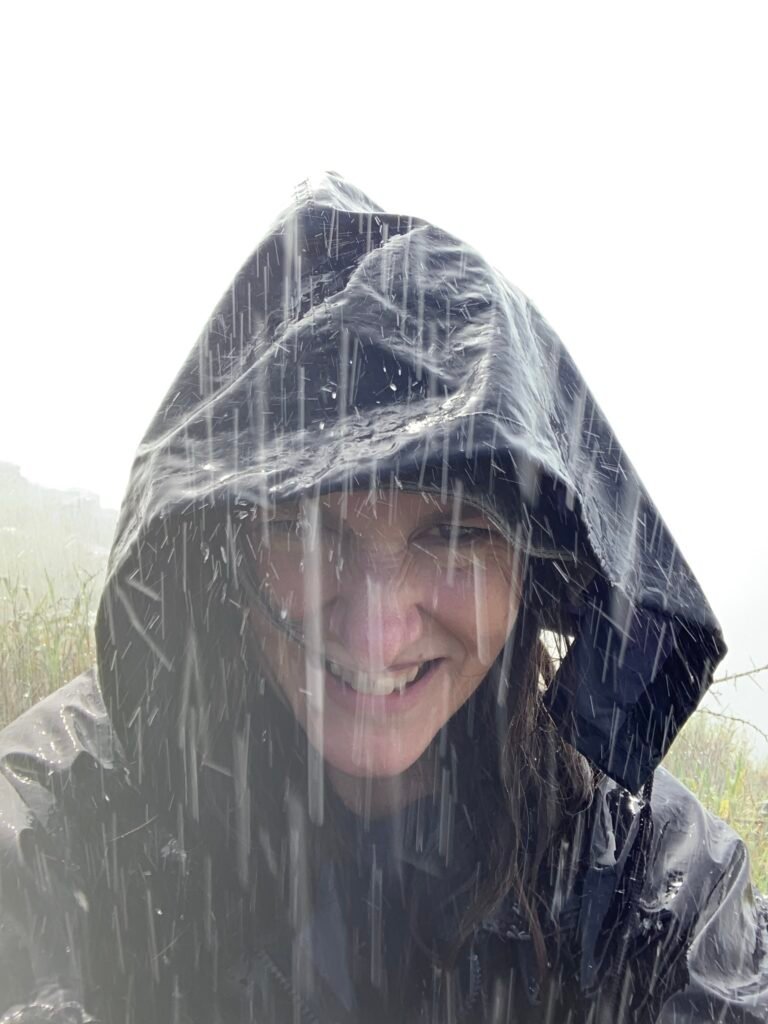
- You will get wet! At full flood, expect a drenching at viewpoints 10–15 (Zimbabwe). Hire a raincoat at the entrance for a couple of dollars.
- What to wear: Shorts, T-shirt, and shoes you don’t mind getting wet. A dry bag for cameras is essential.
- Photography: Morning spray can make shots tricky – afternoons give the best chance of rainbows.
- Accessibility: Paths can be slippery; take care if wearing flip-flops or sandals, as local guides often do.
Quick Guide – Victoria Falls Travel Essentials
- Location: Border of Zimbabwe & Zambia
- Entry Fees: $50 Zimbabwe / $20 Zambia (international visitors) at time of writing
- KAZA UniVisa: $50, valid for both Zimbabwe and Zambia for 30 days
- Best Time to Visit: June–Sept (visibility) | March–April (power) | Nov–Dec (low water, gorge views)
- Recommended Stay: 2 nights if focused on the Falls, 3–5 nights if combining with Zambezi relaxation or regional activities
- Accommodation: Bustling town hotels and safari-style camps in Zimbabwe vs tranquil riverside lodges in Zambia
- Conservation: Your visit helps support frontline projects in the Zambezi Basin