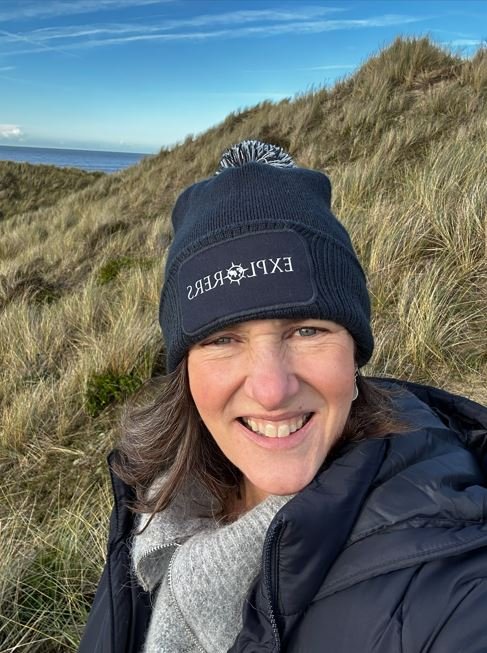
Winterton-on-Sea has always been my favourite place on the Norfolk coast.
What keeps drawing me back is the sense of change through the seasons. In May, it’s the arrival of little terns on the beach; in high summer, skylarks singing above the dunes; and in winter, the soft light filtering through the marram grass, followed by the arrival of the grey seals.
I first came to Winterton shortly after moving to Norfolk in 2005 and immediately fell for its wild, windswept character. Over the past 20-plus years, I’ve watched both the coastline and Winterton’s relationship with seals change dramatically.
From Horsey to Winterton: A Colony on the Move
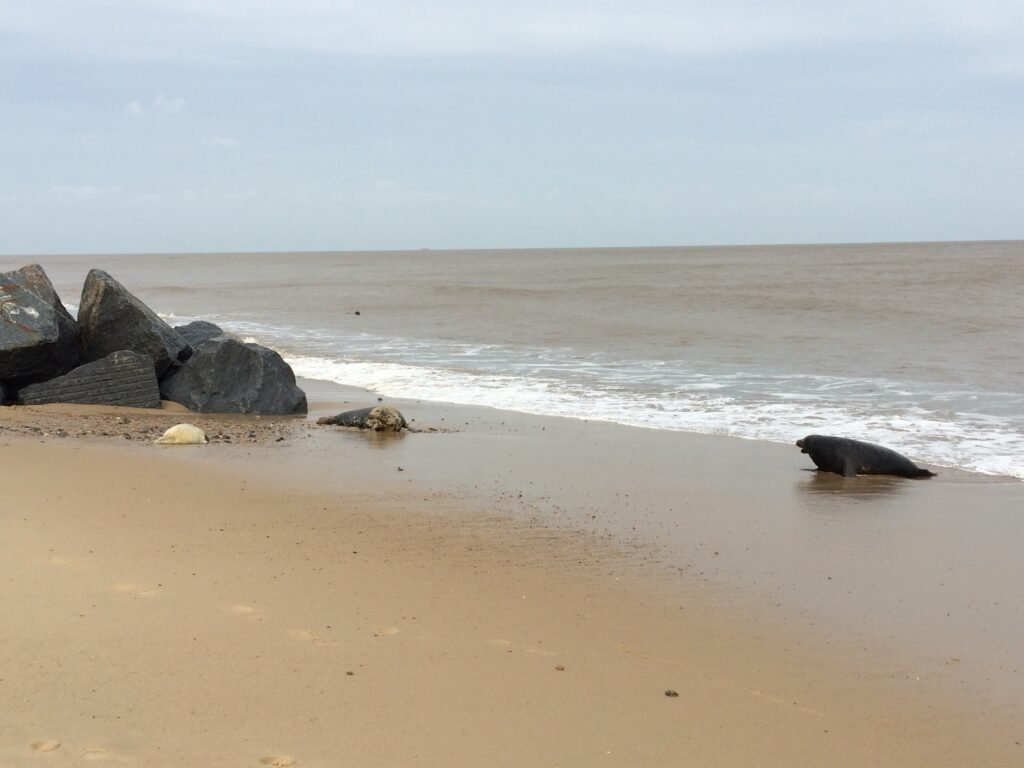
When we first started visiting, you might occasionally see grey seals offshore, but pupping was firmly centred at Horsey, and even there numbers were relatively low.
At Winterton in December, you might encounter a few seals hauled out near the groynes if you walked far enough north. There were relatively few people, too, even on busy days like Boxing Day, and you simply needed to be more mindful as you approached the stretch towards Horsey, heading up into the dunes if there were seals on the beach.
Gradually, seal numbers increased. To put this into context, during the 2005/06 season, around 100 seal pups were born at Horsey. By 2009/10, that number had risen to approximately 1,000 pups along the coast between Waxham and Winterton. A record 3,796 pups were born along the five-mile stretch including Horsey and Winterton during the 2022/23 season, underlining just how rapidly the colony has expanded. This year, the seal pup count has already exceeded 3,000 and it’s only December.
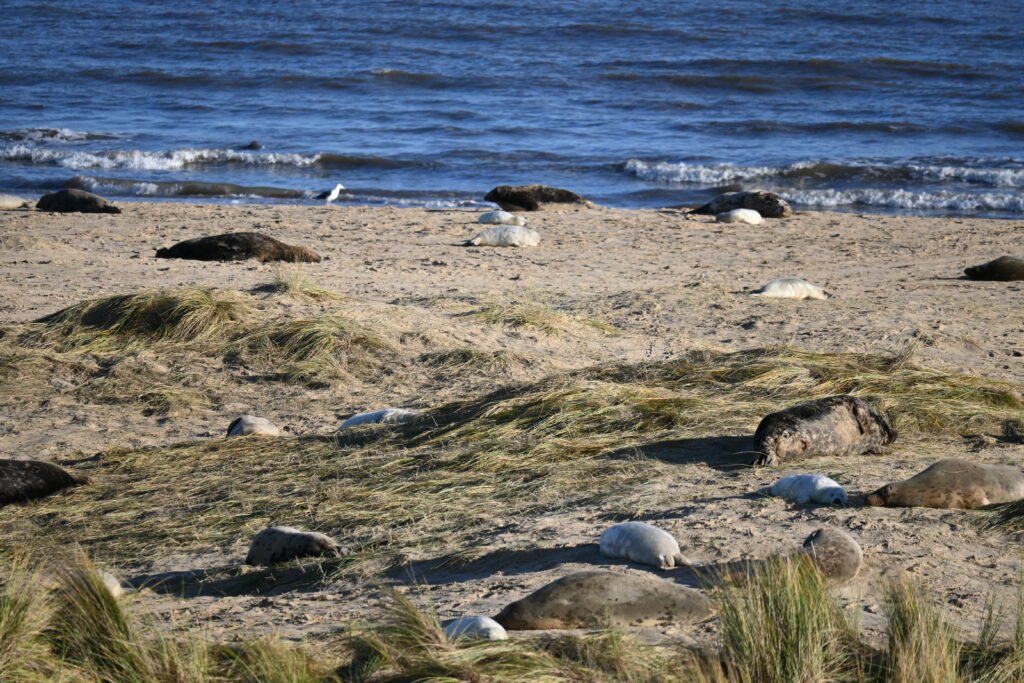
With this boom in numbers, Winterton shifted from a fringe site to part of the core pupping area. Today, during the height of the season, seals and pups can be seen all along the beach, sometimes as far south as the Winterton beach car park and café.
With that growth came challenges. Each winter brought more visitors, alongside a worrying increase in disturbance: dogs off leads, people approaching pups for photos, and growing pressure on volunteer wardens trying to protect the colony.
Why the Barrier Matters
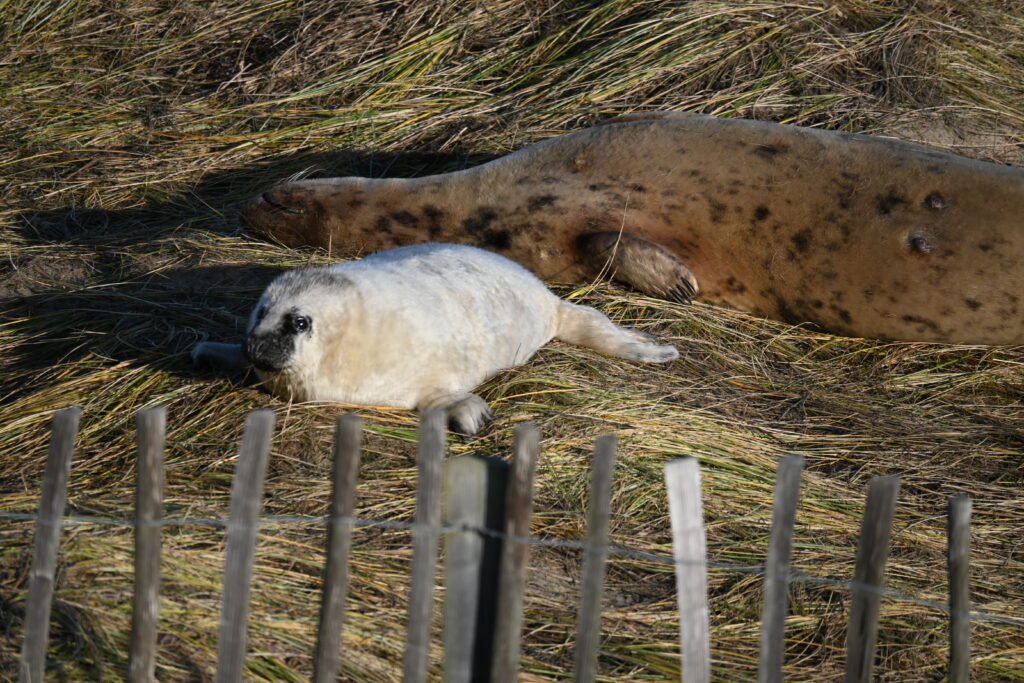
In the 2019/2020 season, seasonal beach restrictions were introduced at Winterton. Access to the beach is now limited during pupping. These measures have made a real difference. With so many seals now using the beach, unrestricted access simply isn’t practical.
It’s also worth remembering that grey seals are large, powerful animals. They can move surprisingly quickly and will bite if threatened. The restrictions work both ways – protecting seals, people and dogs.
There are gaps in the seal barrier (fence) so you will see seals on both sides of the barrier and you may see some seals looking to find a way through.
With protective measures in place, and better information and signage, disturbance levels have fallen, even as seal numbers have continued to rise.
Winterton is now recognised as one of the most important mainland grey seal pupping sites in the UK – a genuine conservation success.
My Perfect Winterton Visit
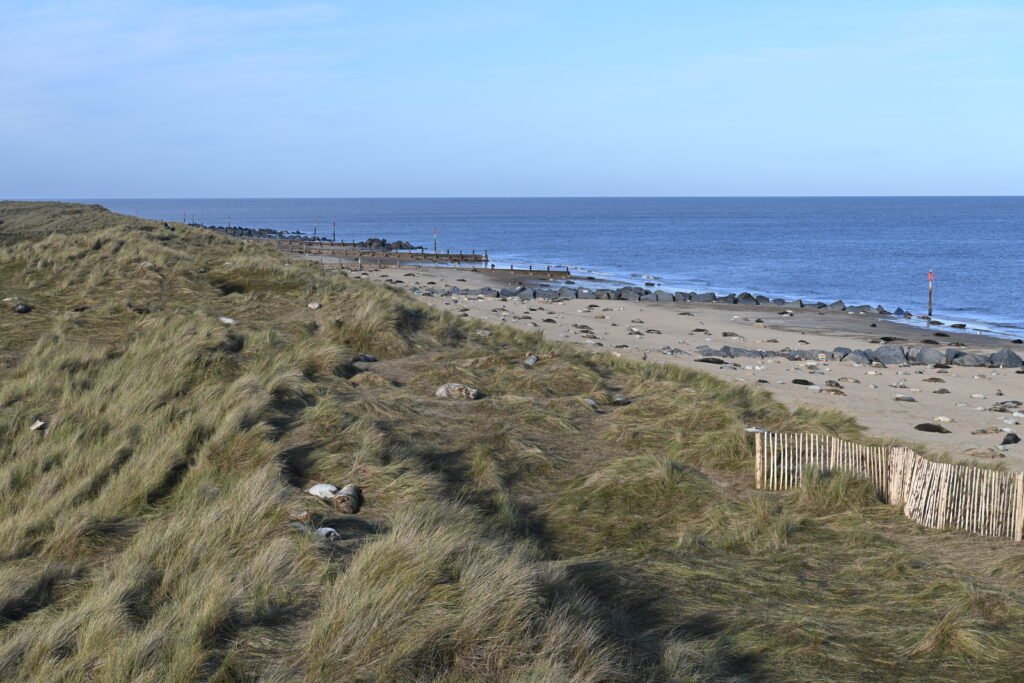
Local people tend to have their own favourite places to park and walk, but for most visitors the best advice is simple: use the official beach car park.
It’s well located, helps manage footfall and importantly parking donations on certain days help support local charities, including Friends of Horsey Seals. It’s a small but tangible way to give something back.
The original Dunes Café was lost to coastal erosion in 2020, but Seal View Café has taken its place up on the dunes by the car park. You’ll also find loos here.
If possible, my favourite time to visit is a midweek afternoon, when the winter sun sits low, the light is beautiful and there are few people around. Weekends, school holidays and Christmas can be extremely busy, so if I do visit then, I’ll aim for early in the day.
Stick to the dune paths. Early or late in the season, limited beach access may be possible but always follow signage and warden advice. You don’t need to walk far to see seals; views open out quickly, with adult bulls and cows scattered across the sand and pups at various stages of development. Seals often haul out surprisingly close to paths and within the dunes themselves.
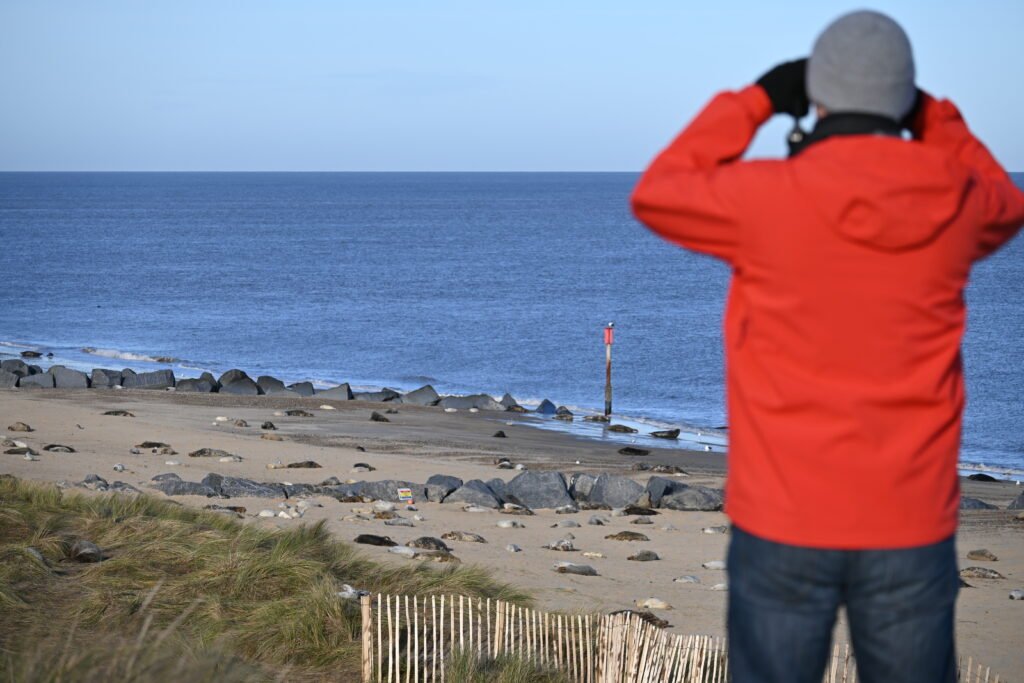
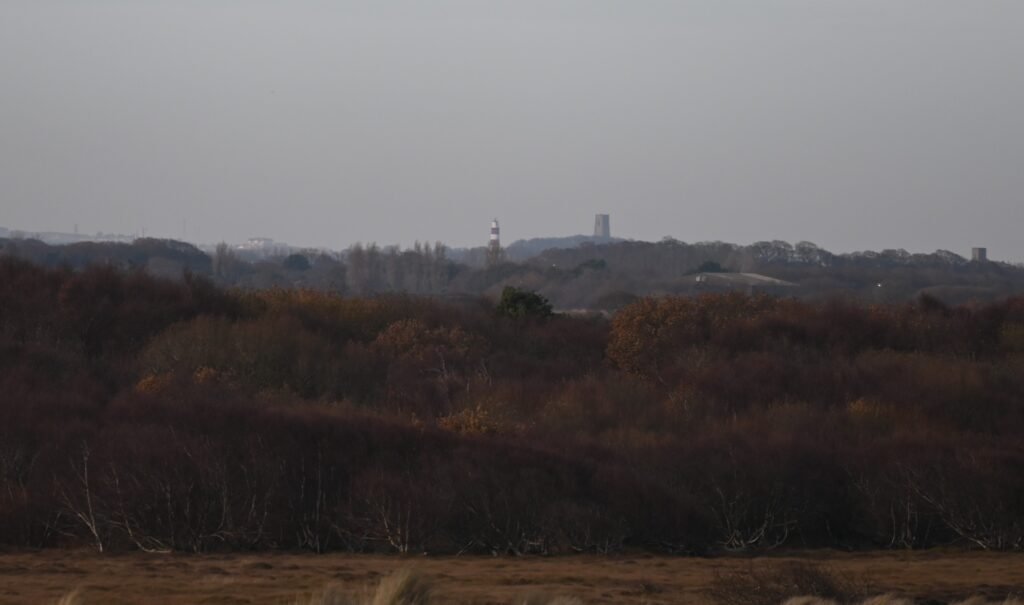
I like to head north through the dunes towards Horsey. My favourite spot is near Checkpoint 59, identifiable by the white numbers painted on the large rock sea defences. Known locally as Bullet Hill, this area offers wonderful panoramic views along the beach and often all the way to Happisburgh (where Explorers Against Extinction’s HQ is based). From here, you can really appreciate the scale of the colony. Binoculars are invaluable.
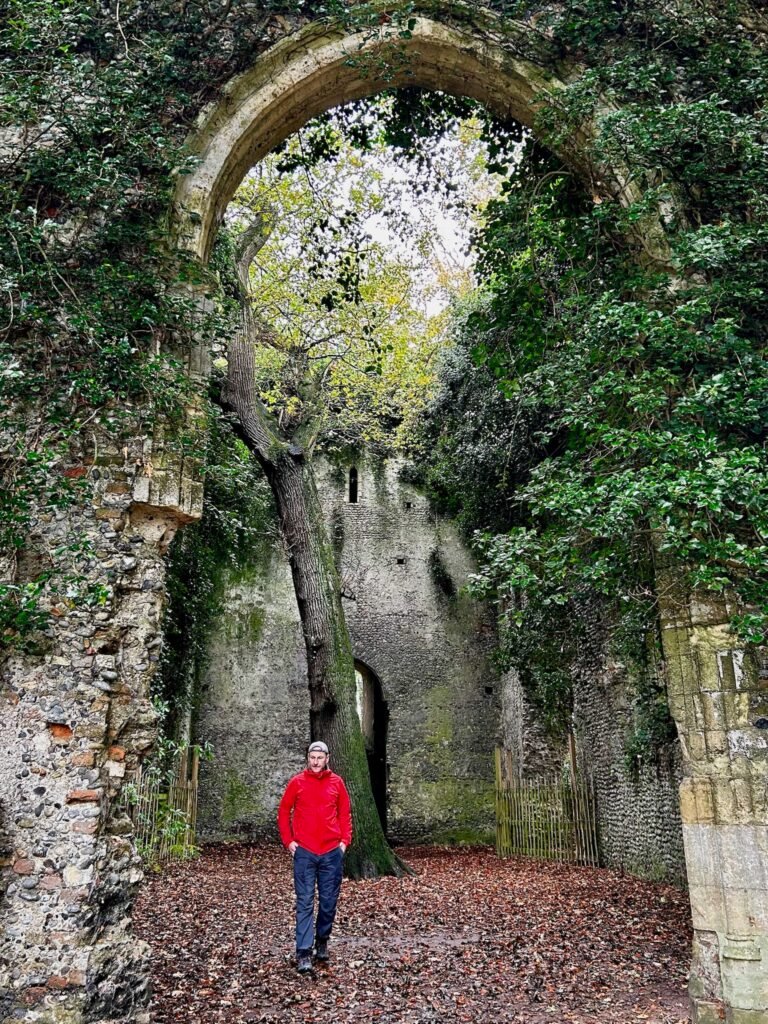
For those wanting a longer walk, excellent circular routes link dunes, village and farmland. One favourite heads inland to take in the ruins of St Mary’s Church on Manor Road before looping back towards the coast. A longer option links Winterton and Horsey via paths and dunes – just be prepared to reroute if seals move into certain areas.
A visit to the Fisherman’s Return is a fine way to end the walk. There’s also a fish and chip shop, café and village shop nearby.
Understanding Pupping Season: What You’re Seeing
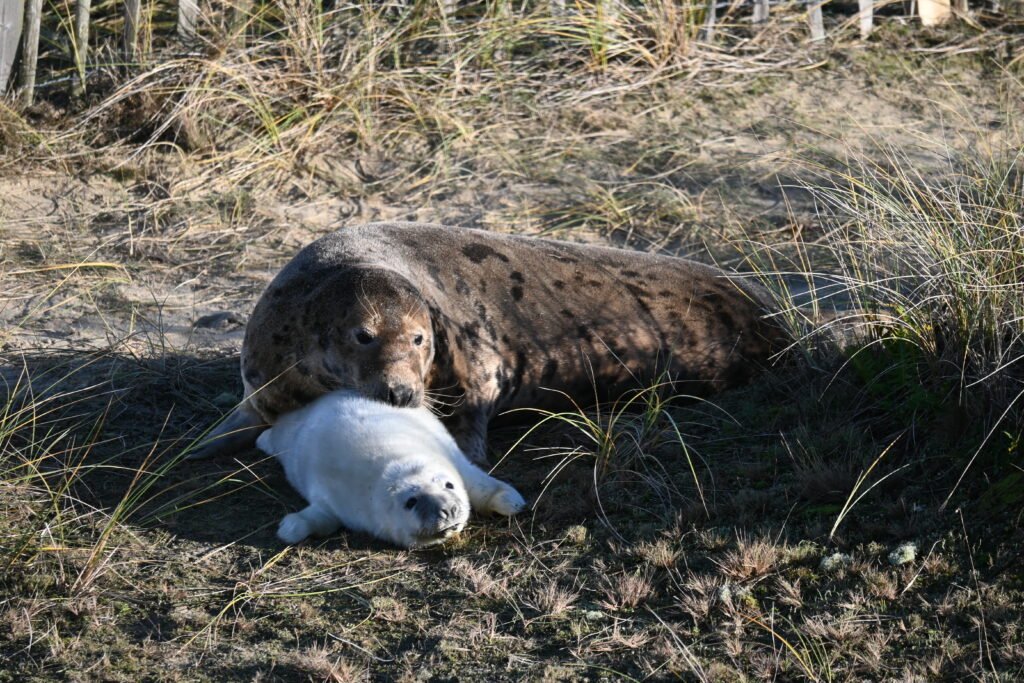
Grey seal pupping season at Winterton typically runs from early November through to the end of January, peaking in December.
For the most up-to-date advice, Friends of Horsey Seals offers the best source of information. Here are a few common questions visitors ask.
Why do some pups appear to be alone?
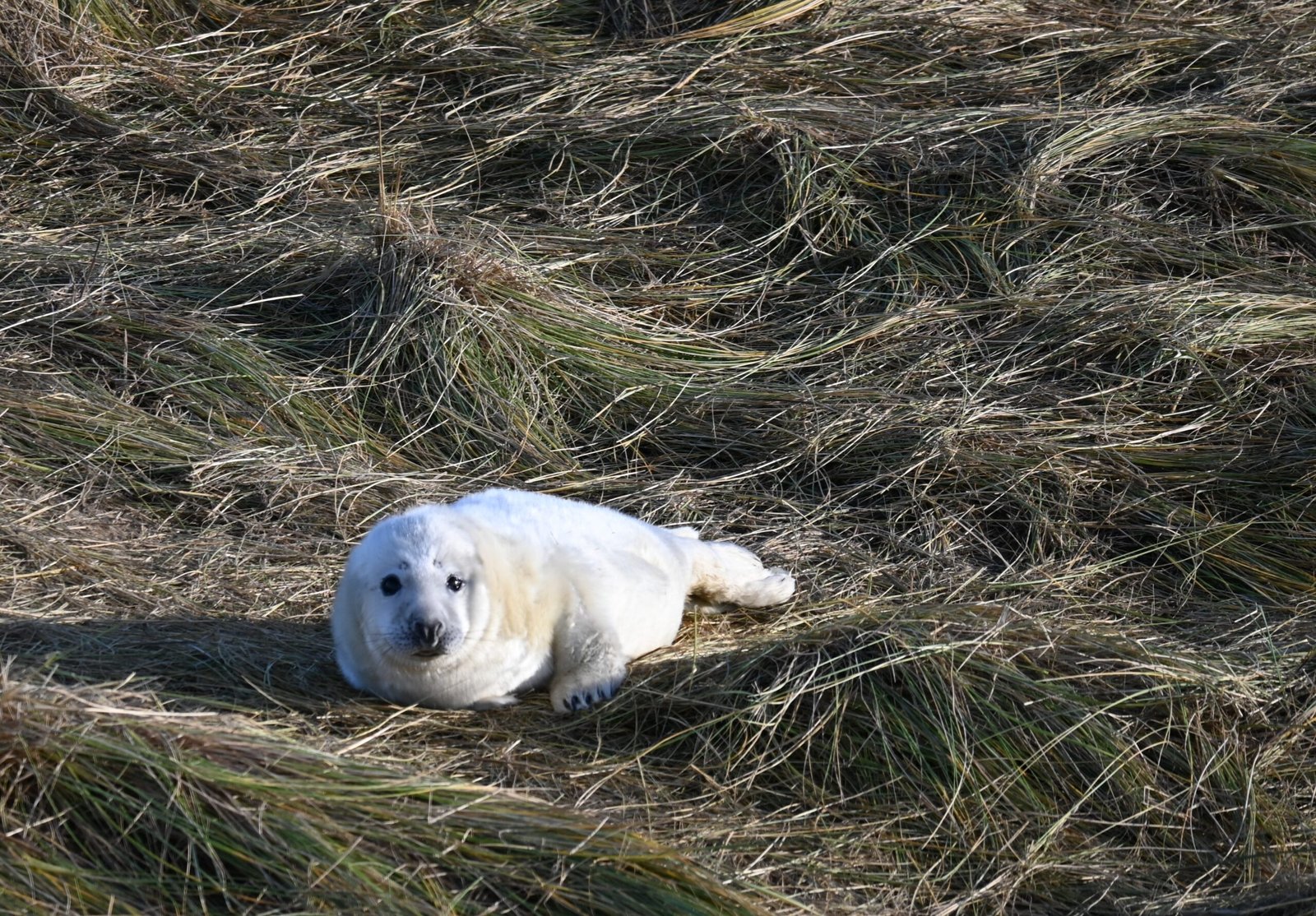
This is normal. Mother seals (cows) give birth on land and feed their pup for around three weeks on extremely rich milk. During this time, a mother may move away briefly, and once the pup is weaned she will leave permanently. A pup on its own is not abandoned unless it is repeatedly calling or visibly injured. If you are worried, speak to a warden.
During this short nursing period, pups grow extraordinarily fast. Feeding on milk containing around 50%-60% fat, they can triple their birth weight in just three weeks, building vital fat reserves before being left to fend for themselves.
Why aren’t pups in the water?
Pups are born with a white lanugo coat, which provides warmth but is not waterproof. After around 2–4 weeks, pups go through the moult, shedding this coat and revealing a waterproof grey coat beneath. Only then can they safely enter the sea.
What happens after pupping?
Once breeding ends, the beaches quieten, but the story isn’t over. Young seals continue to return to shore between early foraging trips, learning to feed independently. At the same time, adult grey seals also return to land to moult, usually from January into early spring, shedding old fur and growing a new coat. During the moult, seals spend long periods hauled out and should be disturbed as little as possible.
Why Disturbance Is So Harmful
Disturbance causes stress. Mothers may abandon pups if they feel threatened. Stampedes can lead to mothers and pups being separated, or forcing pups into the sea before they are ready – sometimes with fatal consequences.
Natural England guidance recommends staying at least 100 metres away wherever possible. At Winterton, dune geography can make this difficult, which is why staying on paths, keeping dogs on leads and well away, and following warden guidance is essential. If your dog is prone to barking, it may be kinder to choose a different walk during pupping season.
With Thanks to the Wardens
Sites like Winterton simply would not function without the dedication of volunteers – particularly Friends of Horsey Seals, who carry out weekly counts, monitor welfare and engage patiently with the public in all conditions!
A Privilege, If We Get It Right
Winterton is special throughout the year, but pupping season is something else entirely. Few places offer such a close view of a wildlife event at this scale.
Go and visit but do so thoughtfully. Respect the restrictions, keep your distance, listen to the wardens, and remember these measures are in place for good reason. Getting this right ensures that Winterton’s seal colony continues to thrive for many winters to come.
Images: Sara White