

Ecuador
Ecuador
Few countries offer such an extraordinary variety of landscapes and wildlife in such a small area as Ecuador. Straddling the equator on South America’s Pacific coast, this captivating country is a place of remarkable contrasts, where mist-shrouded cloud forests give way to towering Andean volcanoes, the Amazon rainforest teems with life, and the legendary Galápagos Islands lie far out in the Pacific.
For wildlife enthusiasts, Ecuador is a destination full of possibility. In the lush Chocó and Andean cloud forests, jewel-like hummingbirds hover among tropical flowers, colourful tanagers flit through the canopy and toucans call from the treetops. Further east, the vast Amazon rainforest offers the thrill of exploring one of the richest ecosystems on Earth, home to monkeys, macaws, river dolphins and countless other fascinating creatures.
Then there are the Galápagos Islands, one of the world’s truly extraordinary wildlife destinations. Here, giant tortoises wander ancient volcanic landscapes, marine iguanas bask on black lava rocks and playful sea lions swim through crystal-clear waters. It’s a place where wildlife encounters feel wonderfully intimate and the natural world takes centre stage.
Yet some of Ecuador’s greatest rewards lie beyond its celebrated highlights. From remote forest reserves and little-visited wilderness areas to inspiring community-led conservation projects, this is a country that invites you to explore a little further, linger a little longer and discover something unexpected. For travellers drawn to wildlife, wild landscapes and meaningful conservation experiences, Ecuador offers the promise of a journey that stays with you long after you return home.
Volcanoes, cloud forests and extraordinary wildlife.
ECUADOR JOURNEY INSPIRATION
Our travel network specialises in tailormade holidays and carefully selected small-group journeys, with a focus on responsible wildlife travel. Wherever possible, we favour lower-impact experiences, locally owned or community-connected accommodation, and operators whose work supports conservation and local livelihoods.
Below you’ll find a selection of suggested trips, with price guides, combining destinations, camps and lodges that we think work particularly well together. There are many more possibilities, so these are intended simply as a starting point.
When you’re ready to explore your options, please complete an enquiry form. We’ll put you in touch with the most relevant specialist partner team, who can discuss your interests and budget and either tailor an itinerary for you or recommend the most suitable small-group departure.
This rewarding mainland journey explores some of Ecuador’s finest wildlife regions, combining Quito, Mindo Cloud Forest, Papallacta and Antisana, and the Ecuadorian Amazon.
It is particularly strong for birdlife, with opportunities to see hummingbirds, tanagers, mountain toucans, Andean cock-of-the-rock and, with luck, Andean condor. The landscapes are equally varied, from misty cloud forest and high-altitude páramo to the extraordinary biodiversity of the Amazon.
The final three nights are spent at Sacha Lodge, reached by motorised canoe and traditional dugout canoe. Here, forest walks and boat trips are accompanied by an English-speaking naturalist and local Indigenous guide, with possibilities including monkeys, sloths, caimans, toucans, macaws, tapir and even jaguar.
Days 1–2: Quito
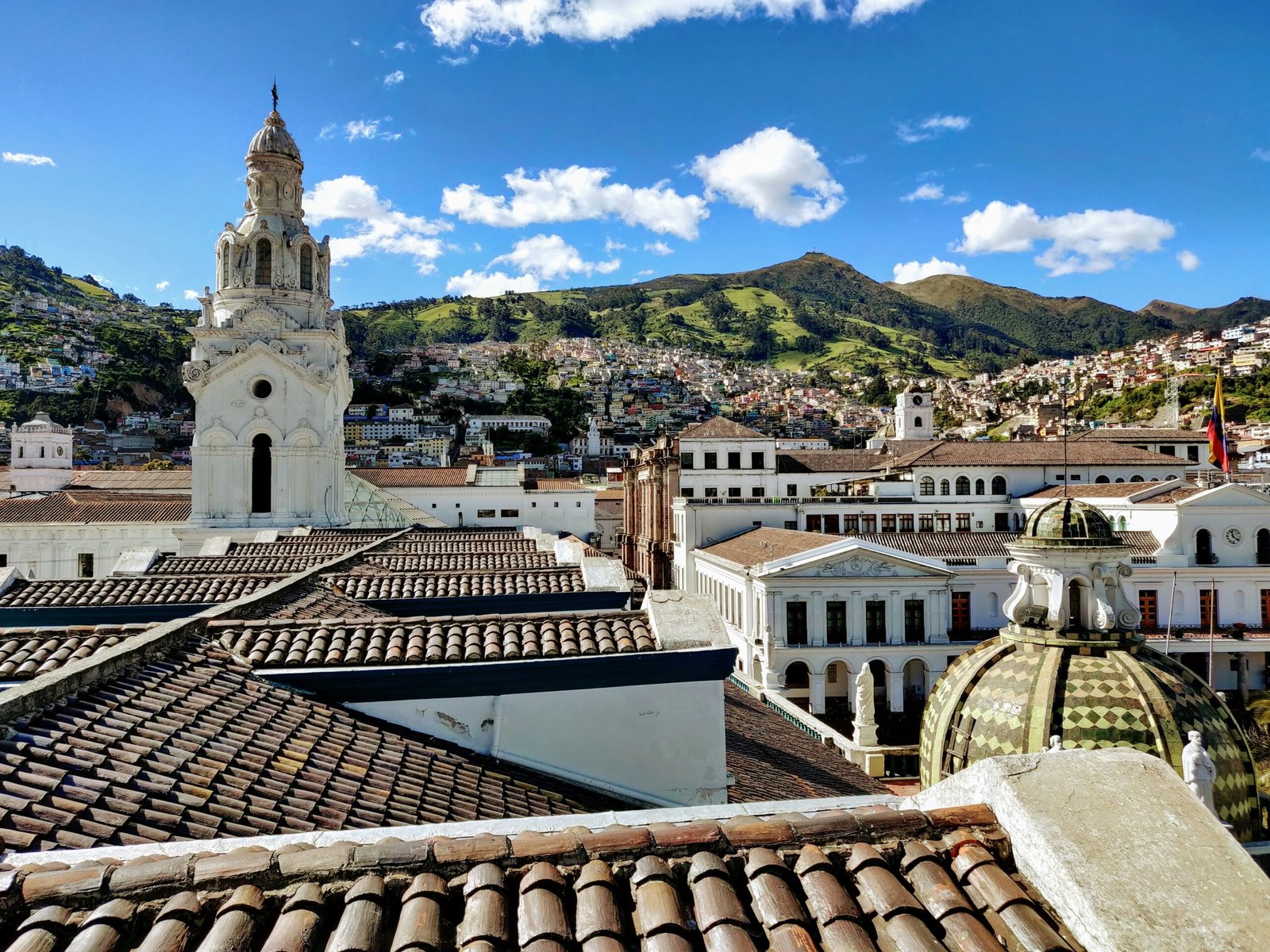
Arrive in Ecuador’s high-altitude capital for two nights in the historic centre, staying at Hotel Patio Andaluz. Explore Quito’s atmospheric old town, a UNESCO World Heritage Site, with its cobbled streets, colonial architecture and churches. There is also time to visit the Equator at Mitad del Mundo.
Days 3–4: Mindo Cloud Forest
Travel northwest from Quito into the Mindo Cloud Forest, one of South America’s outstanding birding regions. Walk through lush forest in search of colourful tanagers, mountain toucans and hummingbirds, with the chance to visit an Andean cock-of-the-rock lek and watch the males displaying. Mindo supports more than 400 bird species alongside orchids, bromeliads and a remarkable diversity of cloud-forest plants.
Stay at Sachatamia Lodge, set within its own private forest next to a nationally protected reserve. The following day includes more cloud-forest walking and a visit to El Pahuma Reserve, a privately owned forest protecting more than 600 hectares. The reserve provides an alternative income to destructive activities such as logging and cattle farming.
Day 5: Papallacta & Antisana
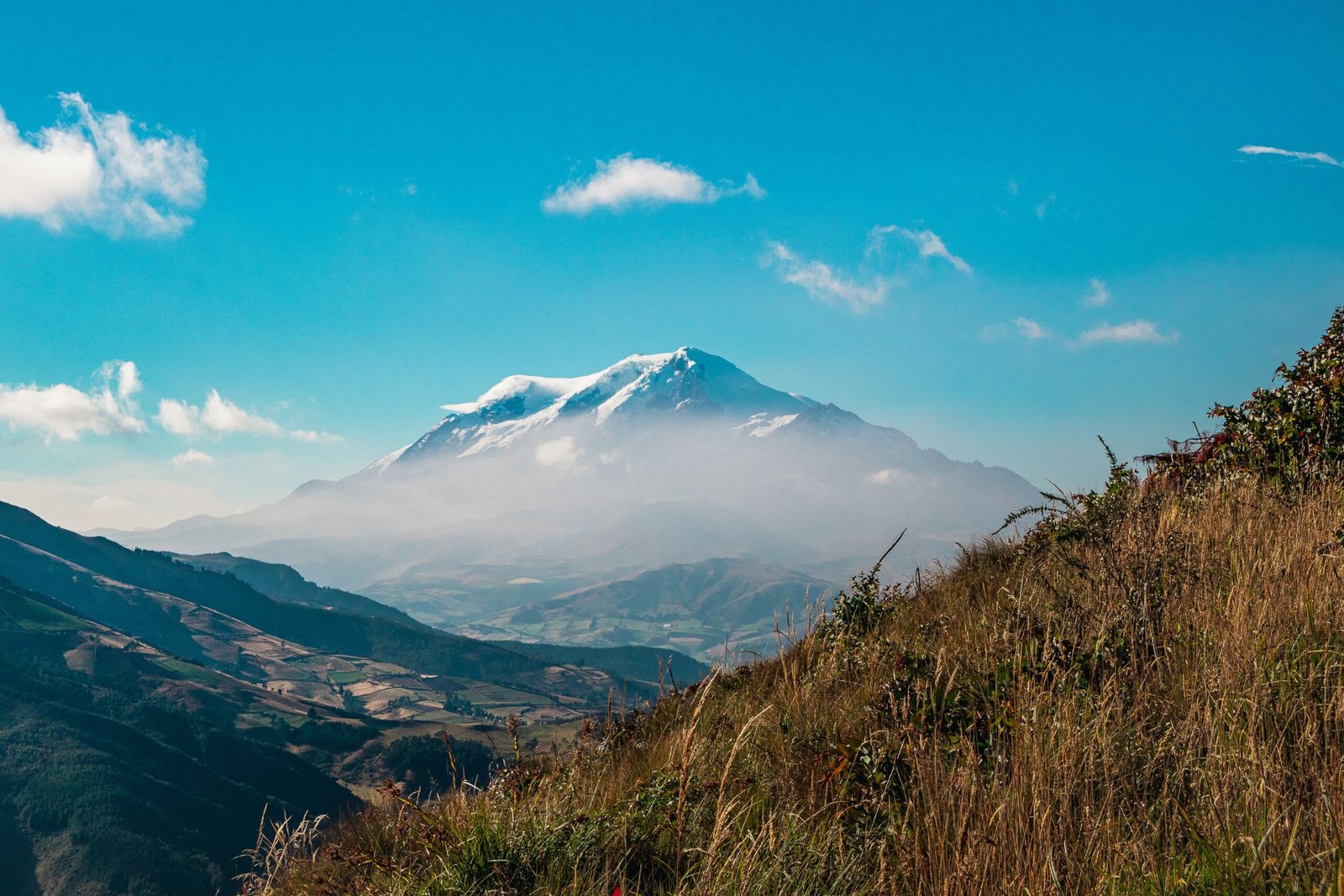
Head east along the historic Cinnamon Trail towards Papallacta and Antisana.The scenery changes dramatically as you climb into high-altitude páramo, with rocky peaks, lakes and sweeping mountain landscapes. This is an excellent area for Andean birdlife and one of the better opportunities on the journey to look for Andean condor.
Spend the night at Termas de Papallacta, where naturally heated thermal pools offer a relaxing end to a day in the Andes.
Day 6: Quito
Return to Quito, with time to continue exploring the historic city.
Days 7–9: Sacha Lodge, Ecuadorian Amazon
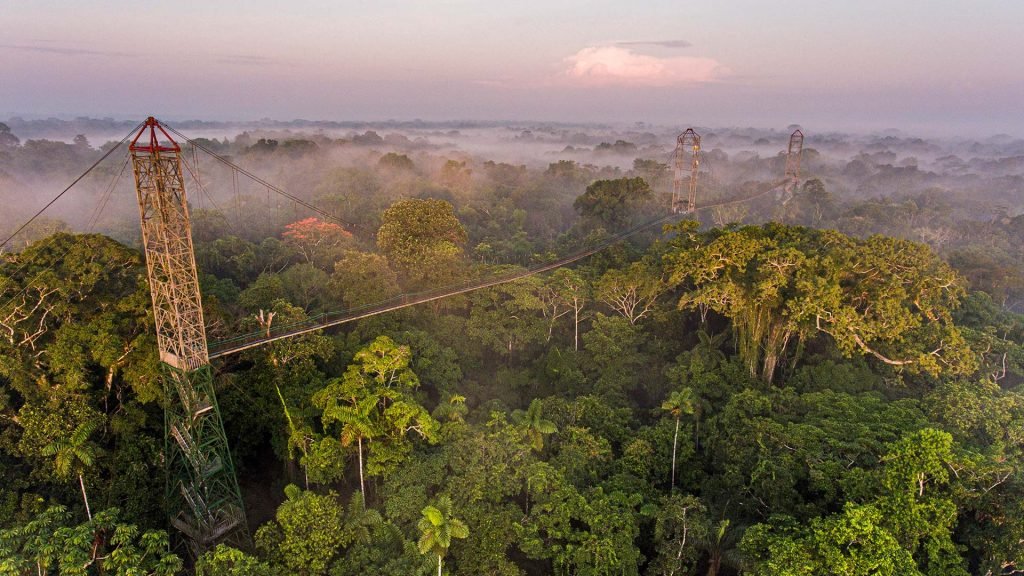
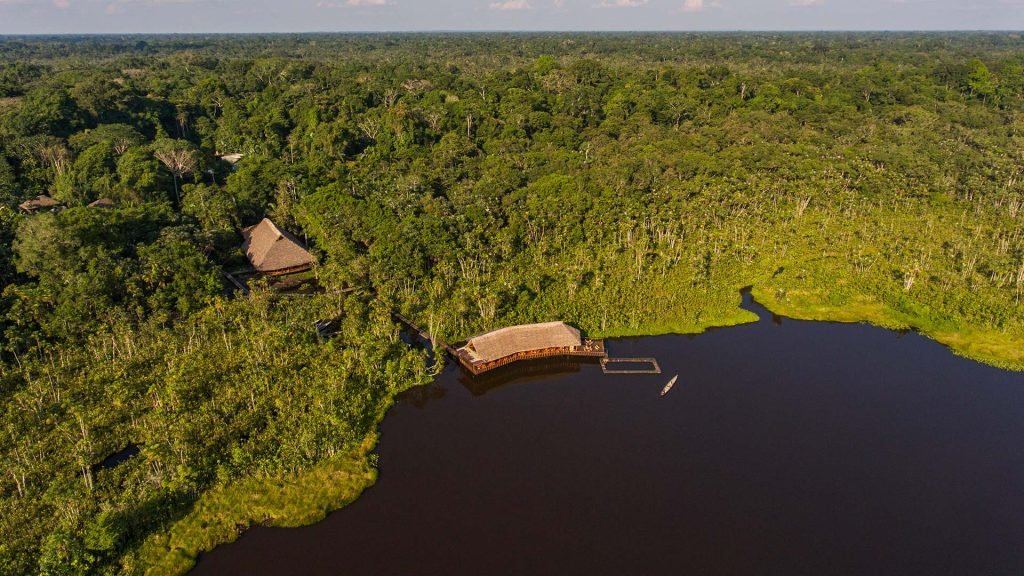
Fly east to Coca before travelling down the Napo River by motorised canoe, with the final approach to Sacha Lodge made by traditional dugout canoe. Set within 2,500 hectares of privately owned rainforest, Sacha Lodge is a simple lodge built using local materials and traditional methods. Excursions are accompanied by an English-speaking naturalist and a local Indigenous guide, exploring the rainforest on foot and by canoe. Wildlife possibilities include monkeys, sloths, caimans, macaws, toucans, hummingbirds, tapir and an extraordinary variety of insects, amphibians and plants. Highlights include the canopy walkway, jungle trails, canoe trips and the possibility of seeing Amazon river dolphin.
Day 10: Return to Quito
Travel back to Coca and fly to Quito for your final night.
Day 11: End of Arrangements
Transfer to the airport for your onward journey.
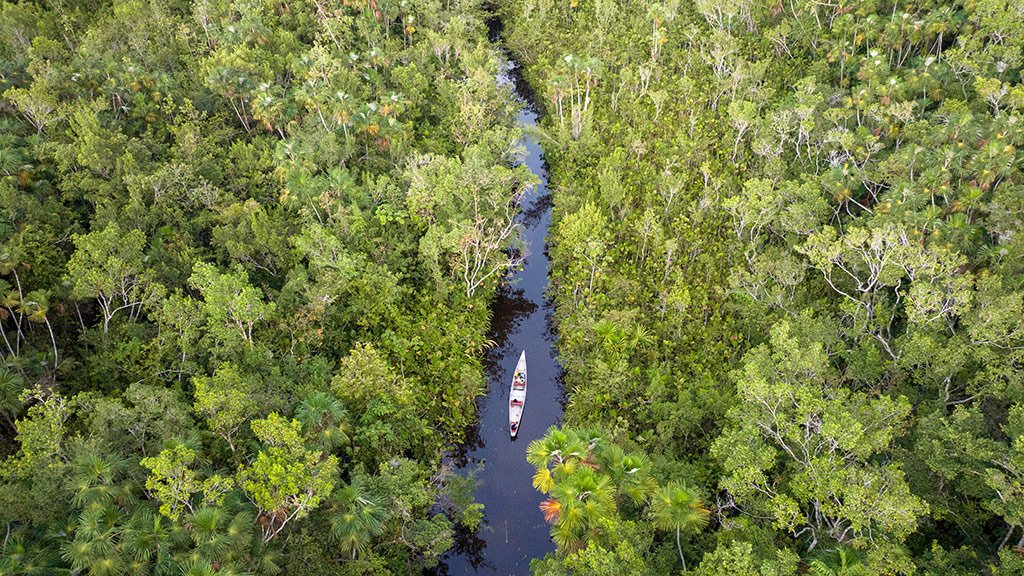
Image: Sacha Lodge
Responsible travel
This itinerary supports several conservation-focused properties and reserves along the way.
In Mindo, Sachatamia Lodge sits within its own private forest adjoining a nationally protected reserve, while El Pahuma Reserve protects more than 600 hectares of tropical forest and provides its Ecuadorian owners with a sustainable alternative to logging and cattle farming.
In the Amazon, Sacha Lodge protects 2,500 hectares of privately owned rainforest, while excursions combine specialist naturalist guiding with the knowledge of local Indigenous guides.
Why we like this trip
A great choice for travellers wanting to experience Ecuador beyond the Galápagos, combining exceptional birding, cloud forest, high Andean landscapes and Amazon rainforest in one journey. We particularly like the mix of specialist naturalist guiding, locally informed experiences and stays within protected forest areas.
Price Guide
Per person sharing: from £4,195 per person excluding international flights.
Our specialist travel partners can arrange international flights from the UK as required.
- This tailormade itinerary can be enjoyed year-round, although conditions vary between the Andes, cloud forest and Amazon.
- This trip starts and ends in Quito.
- This trip can be adapted to suit you.
Includes
- Accommodation as indicated
- Domestic flight between Quito and Coca
- Transfers and transport within Ecuador
- Bed & Breakfast in Quito; Full board elsewhere
- Guided excursions
- Services of local guides
- Conservation fund contribution
Excludes
- International flights from the UK
- Travel insurance
- Gratuities
- Drinks unless stated
- Personal expenses
ENQUIRE
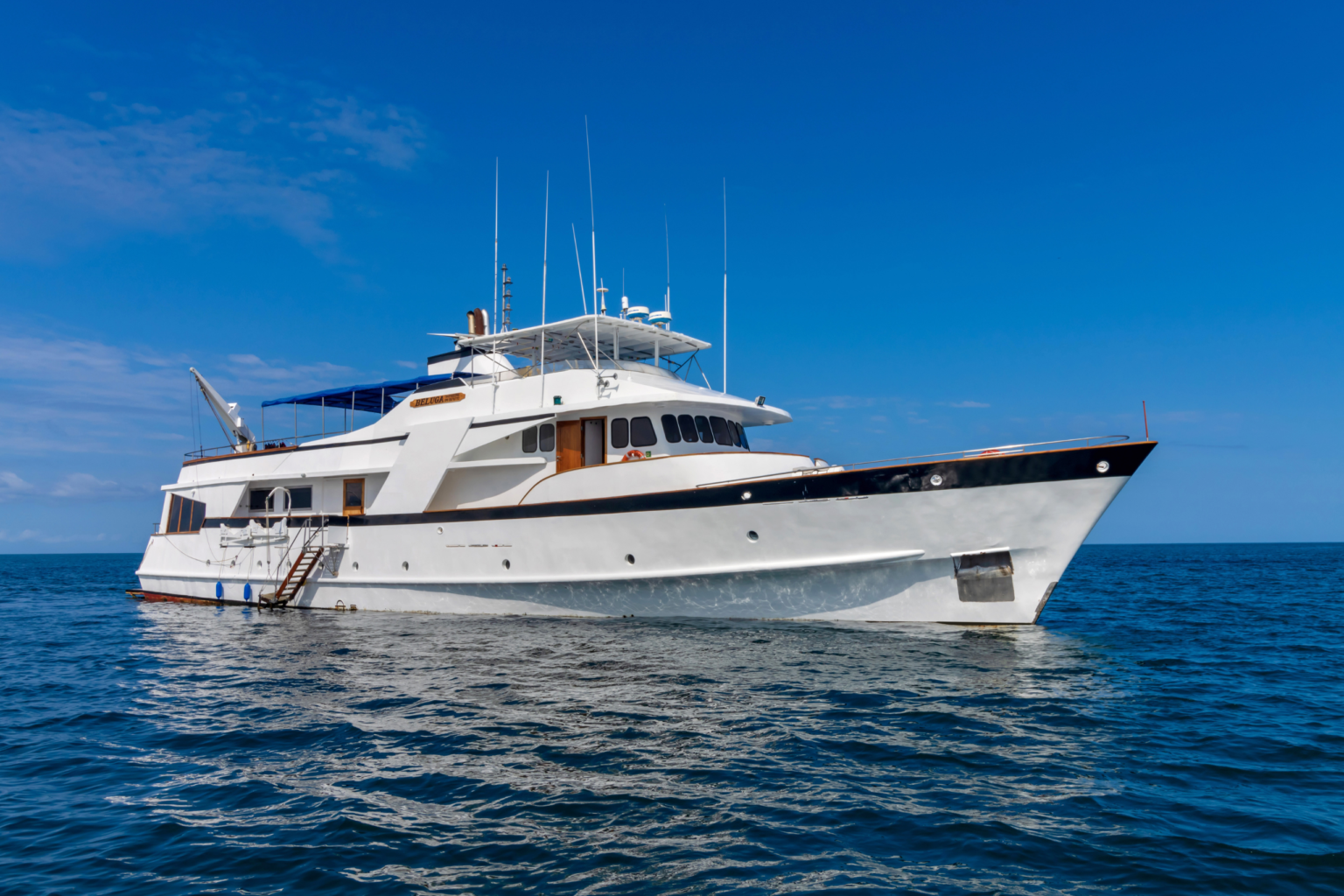
Image: Beluga
Combine the extraordinary biodiversity of the Ecuadorian Amazon with a seven-night Galápagos voyage aboard the 16-passenger Beluga, choosing between two contrasting island itineraries.
Begin with three nights at Napo Wildlife Centre, an Indigenous-owned eco-lodge deep within Yasuní National Park. Explore rainforest trails, creeks and canopy with expert guides, visit spectacular parrot and macaw clay licks, and look for monkeys, giant otters, caimans, toucans and an exceptional variety of Amazon wildlife.
Then fly to the Galápagos and board Beluga, a spacious 36-metre motor cruiser carrying just 16 guests. Choose the Eastern route, particularly rewarding for seabirds, sea lions and classic southern islands such as Española and Floreana, or travel west for the dramatic volcanic landscapes of Isabela and Fernandina, with excellent opportunities for penguins, marine iguanas and flightless cormorants.
Day 1: Quito
Arrive in Ecuador’s capital for an overnight stay in its atmospheric historic centre.
Stay at the boutique Hotel Patio Andaluz.
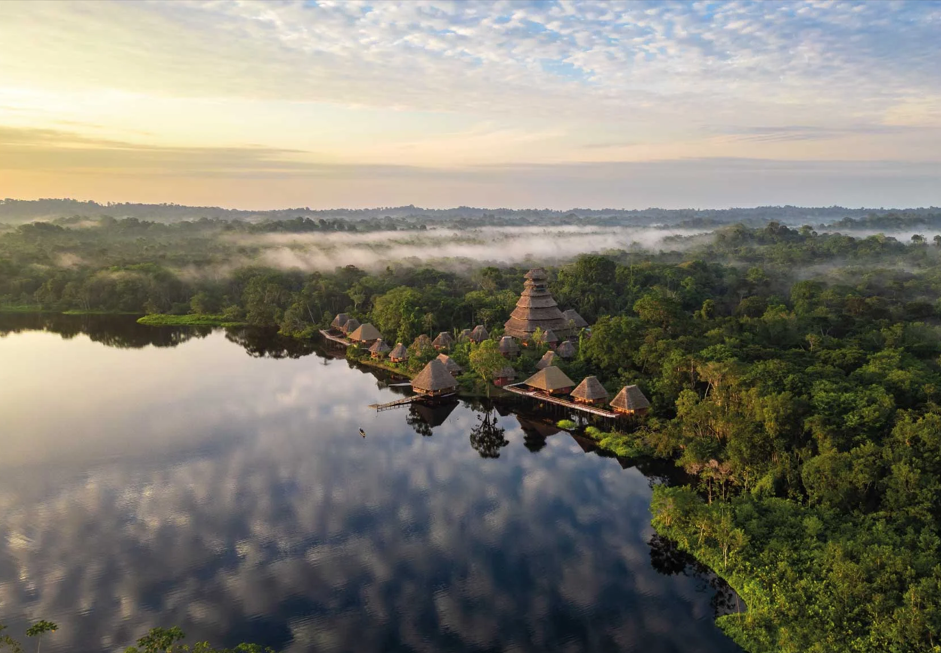
Image: Sacha Lodge
Days 2–4: Napo Wildlife Centre, Ecuadorian Amazon
Fly across the Andes to Coca before travelling by motorised canoe along the Napo River and then by dugout canoe into the forest. Spend three nights at Napo Wildlife Centre, set within Yasuní National Park and built and designed by the Añangu Indigenous community. The lodge has just 16 cabañas overlooking the forest and lake.
Days are spent exploring the rainforest by canoe and on foot. Visit parrot and macaw clay licks, climb a 36-metre canopy tower and search for wildlife including several species of monkey, giant otters, toucans, macaws and colourful tanagers. There is also an opportunity to visit the Añangu community and learn more about life in the forest.
Day 5: Quito
Return by canoe to Coca and fly back to Quito for the night. Stay at Hotel Patio Andaluz.
Days 6–12: Galápagos aboard Beluga
Fly to Baltra and board Beluga for seven nights. This comfortable expedition vessel carries a maximum of 16 passengers in eight en-suite cabins, creating a particularly intimate way to explore the islands. There is a spacious lounge, bar, dining area and generous deck space, while kayaks, snorkelling equipment and wetsuits are provided. An experienced naturalist guide accompanies the voyage.
The first afternoon includes Santa Cruz, with a visit to the Charles Darwin Research Station and an opportunity to see giant tortoises in the highlands. From here, choose between two very different routes.
Choose your Galápagos route: Eastern – seabirds, albatross, flamingos & classic southern islands Western – penguins, marine iguanas, volcanoes & the wild western islands
Option 1: Eastern Galápagos
Day 7: South Plaza & Santa Fe
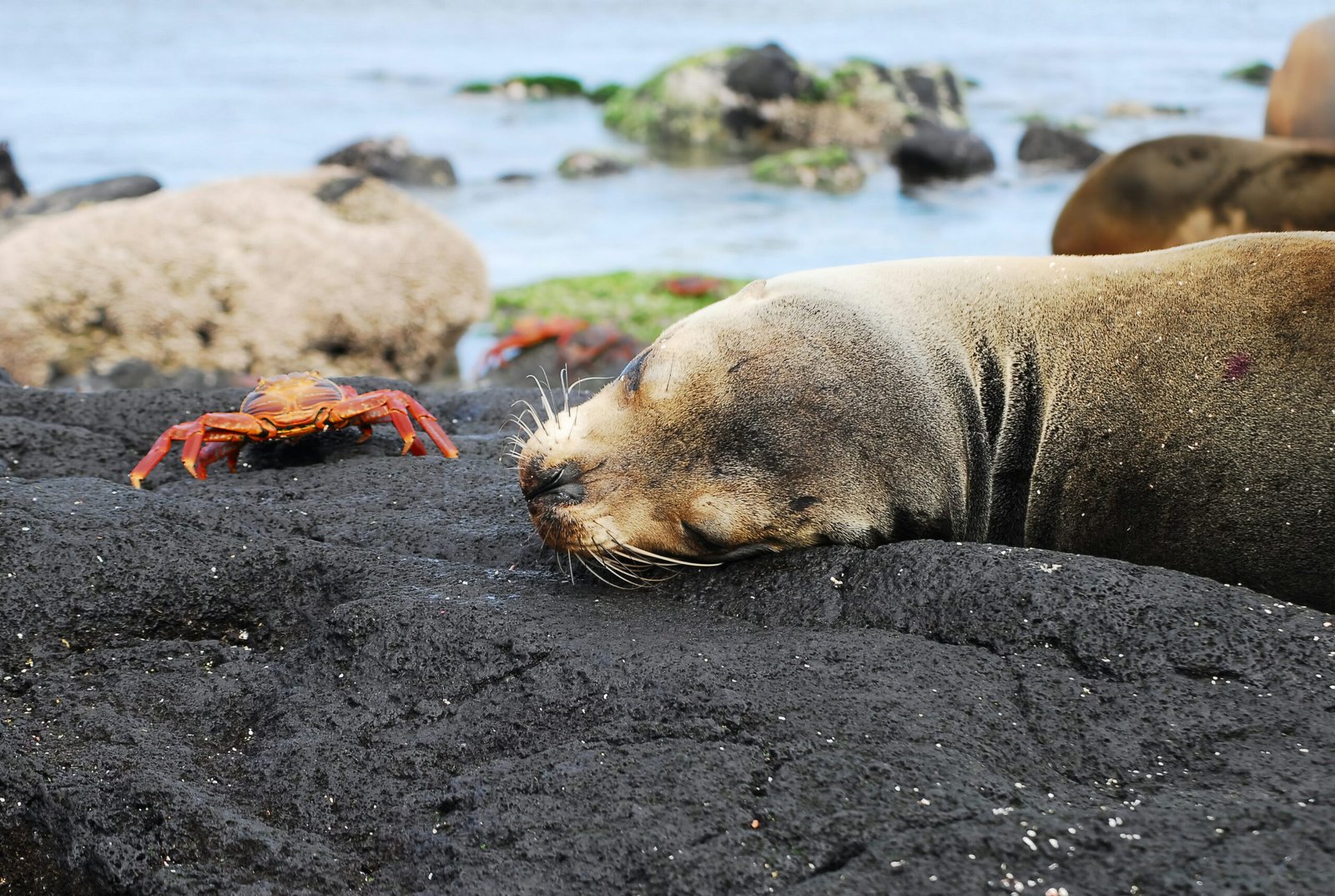
Explore tiny South Plaza, where land iguanas wander among colourful vegetation and large numbers of sea lions gather beneath the cliffs.
Continue to Santa Fe, home to its own endemic land iguana, as well as sea lions, Galápagos hawks, mockingbirds and a beautiful white-sand bay.
Day 8: San Cristóbal
Visit the white-sand beaches of Cerro Brujo before travelling inland to Galapaguera to see giant tortoises in a natural setting.
El Junco Lagoon, the only permanent freshwater lake in the Galápagos, attracts a variety of birdlife and offers sweeping views across the island.
Day 9: Española
One of the great wildlife islands of the archipelago.
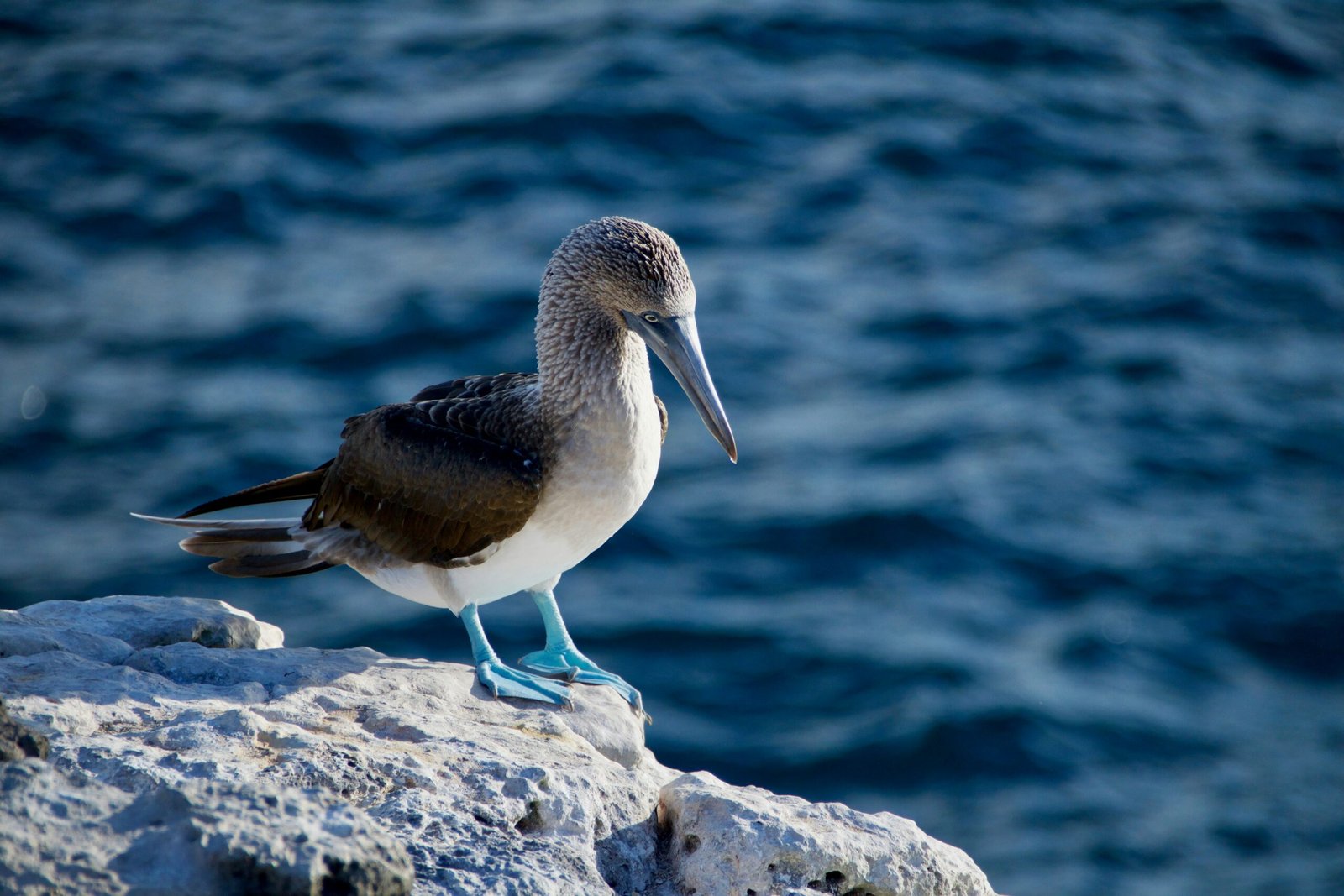
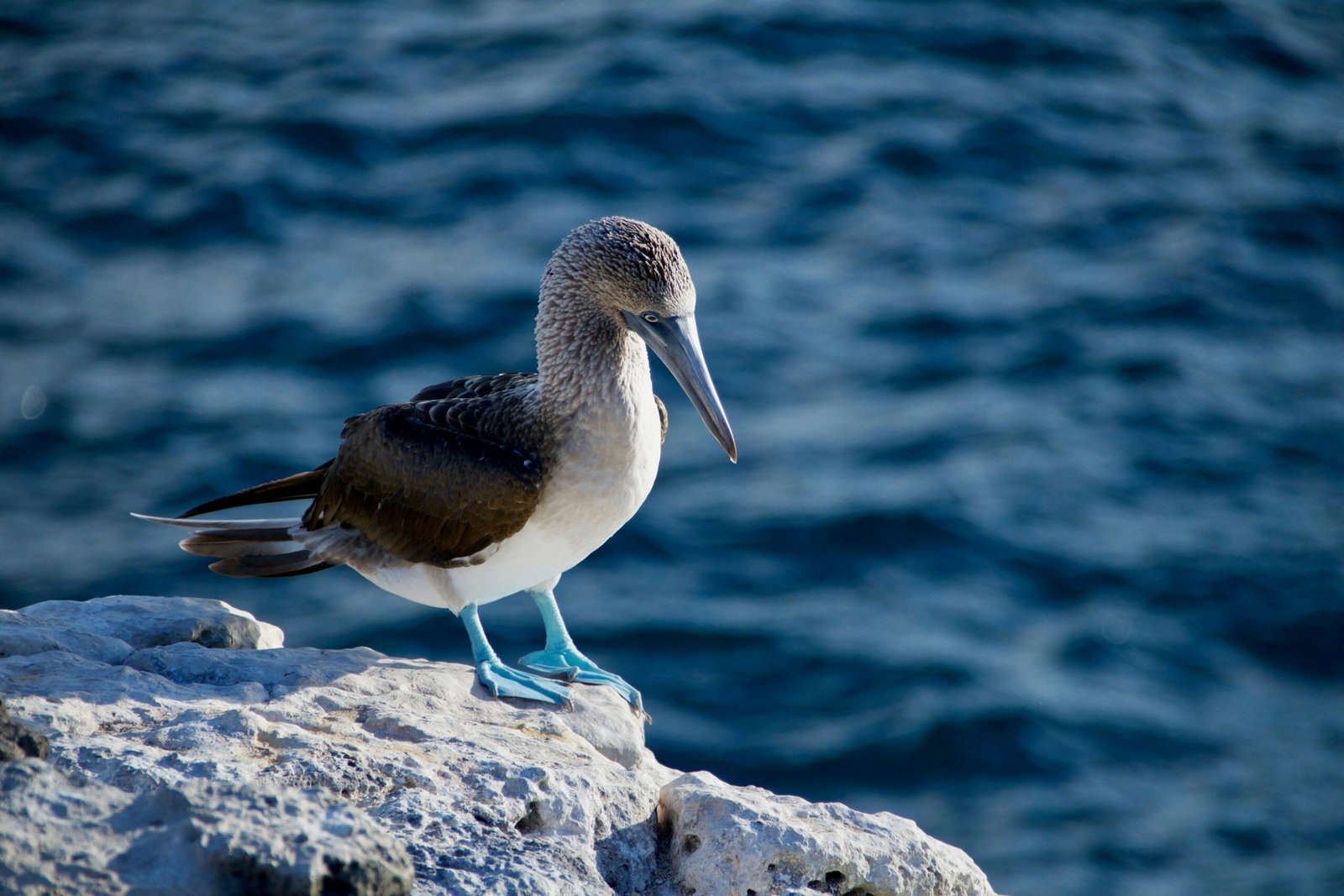
Look for sea lions, brightly coloured marine iguanas, blue-footed and Nazca boobies and the remarkable waved albatross, the world’s only tropical albatross. Gardner Bay adds excellent snorkelling with tropical fish, turtles and reef sharks.
Day 10: Floreana
Explore Punta Cormorant, where flamingos may be seen around an inland lagoon, before snorkelling at Devil’s Crown, one of the Galápagos’ best-known marine sites.
Later visit historic Post Office Bay, where the traditional wooden mail barrel recalls the island’s colourful whaling and settler history.
Day 11: Santa Cruz & Santiago
Visit Dragon Hill on Santa Cruz before continuing to Santiago, with its seabirds, fur seals, marine iguanas and striking lava landscapes.
Day 12: Genovesa (Tower Island)
Finish with one of the finest birding islands in the Galápagos.
Genovesa supports huge colonies of frigatebirds, red-footed boobies, storm petrels, lava gulls and tropicbirds, with the possibility of finding the endemic Galápagos short-eared owl.
Day 13: Santa Cruz & Disembarkation
On the final morning, explore Black Turtle Cove (Caleta Tortuga) on the north coast of Santa Cruz by panga.
This peaceful mangrove-fringed inlet is an excellent place to look for marine turtles, rays, sharks and pelicans, with nesting turtles possible at certain times of year.
Return to Beluga before disembarking at Baltra and transferring to the airport for your journey to Guayaquil.
Option 2: Western Galápagos
Day 7: Sombrero Chino & Rabida
Explore volcanic Sombrero Chino, where sea lions, marine iguanas and occasionally Galápagos penguins may be encountered.
Continue to Rabida, distinguished by its dark red beach and saltwater lagoon, with flamingos, pelicans and excellent snorkelling.
Days 8–10: Isabela
Three days are devoted to Isabela, the largest island in the archipelago and one of the major attractions of this western itinerary.
Explore the vast Sierra Negra volcano, visit the giant tortoise breeding centre and flamingo lagoon near Puerto Villamil, and travel by dinghy through Elizabeth Bay in search of penguins, green turtles and rays.
Further north, visit Urbina Bay for land iguanas and giant tortoises before exploring historic Tagus Cove beneath the Darwin and Alcedo volcanoes.
Day 11: Fernandina
Explore the youngest and one of the most pristine volcanic islands in the Galápagos.
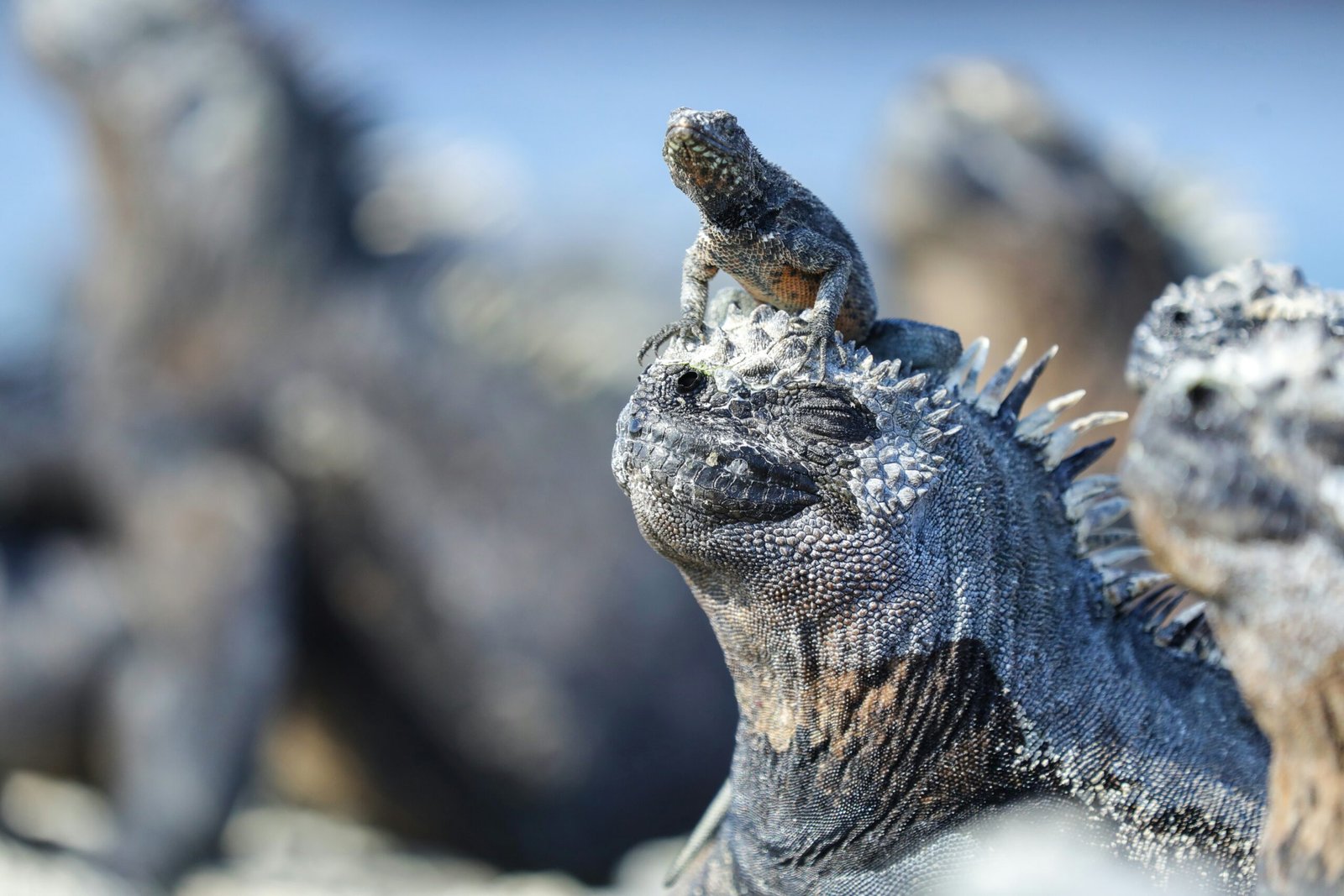
Fernandina’s stark lava landscapes support huge numbers of marine iguanas, along with sea lions, Galápagos penguins, Sally Lightfoot crabs and flightless cormorants.
Day 12: Santiago & Bartolomé
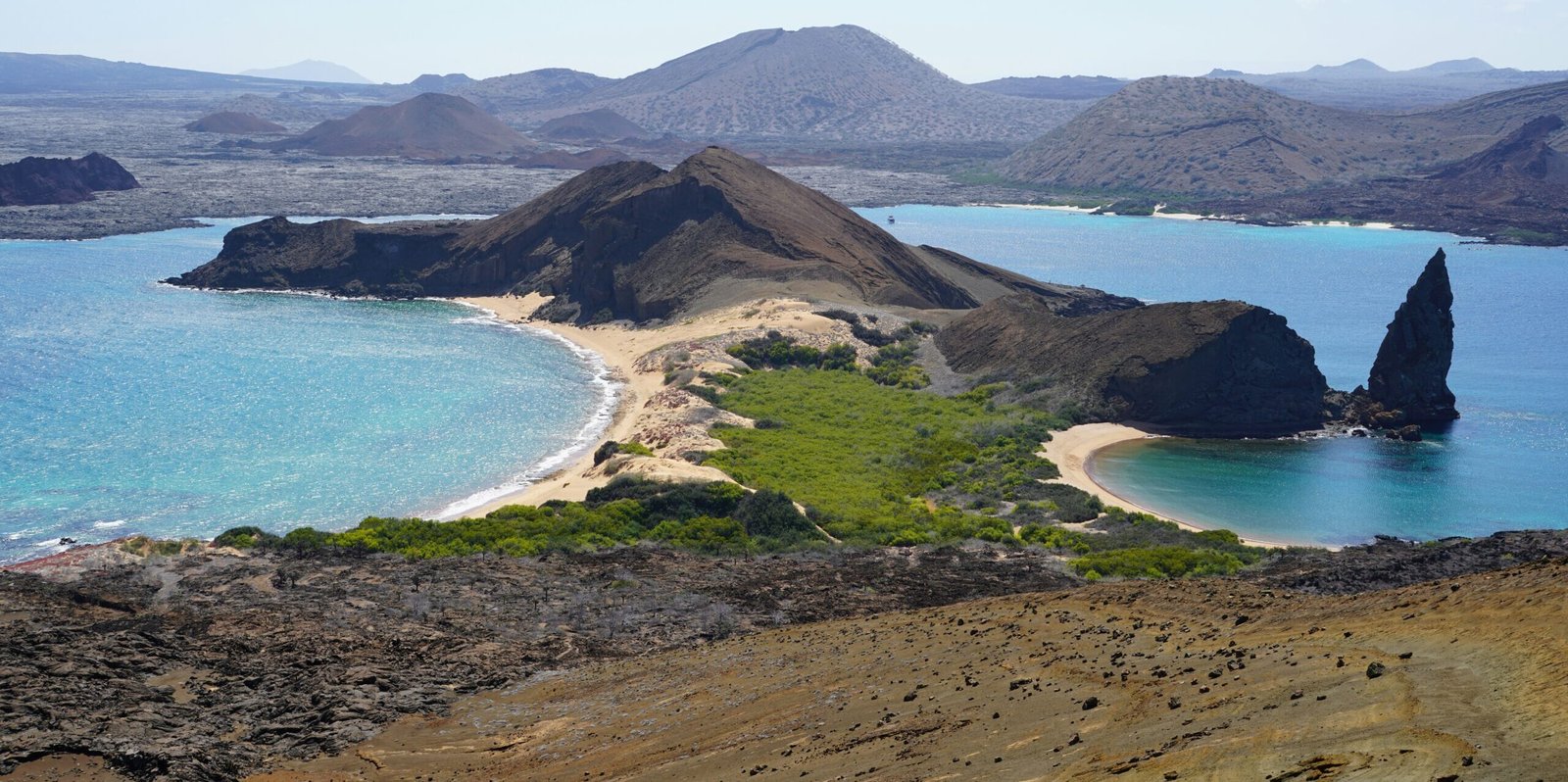
Explore Santiago’s rocky coastline and tidal pools before continuing to Bartolomé, home to iconic Pinnacle Rock.
A hike to the island’s summit gives one of the classic views of the Galápagos, while the surrounding waters offer opportunities to see sea lions and penguins and to snorkel from the beach.
Day 13: North Seymour
Your final island is one of the Galápagos’ great seabird sites.
Look for colonies of blue-footed boobies and magnificent frigatebirds, alongside land and marine iguanas and sea lions, before returning to Baltra Airport for your journey to Guayaquil.
Responsible travel
This journey has some particularly strong responsible-travel credentials.
Napo Wildlife Centre is owned and managed by the Añangu Indigenous community within Yasuní National Park, a UNESCO Biosphere Reserve. Conservation is central to the lodge, while tourism provides an economic connection between protecting the rainforest and supporting the local community.
In the Galápagos, travelling aboard Beluga with a maximum of just 16 guests keeps the expedition experience small and personal. The vessel also provides biodegradable toiletries, while wildlife excursions are accompanied by an experienced naturalist guide.
Why we like this trip
The combination of the community-owned Napo Wildlife Centre and a genuinely small 16-passenger Galápagos vessel makes this a particularly appealing wildlife journey. We also like the choice of two distinctly different Galápagos routes: head east for waved albatross, red-footed boobies, flamingos and prolific seabird colonies, or west for Isabela, Fernandina, penguins, marine iguanas and dramatic volcanic landscapes.
Price Guide
Per person sharing: from £6,615 per person excluding international flights from the UK.
Our specialist travel partners can arrange international flights for you as required.
- Choose between Eastern and Western Galápagos itineraries, subject to departure date and availability.
- This tailormade journey can be enjoyed year-round, with seasonal differences in weather and wildlife activity.
- The itinerary starts in Quito and ends in Guayaquil and can be adapted to suit you.
Includes
- Accommodation as indicated
- Domestic and regional flights within Ecuador/Galápagos as applicable
- Transfers as indicated
- Full board in rainforest and Galapagos
- 7-night Galápagos voyage aboard Beluga
- Guided excursions and activities
- Snorkelling gear & wet suit rental on board voyage
- Services of naturalist/local guides
- Conservation fund contribution
Excludes
- International flights from the UK
- Galápagos National Park entrance fee — US$200 per person, payable locally
- Transit Control Card — US$20 per person, payable locally
- Gratuities
- Travel insurance
- Personal expenses
ENQUIRE
This journey combines Quito, the Ecuadorian Amazon, Cotopaxi and a seven-night Galápagos expedition, with a choice of Northern or Southern island routes.
Begin in Ecuador’s historic capital before travelling deep into the Amazon rainforest, where guided walks, canoe trips and night excursions offer opportunities to see monkeys, sloths, caimans, macaws, toucans and other tropical wildlife. Back in the Andes, explore the dramatic landscapes of Cotopaxi National Park before flying west to the Galápagos.
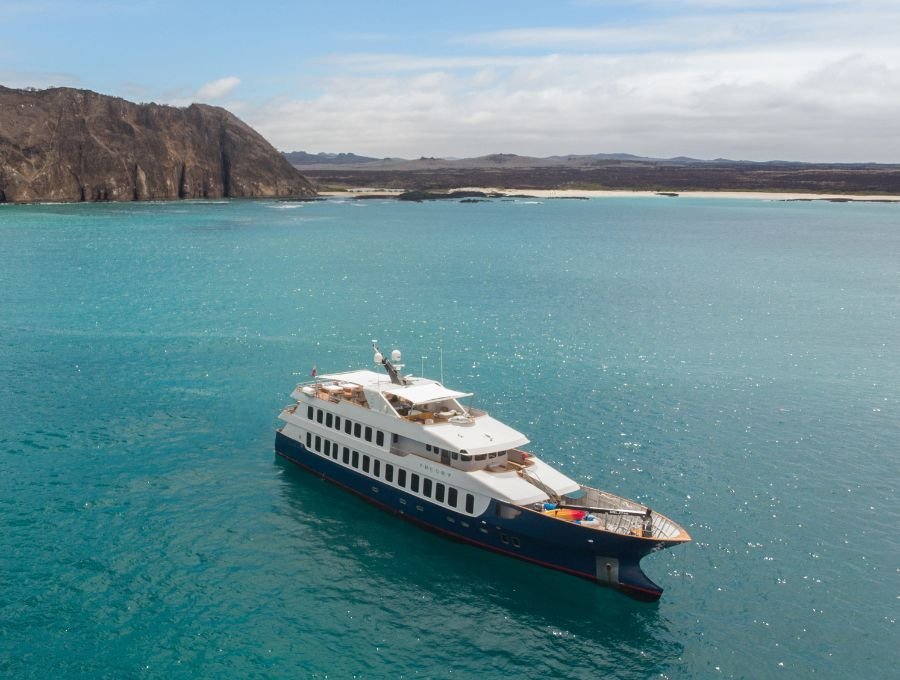
The Galápagos section is aboard one of three identical small expedition yachts — Origin, Theory or Evolve — each carrying a maximum of 20 guests. Choose the Northern route for Isabela, Fernandina, penguins, marine iguanas and flightless cormorants, or the Southern route for Española, Floreana, waved albatross, flamingos and classic Galápagos scenery.
Days 1–2: Quito
Arrive in Ecuador’s capital for two nights in the historic centre, staying at Mama Cuchara.
Explore Quito’s colonial architecture, churches and local traditions, with time to visit the Middle of the World before travelling into the Amazon.
 Days 3–5: Sacha Lodge, Ecuadorian Amazon
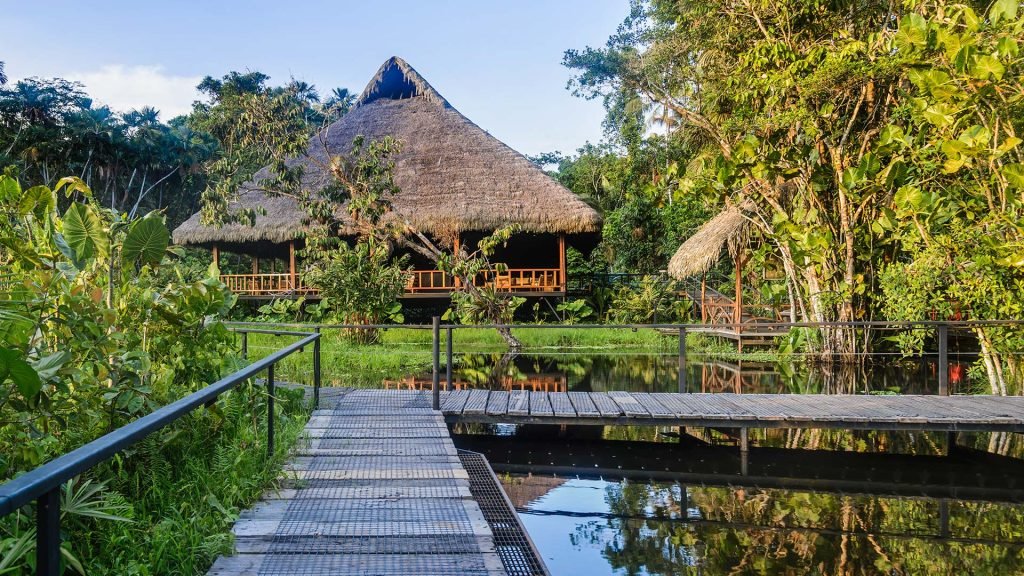
Fly to Coca and continue by motorised canoe and dugout canoe to Sacha Lodge, a simple rainforest lodge set within 2,500 hectares of privately owned jungle.
Excursions are accompanied by an English-speaking naturalist guide and a local Indigenous guide, exploring forest trails, black-water creeks and the canopy.
Wildlife possibilities include monkeys, sloths, caimans, tapir, macaws, toucans, hummingbirds and an extraordinary diversity of insects and amphibians. Night walks and canoe excursions reveal a very different side of the rainforest.
Days 6–7: Quito & Cotopaxi
Return to Quito before heading south through the Avenue of the Volcanoes to Cotopaxi National Park.
The high Andean scenery provides a dramatic contrast to the rainforest, with snow-capped peaks, open páramo and the possibility of seeing Andean condor, fox and other high-altitude wildlife.
Days 8–14: Galápagos Expedition
Fly to the Galápagos and board Origin, Theory or Evolve for a seven-night voyage.
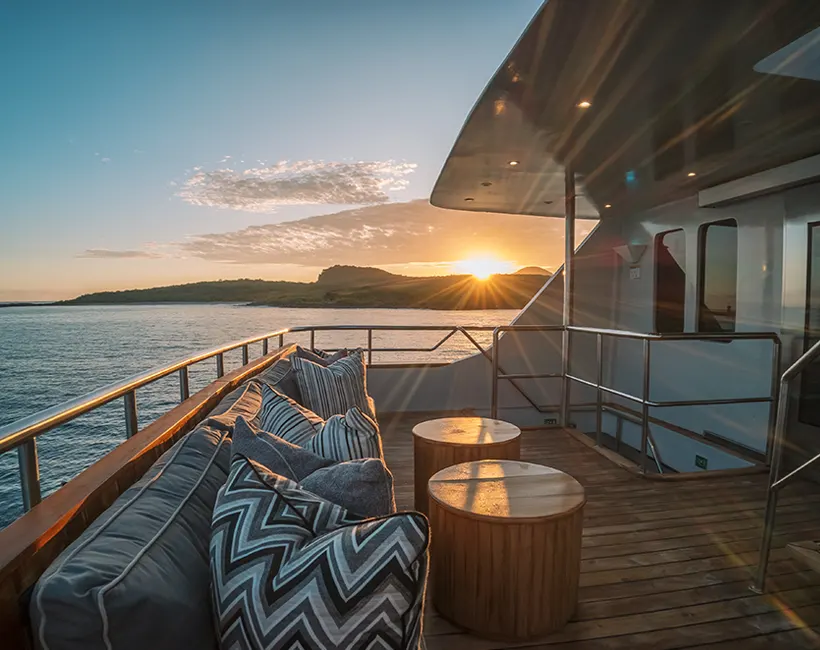
Each yacht carries no more than 20 guests, creating a small and personal expedition experience. Daily activities include guided walks, Zodiac excursions, snorkelling, kayaking and paddleboarding, with routes adapted where necessary according to weather, sea conditions and wildlife opportunities.
Option 1: Northern & Western Galápagos
Day 8: San Cristóbal & embarkation
Fly to San Cristóbal and board your expedition yacht. Begin the voyage with a sunset cruise around Kicker Rock, where seabirds and sea lions gather around the dramatic offshore formation.
Day 9: Genovesa
One of the archipelago’s finest birding islands.
At Prince Philip’s Steps and Darwin Bay, look for red-footed and Nazca boobies, storm petrels, frigatebirds and, with luck, the Galápagos short-eared owl.
Day 10: Santa Cruz
Explore the north of Santa Cruz, with possible visits to Las Bachas or Black Turtle Cove, followed by Cerro Dragon.
Look for flamingos, land iguanas, marine iguanas, Darwin’s finches, sea turtles, sharks and rays.
Day 11: Isabela
Explore the dramatic western coast of Isabela by Zodiac and on foot.
Possible wildlife includes Galápagos penguins, sea turtles, marine and land iguanas, flightless cormorants, dolphins and whales.
Day 12: Fernandina
Visit Punta Espinosa, one of the most pristine sites in the islands and home to enormous numbers of marine iguanas.
Sea lions, flightless cormorants, penguins and sea turtles may also be seen before continuing towards Tagus Cove.
Day 13: Rabida & Santiago
Land on Rabida’s distinctive red-sand beach, where flamingos, marine iguanas and Darwin’s finches may be seen.
Snorkelling can reveal sea lions and rays before continuing to Santiago or Black Turtle Cove, depending on conditions.
Day 14: Santa Cruz Highlands
Visit the Charles Darwin Research Station and giant tortoise breeding centre before travelling into the highlands.
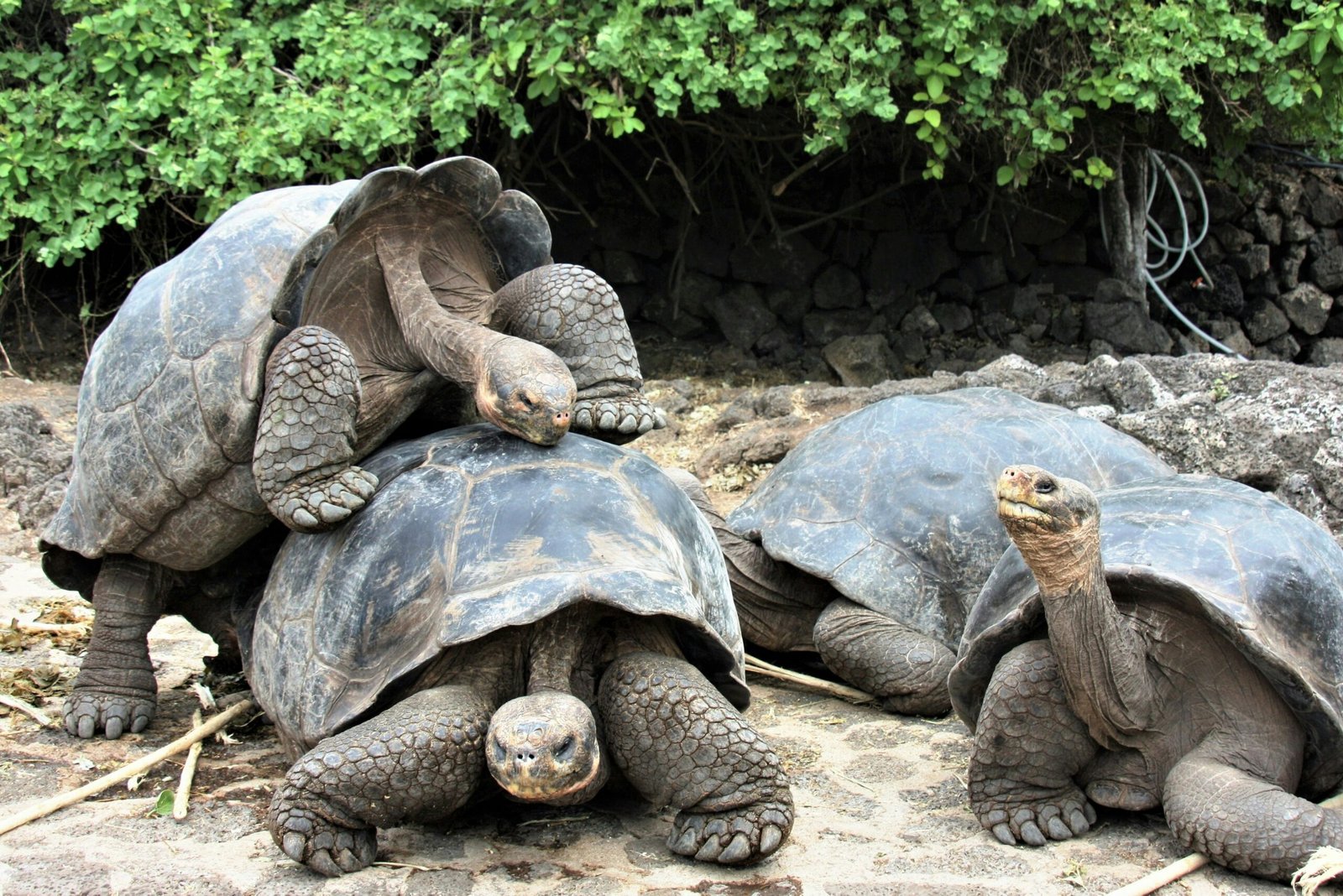
Here, giant tortoises can be seen roaming freely among lava tunnels and the twin craters of Los Gemelos.
Option 2: Southern Galápagos
Days 8–9: San Cristóbal
Board your yacht on San Cristóbal and begin with a sunset cruise around Kicker Rock.
The following day, explore Cerro Brujo and Punta Pitt, where sea lions, frigatebirds and seabirds are highlights. Punta Pitt is notable for the opportunity to see all three Galápagos booby species — blue-footed, red-footed and Nazca.
Day 10: Española
A major highlight of the southern route.
At Punta Suarez, look for marine iguanas, Galápagos hawks, Nazca boobies and the remarkable waved albatross, which breeds here seasonally.
Later, visit Gardner Bay for white-sand beaches, sea lions, snorkelling and kayaking.
Day 11: Floreana
Explore Punta Cormorant, where flamingos feed around a brackish lagoon and sea turtles nest on nearby beaches.
Snorkel at Devil’s Crown or Champion Islet, with possibilities including reef sharks, sea turtles, rays and colourful fish, before visiting historic Post Office Bay.
Day 12: Santa Cruz
Travel into the highlands to see giant tortoises roaming freely before visiting the Charles Darwin Research Station and giant tortoise breeding centre.
Day 13: Bartolomé
One of the Galápagos’ most recognisable landscapes.
Climb to the viewpoint overlooking Pinnacle Rock and the island’s volcanic scenery, or explore by Zodiac in search of Galápagos penguins.
Depending on conditions, the afternoon may include Sombrero Chino, Las Bachas or Black Turtle Cove.
Day 14: South Plaza & North Seymour
Explore South Plaza, where land iguanas live among opuntia cactus and large numbers of sea lions gather beneath the cliffs.
Continue to North Seymour, famous for its magnificent frigatebirds and blue-footed boobies, alongside marine iguanas and sea lions.
Responsible travel
The small-ship format limits each voyage to a maximum of 20 guests, while the vessels support a range of environmental and community initiatives.
These include the Galápagos Whale Shark Project, environmental education for local students, reduced carbon emissions and plastic use, waste-management training, support for local businesses and greater use of locally sourced produce.
Why we like this trip
It combines Sacha Lodge in the Amazon, the high Andes and a small-ship Galápagos expedition in one varied journey.
The choice of two island routes adds real flexibility: head north and west for penguins, marine iguanas, flightless cormorants and wild volcanic landscapes, or south for waved albatross, flamingos, prolific seabird colonies and some of the Galápagos’ most iconic scenery.
Price Guide
Per person sharing: from £11,290 per person excluding international flights.
Our specialist travel partners can arrange international flights for you as required.
- Choose between Northern and Southern Galápagos itineraries, depending on departure date and availability
- This tailormade itinerary is available throughout the year
- December–May generally brings warmer weather and calmer seas in the Galápagos
- June–November is particularly rewarding for marine wildlife and bird activity
- Quito, Cotopaxi and the Amazon can all be explored year-round
- The trip starts in Quito and ends in Guayaquil and can be adapted to suit you.
Includes
- Accommodation as indicated, with most meals included
- Transfers, excursions and activities as indicated
- 7-night Galápagos Islands voyage aboard Origin, Theory or Evolve
- All meals and drinks, including alcohol, while on board
- Conservation fund contribution
Excludes
- International flights
- Galápagos National Park entrance fee — US$200 per person, payable locally
- Transit Control Card — US$20 per person, payable locally
- Gratuities
- Travel insurance
- Personal expenses
Images: Ecoventura & Sacha Lodge
ENQUIRE
A comprehensive 15-day small-group wildlife journey exploring the Galápagos aboard the privately chartered Beluga, with just 9–15 guests and an expert tour leader throughout.
Rather than concentrating on one part of the archipelago, this extended 12-night voyage makes a wide-ranging circuit of the islands, taking in many of the Galápagos’ most important wildlife sites. The itinerary has been timed for April, when highlights can include nesting waved albatross on Española, displaying frigatebirds and boobies, Galápagos penguins, flightless cormorants, marine iguanas, giant tortoises, sea lions and green turtles.
There are frequent opportunities to explore on foot, by panga and in the water, with snorkelling offering the chance to encounter sea lions, turtles, reef fish and, with luck, marine iguanas feeding beneath the surface.
Day 1: Quito
Fly from the UK to Quito and transfer to Hotel Patio Andaluz in the historic centre of Ecuador’s capital.
The evening is free.
Image: Beluga
Days 2–13: Galápagos aboard Beluga
Fly to San Cristóbal and board Beluga, your home for the next 12 nights.
This comfortable 36-metre motor cruiser has eight en-suite cabins, a spacious lounge and dining area, plenty of deck space and an experienced crew including a specialist naturalist guide. Snorkelling equipment, wetsuits and kayaks are provided.
Day 2: San Cristóbal
Begin in the highlands at El Junco Lagoon, an important freshwater habitat where endemic birds can include San Cristóbal mockingbird and white-cheeked pintail.
Return to Beluga and sail overnight towards Española.
Day 3: Española
Explore one of the great wildlife islands of the Galápagos.
At Gardner Bay, sea lions gather on a white-sand beach and snorkelling can reveal tropical reef fish, reef sharks and rays.
Later, walk at Punta Suarez, one of the finest wildlife sites in the islands and the only nesting location in the Galápagos for the waved albatross. April departures are deliberately timed to coincide with their breeding season. Galápagos hawks, Nazca boobies, tropicbirds and marine iguanas may also be encountered.
Day 4: Floreana
Walk around Punta Cormorant, where flamingos and other waterbirds frequent a brackish lagoon.
Snorkel at Devil’s Crown, one of the classic marine sites in the Galápagos, with possibilities including reef sharks, spotted eagle rays and colourful reef fish.
Later, visit historic Post Office Bay and learn more about Floreana’s fascinating human history.
Day 5: Santa Cruz & Santiago
Explore Dragon Hill on Santa Cruz, an excellent area for land iguanas, flamingos and Darwin’s finches.
Later, make a landing at Sullivan Bay on Santiago, where recent lava flows provide a striking insight into the volcanic origins of the islands, with an opportunity to swim and snorkel from the beach.
Day 6: Genovesa
Sail north to Genovesa, one of the finest seabird islands in the archipelago.
Explore Darwin Bay and Prince Philip’s Steps, looking for red-footed boobies, frigatebirds, storm petrels, lava gulls, tropicbirds and other nesting seabirds. Colonies of red-footed boobies can number in the hundreds of thousands.
Day 7: Santa Cruz
Explore the mangrove channels of Black Turtle Cove by panga, looking for sea turtles, rays and reef sharks. Continue into the Santa Cruz highlands to see giant tortoises in the wild, followed by a visit to the Charles Darwin Research Centre.
Day 8: Chinese Hat & Rábida
Explore the volcanic landscapes of Chinese Hat, with possibilities including marine iguanas, sea lions, Sally Lightfoot crabs and Galápagos penguins.
Rábida is known for its distinctive maroon-red beach and excellent birdlife and snorkelling.
Days 9–11: Isabela
Spend three days exploring Isabela, the largest island in the archipelago.
Visit the immense Sierra Negra volcano, explore Puerto Villamil and its tortoise breeding station and flamingo lagoon, and look for marine iguanas, blue-footed boobies and penguins.
At Punta Moreno and Elizabeth Bay, explore stark lava landscapes and mangrove channels where wildlife can include flightless cormorants, flamingos, penguins, green turtles, rays and reef sharks.
Further north, visit Urbina Bay, where giant tortoises and unusually large land iguanas may be encountered, followed by a walk at historic Tagus Cove.
Day 12: Fernandina & Punta Vicente Roca
Land at Punta Espinoza on Fernandina, one of the most remarkable wildlife sites in the Galápagos.
Huge colonies of marine iguanas dominate the rocky shore, while other possibilities include flightless cormorants, Galápagos penguins, hawks and sea lions.
Later, return to Isabela for a panga excursion and snorkelling at Punta Vicente Roca, where turtles, sea lions, marine iguanas, seabirds and occasionally dolphins may be encountered.
Day 13: Santiago & Bartolomé
Walk along the black-sand coast at Puerto Egas on Santiago, looking for fur seals, sea lions, shorebirds and Darwin’s finches.
Continue to Bartolomé for the classic climb overlooking Pinnacle Rock, followed by snorkelling from the beach where Galápagos penguins, sea lions and juvenile sharks may be seen.
Day 14: North Seymour & return journey
Finish the voyage on North Seymour, one of the archipelago’s outstanding seabird islands.
Walk among colonies of blue-footed boobies, magnificent frigatebirds and swallow-tailed gulls, with opportunities for excellent wildlife photography.
Return to Beluga, say farewell to the crew and disembark for the flight back to mainland Ecuador and onward international flight.
Day 15: Arrive UK
Arrive back in the UK.
Why we like this trip
Most Galápagos cruises concentrate on one region of the archipelago. This departure is different: 12 nights aboard a privately chartered small vessel allows time to explore both the eastern and western islands in a single voyage.
With only 9–15 guests, a specialist naturalist guide and an experienced wildlife tour leader, it offers a particularly immersive way to experience the Galápagos. The April timing is another major attraction, coinciding with waved albatross nesting on Española and excellent seabird activity across the islands.
Your Tour Leaders
15 April 2027 — Helen Bryon
A former South African safari guide and experienced wildlife tour leader, Helen has a broad interest in wildlife ranging from big cats and wild dogs to cetaceans and birds. She has led trips across South America and other wildlife destinations and brings energy, enthusiasm and extensive field experience to the group.
13 April 2028 — Chris Breen
Chris began his career guiding and managing wilderness camps in Zambia’s Luangwa Valley before establishing the company in 1992. A keen conservationist, photographer and birder, he has extensive experience leading wildlife journeys around the world, including the Galápagos.
Departures & Price Guide
15 April 2027 Led by Helen Bryon From £11,895 per person including international flights from the UK
13 April 2028 Led by Chris Breen From £12,995 per person including international flights from the UK
Includes
- International flights from the UK
- Regional and domestic flights as indicated
- 1 night in Quito
- 12-night Galápagos cruise aboard Beluga (full board basis)
- Transfers
- Guided excursions and activities
- Expert local naturalist guide
- Tour leader throughout
- Transit Control Card
Excludes
- Galápagos National Park entrance fee — US$200 per person, payable locally
- Drinks unless otherwise stated
- Gratuities
- Travel insurance
- Personal expenses
Fitness & Snorkelling
A good general level of fitness is recommended. Most island walks are around 2–3 kilometres and are taken at a leisurely wildlife-watching pace, although terrain can include rocks, lava, scree and beaches. Guests can choose to remain aboard Beluga for individual excursions if preferred.
Snorkelling is an important part of the trip and is generally accessed from the pangas. Wetsuits, masks, snorkels and fins are provided aboard Beluga.
ENQUIRE
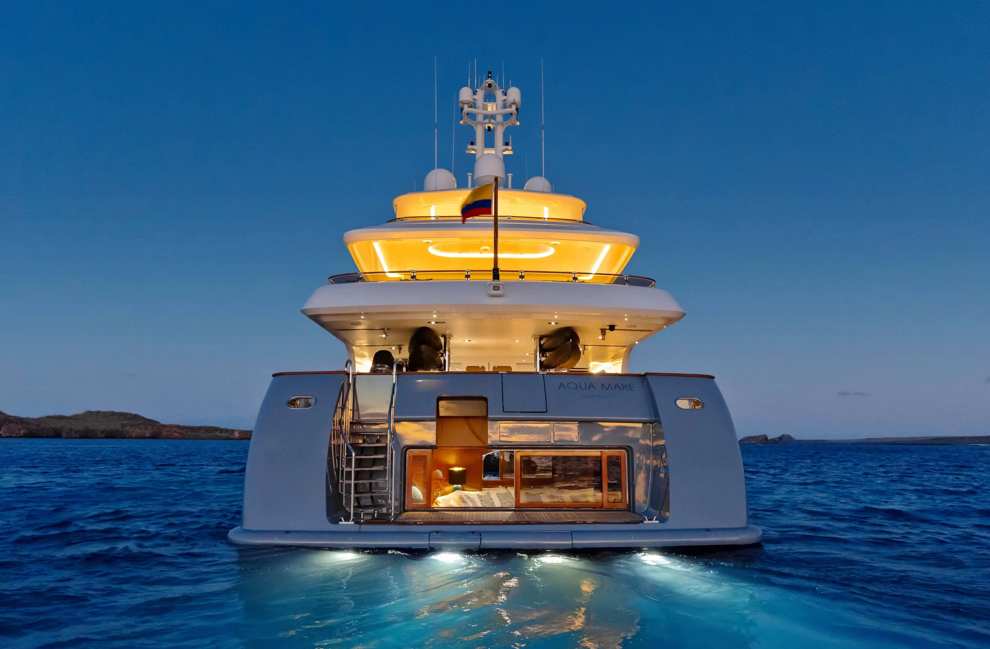
Image: Aqua Mare
A luxurious journey combining historic Quito, the extraordinary cloud forests of Mashpi and a seven-night Galápagos expedition aboard the 50-metre superyacht Aqua Mare.
Begin with two nights at elegant Casa Gangotena in the heart of Quito before travelling into the Chocó cloud forest for three nights at Mashpi Lodge. Set within a 1,300-hectare private reserve, Mashpi combines contemporary luxury with exceptional biodiversity, expert naturalist guiding and innovative ways to explore the forest canopy.
The second half of the journey takes you to the Galápagos aboard Aqua Mare, where just seven sea-facing suites, a one-to-one crew-to-guest ratio and two dedicated naturalist guides create an exceptionally personal expedition experience. Choose between Eastern and Western Galápagos routes, each offering a distinct mix of wildlife, landscapes and islands.

Image: Casa Gangotena
Days 1–2: Quito
Arrive in Quito for two nights at Casa Gangotena, an elegant boutique hotel housed within a restored historic mansion in the heart of the Old Town.
Explore the UNESCO-listed historic centre with a private guided tour, including its colonial architecture and churches, local artisans and an Ecuadorian chocolate tasting, before visiting the Middle of the World.
Image: Casa Gangotena
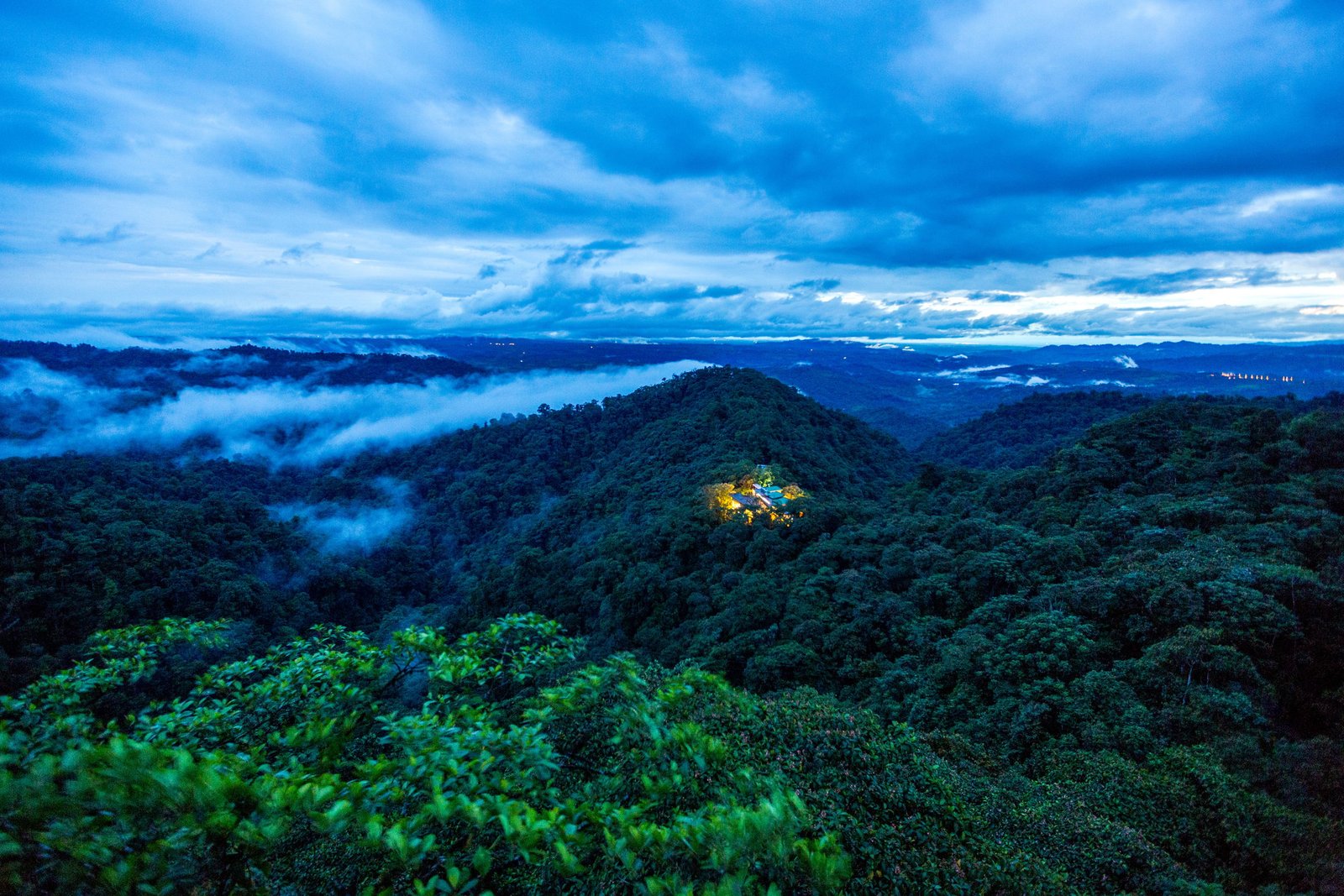 Image: Mashpi Lodge
Days 3–5: Mashpi Rainforest Biodiversity Reserve
Travel from Quito into the misty forests of the Mashpi Rainforest Biodiversity Reserve, part of the globally important Chocó biodiversity hotspot.
The private reserve protects around 1,300 hectares of cloud forest and rainforest and supports extraordinary biodiversity, including around 500 bird species, orchids, bromeliads, butterflies, amphibians and mammals.
Spend three nights at Mashpi Lodge, where floor-to-ceiling windows overlook the forest canopy and expert naturalists lead a range of activities.
Explore walking trails and waterfalls, take night walks, climb the observation tower or travel through the canopy on the Dragonfly aerial tram and Sky Bike. Hummingbirds are a particular highlight, with 32 species recorded within the reserve.
Day 6: Quito
Enjoy a final morning activity at Mashpi before returning to Quito for another night at Casa Gangotena.
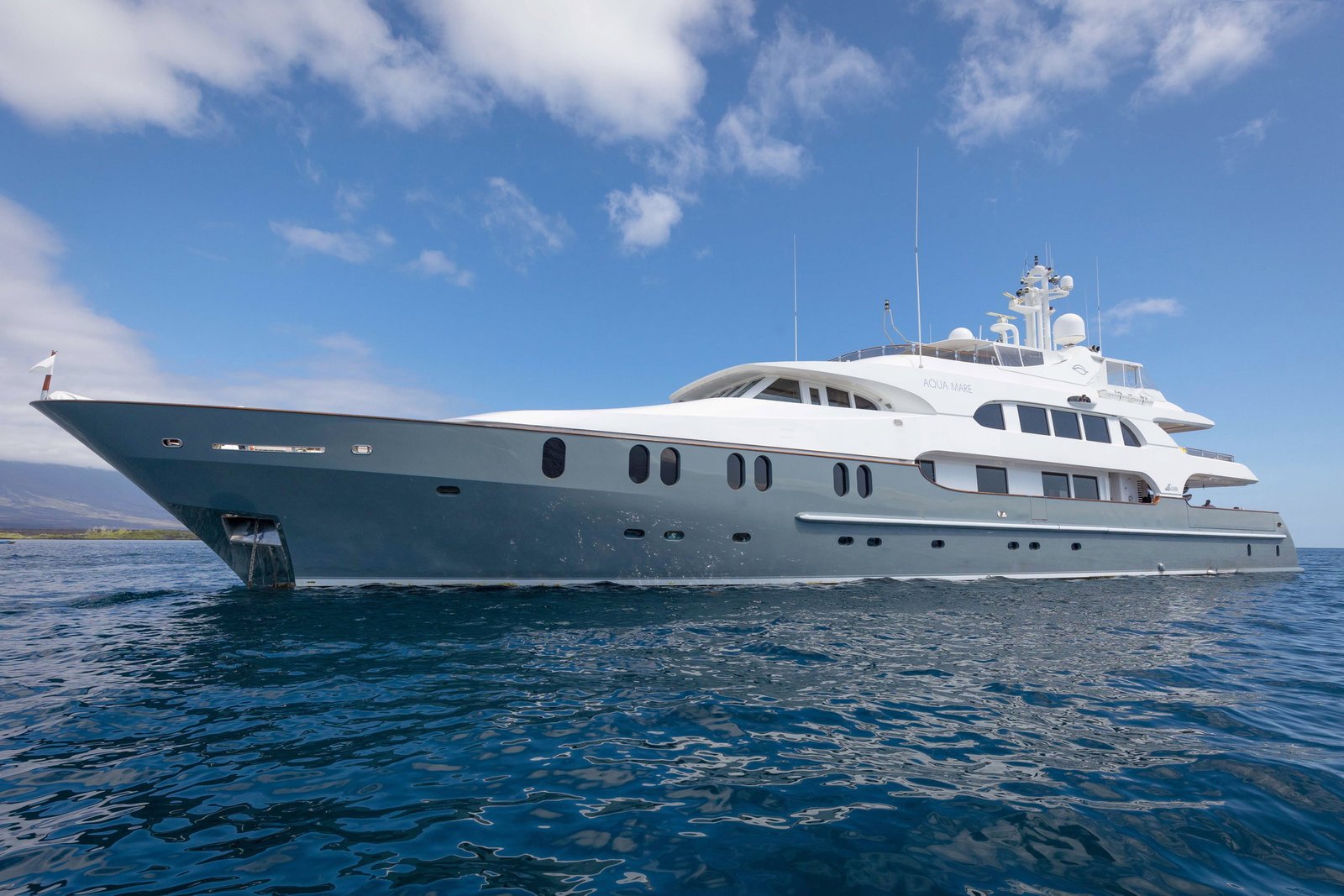
Image: Aqua Mare
Days 7–14: Galápagos aboard Aqua Mare
Fly to Baltra and board Aqua Mare for seven nights.
This impressive 50-metre superyacht accommodates guests in just seven sea-facing suites across three decks. Facilities include panoramic outdoor dining, a barbecue area, hot tub, swim platform, lounge, dining room and library.
Aqua Mare carries kayaks, paddleboards and snorkelling equipment and operates with a one-to-one crew-to-guest ratio and two dedicated naturalist guides, combining a very high level of comfort with a genuine expedition experience.
Choose between two contrasting Galápagos routes:
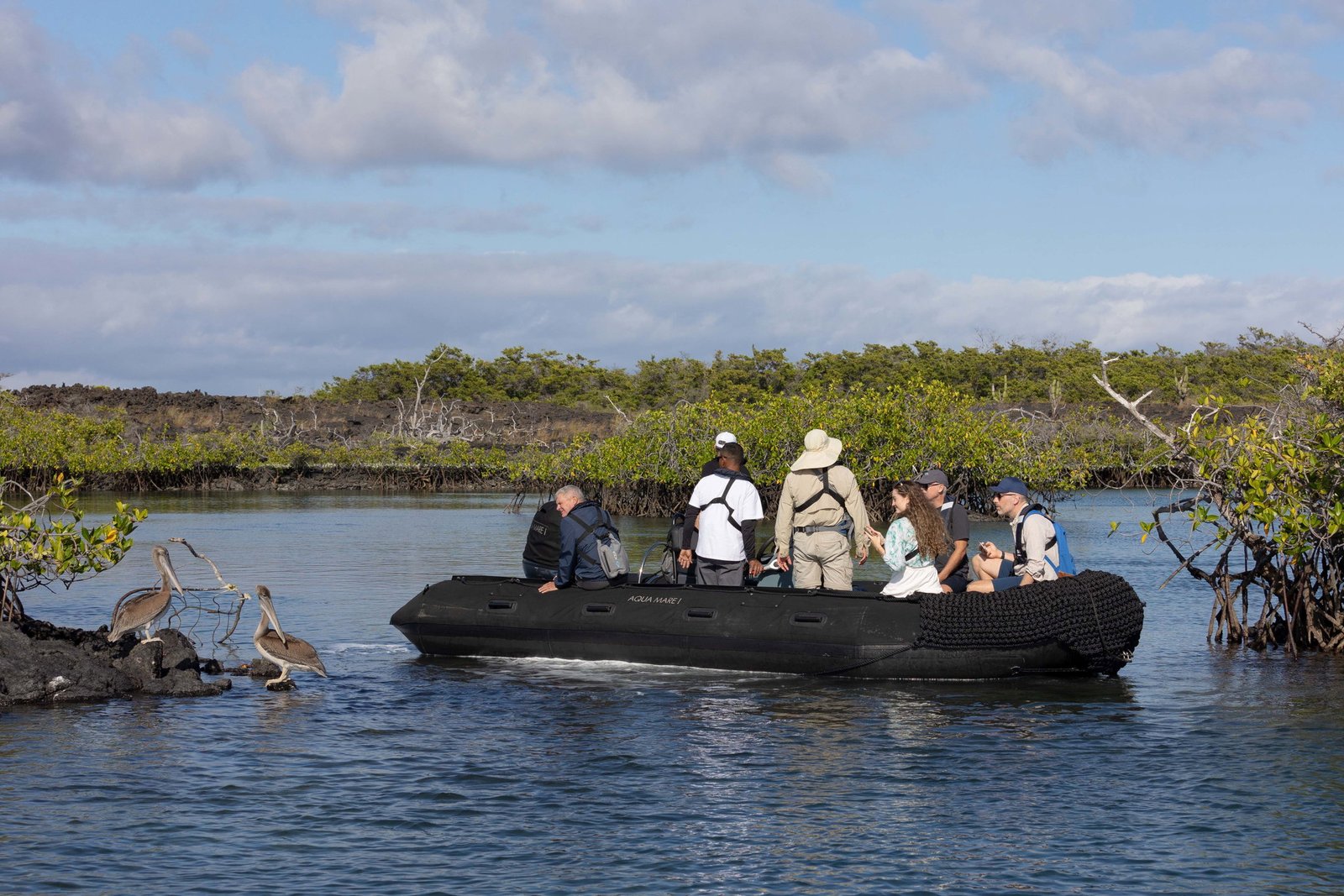 Image: Panga, Aqua Mare
Option 1: Western Galápagos
Day 7: Santa Cruz & embarkation
Arrive at Baltra and board Aqua Mare before travelling to Puerto Ayora on Santa Cruz.
Settle into your suite, explore the waterfront and enjoy your first evening aboard.
Day 8: Floreana
Explore Punta Cormorant, where flamingos and other shorebirds gather around a brackish lagoon and sea turtles nest on nearby beaches.
Later visit historic Post Office Bay and Mirador de la Baronesa before returning to Aqua Mare for the evening.
Day 9: Isabela
Explore the dramatic western side of Isabela, the largest island in the archipelago.
Walk through the volcanic landscapes of Punta Moreno in search of marine iguanas, flightless cormorants and Galápagos penguins, before travelling to Urbina Bay for opportunities to see land and marine iguanas and giant tortoises.
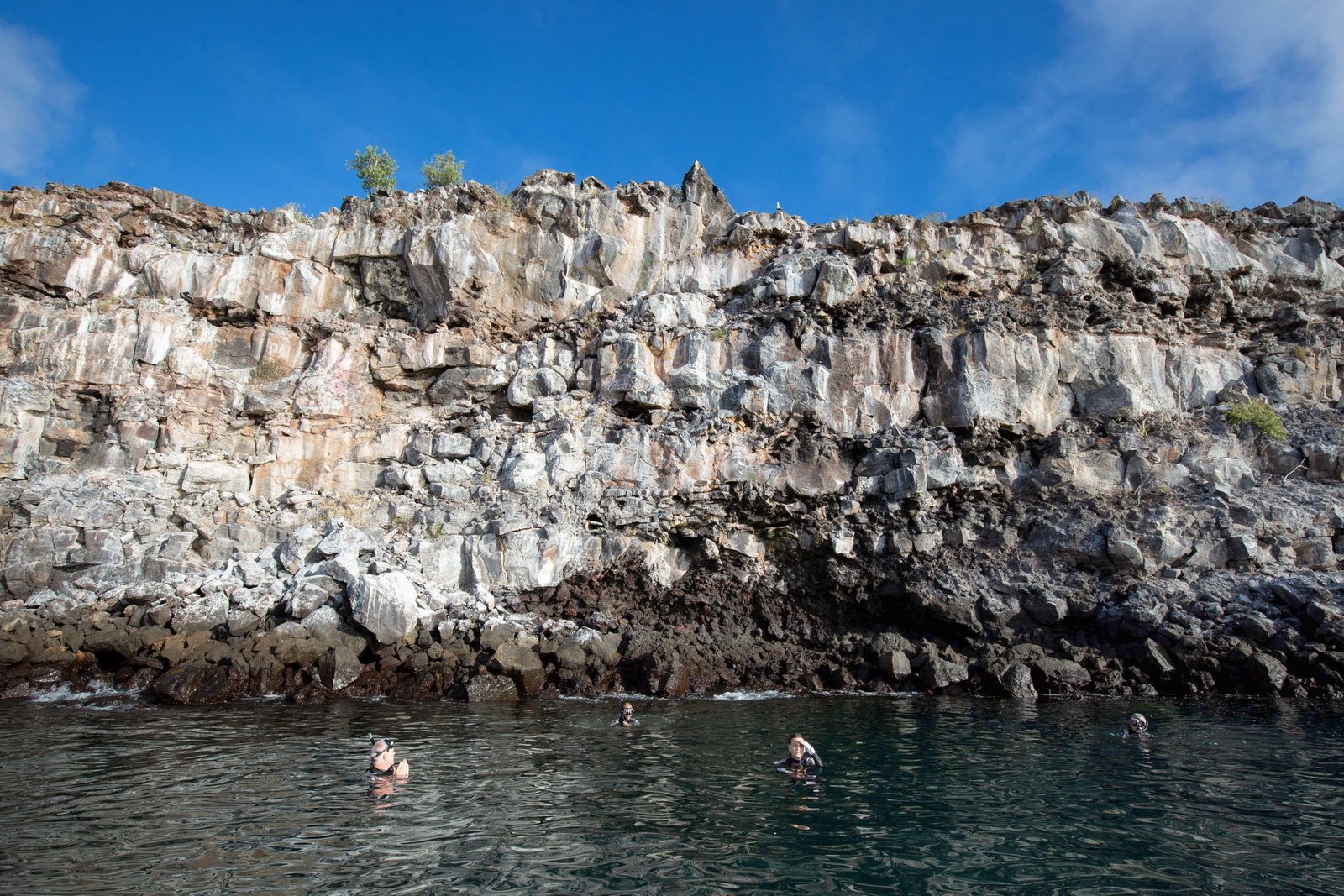
Image: Snorkelling, Aqua Mare
Day 10: Fernandina & Isabela
Land at Punta Espinoza on Fernandina, one of the wildest islands in the Galápagos.
Large colonies of marine iguanas dominate the dark volcanic shoreline, while flightless cormorants, penguins and Galápagos hawks may also be seen.
Later explore historic Tagus Cove on Isabela, with opportunities to hike, kayak, snorkel or paddleboard.
Day 11: Santiago
Explore Santiago around Buccaneer Cove or Playa Espumilla, followed by Puerto Egas.
Walk the intertidal zone in search of fur seals and other wildlife or snorkel with sea turtles, sea lions and white-tipped reef sharks.
Day 12: Rábida & Black Turtle Cove
Explore Rábida, instantly recognisable by its deep-red beach and cliffs.
Choose to explore on foot, by kayak, paddleboard or snorkel, looking for sea lions, Darwin’s finches and pelicans.
Later travel by Zodiac through the mangroves of Black Turtle Cove, an important habitat for sea turtles, rays and sharks.
Day 13: North Seymour & Mosquera
Visit North Seymour, one of the Galápagos’ great birding islands, with excellent opportunities to see magnificent frigatebirds, blue-footed boobies, swallow-tailed gulls and land iguanas.
After lunch, continue to tiny Mosquera Island, whose beaches attract large numbers of sea lions.
Day 14: Daphne Island & disembarkation
Enjoy a final breakfast aboard while circumnavigating Daphne Island, before returning to Baltra to disembark and transfer to the airport for your onward journey.
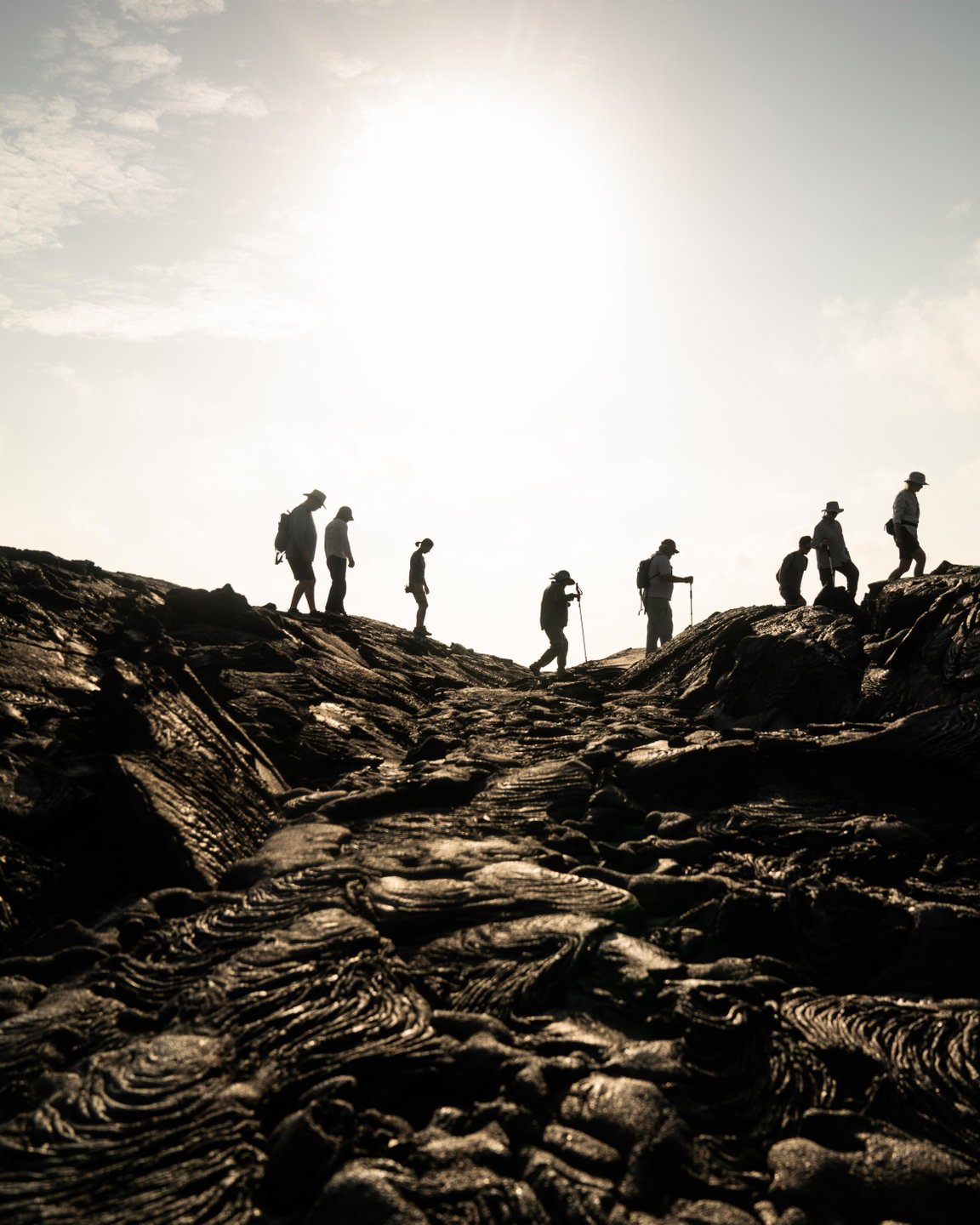 Image: Trekking, Aqua Mare
Option 2: Eastern Galápagos
Day 7: Santa Cruz & embarkation
Fly to Baltra and board Aqua Mare.
Your first excursion takes you to Bahía Borrero on northern Santa Cruz, where Darwin’s finches can be seen among the coastal vegetation and sea turtles may be encountered while snorkelling.
Day 8: Genovesa
Travel north across the Equator to Genovesa, one of the finest seabird islands in the Galápagos.
Explore Darwin Bay and El Barranco in search of red-footed boobies, frigatebirds, storm petrels, lava gulls and fur seals, with walking and snorkelling opportunities throughout the day.
Day 9: Santiago & Sombrero Chino
Walk across the extraordinary lava formations of Sullivan Bay on Santiago before continuing to volcanic Sombrero Chino.
The surrounding waters offer opportunities to see sea lions and Galápagos penguins, with snorkelling, kayaking and paddleboarding available.
Day 10: Bartolomé & Santa Cruz
Climb to the famous viewpoint on Bartolomé overlooking Pinnacle Rock and its striking volcanic landscape.
Cool off afterwards with a snorkel, where Galápagos penguins and sea turtles may be encountered, before continuing to Cerro Dragon on Santa Cruz in search of land iguanas.
Day 11: Santa Cruz
Visit a giant tortoise reserve to see Galápagos giant tortoises roaming freely in the highlands.
Later, visit the Fausto Llerena Breeding Centre and Charles Darwin Research Station, with time in Puerto Ayora before returning to Aqua Mare.
Day 12: Española
Explore one of the archipelago’s great wildlife islands.
At Punta Suarez, look for Española mockingbirds, marine iguanas, seabirds and the remarkable waved albatross when present.
Later, explore nearby islets by tender and snorkel with sea lions and reef fish before visiting the beautiful white-sand beach at Gardner Bay, home to one of the largest sea lion colonies in the Galápagos.
Day 13: Santa Fe & South Plaza
Explore Santa Fe, one of the oldest islands in the archipelago and home to its endemic land iguana.
There is time for snorkelling, kayaking or paddleboarding before sailing to South Plaza, where a guided walk reveals distinctive vegetation, volcanic landforms and further wildlife.
Day 14: Santa Cruz Highlands & disembarkation
After breakfast, bid farewell to Aqua Mare and make a final excursion into the Santa Cruz highlands to visit Los Gemelos, the impressive twin craters surrounded by lush vegetation.
Continue to Baltra Airport for your onward journey.
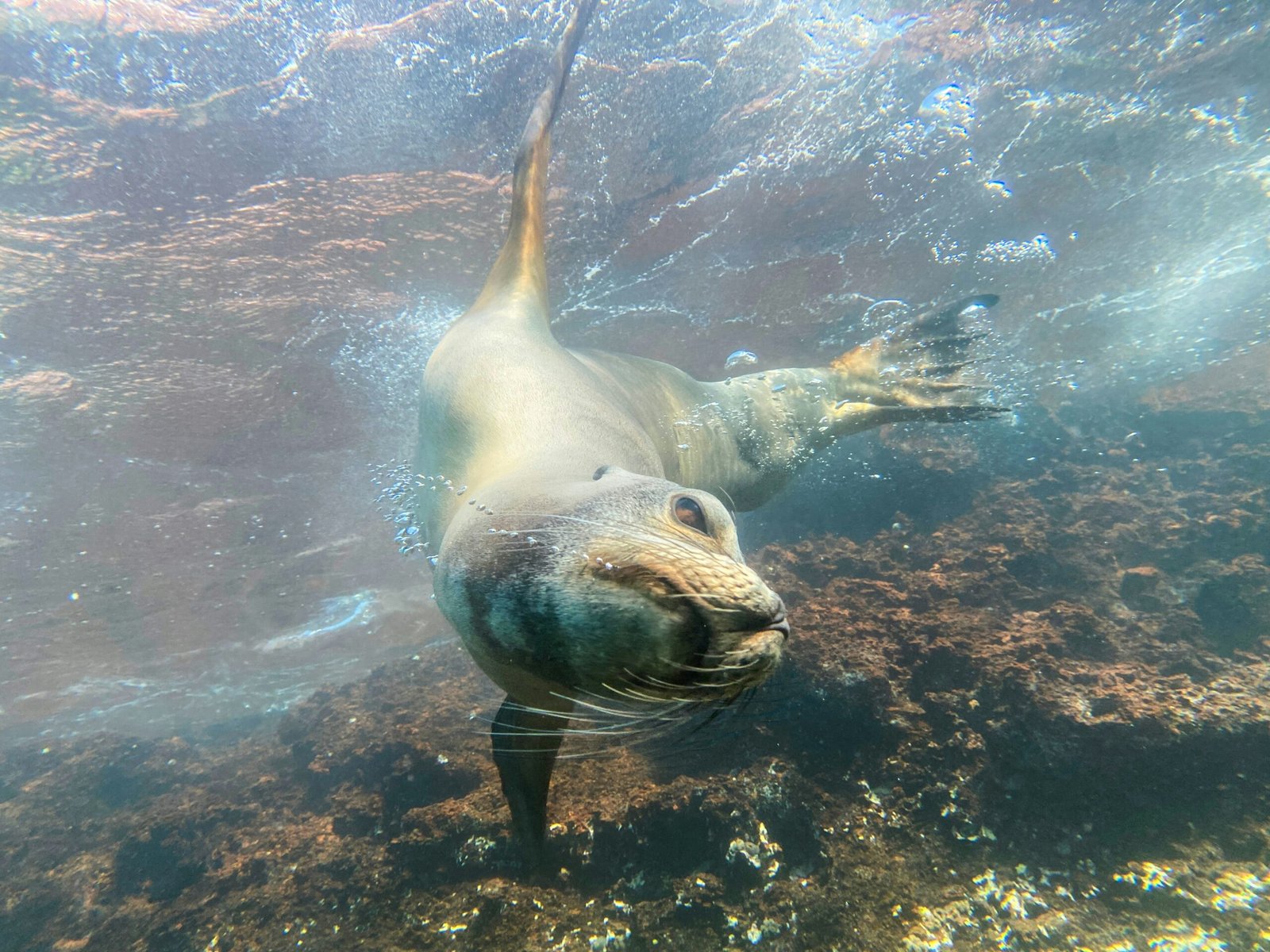
Responsible travel
Both Mashpi Lodge and Aqua Mare place conservation at the heart of their operations.
Mashpi protects a 1,300-hectare private reserve within the Chocó biodiversity hotspot, with resident biologists, naturalist guides and ongoing scientific research helping guests understand the ecology and conservation of the forest.
Aqua Mare incorporates eco-friendly onboard products, improved waste-management technology and efforts to make its food and beverage supply chain more sustainable. It also employs staff from local communities, contributes to social projects and supports wildlife conservation programmes.
Why we like this trip
This is Ecuador for travellers who want exceptional wildlife without compromising on comfort. Casa Gangotena and Mashpi provide two very different luxury mainland stays, followed by an intimate Galápagos voyage aboard Aqua Mare.
The choice of routes adds further flexibility: choose the Western itinerary for Isabela, Fernandina, penguins, marine iguanas and dramatic volcanic wilderness, or the Eastern itinerary for Genovesa’s seabird colonies, Española, waved albatross, giant tortoises and classic Galápagos landscapes.
Price Guide
Per person sharing: from £12,240 per person excluding international flights.
Our specialist travel partners can arrange international flights for you as required.
- Choose between Eastern and Western Galápagos itineraries, depending on departure date and availability
- The tailormade journey includes a 7-night Aqua Mare voyage
- Quito, Mashpi and the Galápagos can be visited year-round
- The trip starts in Quito and finishes in Guayaquil and can be adapted to suit you.
Includes
- Accommodation as indicated
- Transfers as indicated
- Full board at Mashpi
- 7-night Galápagos Islands voyage aboard Aqua Mare including all meals and drinks, including alcohol, while aboard
- Laundry service aboard Aqua Mare
- Excursions and activities as indicated
- Galápagos National Park entrance fee
- Transit Control Card
- Conservation fund contribution
Excludes
- International flights
- Gratuities
- Travel insurance
- Personal expenses
ENQUIRE
ECUADOR GUIDE
You’ll find a short guide to Ecuador below.
To start planning a trip to Ecuador please contact us via the Enquiry Form, by email on info@realworldconservation.org.uk or on 01692 218189.
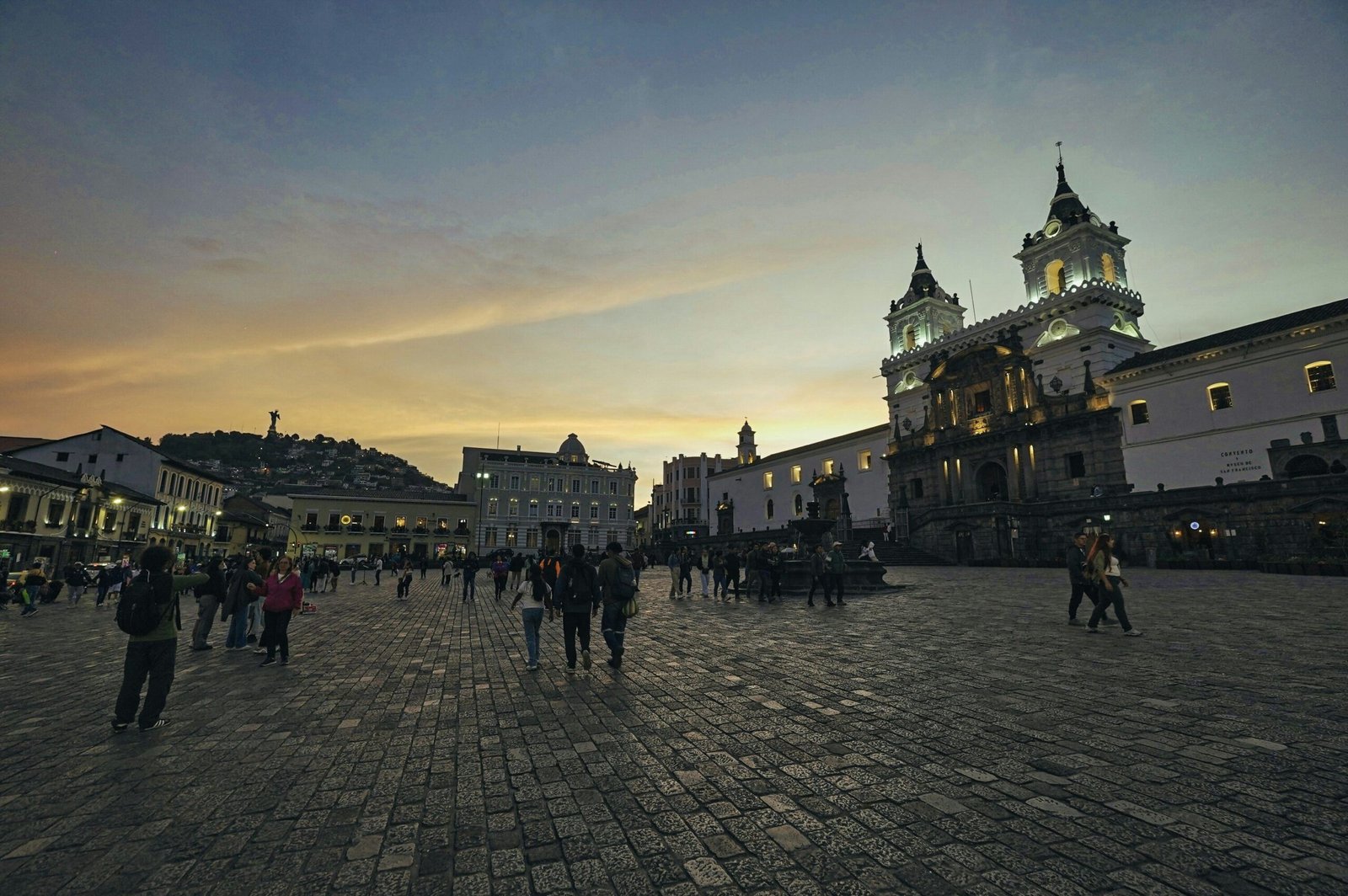
At 2,850 metres high in the Andes, Quito is one of South America’s most atmospheric capitals and a natural starting point for exploring Ecuador. Its historic centre was among the first places to be inscribed as a UNESCO World Heritage Site and remains one of the best-preserved colonial centres in Latin America.
Historic Quito
The old city is a fascinating network of plazas, narrow streets, churches, monasteries and grand colonial buildings. Highlights include La Compañía de Jesús, with its lavish interior, the vast San Francisco complex and the central Plaza Grande.
The city’s position adds considerably to its character, with mountains and volcanoes forming a dramatic backdrop.
Things to Do
A walking tour is the best introduction to the historic centre, often combined with visits to artisan workshops, and markets.
The Middle of the World, north of Quito, is another popular excursion, while the TelefériQo cable car climbs high above the city for expansive views across the surrounding Andes.
How Long to Stay
Quito is not simply somewhere to pass through on the way to the Amazon or Galápagos; it is well worth allowing at least one full day to explore.
It is also sensible to take things slowly on arrival because of the altitude.
Cloud Forest
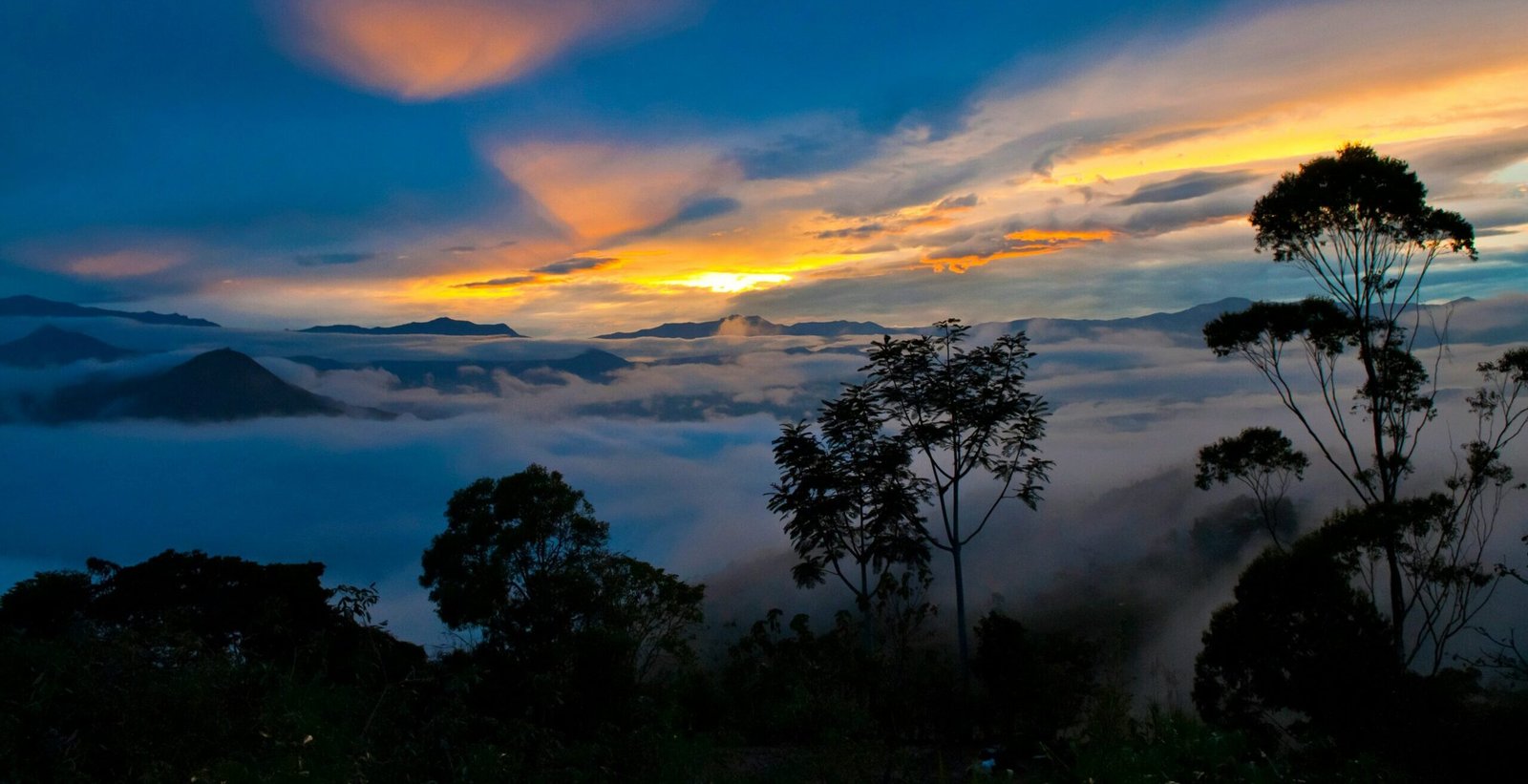
Descending west from Quito, the high Andes give way surprisingly quickly to lush cloud forest, where warm air from the Pacific meets the mountains and creates an exceptionally rich environment of mist, forest, rivers and waterfalls.
The best-known area is Mindo, around two hours from Quito and part of the UNESCO Chocó Andino Biosphere Reserve. It is one of Ecuador’s great birdwatching destinations, with hundreds of recorded bird species including hummingbirds, tanagers, toucans and the spectacular Andean cock-of-the-rock.
Mindo
Mindo works well for anyone interested in wildlife, birdwatching or simply walking in beautiful forest.
Early mornings can be particularly rewarding for birds, while trails lead through forests thick with orchids, bromeliads, mosses and ferns. Butterflies, frogs and a tremendous variety of other wildlife add to the appeal.
 Mashpi
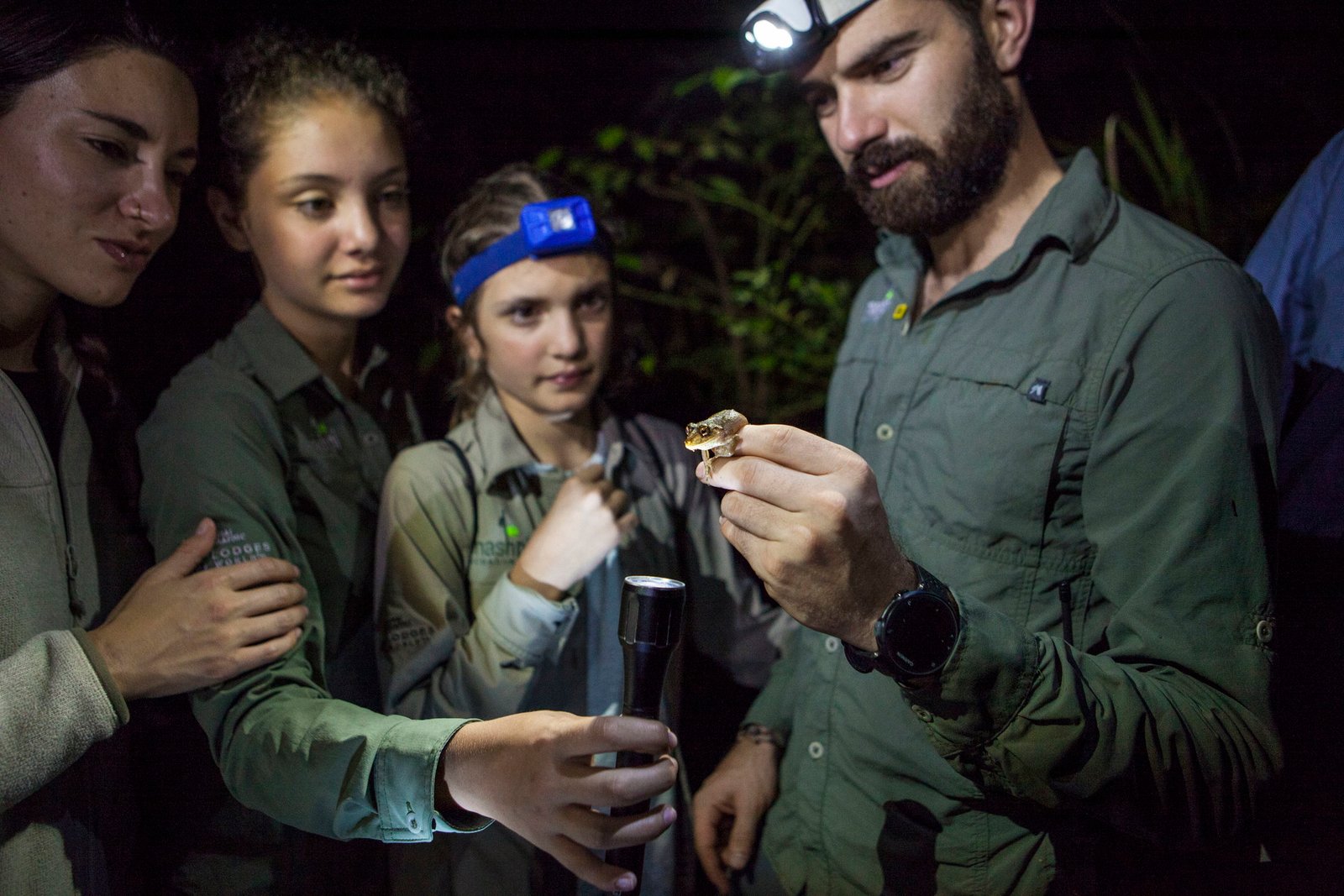
For a more luxurious cloud-forest experience, Mashpi Reserve lies within the wider Chocó region. Here the emphasis is on combining excellent accommodation with guided natural history, canopy exploration, forest trails and conservation.
Image: Mashpi Lodge
Why Include the Cloud Forest?
It offers something very different from both the high Andes and the Amazon and is remarkably easy to combine with Quito.
For birdwatchers it is essential, but you certainly do not need to be a dedicated birder to enjoy it. The combination of hummingbirds, waterfalls, dense vegetation and misty mountain scenery makes this one of Ecuador’s most attractive regions.
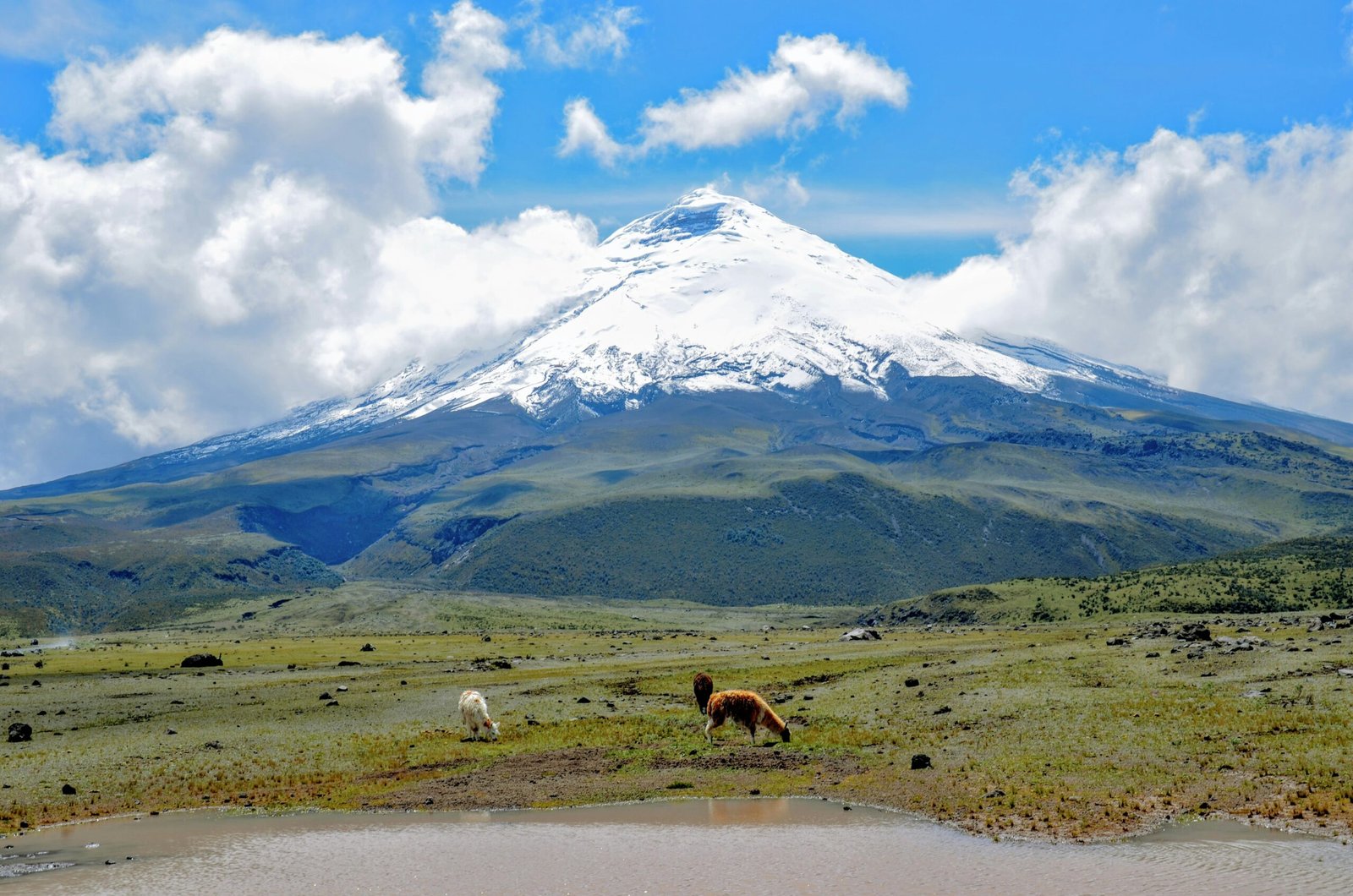 Running through the heart of Ecuador, the Andes create some of the country’s most dramatic landscapes.
South of Quito, the Avenue of the Volcanoes passes between a succession of high peaks, fertile valleys and expanses of páramo. More than 70 volcanoes and mountains lie along this Andean corridor, with Cotopaxi among the most recognisable.
Cotopaxi
At 5,897 metres, Cotopaxi is one of the highest active volcanoes in the world. Its almost perfectly symmetrical snow-capped cone dominates the surrounding national park.
You do not need to be a mountaineer to enjoy the area. Drives and walks through the park reveal wide-open páramo landscapes, lakes and exceptional mountain views. Wildlife can include Andean fox, deer and Andean condor, while Laguna Limpiopungo is particularly good for high-altitude birdlife.
Antisana & Papallacta
East of Quito, Antisana offers another superb high-Andean landscape and is one of the country’s important areas for Andean condors.
Nearby Papallacta is known for its natural thermal springs and works well as a relaxing overnight stop, particularly when travelling between Quito and the Amazon.
Exploring the Highlands
The Ecuadorian Andes are not solely about volcanoes. Small towns, agricultural valleys, Indigenous communities and local markets provide a strong cultural dimension.
This region works particularly well for travellers wanting to add landscapes, walking and culture to a wildlife-focused itinerary.
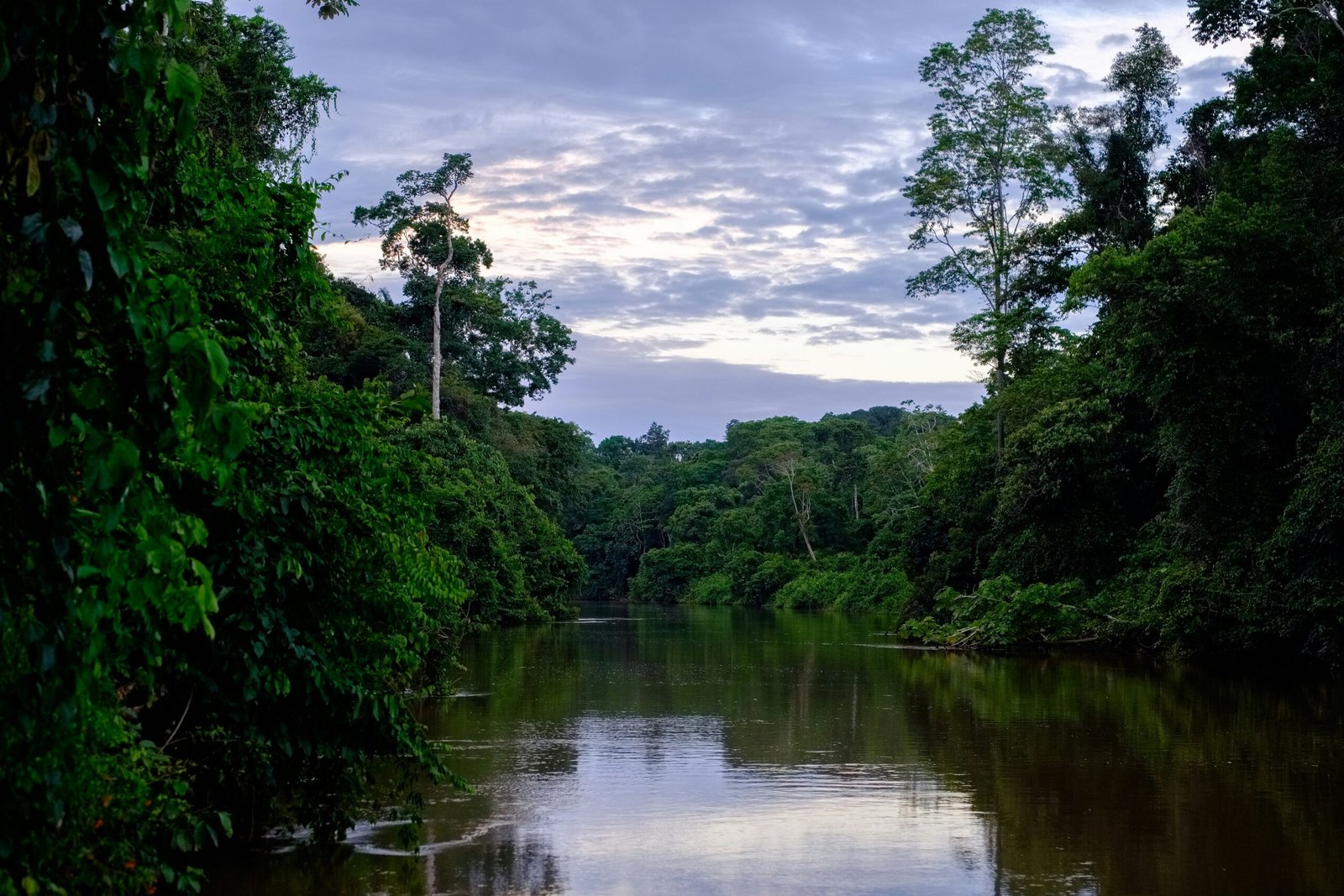
East of the Andes, Ecuador falls rapidly into the upper Amazon basin, an immense landscape of tropical forest, rivers, creeks and wetlands.
Although Ecuador contains only a relatively small part of the Amazon, its forests are exceptionally species-rich. Yasuní Biosphere Reserve is recognised by UNESCO as one of the most biodiverse areas on the planet and protects extensive areas of largely intact tropical rainforest.
Wildlife
The sheer diversity is the attraction here rather than sightings of a few large mammals. Monkeys, sloths, caimans, river dolphins, giant otters, tapir and even jaguar inhabit these forests, alongside extraordinary birdlife including macaws, parrots, toucans and hummingbirds.
Insects, reptiles, amphibians and plants are every bit as much a part of the experience.
Exploring the Rainforest
Forest walks reveal life at ground level, while dugout canoe trips along black-water creeks give access to quieter waterways. Canopy towers and walkways provide a completely different perspective and are particularly rewarding for birdlife.
Night walks are also worthwhile, when frogs and other nocturnal species become active.
Where to Stay
Two of the strongest options are Sacha Lodge and Napo Wildlife Centre.
Sacha sits within a large privately protected forest and combines excellent naturalist guiding with local Indigenous guides.
Napo Wildlife Centre lies within Yasuní and is owned by the Añangu Indigenous community, making it especially interesting for travellers wanting to see how wildlife tourism can support both forest conservation and local livelihoods.
How Long to Stay
We recommend at least three nights, although four gives considerably more time to explore.
Getting there is part of the experience, usually involving a short flight from Quito to Coca followed by travel along the Napo River and then smaller waterways into the forest.
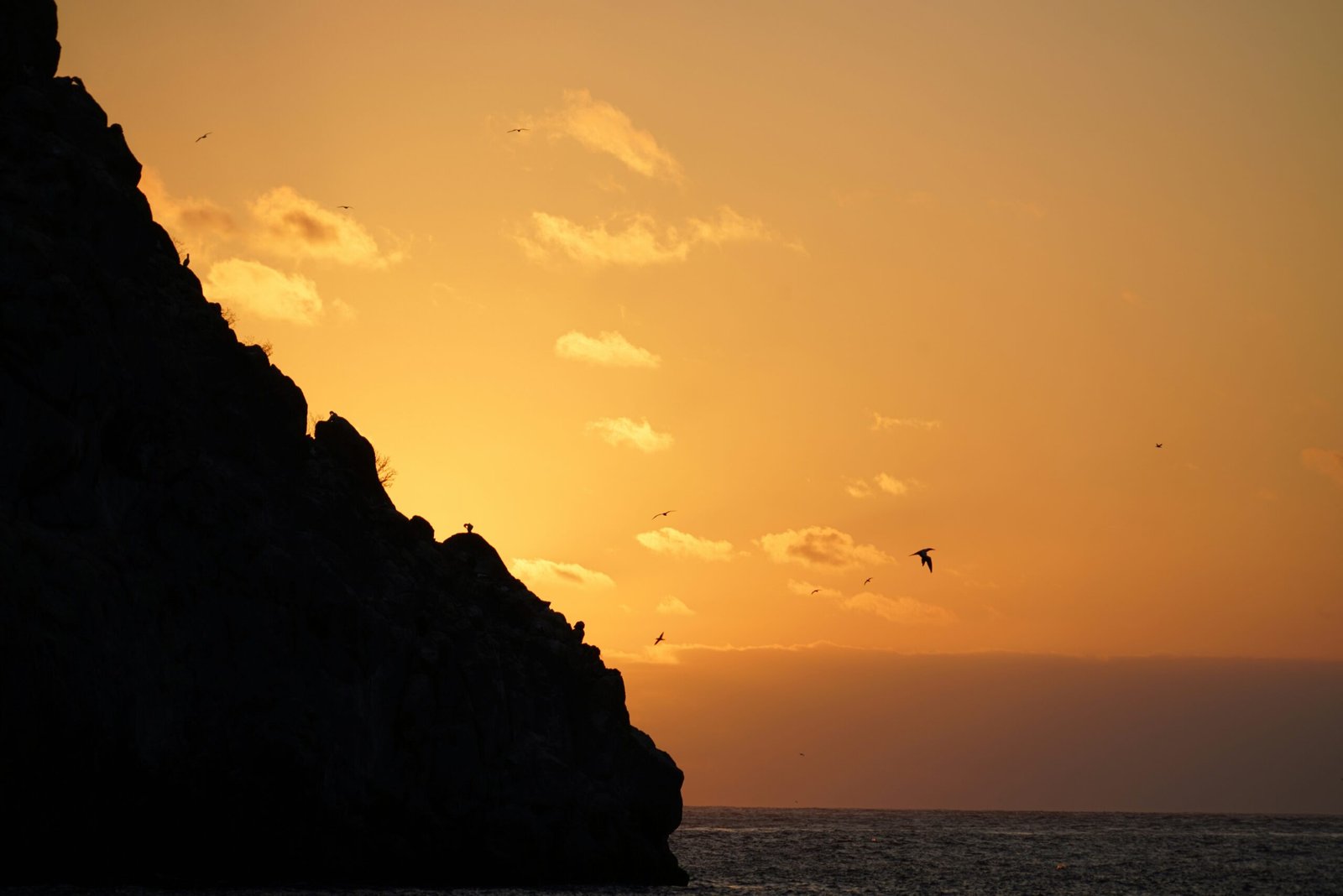
Around 600 miles off the coast of mainland Ecuador, the Galápagos Islands are unlike almost anywhere else on Earth.
Their isolation allowed plants and animals to evolve in distinctive ways, producing species found nowhere else. Giant tortoises, marine and land iguanas, Galápagos penguins, flightless cormorants, sea lions, Darwin’s finches and several species of booby are among the archipelago’s best-known inhabitants.
What makes the islands particularly special is not simply the wildlife, but how closely it can often be observed.
Exploring the Islands
The best way to see a broad selection of islands is by small expedition vessel.
Cruises generally combine guided walks with Zodiac or panga excursions, snorkelling, kayaking and paddleboarding. The Galápagos National Park manages a large network of authorised land and marine visitor sites, helping control where and how visitors explore the protected areas.
Choosing a Route
There is no single “best” Galápagos itinerary. Different routes emphasise different islands and wildlife.
Northern routes usually include areas such as Genovesa (Tower) and can be particularly strong for seabirds.
Western routes focus on Isabela and Fernandina, where volcanic landscapes combine with excellent opportunities for Galápagos penguins, marine iguanas and flightless cormorants.
Southern and eastern routes can include Española and Floreana, with waved albatross, flamingos, sea lion colonies and some excellent snorkelling.
For a first visit, we would prioritise the quality and size of the vessel, the naturalist guiding and the overall variety of the itinerary, rather than trying to tick off every island.
Wildlife Through the Year
The Galápagos can be visited throughout the year and most signature species are resident.
From roughly December to May, conditions are generally milder, with warmer seas and typically calmer water.
From June to November, the cooler Humboldt Current brings nutrient-rich water, making this an especially productive period for marine life and seabirds. Wildlife activity varies month by month; for example, waved albatross return to Española from around March/April, while different seabirds breed at different times of year.
Choosing a Vessel
Vessel size makes a significant difference.
Smaller ships can create a more intimate experience, particularly for getting ashore and travelling in Zodiacs. At the other end of the scale, high-end expedition yachts can offer exceptional comfort without sacrificing wildlife activities.
For us, the important things are good naturalist guides, responsible operations, manageable group sizes and an itinerary with plenty of time off the vessel.
Responsible Travel
The Galápagos is an exceptionally fragile ecosystem, and responsible tourism is fundamental to its protection.
Visitors should follow National Park guidance closely, remain on designated trails, keep appropriate distances from wildlife and avoid disturbing animals for photographs.
Choosing operators with strong environmental practices, knowledgeable local guides and a genuine commitment to conservation helps ensure tourism remains a positive force for the islands.
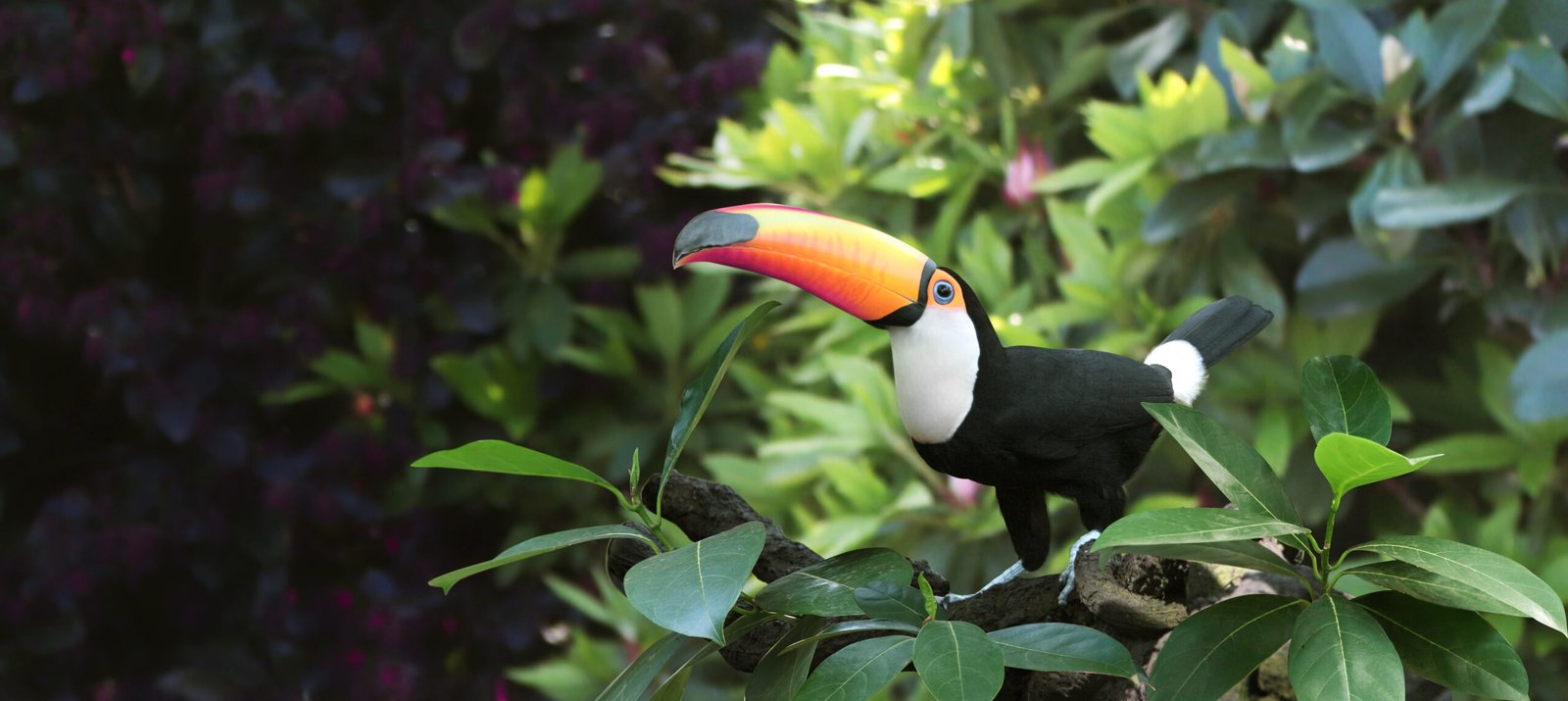
Ecuador is a year-round destination, but conditions vary considerably between the Andes, cloud forest, Amazon and Galápagos.
Quito & the Andes
Quito and the highlands can be visited throughout the year. The drier months from June to September often bring clearer skies and better mountain views, making this a good time for Cotopaxi, Antisana and the Avenue of the Volcanoes.
Conditions in the Andes can change quickly, however, and sunshine, cloud, wind and rain are all possible at any time of year.
Cloud Forest
The cloud forest is humid year-round, which is exactly what supports its extraordinary biodiversity.
Rain is possible at any time, although June to September is generally drier. Birdlife remains excellent throughout the year, with early mornings often particularly rewarding for hummingbirds, tanagers and other species.
Amazon
The Amazon is also a year-round wildlife destination.
The wetter period generally brings higher water levels, which can make canoe exploration especially rewarding, while drier months can favour walking trails and forest exploration. Rainfall is always possible and is very much part of the rainforest experience.
Galápagos Islands
The Galápagos can be visited at any time of year, with most of the iconic wildlife present throughout.
December to May is generally warmer, with warmer sea temperatures and often calmer conditions. This is an excellent period for snorkelling and marine activities.
June to November is cooler and drier, when nutrient-rich currents bring particularly productive marine conditions. This can be an excellent time for seabirds, penguins, sea lions and other marine wildlife, although seas can be choppier.
There is no single best month to visit the Galápagos – the choice depends more on the wildlife you most want to see and the type of conditions you prefer.
Our View
For a journey combining several regions of Ecuador, April–May and September–November can offer a particularly good balance, while the country as a whole remains highly rewarding throughout the year.
OUR PROJECT PARTNERSHIPS IN SOUTH AMERICA
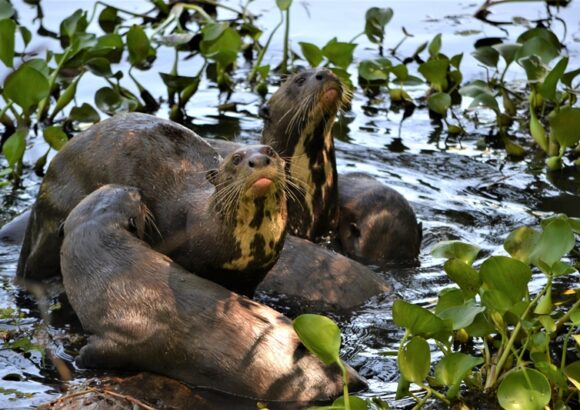
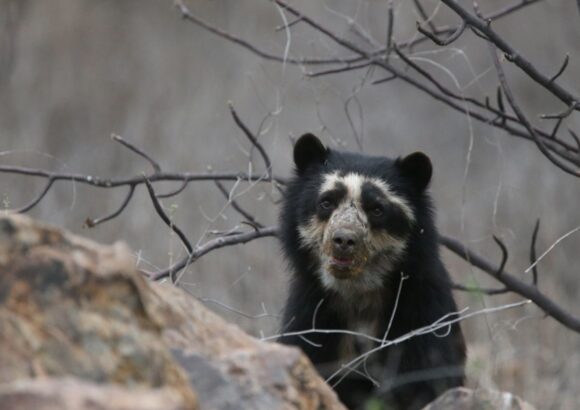
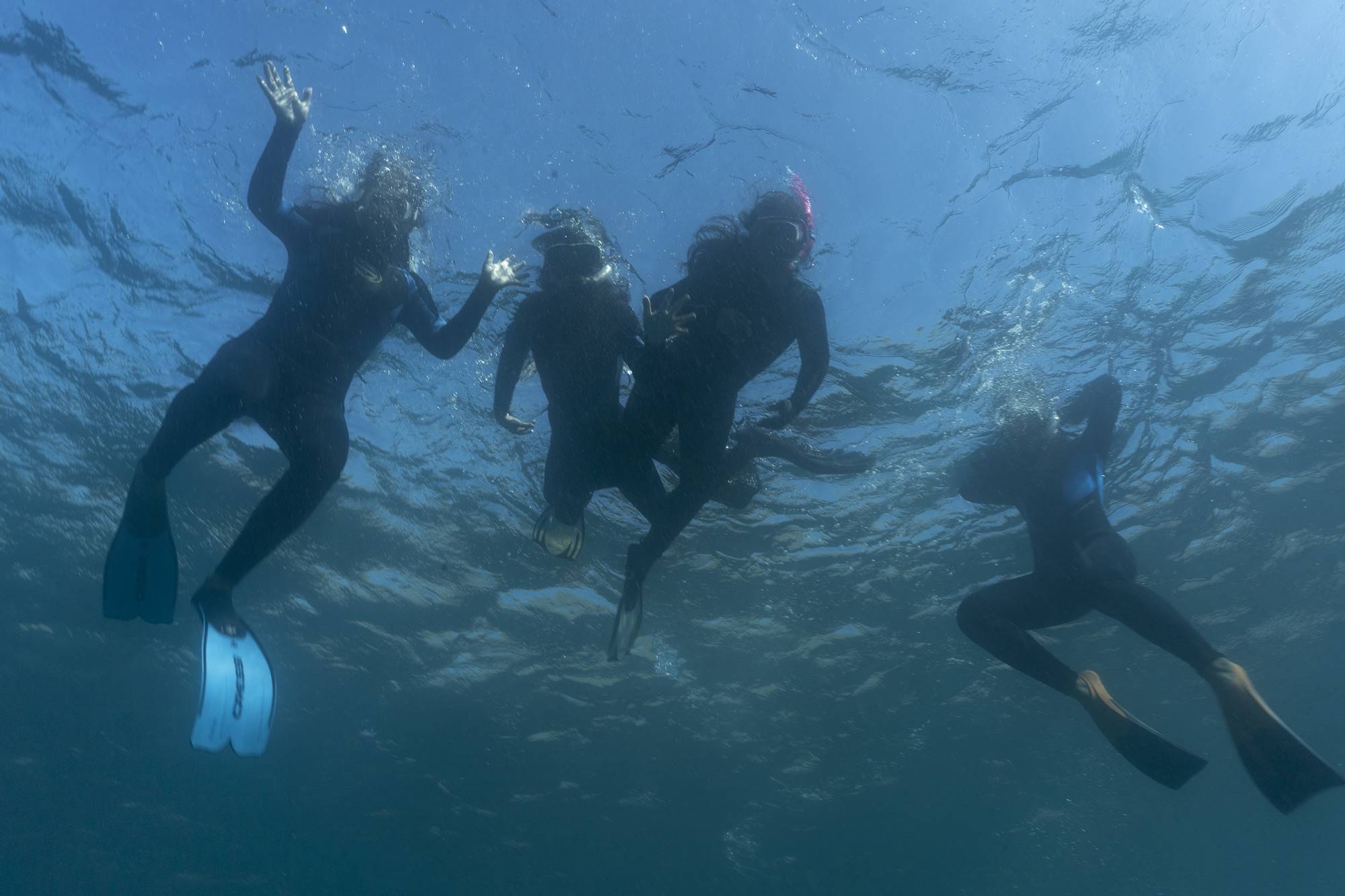
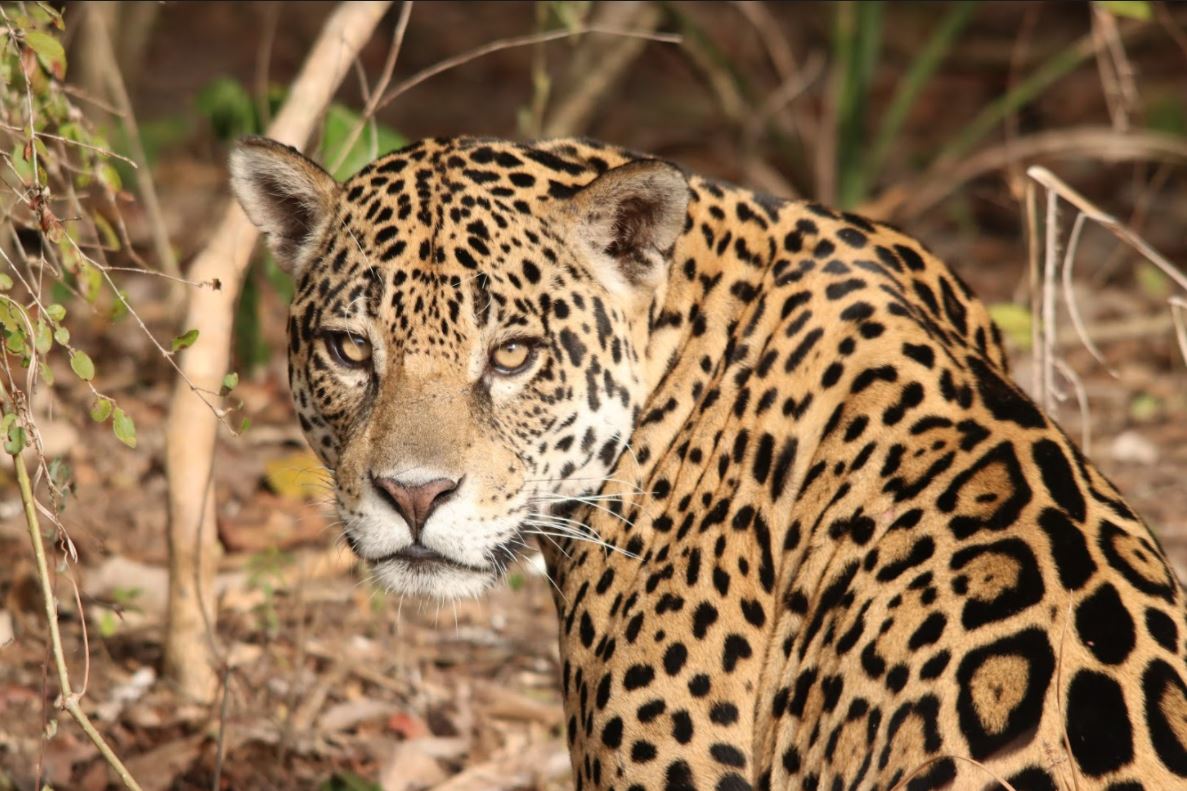
Image bottom left: Sacha Lodge