

Paul Goldstein
Big Blue, Trincomalee, Sri Lanka;
Photographic print
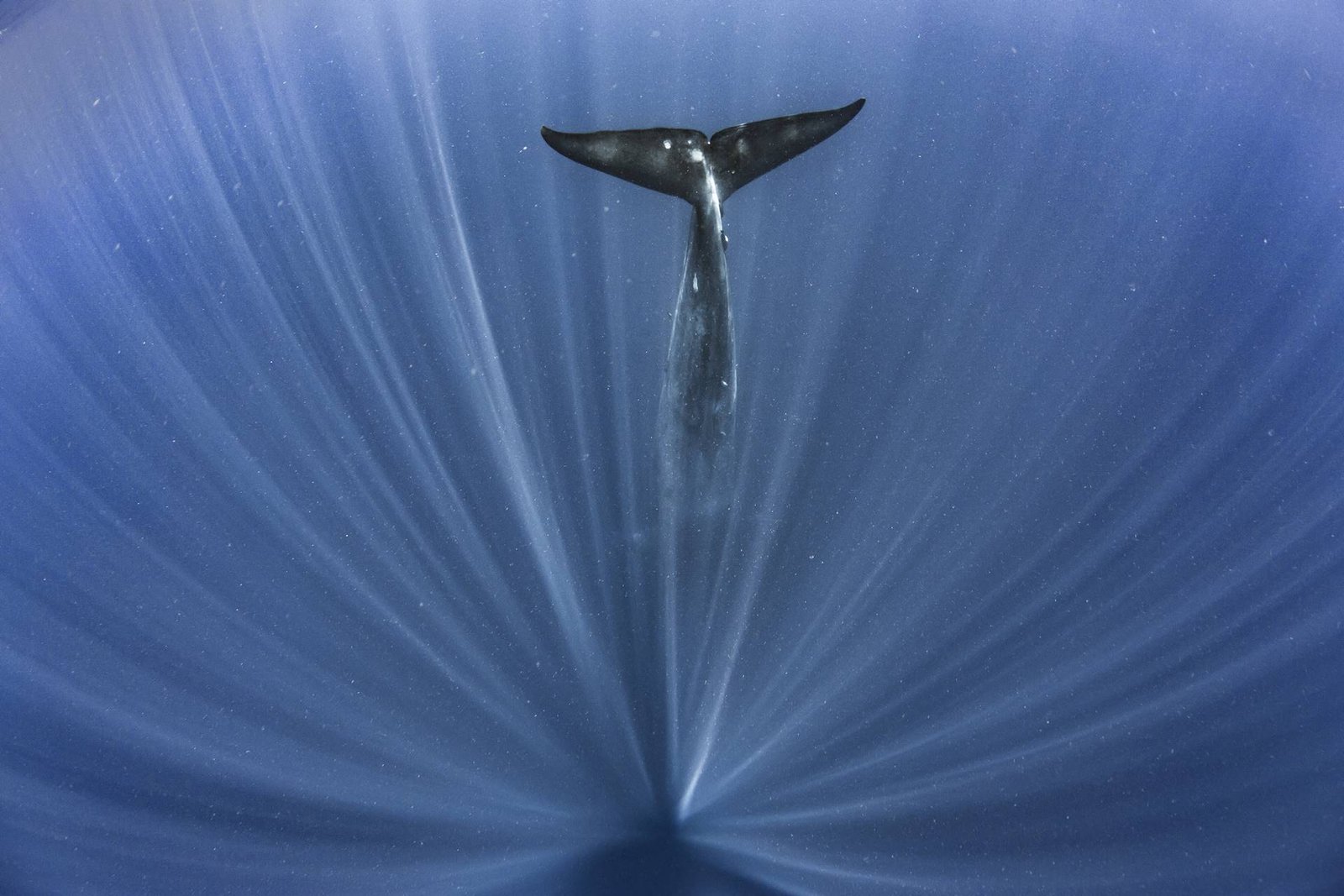
Off Sri Lanka’s northeast coast, deep underwater canyons and seasonal monsoon currents draw nutrient-rich water to the surface, creating one of the world’s finest feeding grounds for blue whales and other marine life.
Paul Goldstein is an award-winning British wildlife photographer, guide and conservationist with more than 40 years’ experience travelling and photographing wildlife across all seven continents. Entirely self-taught, he is particularly known for his images of predators and for his long association with Kenya’s Maasai Mara, where he co-owns the Kicheche safari camps. His photography is rooted in patience, fieldcraft and a strong belief in ethical wildlife encounters, with the welfare of the subject always taking priority over the image.
Goldstein is also a passionate conservation campaigner, using his photography, lectures and extraordinary endurance challenges to raise more than £500,000 for wildlife and community projects, particularly those supporting Bengal tiger conservation.
Warming Oceans
The ocean absorbs more than 90% of the excess heat trapped by greenhouse gases, buffering the impacts of climate change. Yet rising temperatures, changing currents and ocean acidification are disrupting marine ecosystems from plankton and krill to coral reefs, forcing wildlife throughout the food web to adapt.
RENEWAL IN ACTION
Rebuilding Ocean Resilience
Across Mauritius, Rodrigues and the Seychelles, the United Nations Development Programme’s Restoring Marine Ecosystem Services initiative is restoring damaged coral reefs and cultivating corals better able to withstand warmer seas. Healthy coral reefs support some of the world’s richest marine food webs, providing nursery grounds for fish, sustaining biodiversity and helping coastal ecosystems recover from a warming ocean.