

Emma Swift
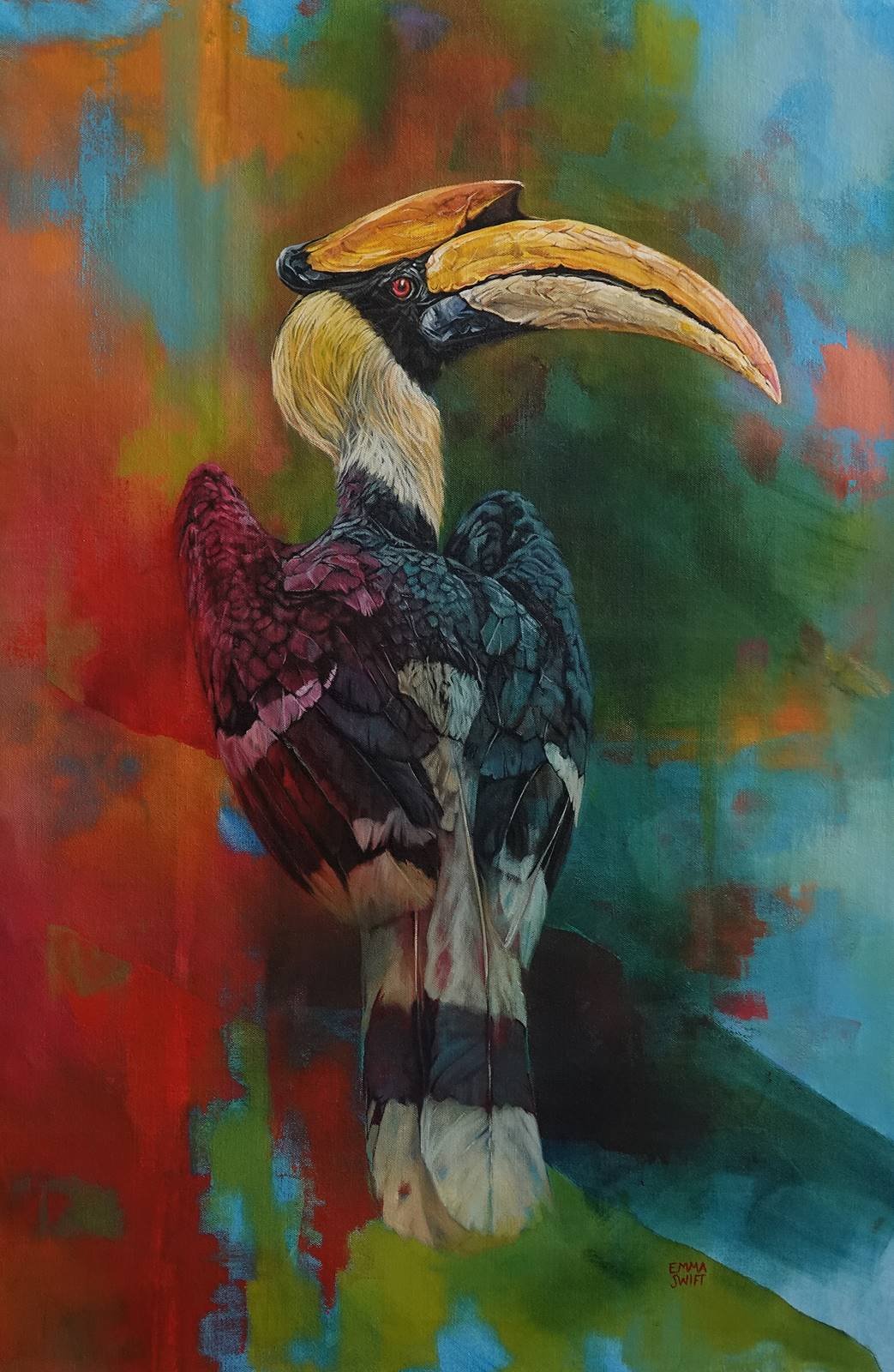
Great Hornbill;
Acrylic on linen canvas
Emma Swift is an award-winning British wildlife artist whose detailed and expressive work reflects a lifelong fascination with animals and the natural world. Working predominantly in oils, she creates richly observed wildlife portraits that seek to capture not only the appearance of her subjects, but also their character, movement and presence.
Swift has achieved considerable recognition through leading wildlife art competitions. She has enjoyed particular success with Explorers Against Extinction’s Sketch for Survival, where her work has been selected on multiple occasions and has proved extremely popular with collectors and supporters. She has also received recognition through the David Shepherd Wildlife Foundation’s Wildlife Artist of the Year Awards, one of the most established international platforms for contemporary wildlife art.
Her paintings range from African mammals and big cats to British wildlife, combining careful observation with an accomplished handling of light, texture and atmosphere. Rather than simply creating an accurate representation, Swift aims to communicate something of the encounter with the animal and to encourage a deeper connection between the viewer and the natural world.
Conservation is an important thread running through her practice. Through competitions, exhibitions and the sale of her work, her art has helped raise funds and awareness for wildlife and the protection of threatened species and habitats.
At a time when wildlife faces increasing pressure from habitat loss, climate change and other human impacts, Swift’s paintings celebrate the beauty and individuality of animals while reminding us what is at stake. Her combination of technical skill, sensitivity and commitment to conservation has established her as a distinctive voice within contemporary British wildlife art.
Rebuilding Nature
Great hornbills are among the most important seed dispersers in Asia’s tropical forests. As rising temperatures alter fruiting seasons and deforestation fragments ancient forests, trees and hornbills increasingly struggle to support one another. Protecting hornbills also means protecting the forests they help regenerate.
Nature can recover when natural processes are restored. Reconnecting forests, wetlands and grasslands allows wildlife to return, strengthens biodiversity and builds resilience to environmental change.
The greatest threat to orangutans is the loss of their forest habitat. In Indonesian Borneo, Explorers Against Extinction supported the Orangutan Foundation to restore 10 hectares of degraded rainforest within Lamandau Wildlife Reserve through the construction of a new nursery and the planting of 12,000 native tree seedlings. Every restored hectare creates new opportunities for orangutans and the countless other species that depend upon healthy rainforest.