

Gary Hodges
Sabu;
Hand embellished print
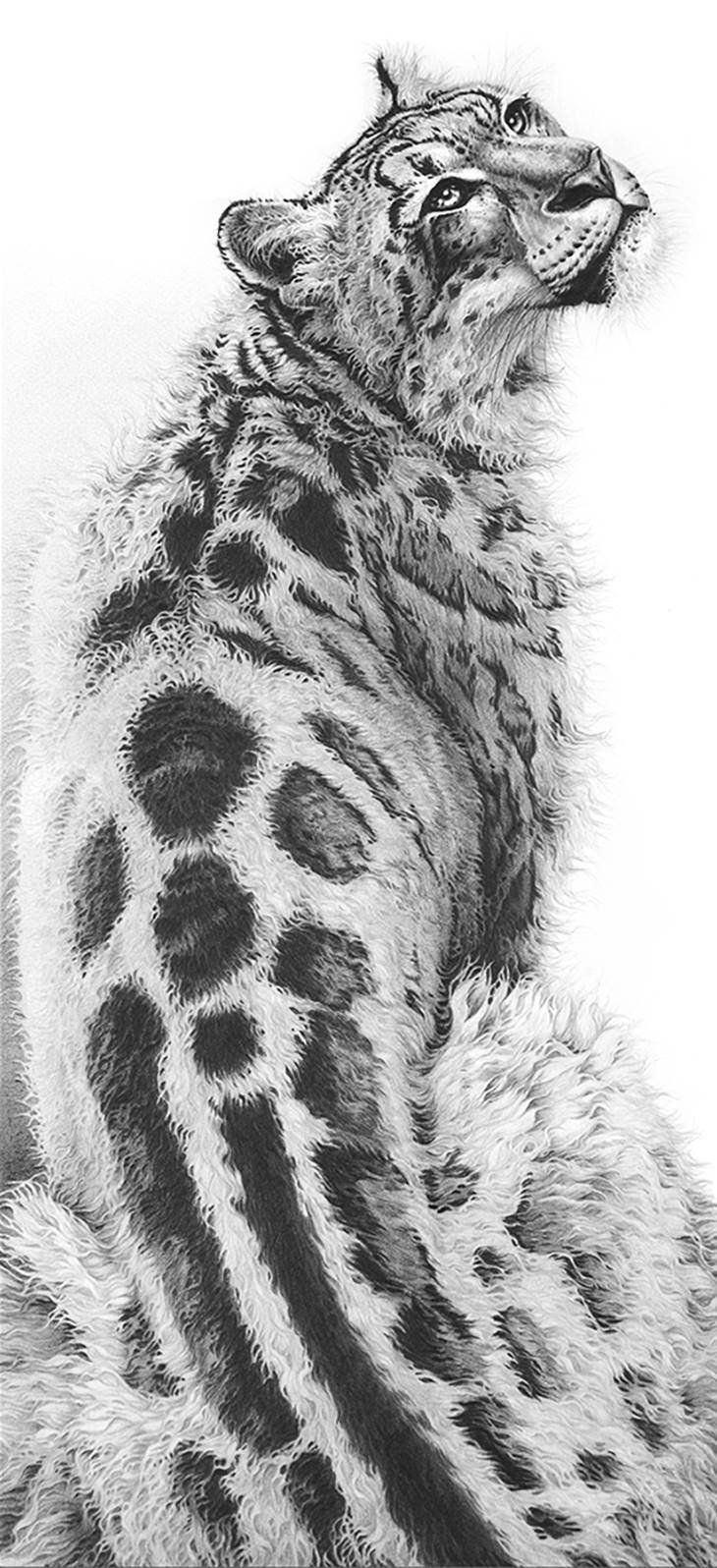
Gary Hodges is one of Britain’s best-known wildlife artists, celebrated for his extraordinarily detailed pencil drawings and his longstanding commitment to conservation. Working almost exclusively in graphite, he creates powerful portraits of wildlife that combine remarkable technical precision with a strong sense of character and emotional connection.
He developed his distinctive approach to drawing largely through observation and experimentation. His subjects range from elephants, rhinos and big cats to primates, marine life and British wildlife. Working from his own photographs and field observations, he builds his drawings slowly, using subtle variations in tone and texture to capture everything from skin and fur to light, movement and expression.
Hodges has enjoyed considerable success since becoming a full-time artist in the 1980s. His limited-edition prints have attracted collectors around the world, while major solo exhibitions have drawn large audiences. His work has become particularly associated with elephants, animals for which he has a deep affection and which have featured throughout his career.
Conservation is fundamental to Hodges’ work. Over several decades he has used his art to raise awareness and substantial funds for wildlife organisations and projects, particularly those protecting elephants and other threatened species. His commitment goes well beyond depicting endangered wildlife: fundraising and advocacy have become an integral part of his artistic career.
Hodges has also been a longstanding supporter of Explorers Against Extinction, contributing original work to help raise funds for frontline conservation projects, as well as being head judge on their Sketch For Survival competition.
Through the simplicity of pencil and paper, Hodges creates images of extraordinary depth and intensity. His work demonstrates the power of wildlife art not only to celebrate the beauty of individual animals, but also to build empathy and encourage people to care about their survival.
Understanding the Ghost of the Mountain
As temperatures rise, treelines creep higher into the alpine zone, reducing the grasslands that support prey such as ibex and blue sheep. With prey numbers under pressure, snow leopards are forced closer to human settlements in search of food, bringing people and predators into increasing conflict.
In India’s Spiti Valley, Nature Conservation Foundation researchers are using long-term monitoring, camera traps and genetic analysis to better understand snow leopard populations across the high Himalaya. Supported by Explorers Against Extinction, the project is helping identify key habitats, monitor population health and guide community-based conservation that enables people and predators to share this remarkable landscape.