

Sophie Green
Scales of Injustice;
Acrylic on linen canvas
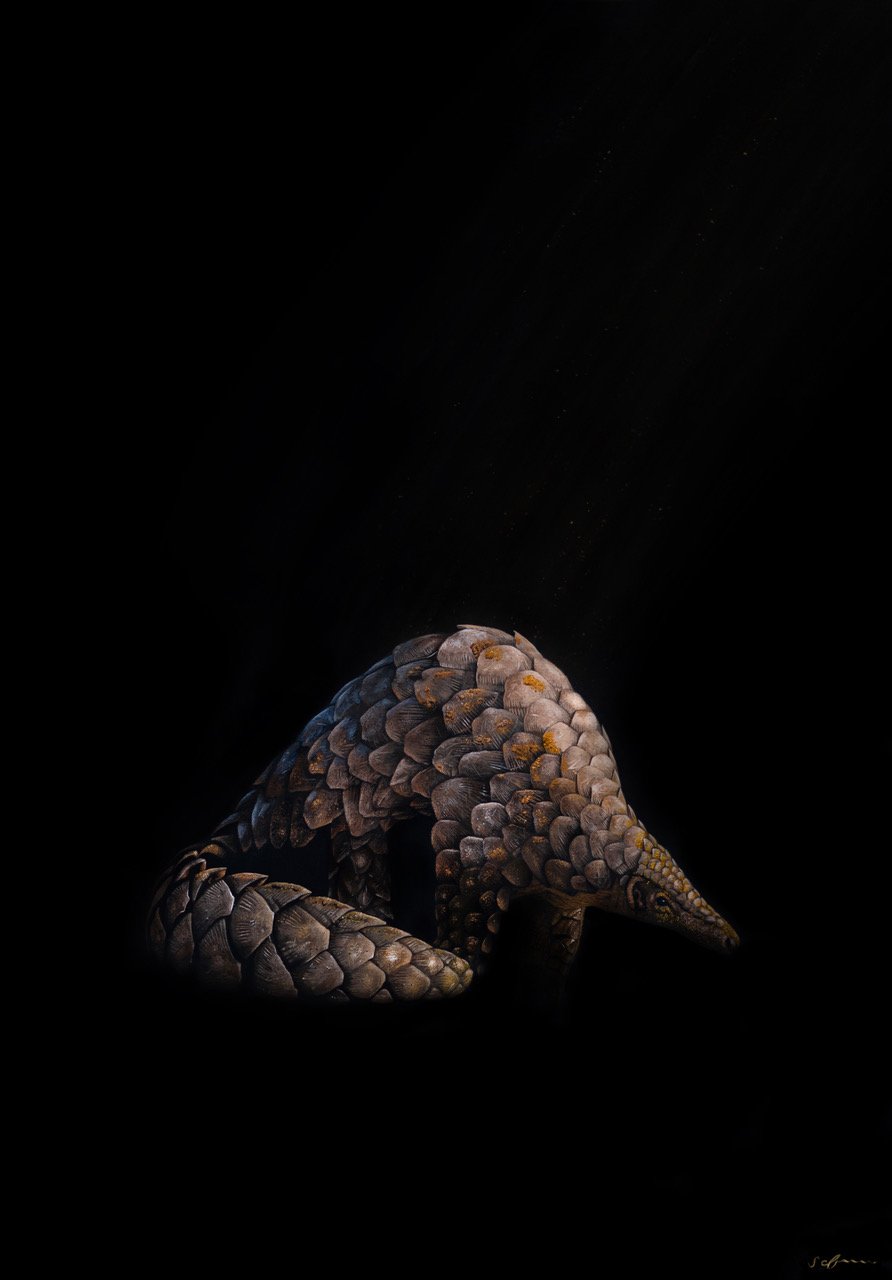
Sophie Green is an award-winning British wildlife and conservation artist whose highly detailed paintings celebrate some of the world’s most threatened species while raising awareness and funds for their protection.
Working primarily in acrylics, Green is known for her strikingly realistic portraits of animals, often placing her subjects against clean or minimal backgrounds. This distinctive approach focuses attention on the individual animal – its character, expression and presence – and reflects her belief that art can help people form a stronger emotional connection with wildlife and the challenges it faces.
Conservation lies at the heart of Green’s practice. Her work has supported numerous wildlife charities and conservation initiatives around the world, raising significant funds through original paintings, prints, exhibitions and special projects. She has worked with organisations protecting species including elephants, rhinos, big cats, primates and marine wildlife, using her growing international profile to draw attention to habitat loss, poaching, wildlife trafficking and other pressures on the natural world.
Green’s paintings have been exhibited internationally and have received numerous awards. Her work has featured in major wildlife art exhibitions, and she has been recognised for both her technical skill and her commitment to conservation. She is also an ambassador for wildlife and environmental causes, demonstrating how artists can play an active role in communicating conservation stories beyond the scientific and campaigning communities.
At the centre of Green’s work is a simple but powerful idea: that encouraging people to see animals as individuals can help inspire greater empathy for the species and ecosystems they represent. Combining meticulous observation with a strong conservation purpose, her paintings seek not simply to depict wildlife, but to celebrate what remains and encourage action to protect it.
From Rescue to Recovery
Pangolins depend on healthy forests alive with ants and termites. Habitat loss, climate change and illegal wildlife trade make it increasingly difficult for slow-breeding pangolin populations to recover.
Rescuing an animal is only the beginning. Long-term protection depends on understanding how wildlife survives and thrives once it returns to the wild.
The Lilongwe Wildlife Trust’s pangolin programme, supported by Explorers Against Extinction, is helping build Malawi’s first detailed picture of wild pangolin populations. Rehabilitated pangolins are fitted with unique identification markers and GPS or VHF tracking tags before release, allowing rangers to monitor their movements and respond if animals face new threats. Every successful release adds to our understanding of one of the world’s most heavily trafficked mammals, helping improve its long-term conservation.