

Karen Laurence Rowe
Water Seeker;
Acrylic on linen canvas
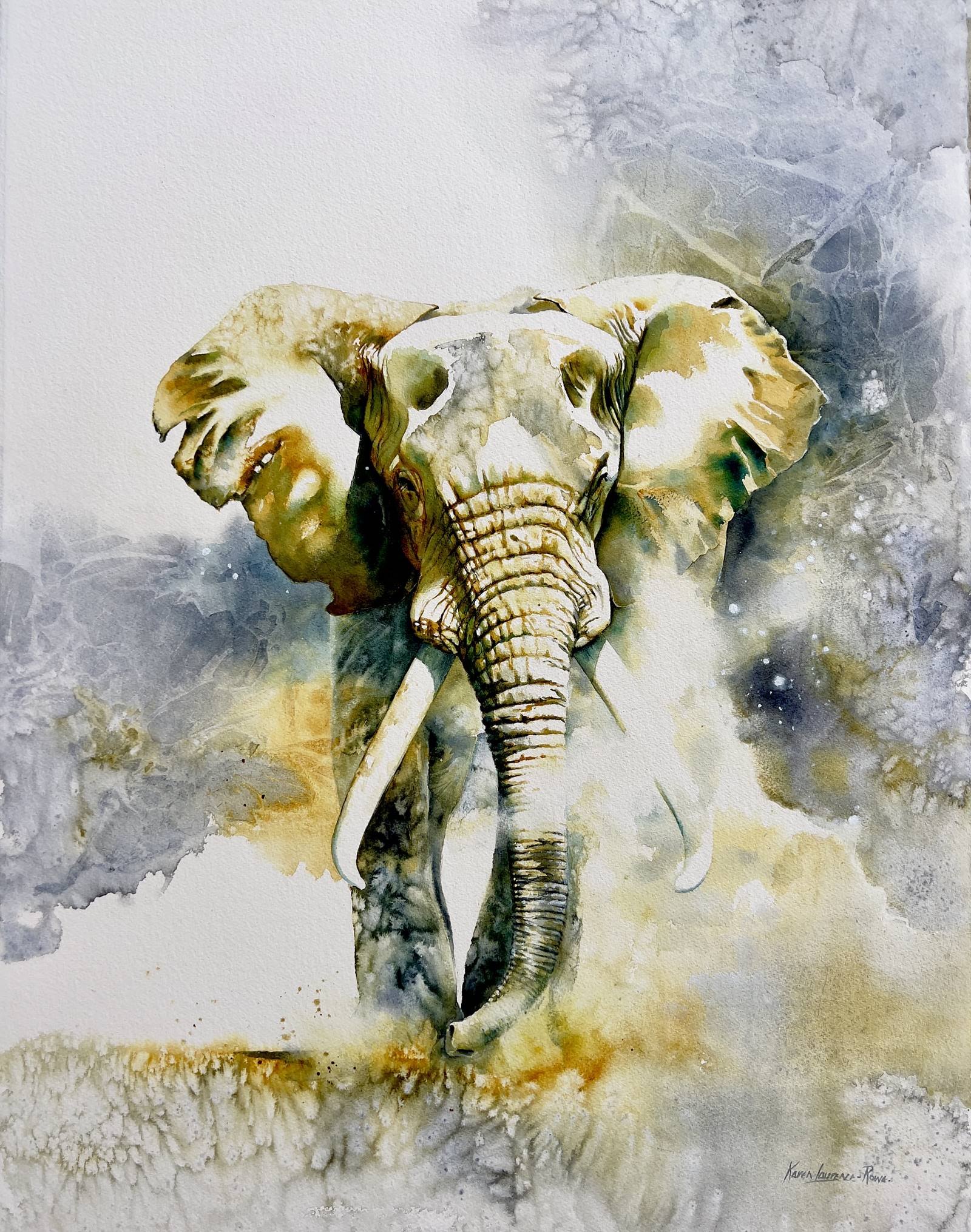
Karen Laurence-Rowe is an award-winning wildlife artist based in Kenya, whose paintings are inspired by a lifetime immersed in the landscapes and wildlife of East Africa. Born in Uganda and raised in Kenya, she has developed a distinctive style that combines accomplished wildlife portraiture with a strong sense of atmosphere, movement and the drama of the African wilderness.
Working primarily in oils and watercolours, Laurence-Rowe is particularly known for her depictions of elephants, big cats and other African wildlife. Her paintings are informed by extensive time in the field, observing animals and the landscapes they inhabit. Light, dust, distance and changing weather frequently play an important role in her compositions, allowing her to capture not simply an individual animal but a sense of place and the experience of encountering wildlife in the wild.
Laurence-Rowe has received significant international recognition. She was named David Shepherd Wildlife Foundation Wildlife Artist of the Year in 2012, winning again in 2023,making her the only artist to win the award twice. Her paintings are held in private collections around the world and have been exhibited internationally.
Conservation is integral to her work. Living and working in Kenya has given Laurence-Rowe first-hand experience of both the richness of East Africa’s wildlife and the increasing pressures facing its habitats. She has used her art to raise substantial funds for conservation organisations and projects, supporting efforts to protect wildlife and the landscapes on which it depends.
Her work combines technical skill with a deep personal connection to Africa. Whether capturing the power of an elephant, the intensity of a predator or animals disappearing into a vast landscape, Laurence-Rowe’s paintings celebrate the wild character of East Africa while reminding viewers of the importance of ensuring that these species and places endure.
People and Wildlife Together
Savannah elephants shape entire ecosystems by creating waterholes, dispersing seeds and opening pathways through woodland and scrub. As drought intensifies and habitats become fragmented, elephants travel further in search of food and water, increasing conflict with people and placing greater pressure on already vulnerable populations.
Conservation is most successful when local people benefit from protecting nature. Around the world, communities are reducing conflict with wildlife while creating sustainable livelihoods linked to healthy ecosystems.
At Reteti Elephant Sanctuary in northern Kenya, the first community-owned and community-run elephant sanctuary in Africa, more than 1,200 Samburu women now supply fresh goat’s milk for orphaned elephants. What began as an emergency response during the COVID-19 pandemic has grown into a programme that empowers women while helping orphaned elephants return to the wild. Explorers Against Extinction is funding a new milk handling and pasteurisation unit, strengthening Reteti’s ability to care for orphaned elephants during periods of drought.