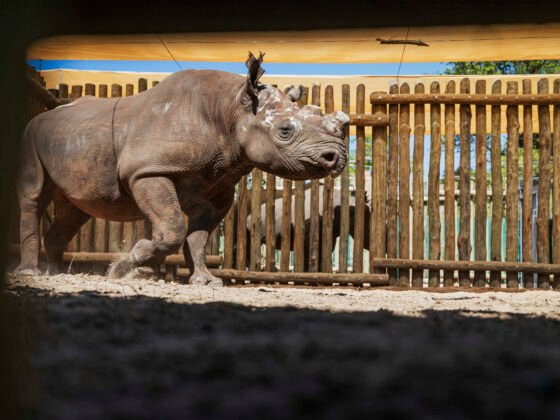

Garamba National Park in the Democratic Republic of Congo was the last wild home of the northern white rhino, an endemic sub species of white rhino – the largest and reportedly most sociable of rhino species.
The rise and fall of northern white rhinos
Northern white rhino used to be wide ranging, found in Uganda, Sudan, DRC, Chad and Central African Republic but by the 1980s only an isolated population of 15 survived in Garamba. It is estimated that over 2,300 were lost in this region due to armed conflict and rampant poaching in the 60s and 70s.
Although conservation efforts briefly led to some respite and allowed the northern white rhino numbers to recover to 30 in Garamba, success was short-lived due to political rifts, conflict and increased poaching pressure.
Efforts were made to translocate some of the rhino away from the conflict zone to other areas in Africa, but plans were thwarted. Numbers dwindled once again as conflict escalated, and by 2006 the northern white rhino was considered locally extinct.
Some of the sub species survived in captivity in the US and Czech Republic. Their sad story is well-known, with the death of Sudan, the last male northern white in March 2018 making headlines around the world.
It was a privilege to spend time with Sudan in 2016 at the Ol Pejeta Conservancy in Kenya, where the last remaining two northern white female rhino on the planet, Najin and Fatu, still reside in a special 700 acre enclosure.
Sudan loved a tickle behind his ear, and on his mud-caked belly.
Image: Looking extinction in the face – meeting Sudan at the Ol Pejeta Conservancy, 2016
Garamba’s restoration
It felt particularly poignant to meet Sudan and then to travel to Garamba National Park, now managed by NGO African Parks in partnership with the Institut Congolais pour la Conservation de la Nature (ICCN), a few years later in 2019.
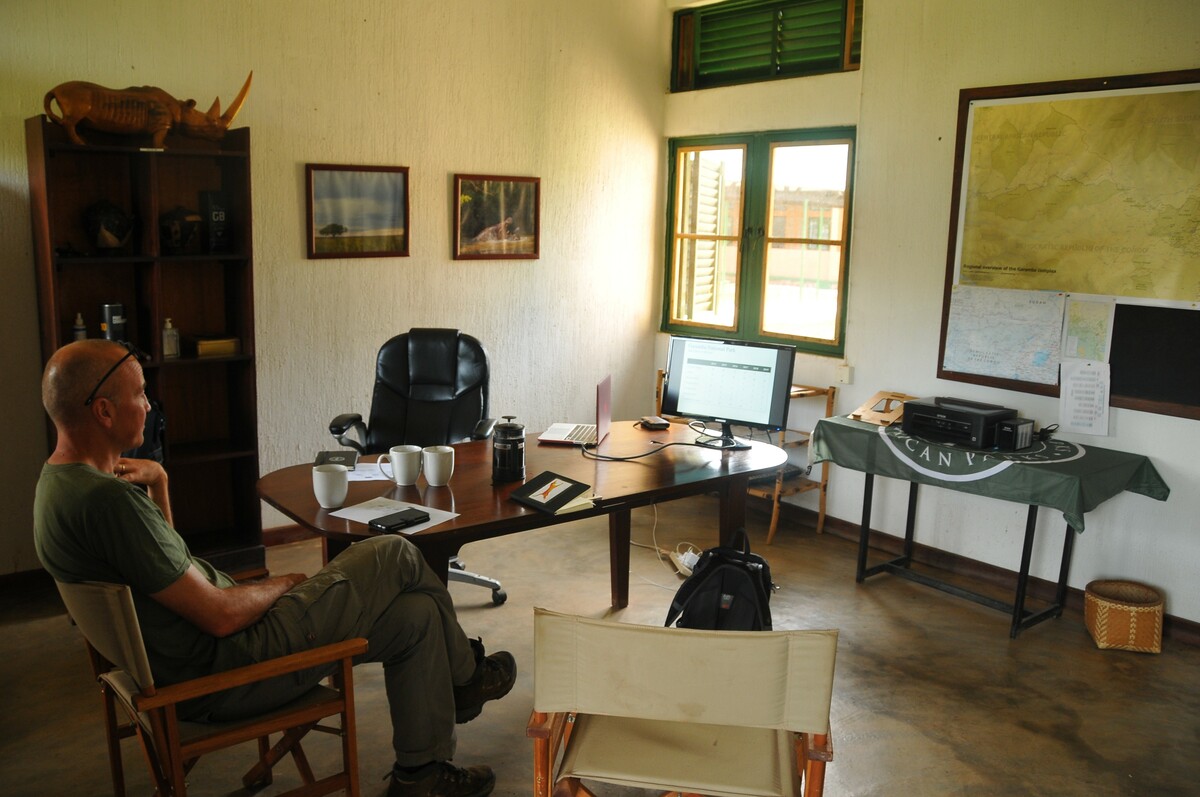
I remember being sat in John Barrett’s office (General Manager of Garamba) during that visit.There was a bottle of whisky and a bottle of gin on the bookshelf behind John’s desk, and a large leather rhino on the top shelf – a nod to the northern whites.
As trustees of Explorers against Extinction, we were there to learn more about Garamba and to shadow one specific element of John’s new programme – the K9 unit – which Explorers Against Extinction helped to fund.
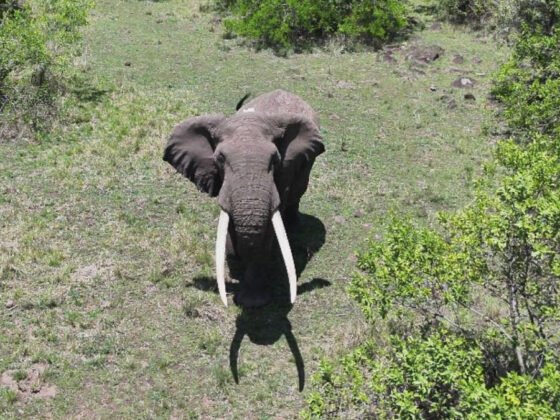
Ex-army, John took up the post at Garamba with African Parks in 2016. With a steely resolve to break the cycle of destruction, under his leadership a new law enforcement programme was implemented. In 2016, 91 elephants were lost to poaching. In 2018 three elephants were lost.
The progress in Garamba has been inspiring. Many species have shown population growth and a combination of law enforcement and socio-economic community initiatives has led to a decrease in illegal activity.
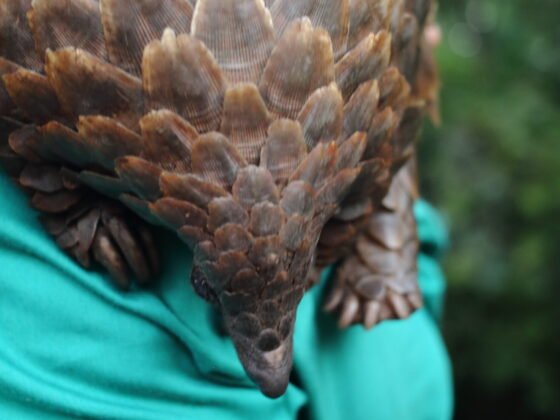
We talked to the team while we there about ambitions to return rhino to the landscape and how the dogs would be a vital tool to help protect them, as well as other endangered species including pangolin, Kordofan giraffe and elephant.
Four years on from our visit to Garamba and I can hardly believe that I am writing about the reintroduction of rhino! It really is momentous. I hope John has been able to celebrate with a nip or two of whisky!
Why are rhino so important to Garamba?
The northern white rhino played an incredibly important role in Garamba, helping to maintain the ecosystem. Without them, and also with the dramatic reduction in elephant numbers, ‘the gardeners of the forest’, the landscape has changed over the years.
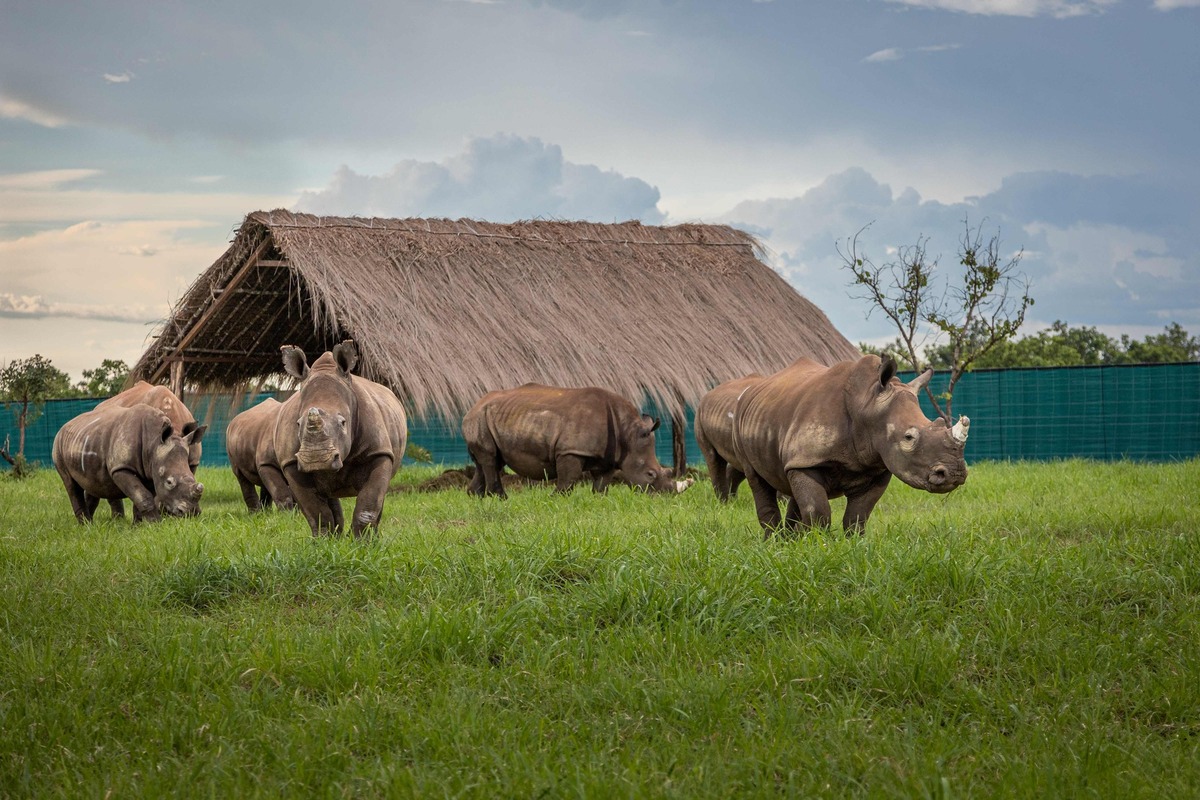
White rhinos have a characteristic wide mouth, or square lip. The tough prehensile lips enable the white rhino to effectively ‘mow’ and create grazing lawns, an ideal, open habitat for antelope and other species. The lawns also act as a natural fire break.
This translocation is part of a broader conservation initiative within the Garamba Complex (GC) to restore the full diversity of megaherbivores in the park. By introducing southern white rhinos, Garamba National Park will significantly contribute to the wildlife economy of the DRC, ensuring that the conservation of the country’s natural landscapes generates long-term benefits for local communities and all Congolese.
Rhino Translocation
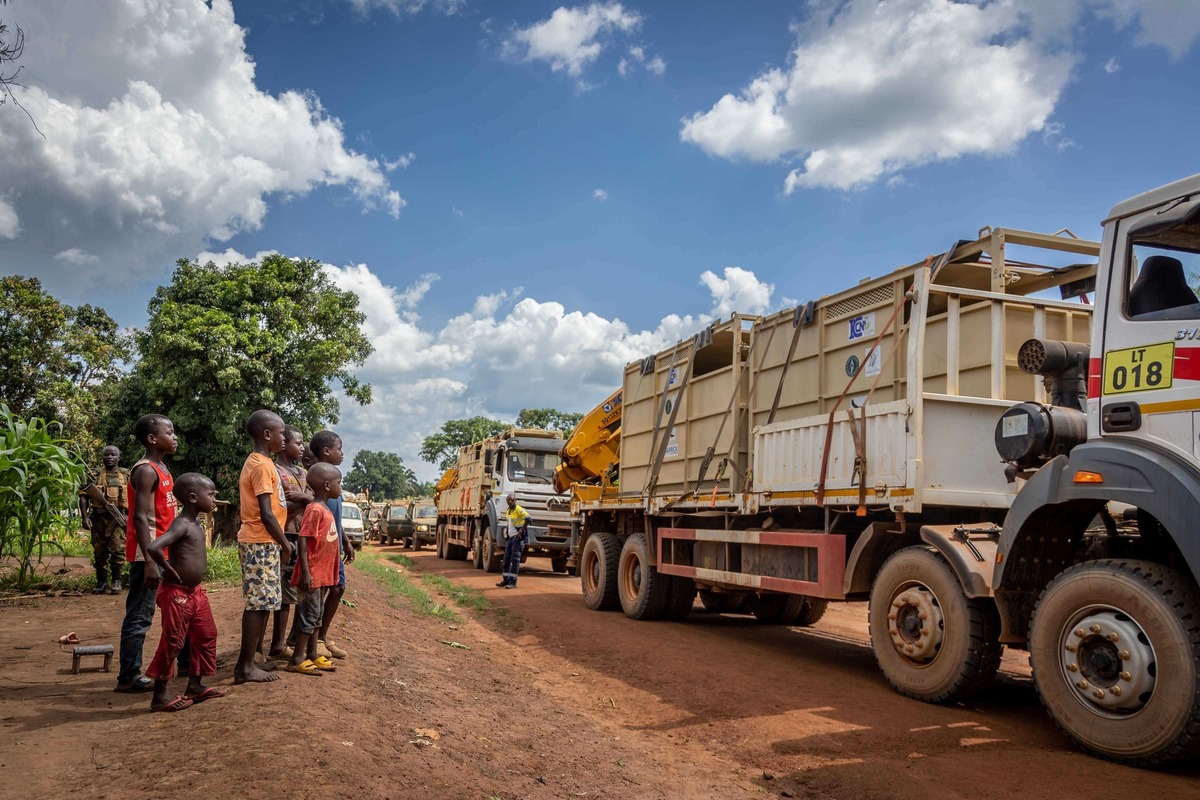
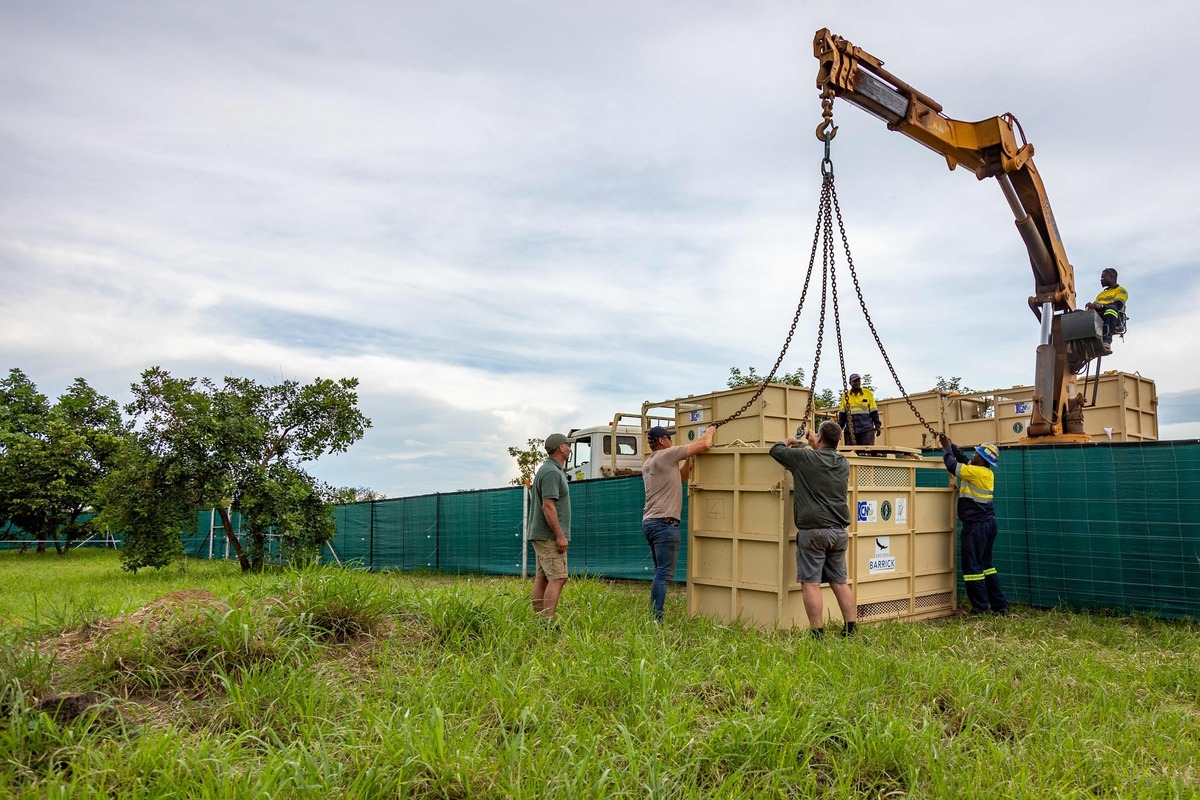
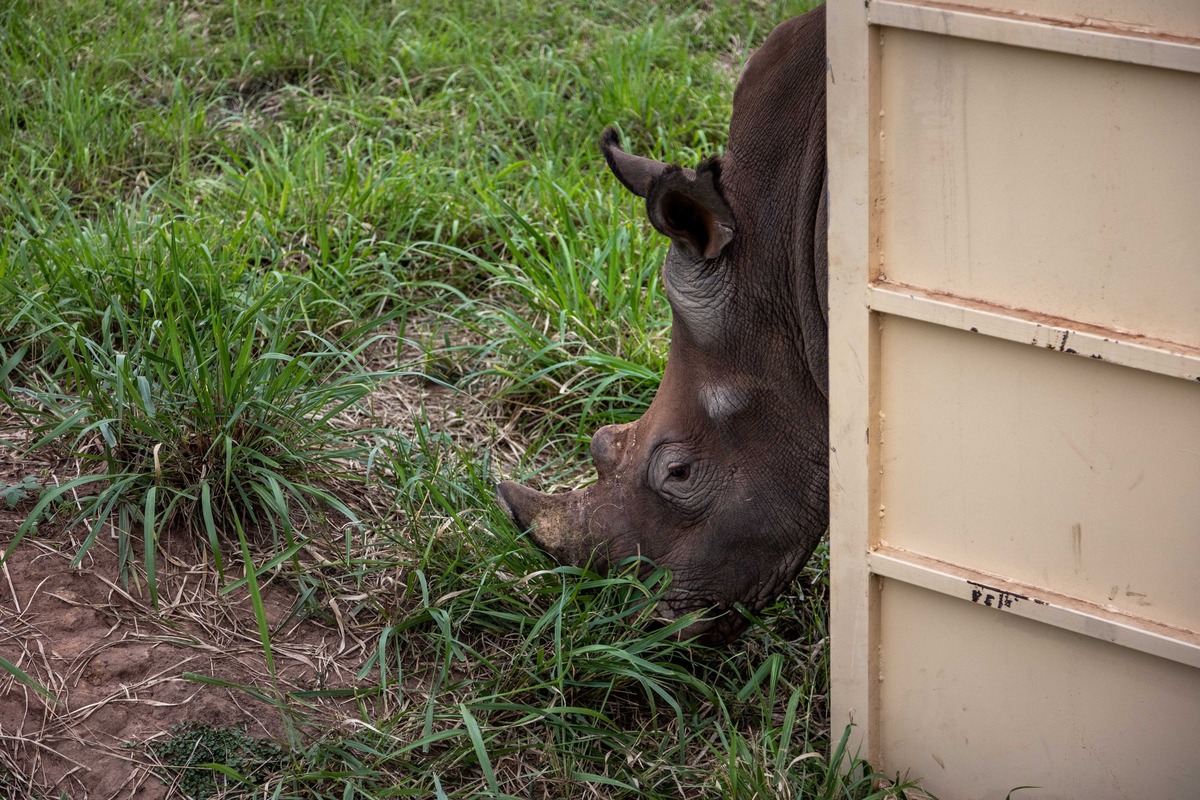
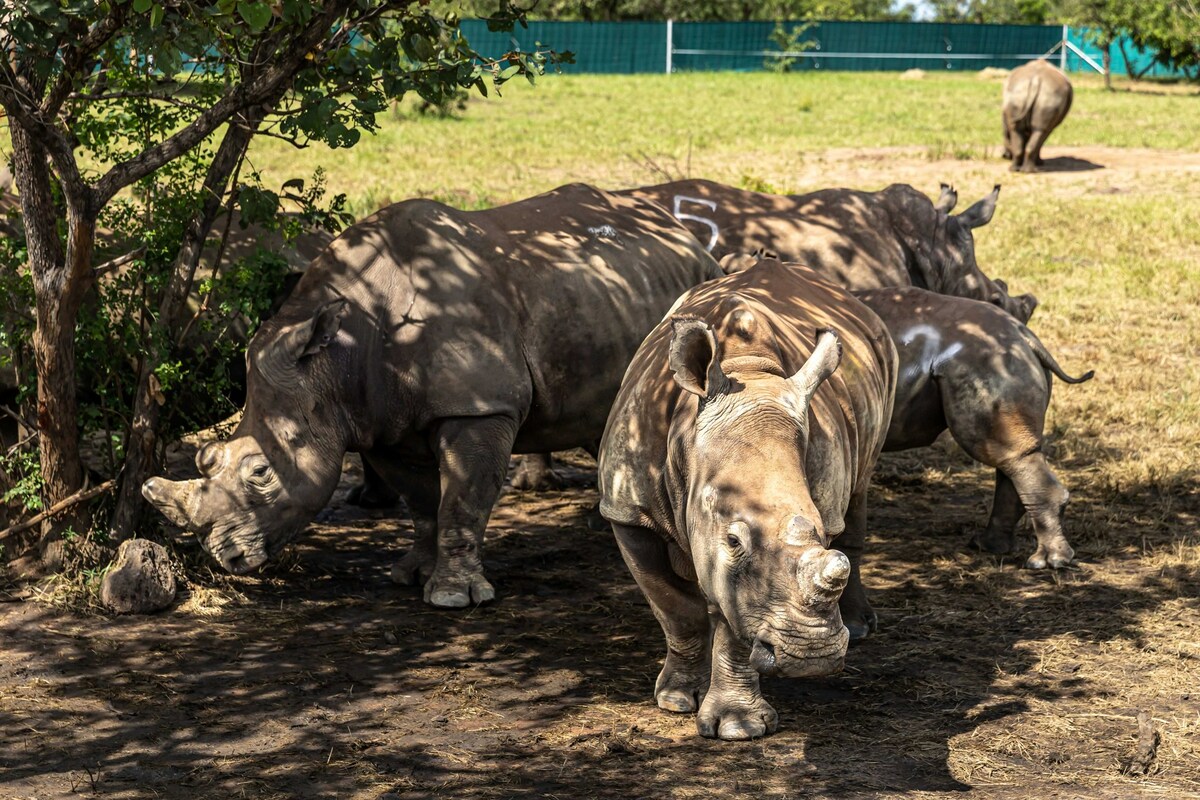
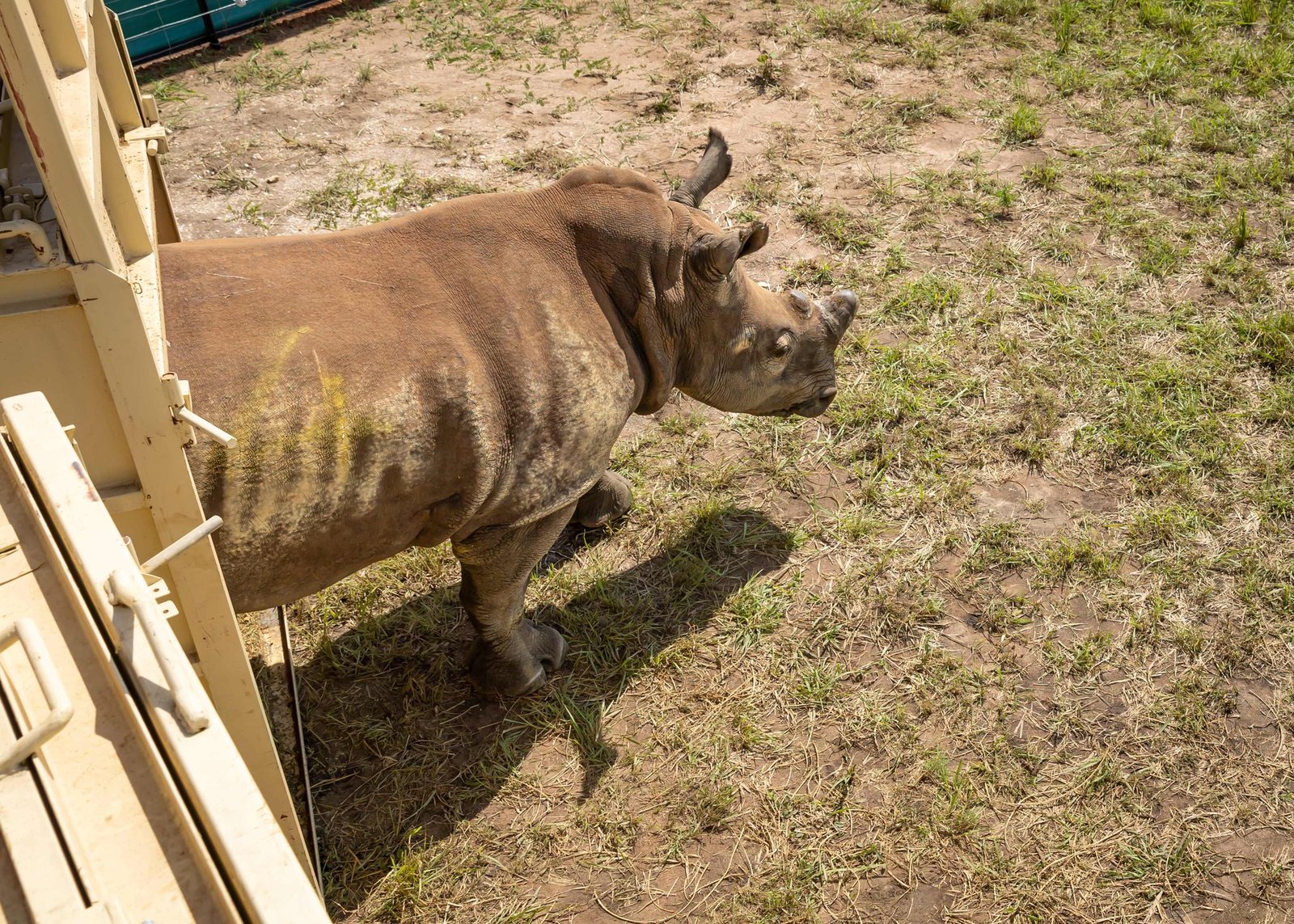
16 southern white rhinos were transported from &Beyond Phinda Reserve in South Africa to Garamba National Park. They arrived last week in two groups over the course of five days, with all 16 being reunited on arrival, and acclimitised in a special boma.
When ready for release, it is hoped that the southern white rhino will fulfil the same role as the endemic northern white rhino did in the past, grooming the landscape and creating these clearings.
The ambition is to translocate further southern white rhino to Garamba to create a viable breeding population.
You can read the full report about the translocation on the African Parks blog. We look very forward to sharing further updates.
Images (below): African Parks, Frank Weitzer; Martin van Rooyen.