Heading north from the dusty scrape of Samburu’s Kalama airstrip, the landscape shifts almost immediately, opening into something wilder, redder and far more expansive.
We join the A2, which cuts through northern Kenya beneath the watchful presence of Mount Ololokwe, its dark outline anchoring the horizon. Camels and goats drift across the roadside, guided by Samburu pastoralists wrapped in bright shukas. Everything moves at an unhurried pace. It feels timeless.
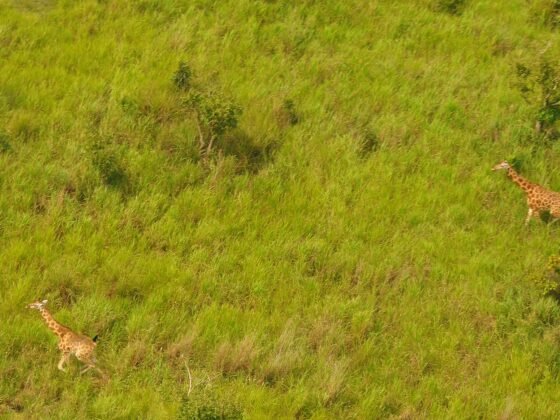
Wildlife appears in glimpses between the trees. A reticulated giraffe lopes through the scrub with easy grace. Grevy’s zebra flicker into view, then disappear just as quickly. A Somali ostrich pauses mid-step, almost performative, as if aware it is being watched. These are species shaped by this harsher, arid environment. Resilient and distinctive.
There is an immediate sense that this is a different Kenya. More remote, less visited and as much about people and landscape as wildlife.
Our destination is the Namunyak Community Conservancy, where conservation, eco-tourism and community come together.
A Landscape Recovered
Namunyak Community Conservancy, set within the folds of the Mathews Range, has not always been the thriving place it is today.
The ivory poaching crisis of the 1970s, combined with instability during the Somali civil war in the 1980s, decimated elephant and rhino populations. As wildlife disappeared, the landscape began to shift, with trees encroaching across what had once been open grassland.
The conservancy was founded in 1995, and following a partnership between the Samburu community and Piers and Hilary Bastard, Sarara, the original eco-lodge in the conservancy, opened in 1997. Piers reflects over sundowners that guests in those early years would have been unlikely to see much wildlife at all.
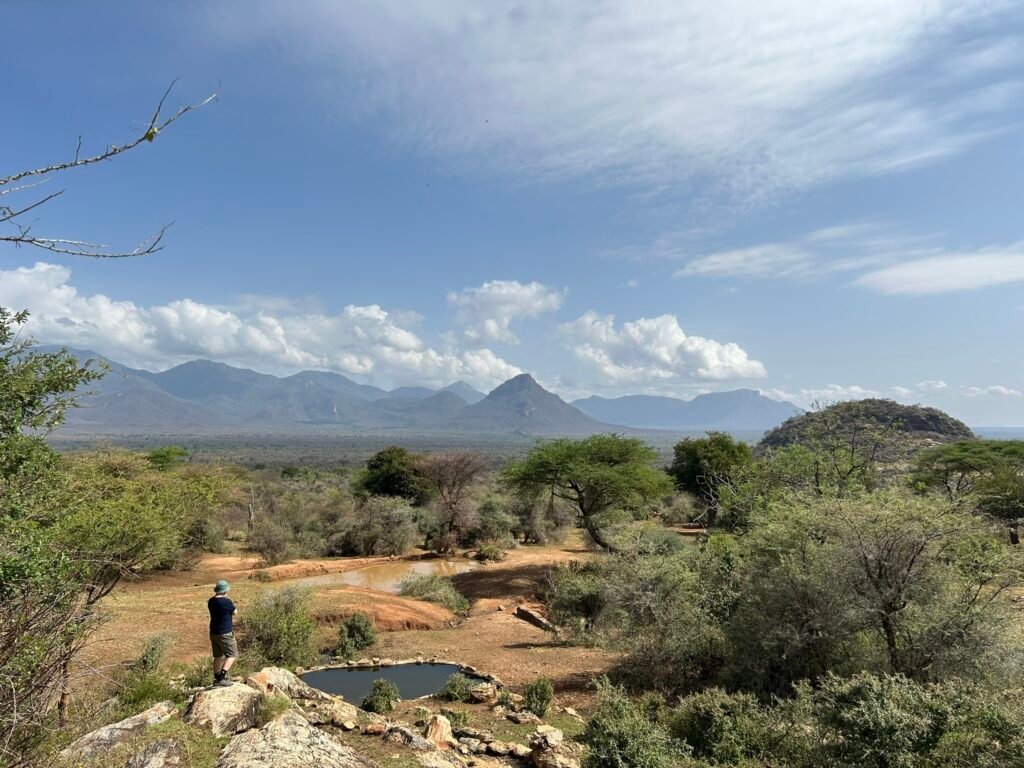
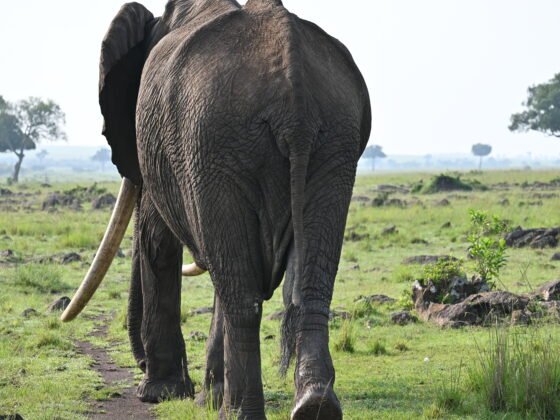
Today, several thousand elephants are once again living and breeding here. The forested slopes now support elephant, leopard, reticulated giraffe, kudu and even African wild dog. A remarkable recovery in just two decades.
Piers handed over the reins in 2010 to his youngest son Jeremy and his wife, Katie Rowe. Together with the local community, they co-founded the Reteti Elephant Sanctuary in 2015 and established the Sarara Foundation shortly afterwards.
A small collection of properties followed, all rooted in place, and taking inspiration from Sarara. These include Sarara Treehouses, Reteti House and the newest addition, Sarara Wild.
Reteti House is the closest of them all to the Reteti Elephant Sanctuary, and that proximity shapes any stay there.
Reteti House: A Cliffside Eco Lodge
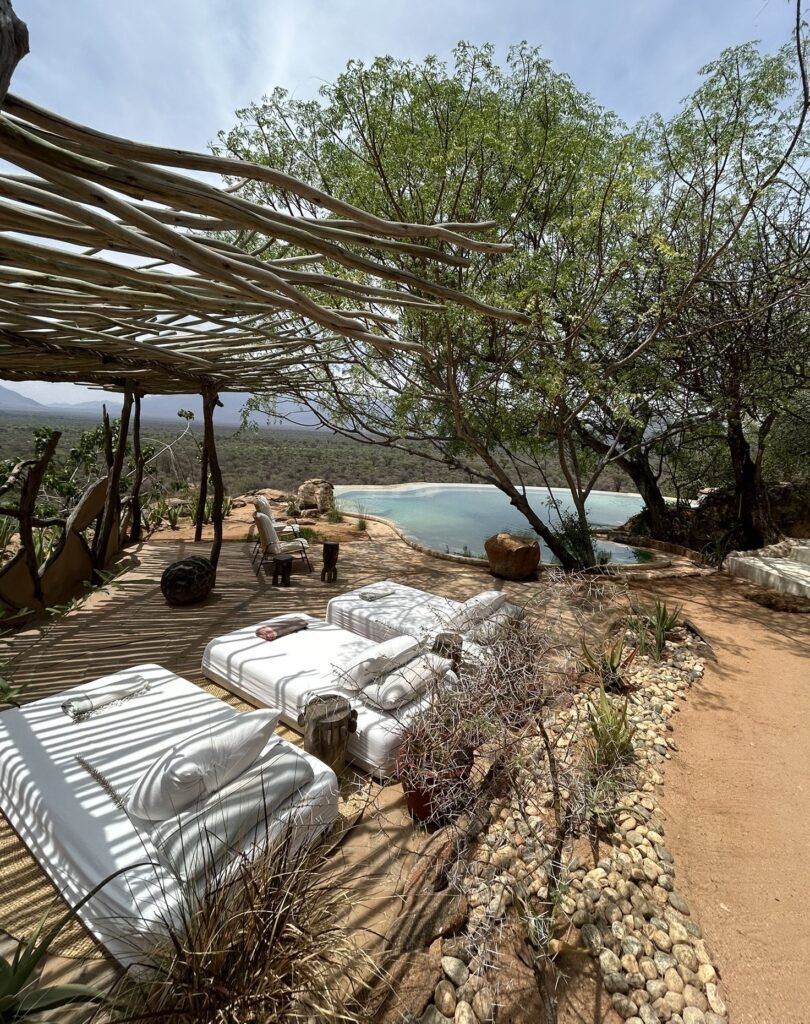
Opened in 2021, Reteti House is an exclusive-use eco lodge set high on a rocky escarpment, with sweeping views over a waterhole often visited by elephants in the dry season. Beyond, the valley stretches towards the peaks of the Mathews Range.
The design is striking. Built from rock, timber and thatch, the house feels moulded into the cliff itself. A long, linear structure runs along the escarpment, centred on an impressive lounge, bar and infinity pool, all facing outward toward the spectacular view.
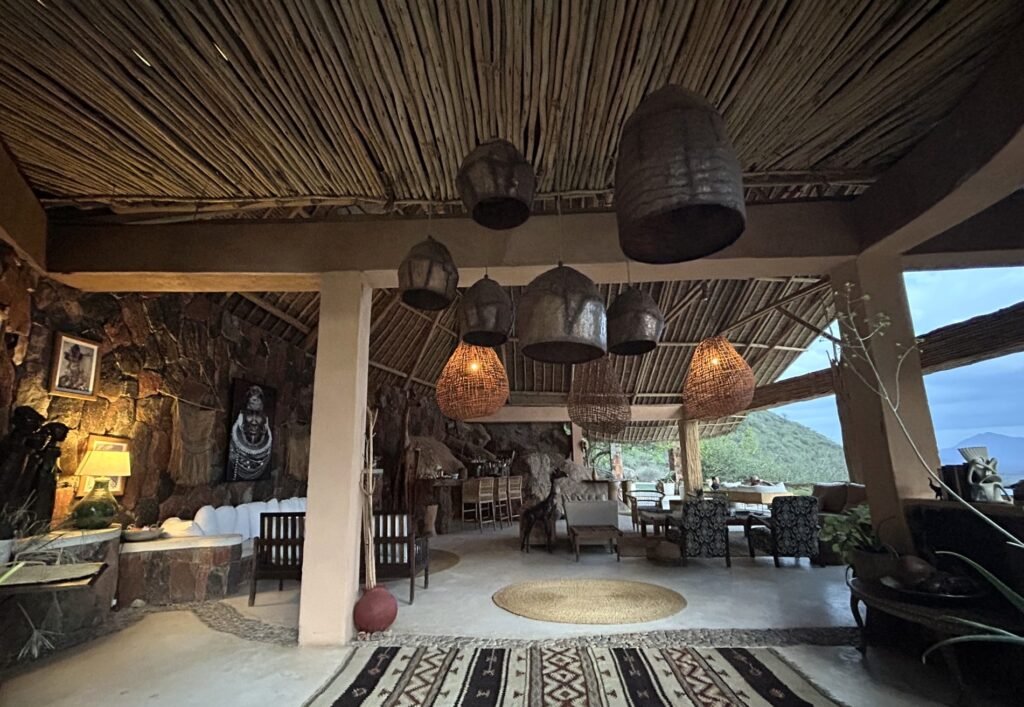
A circular design theme runs throughout, inspired by traditional Samburu bomas. Oversized lampshades, shaped like goat bells and weaver bird nests, create a strong visual identity. Rattan, timber and layered textures soften the architecture and bring warmth to the interiors. The cliff itself forms the backdrop to the bar, anchoring the space in its surroundings.
Rooms and Layout
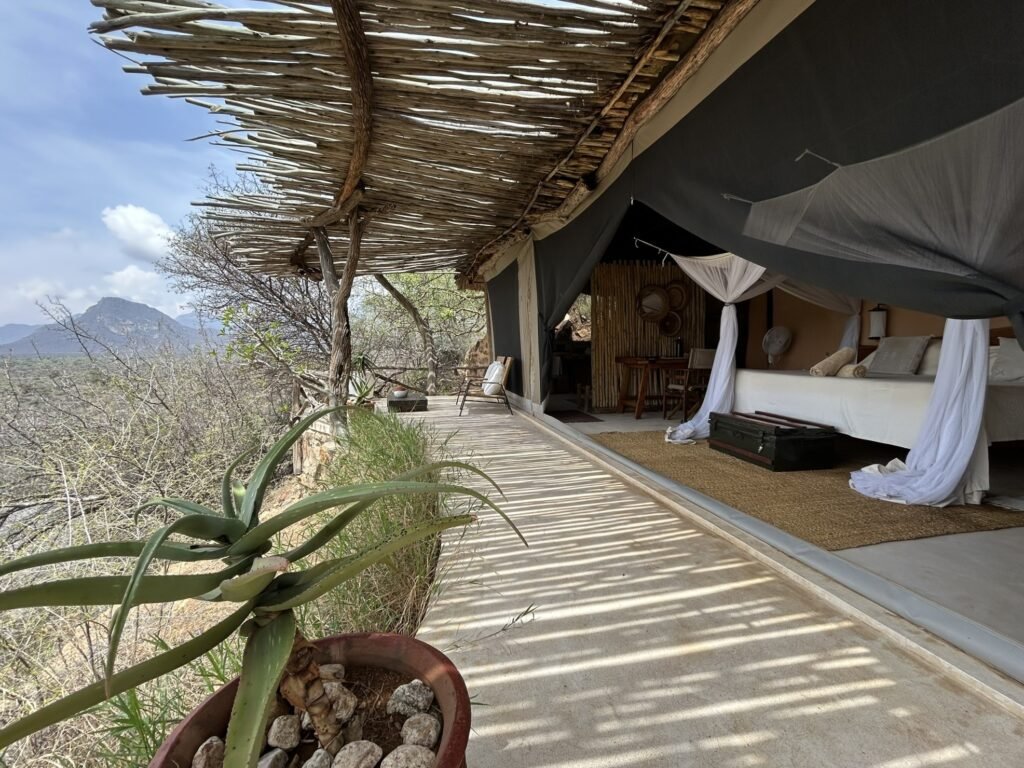
Accommodation is arranged to maximise privacy and the wonderful views.
To the west of the main area, four standalone tented suites sit beneath thatched roofs. Three share the same level, while one sits higher up the slope. I stayed in the upper suite, which caught the breeze and offered wide views across the valley.
Each suite opens fully to the landscape and features a private balcony, ensuite bathroom with outdoor shower, and there’s some lovely little extra touches like yoga mats for guests to use, handmade soaps, and colourful bath robes.
To the east, a two-bedroom unit sits closest to the waterhole. Each bedroom is ensuite with outdoor showers, connected by a shared lounge and would suit friends travelling together or a multi-generational family. There is also an open-plan family room beneath the main area, sleeping up to four guests, ideal for those with younger children.
In total, Reteti House accommodates up to 16 guests, making it well suited to families or private groups. It would be a wonderful choice for a special celebration or get-together.
Sustainability in Practice
Reteti House has been designed to operate with minimal environmental impact.
Power is solar. Water is gravity-fed from mountain springs and purified through UV filtration. Plastic bottles and straws are not used, and recycling practices are in place.
Food is chilled in traditional charcoal ‘bush fridges’, soaked with water twice daily. A simple, effective solution that aligns with the lodge’s low-impact approach.
Experiences in Namunyak
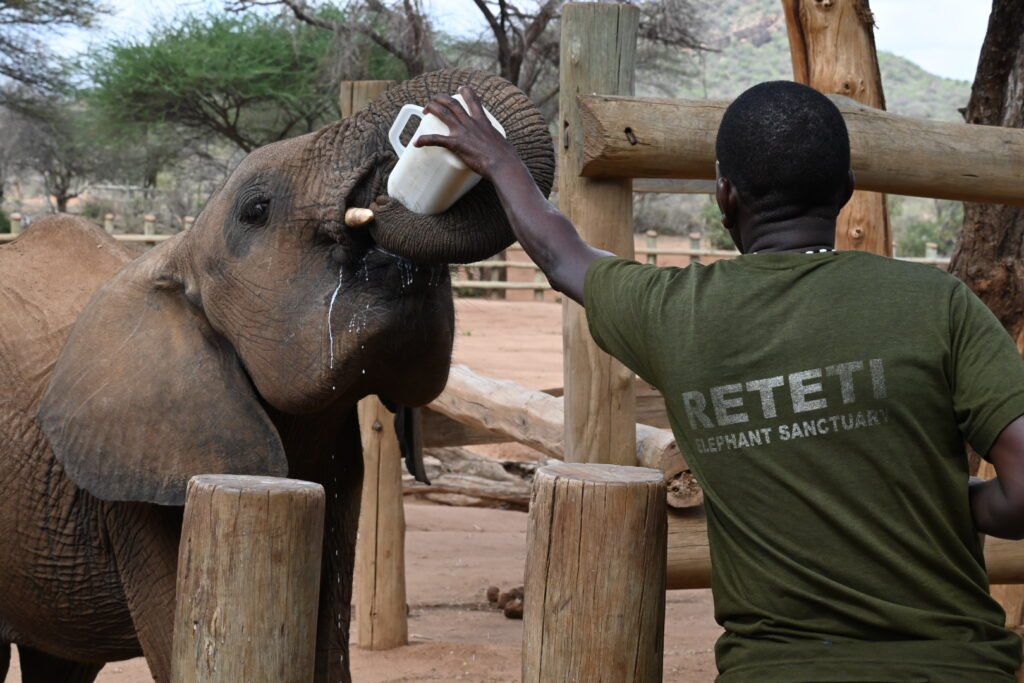
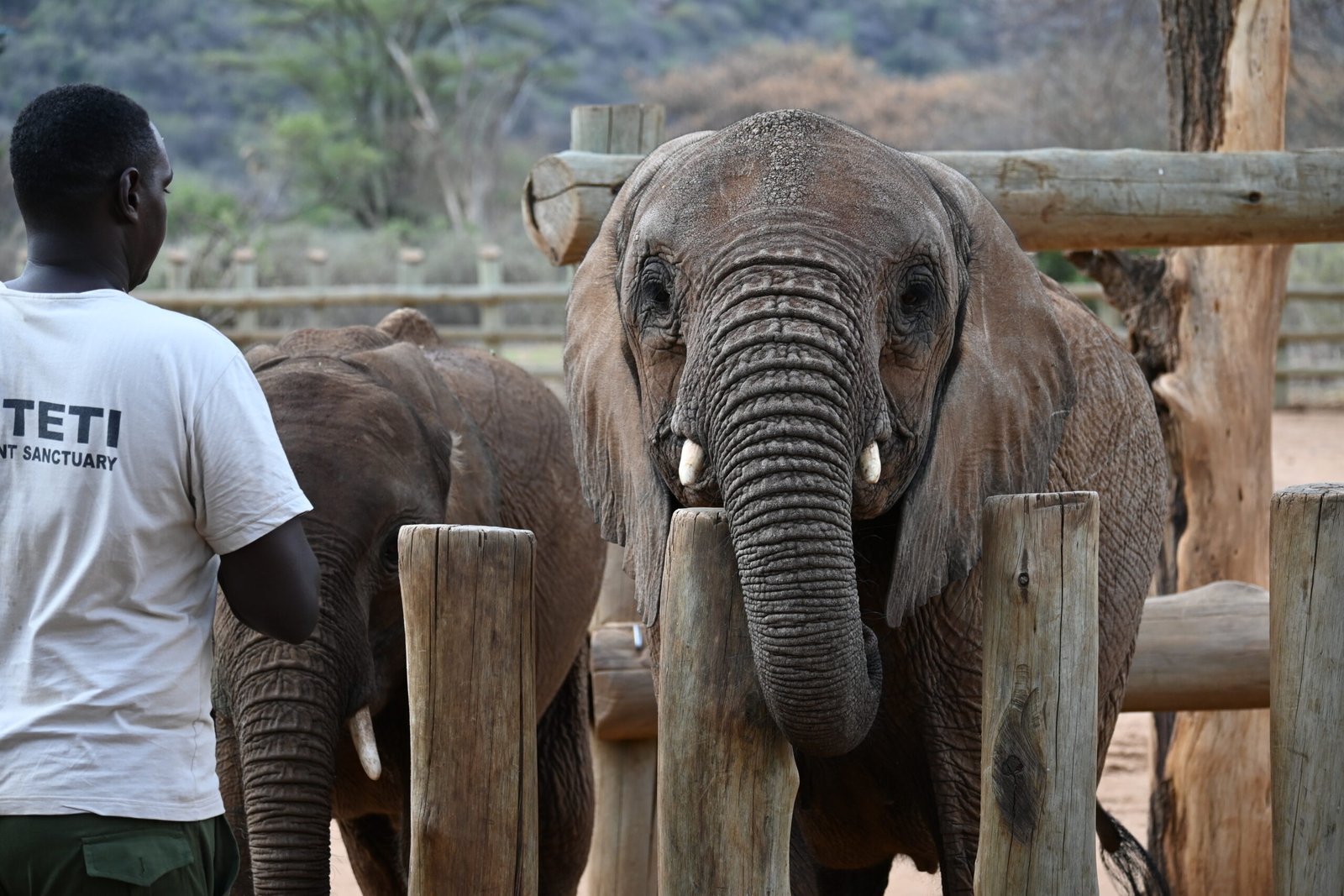
The defining experience is a visit to the Reteti Elephant Sanctuary, the first community-owned elephant sanctuary in Africa.
Explorers Against Extinction is delighted to support the sanctuary by fundraising for a new milk pasteurisation unit throughout 2026.
Guests at Reteti House have access to the most atmospheric feeding times, including early morning and evening feeds reserved for Reteti guests. The house is just a 10-minute walk around the bluff to the sanctuary, or a short drive.
We attended the 3pm feeding with the youngest orphaned elephants, followed by a tour of the sanctuary.
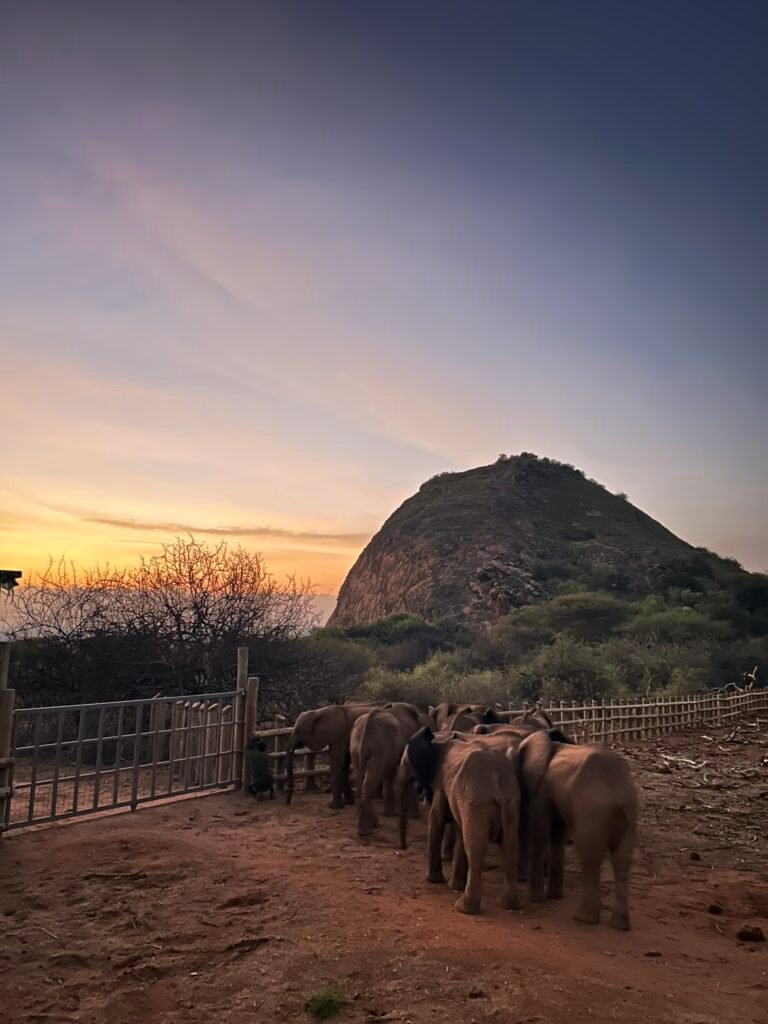
The following morning, we returned for the 6am feed with the weaning herd, all around eight years or older. We were momentarily delayed by a leopard sighting on our way there, so by the time we’d picked our way through the darkness, the orphans were impatiently lined up along the fence reaching their trunks out, hungry for milk. After feeding, the older elephants move out into the conservancy to browse and socialise.
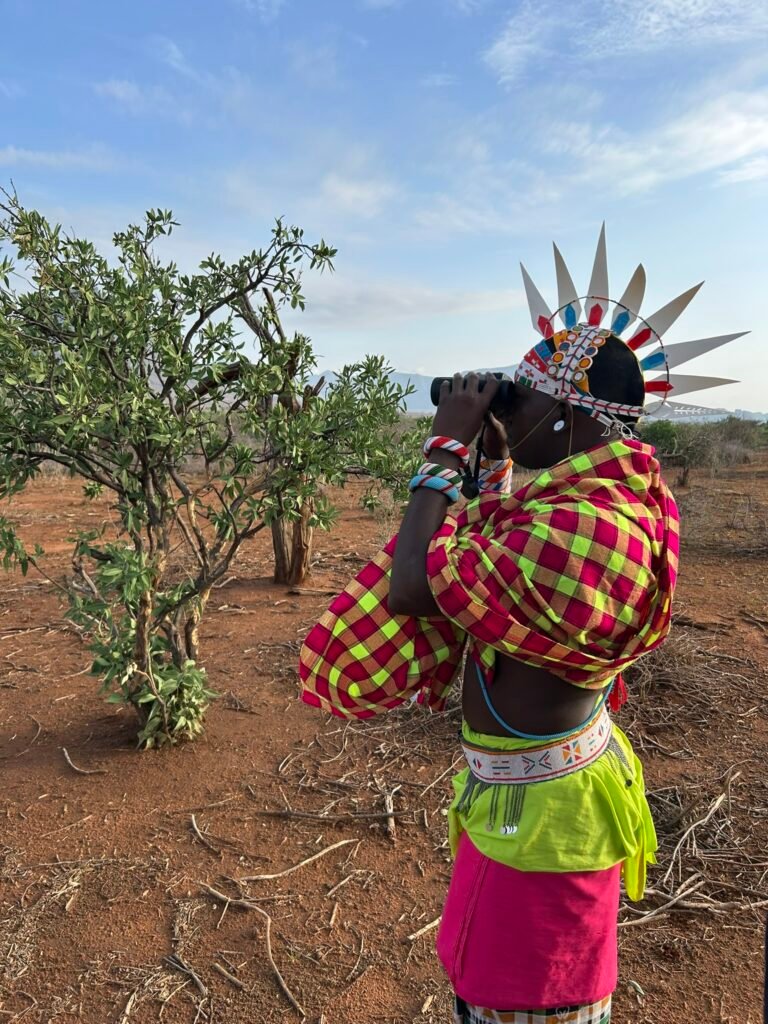
I only stayed for a night, but for those staying a few days, beyond the sanctuary visits, activities include guided walks, game drives and cultural visits too with your Samburu guide. Activities such as beading with Samburu women or visiting a local blacksmith can be arranged (additional cost). During our stay, we were invited to attend a Samburu wedding in the village. Rich in colour and ceremony, it offered a glimpse into a culture where traditions remain strong and livestock still underpin daily life.
Evenings on the Escarpment
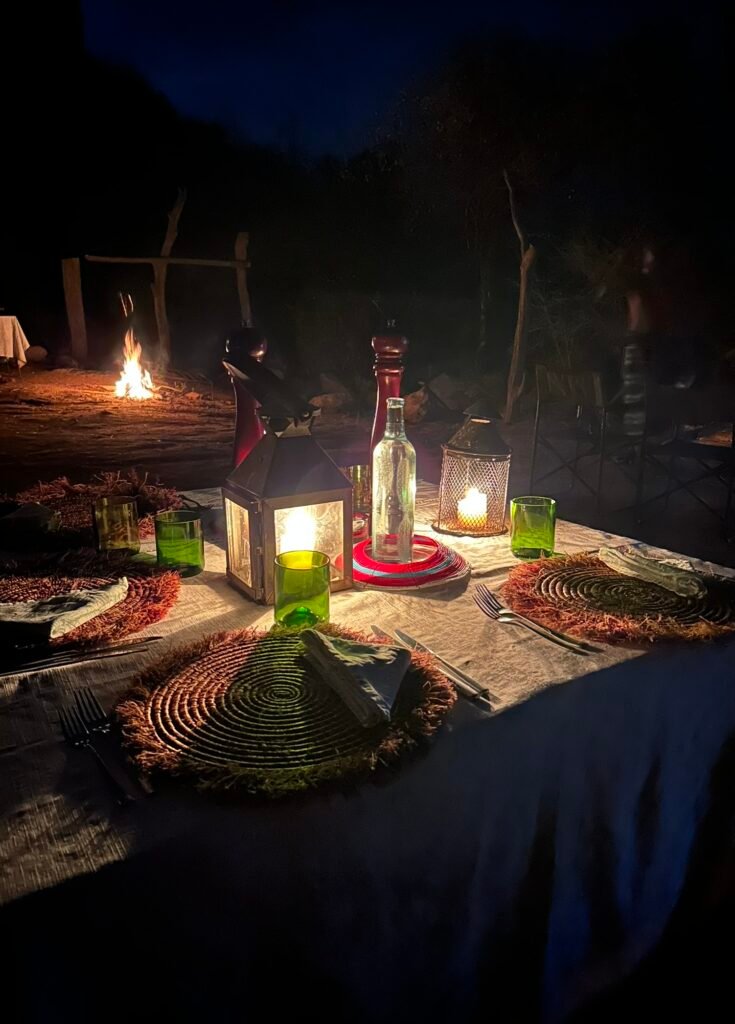
Evenings at Reteti House are quietly memorable.
After gin and tonic in the lounge as the sun slid behind the hillside, we enjoyed a bush supper set out on the cliff around a campfire, the valley dropping away into darkness below.
Later, under a clear night sky, our host Mr T guided us through the constellations. His indepth knowledge began in an unlikely way. As an eight-year-old, he once spent an entire night in a tree while hyenas circled below. This is where his passion for studying the stars began.
It is these stories that stay with you, and capture the spirit of the place.
Getting There
Reteti House is accessed via a 1.5-hour road transfer from Samburu Kalama airstrip, served by scheduled flights from Nairobi Wilson. If combining with Sarara, Reteti is around a 45-minute drive away.
Private charters can land at Namunyak airstrip, followed by a short drive. Helicopter access is also possible.
The lodge sits at approximately 930 metres above sea level.
Why Stay at Reteti House?
Reteti House stands out for its direct connection to the Reteti Elephant Sanctuary, something no other property in the conservancy can offer in quite the same way.
Its dramatic setting on the escarpment, sense of space and privacy, and strong ties to the Samburu community give it a distinct character.
That said, it is not a classic big-game safari destination. Outside of the sanctuary, wildlife sightings can be limited, particularly at certain times of year. I visited at the end of February, which is usually a reliably dry time of year, but unseasonal heavy rain meant the singing wells ceased activity and we did not see a single elephant across the conservancy (other than those at the sanctuary). Reticulated giraffe sightings were good from Sarara, and we also saw buffalo and impala. The birdlife was superb.
This part of northern Kenya is likely to appeal most to those who have travelled in Africa before. Time in the Mathews Range offers a clear contrast to the wildlife-rich experience of the Mara or Laikipia. There’s a greater sense of remoteness and a stronger focus on landscape and Samburu culture.
For those willing to embrace that shift in perspective, Reteti House offers something rare. The wildlife, when it appears, feels like a bonus rather than the main event.
Plan Your Safari
If you would like to include Reteti House or any of the Sarara properties within a wider Kenya itinerary, we would be delighted to help.
Explorers Against Extinction works with a small number of trusted travel partners to offer tailor-made wildlife journeys to Africa and beyond. If your enquiry results in a booking, we receive a small donation at no additional cost to you to support our work.
Get in touch to start planning your Kenya safari and travel with purpose.