The availability of wild prey is the most important factor when determining if a region is suitable for snow leopards.
However, there are multiple factors influencing the delicate relationship between predator and prey, with human activity and climate change central to the challenges faced in this wild and remote landscape, as we dicovered when we spent time counting sheep with Nature Conservation Foundation in the Spiti Valley on the India/Tibet border.
Wild Prey
The snow leopards’ preferred wild prey species are blue sheep (bharal), ibex and Argali wild sheep, although they will also eat rodents, hares, marmots and other small mammals.
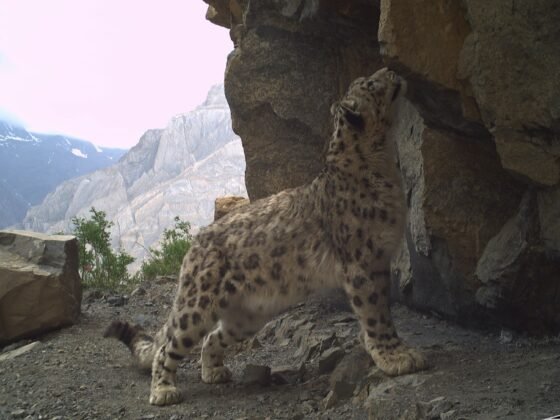
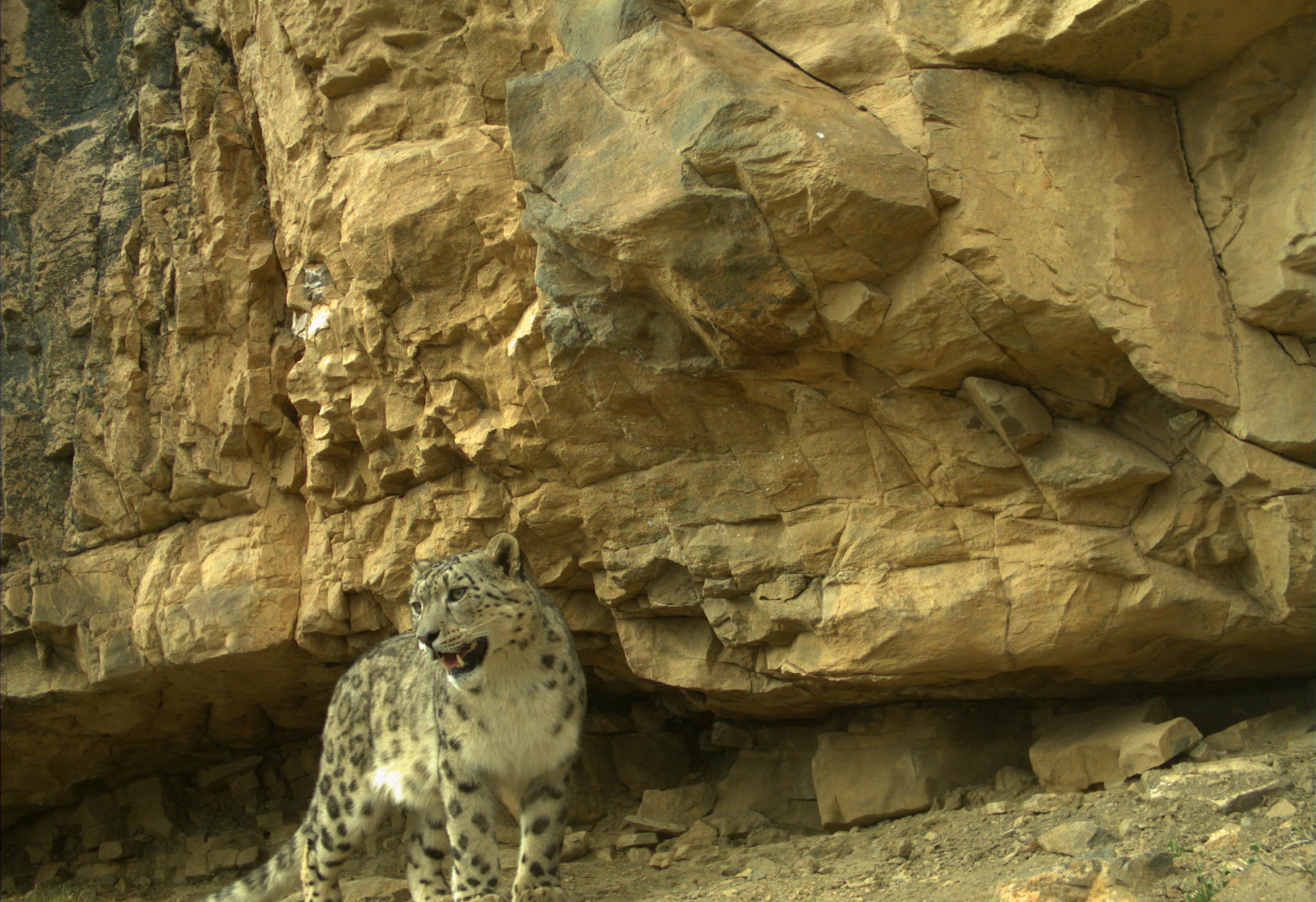
Snow leopards hunt at dawn and dusk, beautifully camouflaged against the rocky outcrops and using their huge paws like giant snowshoes to silently navigate the terrain. Their powerful build and great agility make them very effective hunters.
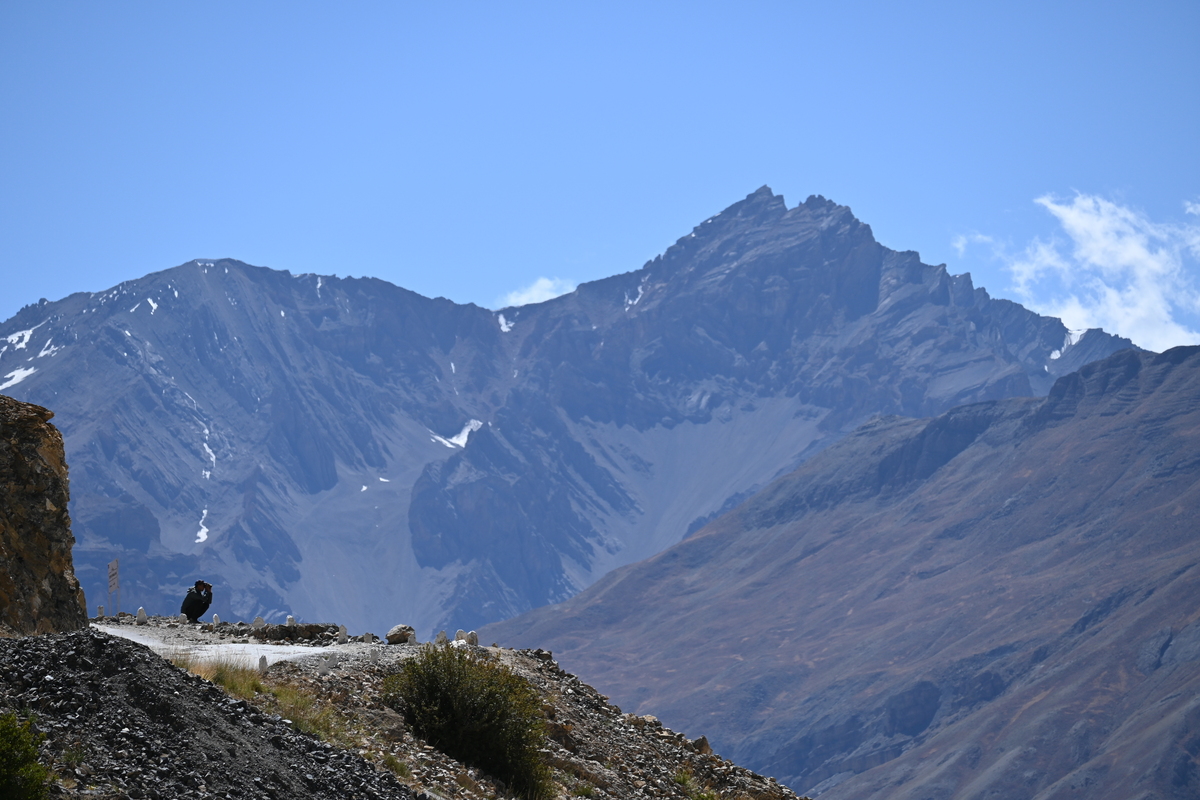
We spent time with Thinley, one the NCF scouts, searching for blue sheep and ibex in the thin air above the village of Kibber in the Spiti Valley.
The sheep are more of a slate colour than true blue, blending in brilliantly with the rocks, so they are surprisingly tricky to pick out in such a vast and rugged landscape.
Thinley told us that snow leopards can kill an animal three times their own weight. One blue sheep will keep a snow leopard going for 7-10 days. The cat will tend to stay with the carcass until it has all gone.
Blue sheep numbers are pretty robust in the Spiti Valley which is good news for snow leopards but can cause issues for humans.
During summer months the snow leopards disperse across a vast area, reaching high elevations, way above human habitation. Large herds of blue sheep remain around the villages in summer, their populations largely unchecked by predation. The sheep raid the villagers’ crops at harvest time causing conflict with people. Because of the extreme weather in this area there is only one harvest, and even this has been jeopardised in recent years due to the decline in freshwater availability. Loss of crops is absolutely perilous for the people here.
In winter the cats come down to below the villages, with their home range around 4,000m. This brings a different raft of challenges…
Image: Thinley looking for wild prey
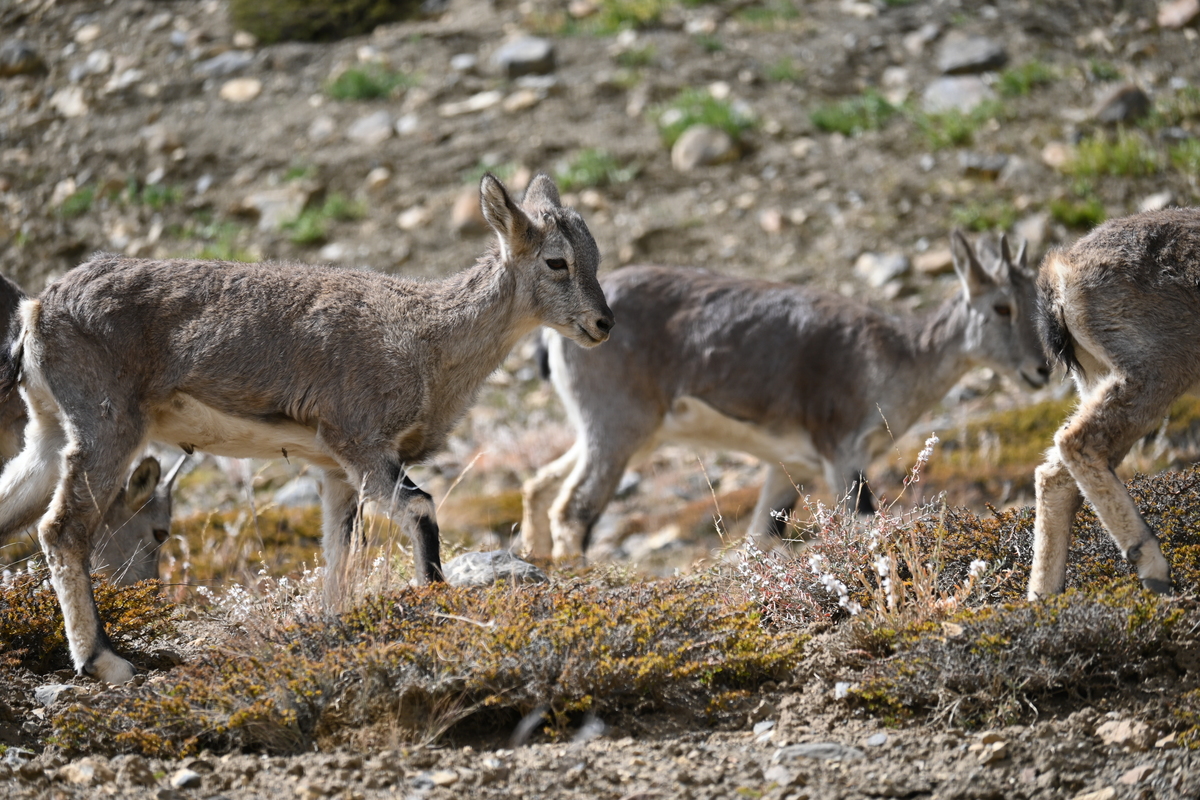
Image: Blue Sheep on the hillside near Komic
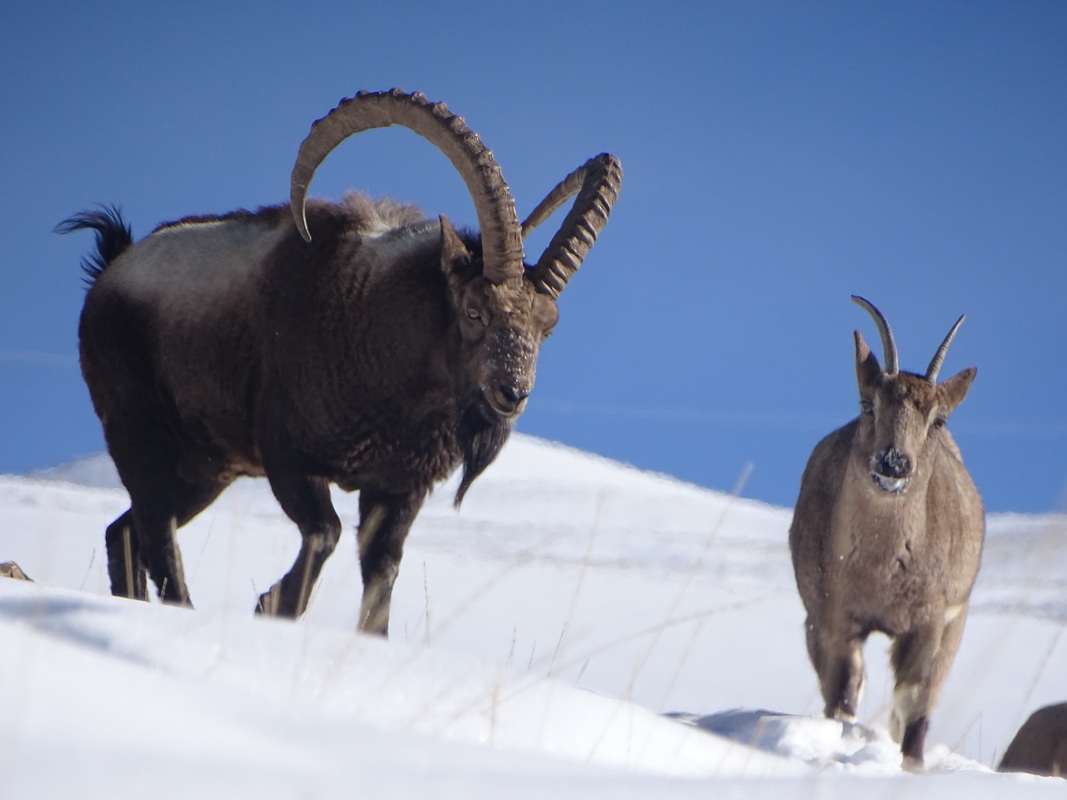
Image: Himalayan ibex (NCF)
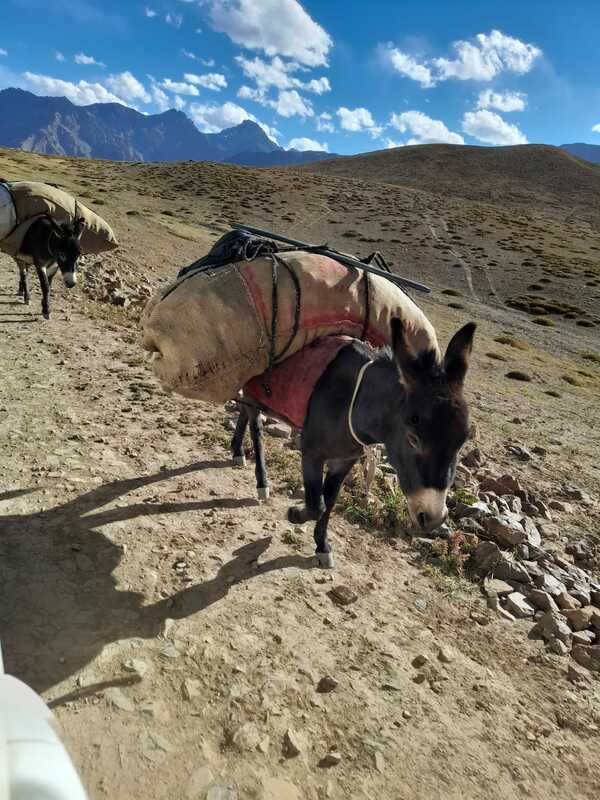
Domestic Livestock
Snow leopards are opportunistic hunters so in the grip of winter when the weather is harsh and food harder to come by, the killing of livestock, unsurprisingly, increases. This is when the snow leopards frequent lower elevations around the villages and are attracted by an easy meal.
Snow leopards will take small yaks, horses, cows and donkeys. If they get into a coral, much like a fox, they will kill everything. This can be ruinous for the villagers.
The chief of Kibber told us that there is one livestock kill a week during winter, on average.
NCF does offer an Insurance scheme so villagers can be compensated if their prize yak or horse is taken by a snow leopard and they are also funding predator proof corals.
From meeting with the team and seeing their ledgers, horses and yaks were most commonly taken – these are insured for 60-80 Indian Rupees each (57p-76p) with compensation between 4760 and 7600 Indian Rupees, (£45-£72) while cows and donkeys are insured for around 30 Rupees each (28p) with compensation of around 2800 Rupees (£26).
We were surprised to learn that the age and gender, as well as the colour of the livestock is key when paying out compensation! White is very rare, and greatly prized, while brown is common and cheap!
As a result of the compensation scheme there have been no retaliatory killings in recent years. The villagers support snow leopard conservation and welcome the additional job opportunities with the development of snow leopard tourism.
The people are more upset about the sheep eating their peas so this is something NCF are working to resolve. Possible solutions include paying ‘community scouts’ at harvest time to scare off the sheep, or the chief is very keen on installing fences.
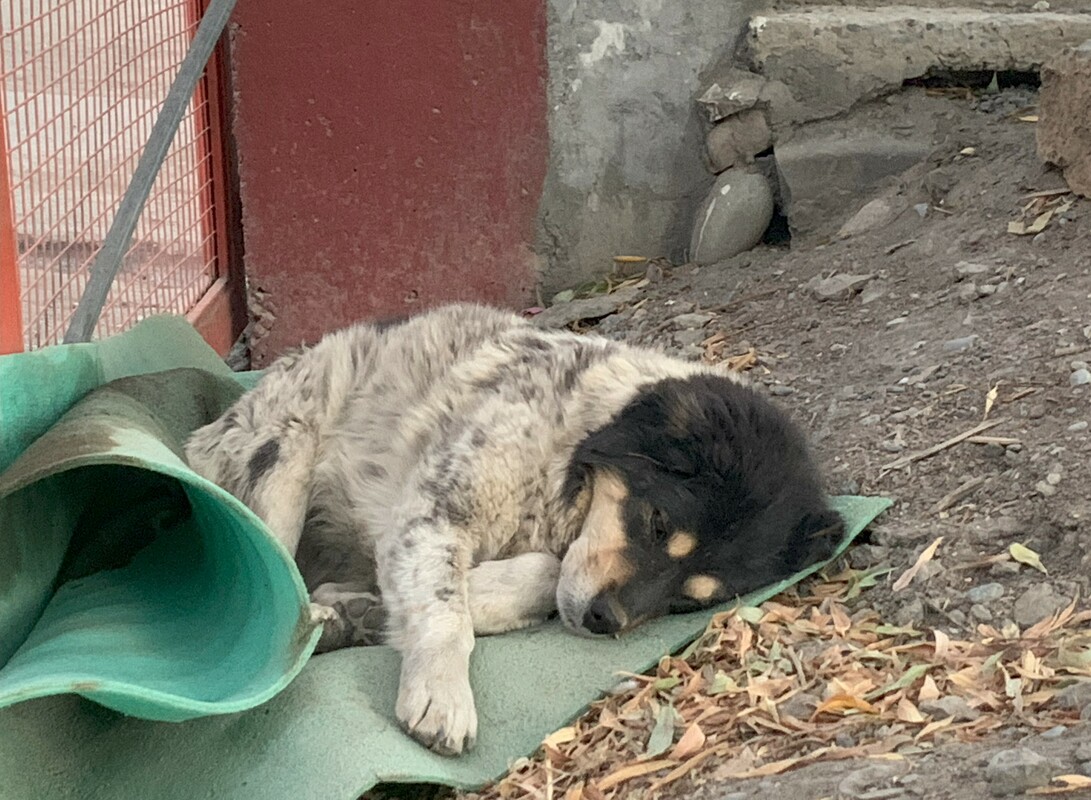
Stray Dogs
We met a young researcher from the US during our stay in Kibber. He is using GPS collars to track the movement of stray dogs. Their numbers have exploded in the Spiti Valley. In Kaza there are as many as 300 strays and you can see and hear them wherever you go.
Why would the dogs pose a threat to snow leopards? While many stay close to the village, feeding on trash, some dogs roam far and wide and have been caught on camera traps used to monitor snow leopards.
Dogs have been documented chasing native predators away from kills. It is possible that some feral dogs hunt wild prey, increasing competition, as well as attacking livestock.
Studying the dogs will provide insight to their behaviour, including their diet, as well as interactions with wildlife.
The findings will help to shape conservation strategy, for example, the roll out of a sterilisation programme.