High in the Eastern Himalayas, amongst rhododendron forests, Himalayan birch, fir, pine and bamboo thickets, lives one of the world’s most endearing and elusive animals: the red panda. But this unique species faces an uncertain future. Habitat loss from deforestation, agriculture, livestock grazing and unsustainable development has left populations increasingly fragmented.
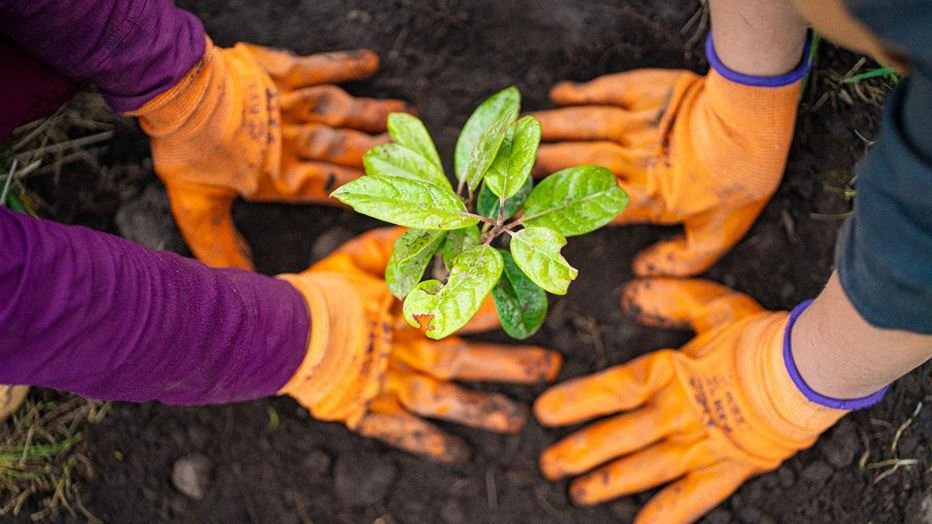
To tackle this, the Red Panda Network (RPN) launched its Plant a Red Panda Home campaign in 2020, building on years of small-scale reforestation. The aim is simple but powerful: restore degraded land, reconnect forest corridors, and create safe, thriving habitat for red pandas.
Last year, Explorers Against Extinction partnered with RPN to support this ongoing reforestation initiative with a small grant. The project continues to go from strength to strength – here’s a look at progress so far.
2025 Achievements
In 2024, over 96,000 seedlings were planted. In 2025, the programme has already broken records:
- 142,776 seedlings planted across degraded sites in Nepal
- 54 native species restored, including rhododendron, Himalayan fir, birch, oak and bamboo
- 1,813 days of work created for local communities
- 214 people employed (147 men and 67 women)
“Because of this project, I can support my family while restoring our forest. Thank you for helping us build a better future for ourselves and the red panda.” — Community participant
Protecting New Growth
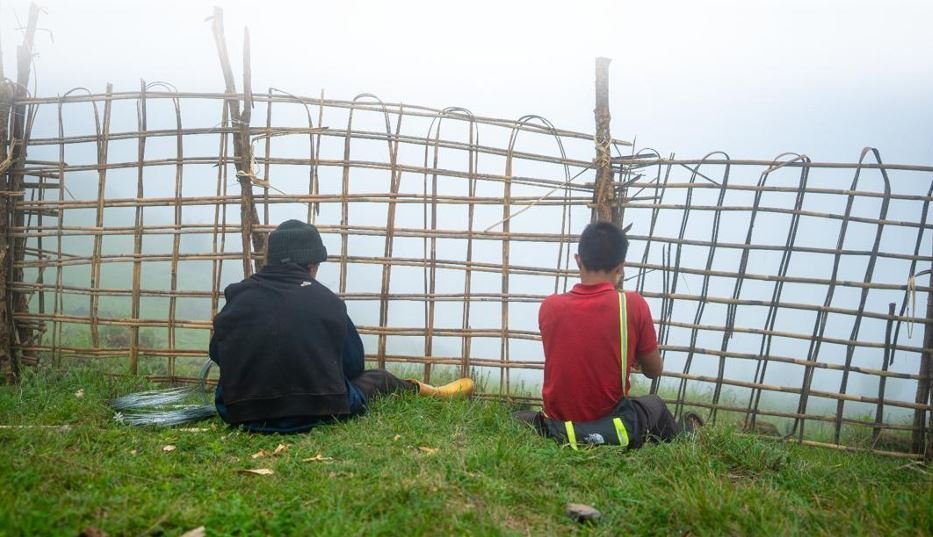
Planting trees is only the first step. Seedlings need protection to survive and grow into strong forests. In 2025, RPN also constructed:
- 8,808 metres of bamboo fencing
- 2,000 metres of mesh-wire fencing
- 1,885 days of additional employment for local people
These fences safeguard young trees from grazing cattle, deer, sheep and yaks, which can otherwise trample or damage plantations.
From Seed to Forest
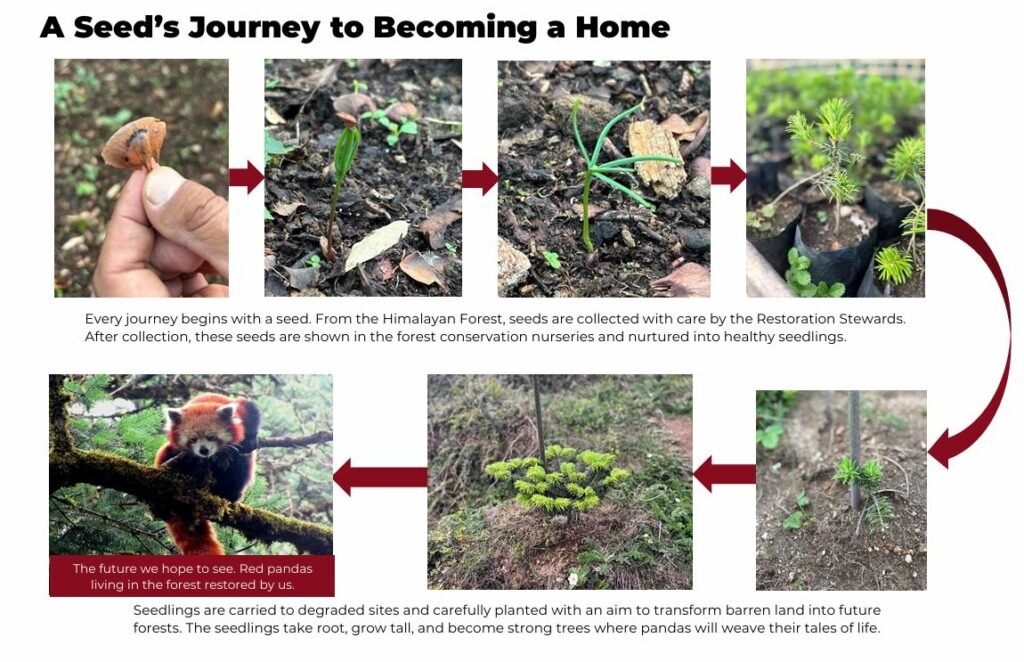
Every forest begins with a seed. Collected by local stewards, seeds are nurtured in community nurseries before being carried to degraded sites for planting. Over time, they take root, grow tall, and reconnect fragmented habitat – creating a living landscape where red pandas can thrive once more.
Looking Ahead
This year’s achievements are just the beginning. The saplings planted in 2025 will take years of care before they become mature forest. Many more degraded areas are still waiting to be restored.
With your support, we can continue to help RPN turn seeds into forests, and forests into safe homes for red pandas.