I’ve visited Kenya many times, but I’ve never seen a rhino in the Greater Mara. When clients tell me they’re keen to see rhino in Kenya, I usually recommend including Laikipia, and if that’s not possible, a stop at Nairobi National Park, where sightings are excellent. But things are changing: visitors to the Mara now have a growing chance of seeing these wonderful animals.
A Brief History
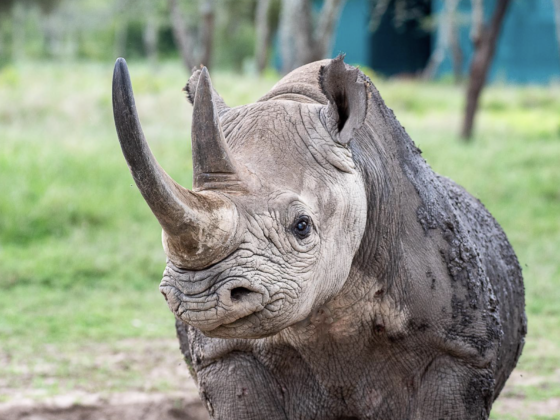
Once widespread across East Africa, the black rhino (Diceros bicornis michaeli) was pushed to the brink of extinction by the horn trade. Even today, despite decades of conservation work across Africa, there are only around 6,500 black rhino left. The species is still listed as Critically Endangered.
In the 1960s and 70s, the Mara supported more than 100 black rhinos. Poaching decimated the population, and by 1984 fewer than 20 remained. By the millennium only one black rhino was known to exist in the Mara Triangle. Anti poaching patrols began soon after, and with space and security the lonely female attracted some company and numbers climbed to ten…
Black or White Rhino?

The two African rhino species are often confused. Both are grey, despite their names.
- Black rhino: smaller, with a hooked lip and smaller head perfect for browsing bushes and trees. They have a reputation for being more aggressive, partly due to their poor eyesight, though they have an excellent sense of smell.
- White rhino: larger, with a square, wide mouth and big heavy head – grazers, perfectly adapted for feeding on grasses. The most populous of the five worldwide rhino species.
Where to See Black Rhino on Safari

- Kenya: Strongholds include Laikipia (for instance, Ol Pejeta and Lewa) and Nairobi National Park. Breeding programmes here have been so successful that rhinos are now being translocated to other areas.
- Namibia: Supports both desert-adapted rhino (notably in Damaraland’s Palmwag Concession) and strong populations of black rhino in Etosha National Park.
- South Africa: Home to the largest overall rhino population in Africa – you are more likely to see white rhino since they significantly outnumber black rhino but both species can be seen.
- Zimbabwe: Black rhino are found in the Lowveld (Motobo Hills, Save, Malilangwe) but they have disappeared from Mana Pools, Hwange and are challenging to see in Matusadona, although there is an Intensive Protection Zone; white rhino have recently been reintroduced to a community conservancy bordering Hwange.
- Botswana: Large-scale reintroductions of black and white rhino into the Okavango Delta have been successful, though white rhino are more commonly seen.
- Zambia: Black rhino have been reintroduced to North Luangwa, while white rhino can be seen in Mosi-oa-Tunya National Park.
Rhino Conservation in the Mara
Conservation of rhino in the Greater Mara is a shared responsibility involving many stakeholders across the national reserve and the conservancies which surround it. Collaborative efforts over the last 25 years have led to a slow but very promising recovery in the rhino population, with as many as 50 black rhino moving between the Masai Mara and the Serengeti today. The two key rhino areas to note are :
- Ol Chorro in the north – the rhino sanctuary here focuses largely on southern white rhino. Visitors can experience guided walks with the rhinos and learn about their conservation from rangers. The sanctuary is supported by tourism.
- The Mara Rhino Project in the national reserve, further to the south, monitors and supports the population of eastern black rhino roaming along the Mara/Sand River (on the border with Tanzania). Launched in 2016, the Mara Rhino Project prioritises habitat restoration, anti-poaching, and collaborative partnerships. Its ambition is to establish a thriving population of rhinos by 2035.
Travel Supporting Conservation
Tourism plays a key role in rhino conservation.
- Sala’s Camp, in the national reserve, has supported ‘rhino rangers’ for more than a decade, contributing a nightly fee per guest to anti-poaching efforts.
- In the north, Ol Chorro receives vital support via the Maa Trust and directly from tourism linked to camps in the Mara conservancies, for example, Mara North.
Funds raised through responsible travel help pay for ranger patrols, training, and increasingly sophisticated monitoring technologies.
Technology on the Frontline
In recent years, the Safari Collection Footprint Trust has funded the ear-notching and tagging of more than 20 eastern black rhinos with GPS transmitters.
Using EarthRanger software and a new LoRaWAN communications network, rangers can monitor rhino movements in real time from the Maasai Mara Conservation Centre. This technology allows for rapid responses to threats, better insights into rhino behaviour, and stronger long-term protection.
A Symbol of Recovery
Thanks to combined efforts, the Mara’s black rhino population is stabilising – and even showing early signs of growth. This success is a testament to collaboration and a reminder of how sustainable safari tourism can directly fund conservation.