I arrived in Moremi in March when much of the reserve had disappeared beneath the summer rains. Roads were closed, self-drive visitors locked out, and access possible only by light aircraft. It felt less like checking into a safari camp and more like slipping into a temporary world suspended between water, woodland and sky.
Within 24 hours, I understood why travellers become so devoted to this corner of the Okavango Delta.
Okuti Camp and Northern Moremi
Part of the Ker & Downey Botswana portfolio, Okuti occupies a privileged position in the northern reaches of the Moremi Game Reserve close to the Xakanaxa Lagoon and the winding channels of the Maunachira River.
Unlike Botswana’s private concessions, Moremi operates under national park regulations, meaning no off-roading, walking safaris or night drives are permitted. Yet what the reserve may lack in exclusivity, it more than compensates for in atmosphere and authenticity. Moremi was established in 1963 by the Batawana people, making it the Okavango’s first protected reserve and one of Africa’s earliest conservation initiatives led by an indigenous community. These ancestral lands still feel deeply revered, carrying a sense of quiet significance that extends beyond the wildlife alone.
As I quickly discovered, part of Moremi’s magic lies in its unpredictability. During the green season (Nov-Mar), rain water swallows huge sections of the reserve. Flash floods restrict access by waterlogging heavy clay soils, filling seasonal pans within the mopane woodland, and submerging access roads. Conversely, the annual floodwaters arriving from Angola around May and June gradually fill channels and lagoons, creating the iconic navigable wetland that expands the Delta to almost three times its size and enhances, rather than restricts, water-based activity.
For many travellers, Moremi works particularly well as part of a wider Botswana itinerary. The contrast between the wooded floodplains here and the vast open horizons of the private Delta concessions with their additional activities, creates two very different safari experiences, each revealing a different side of the Okavango ecosystem.
Arriving in Moremi During the Green Season
We arrived from the Kalahari by light aircraft, banking low over a shifting patchwork of islands, woodland and flooded plains before descending onto the Xakanaxa airstrip. For many guests, a short thirty-minute flight from Maun will provide their first aerial glimpse of the Okavango Delta, and it is an extraordinary introduction.
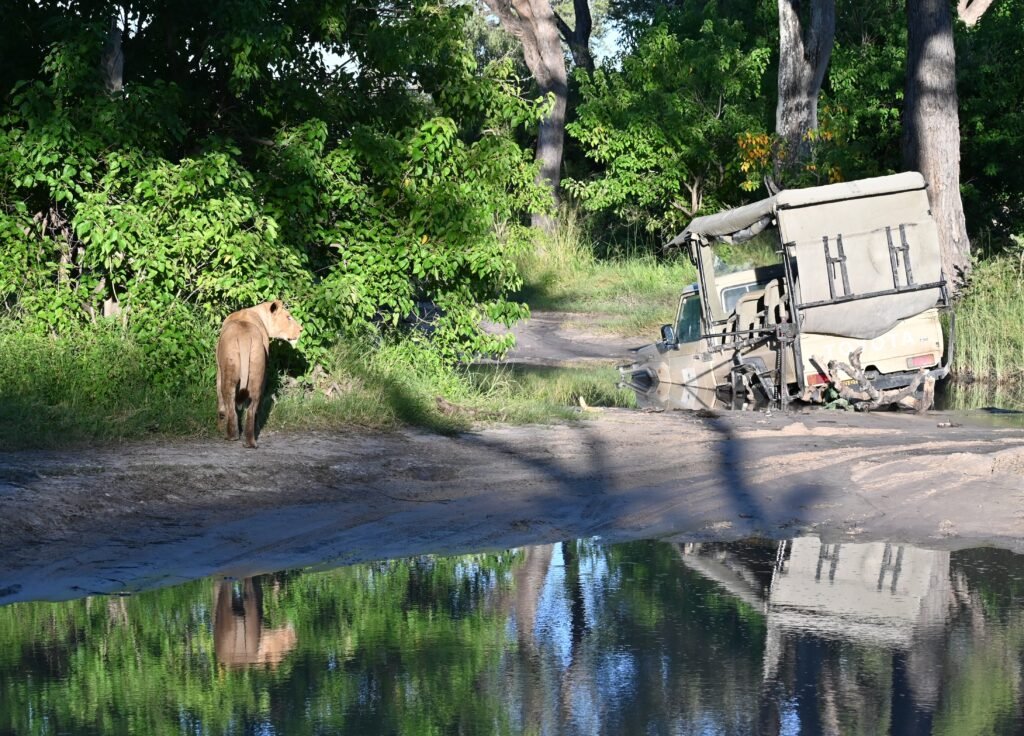
Following heavy summer rains, navigating Moremi’s clay roads becomes increasingly challenging even for experienced drivers. During my March visit, the reserve had recently been closed entirely to self-drive and drive-in traffic because of flooding, leaving only fly-in guests able to reach camp. As we travelled from the airstrip to Okuti, we passed several abandoned vehicles trapped deep in the mud.
For us, the isolation added enormously to the experience. The reserve felt quieter, wilder and strangely cut off from the outside world. I suspect the atmosphere differs considerably during the peak dry season when vehicle traffic increases, though Moremi’s sheer scale still allows a strong sense of space and dispersal.
The drive from the airstrip immediately revealed why this remains one of Botswana’s most beloved safari regions. Cathedral-like mopane woodland stretched in every direction, interrupted occasionally by marula and sausage trees. Our guide explained that “mopane” translates as “butterfly”, referencing the distinctive shape of the leaves.
Even with many tracks inaccessible due to flooding, the reserve carried a remarkable sense of atmosphere.
Inside Okuti Camp
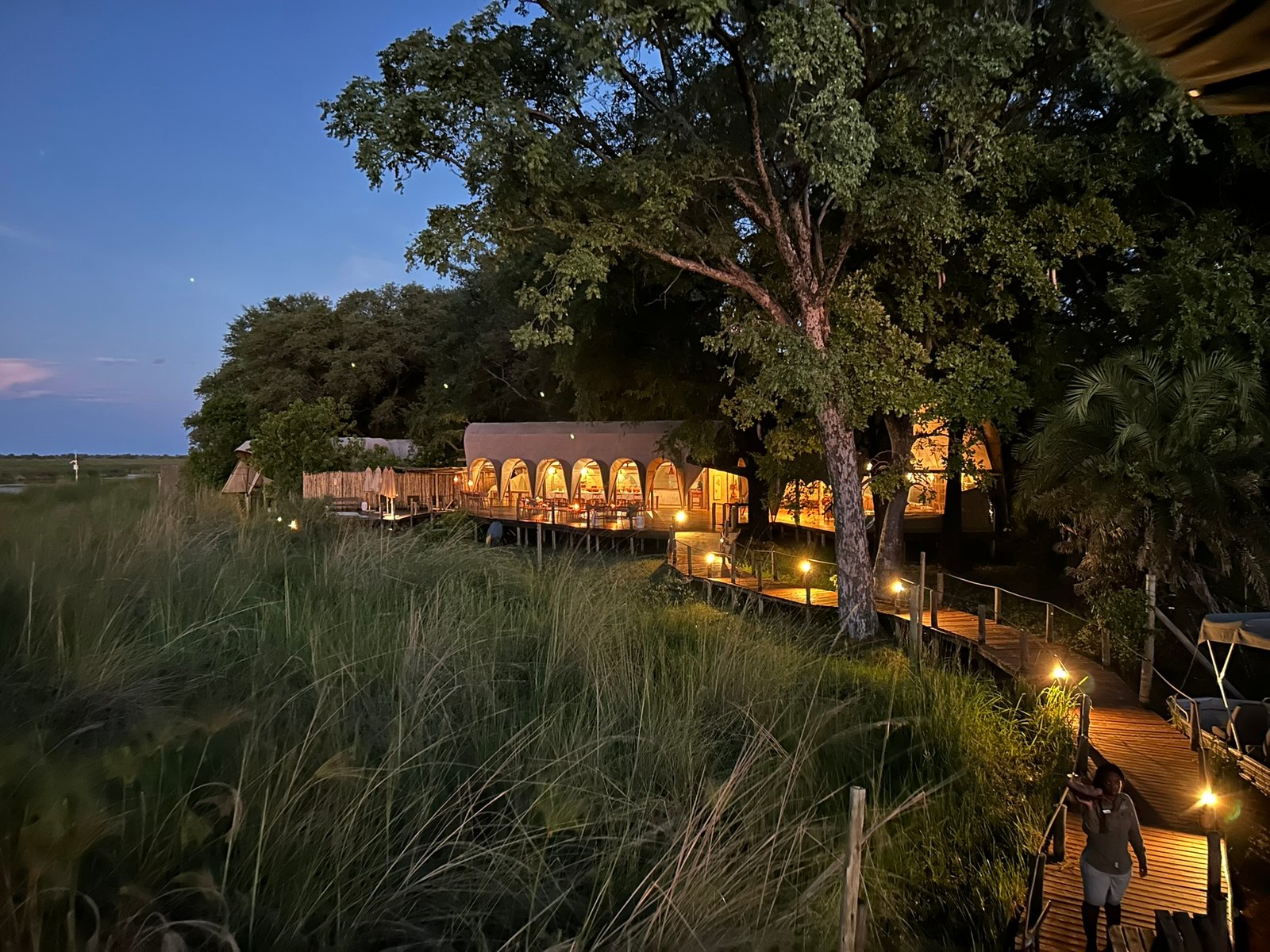
Arrival at Okuti mirrors the atmosphere of Moremi itself. A long raised boardwalk runs beneath jackalberry and marula trees towards the camp’s communal area, while ripening marula fruits were scattered across the ground attracting vervet monkeys and baboons.
From the central area, elevated walkways fan out along the riverfront towards the seven guest mosasas.
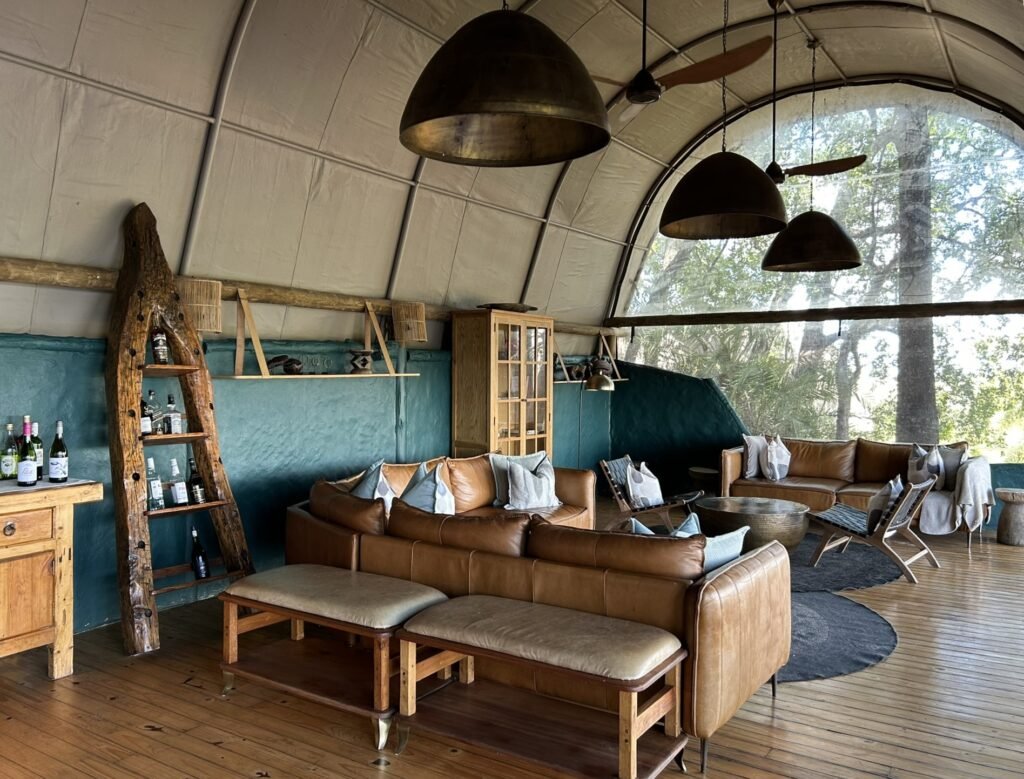
Although still referred to as a “camp”, Okuti feels closer in many ways to a small riverside lodge. Recently refurbished, the design blends contemporary comfort with subtle references to Botswana’s cultural heritage. The curved arches and doorways in the communal areas draw inspiration from Botswana’s parliament building, giving the property a distinct sense of place without feeling overly stylised.
Inside, brown leather, teal and brass tones create spaces that feel relaxed yet quietly sophisticated.
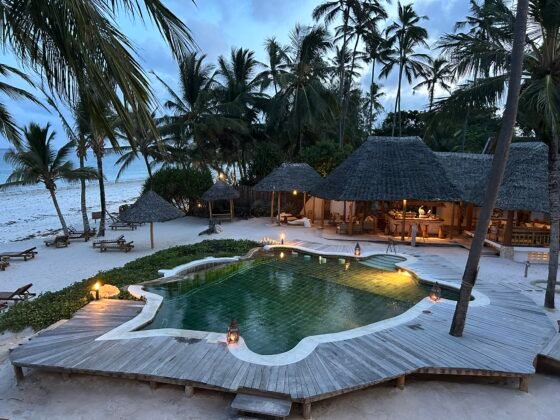
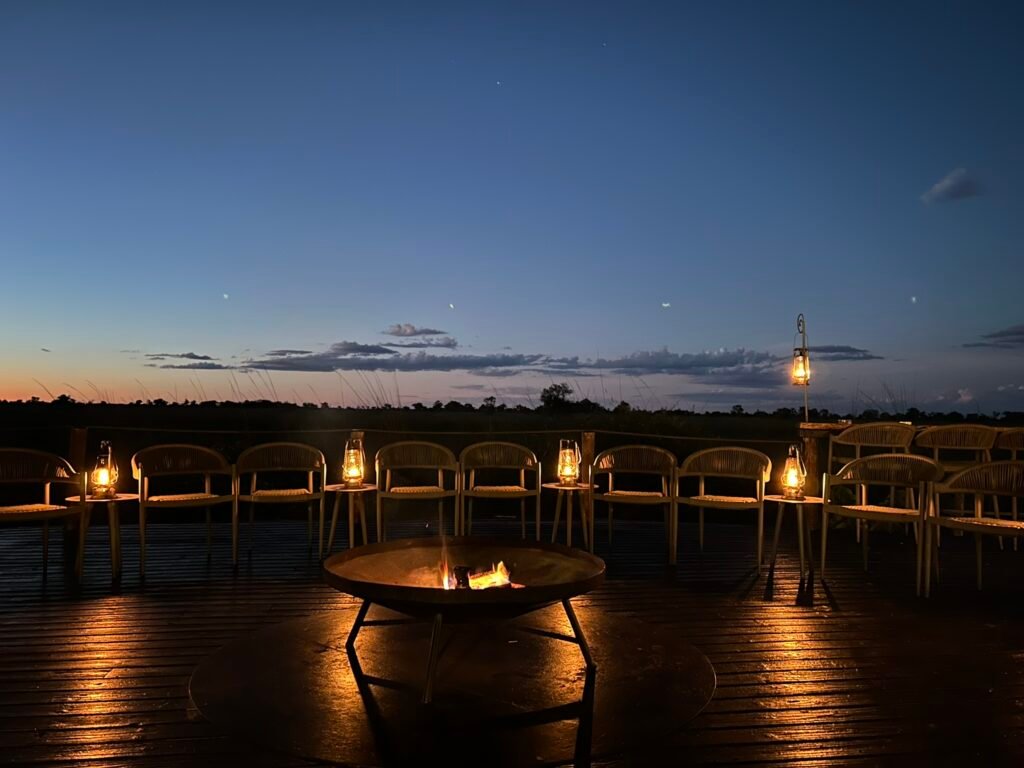
The central lounge opens beautifully towards the river with shaded decks, outdoor seating and a firepit perfectly positioned for dusk. Off to one side sits a discreet plunge pool beside the dining area, while a wooden pontoon disappears through the trees towards the camp’s motorboats and river barge.
Hospitality and Atmosphere
Dining during our stay was communal, encouraging conversations between guests returning from different corners of Moremi each evening. In March, the combination of heat, humidity and standing water inevitably brought large numbers of insects after dark – something likely far less noticeable during the dry season – but it felt more reflective of the environment than any failing of the camp itself.
There is a genuine warmth and ease to Okuti that feels difficult to manufacture. Staff interactions remained friendly and relaxed throughout our stay, helping the camp avoid the overly formal atmosphere that sometimes accompanies luxury safari properties. My visit also coincided with the camp’s regular “choir night”, when staff gathered around the firepit to sing together beneath the trees. It was a genuinely joyful evening and one of the moments that gave the camp its strongest sense of personality and community.
Breakfast during the summer months begins extremely early, with wake-up calls around 5am and departures shortly after six in order to maximise the cooler morning hours. Personally, I felt the experience could perhaps be improved by making breakfast slightly more informal at that hour. Coffee, toast, or cereal around the firepit would feel more natural than a full cooked breakfast before dawn, particularly in the heat and humidity of the green season. Timings do, however, shift slightly later during the winter months to reflect the later sunrise.
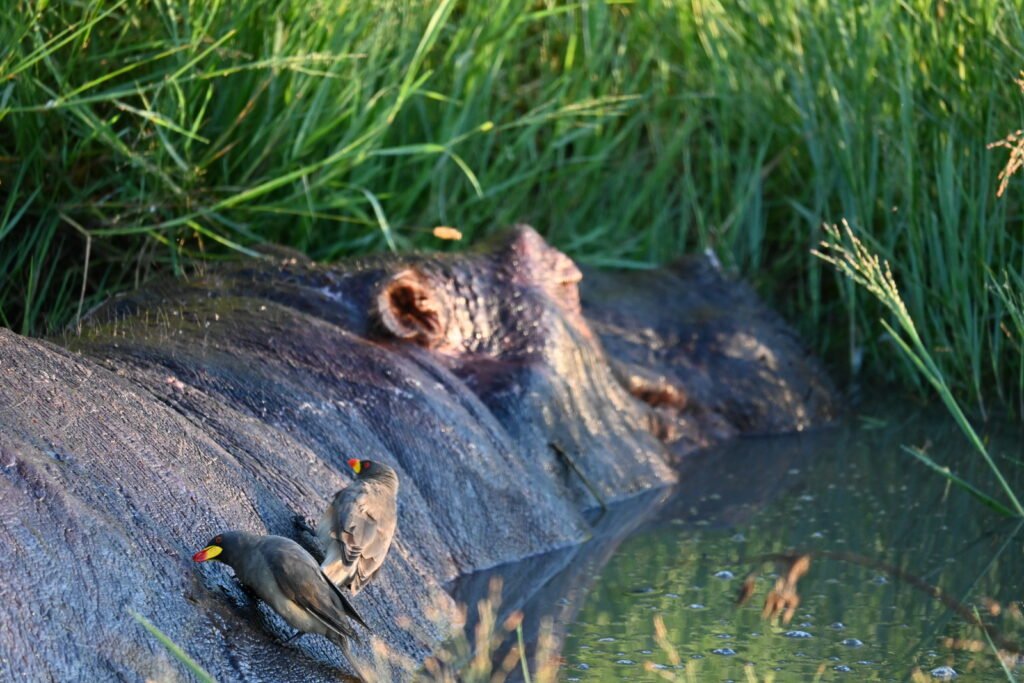
Wildlife moves freely through camp. Bushbuck browsed quietly around the tents most evenings, while monkeys and baboons wandered regularly through the property, making firmly closed doors essential whenever you stepped away. Oscar, the camp’s resident hippo, spends much of the day sheltering beneath the pontoon before emerging after dark to graze around camp.
The Rooms at Okuti
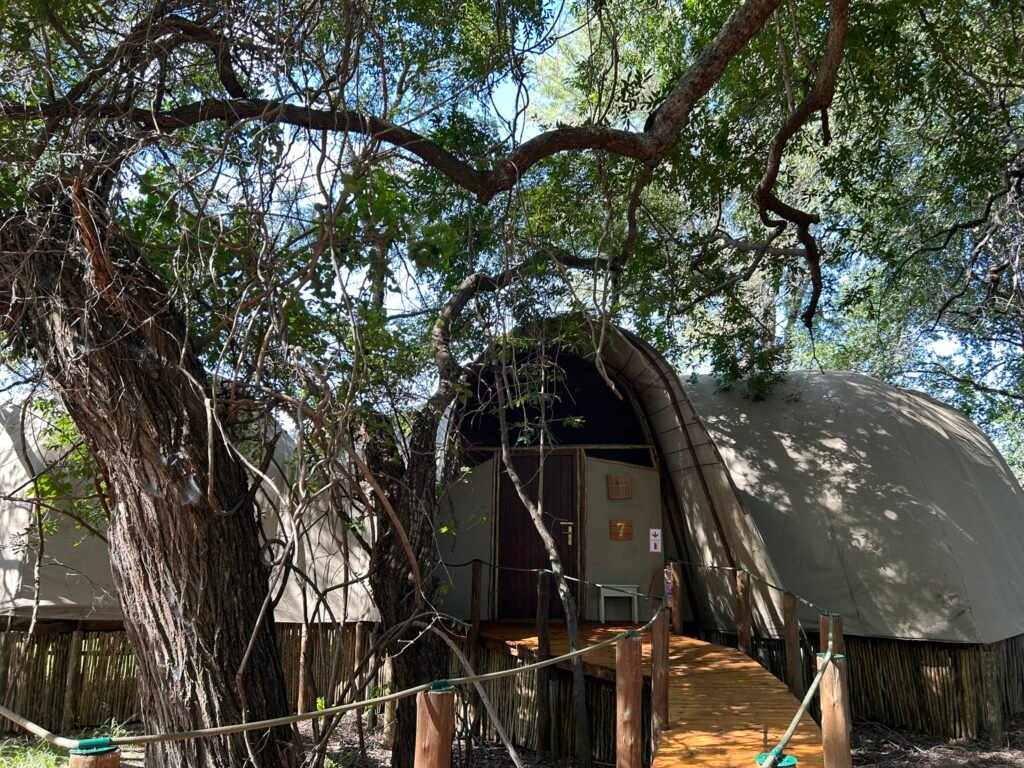
Okuti has just seven mosasas with a total capacity of 18 guests. I stayed in Tent 7, one of two spacious family units positioned to the right of the main area overlooking the river.
The suite felt wonderfully spacious, filled with natural light beneath its curved reed roof. A central lounge connected the master bedroom, indoor bathroom and outdoor shower deck, while a second smaller bedroom opened off the living space with its own access to the riverside deck.
The recent refurbishment has been handled thoughtfully with a strong emphasis on light, space and river views. The accommodation feels fresh, comfortable and contemporary while still retaining a clear safari character.
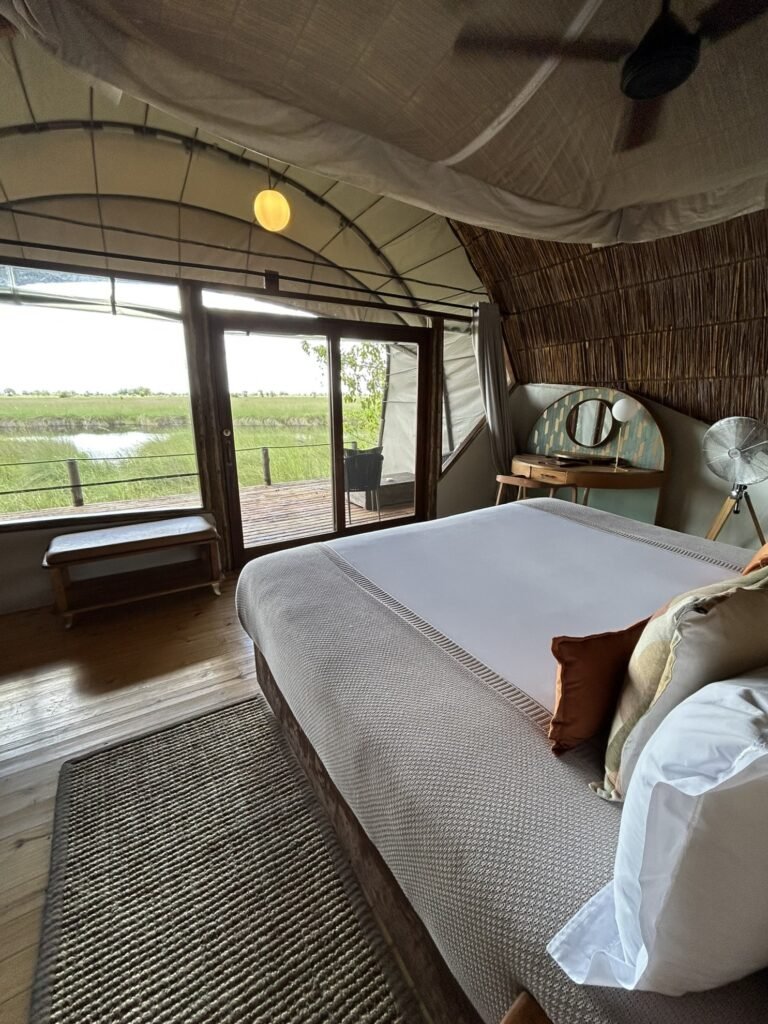
The only real challenge during the green season was temperature. Even with both the floor fan and overhead bed fan running, the rooms became extremely warm during the afternoons and early evenings. Visitors travelling during Botswana’s hotter months should be prepared for this compromise, though the reward comes in the form of dramatic skies, lush landscapes and quieter camps with a far greater sense of isolation. I understand there are plans to introduce additional room-cooling systems in future, which would make a noticeable difference during the peak summer and October/November heat.
Wildlife Sightings in Moremi Game Reserve
Looking at the map of Moremi back at camp, it became clear just how much of the reserve was inaccessible due to the summer rains. Many key routes are accessed via bridges, several of which were completely submerged during our stay, leaving our drives concentrated within a relatively narrow area.
Wildlife viewing inevitably becomes less predictable under these conditions, but patience still brought rich rewards.
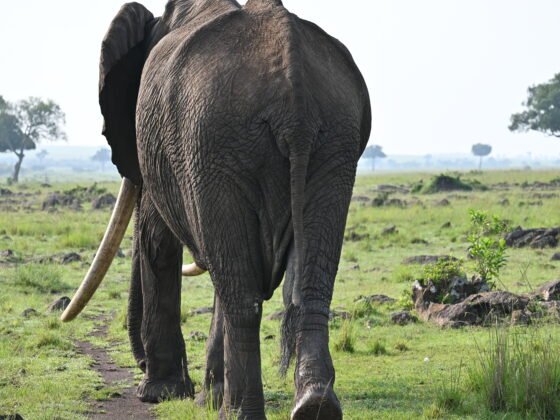
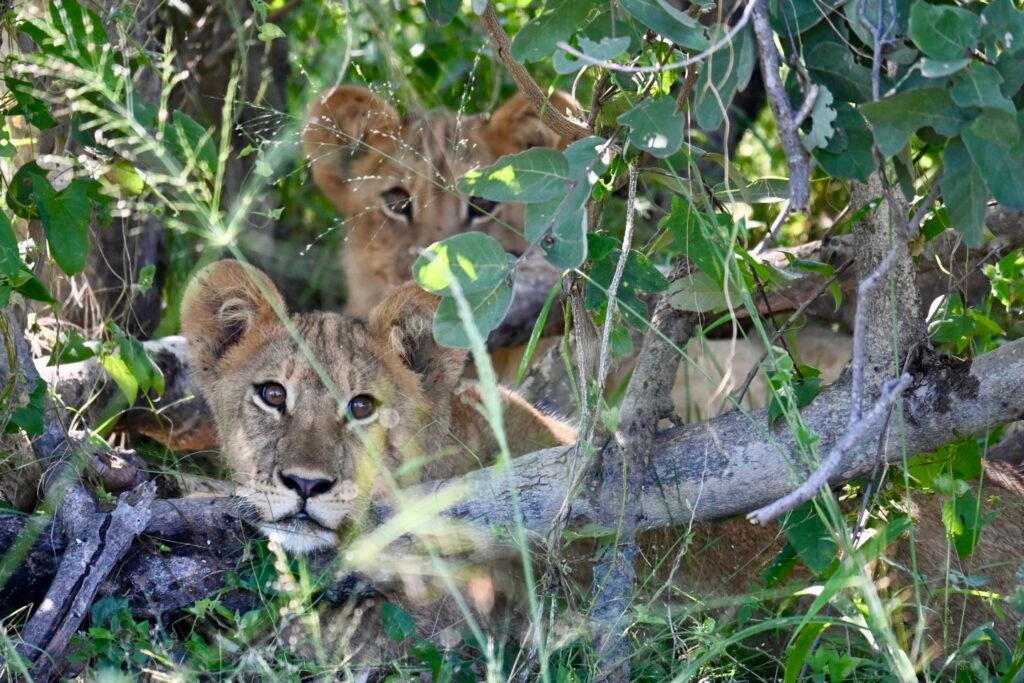
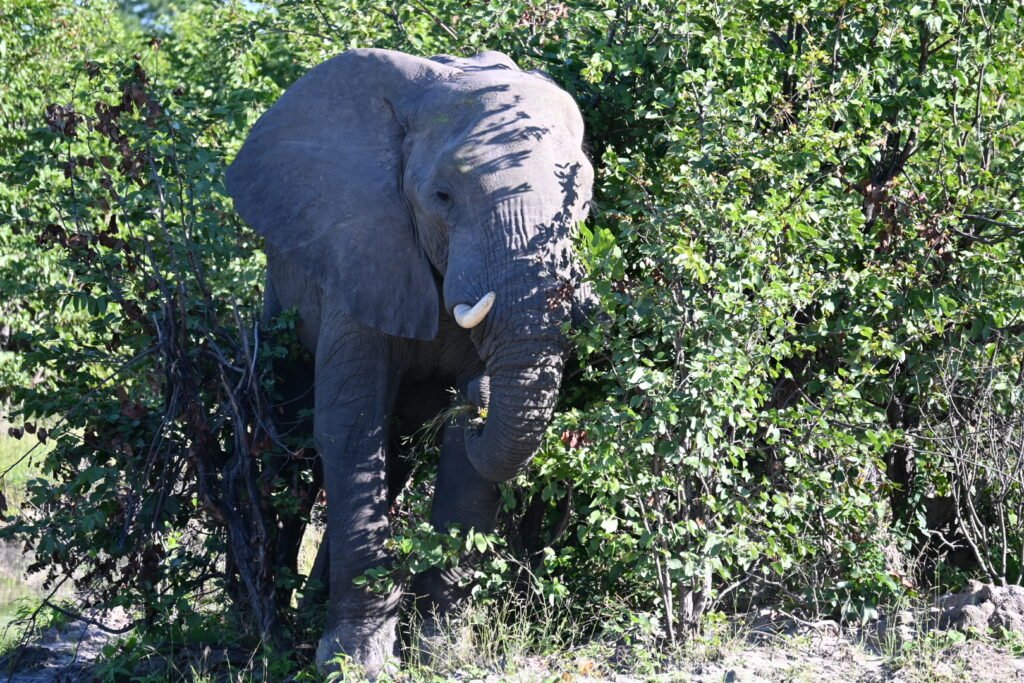
Over the course of our stay we encountered lions, including a sleepy lioness surrounded by playful cubs, elephants, hippos, crocodiles, warthogs, baboons, vervet monkeys, impala, red lechwe and kudu, along with an extraordinary variety of birdlife, often framed against dramatic storm clouds and intensely green vegetation. We also saw a leopard tortoise attempting to navigate the flooding.
One of the most striking aspects of Moremi was how relaxed and habituated many of the animals appeared around vehicles, allowing for unusually close and rewarding encounters. This extended to the birdlife too, with many species seemingly entirely comfortable posing at close quarters.
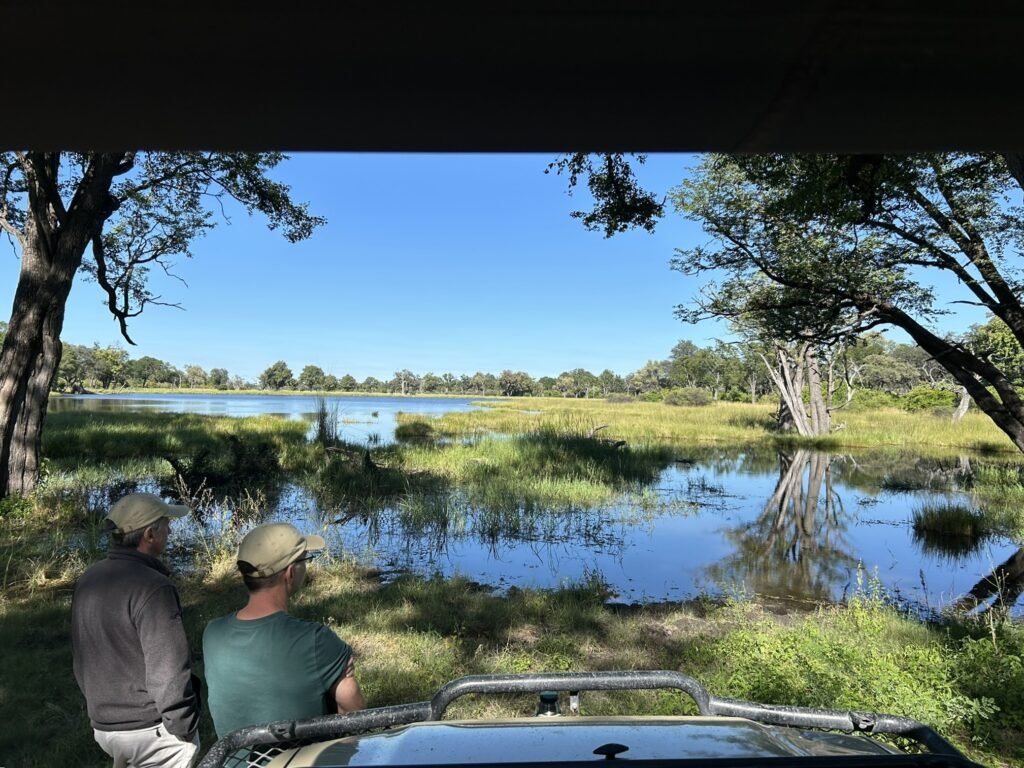
One morning we stopped for coffee deep in the mopane woodland overlooking Veronica’s Island, named after the late botanist Veronica Roodt, and spotted four different species of kingfisher within minutes. Each flash of colour felt impossibly vivid against the deep greens and browns of the forest. It was one of those special safari moments where everything slows down completely and you find yourself utterly immersed in the moment.
Yet while the game drives were memorable, it was ultimately the water-based activities that defined the experience for me.
Exploring the Okavango Delta by Boat
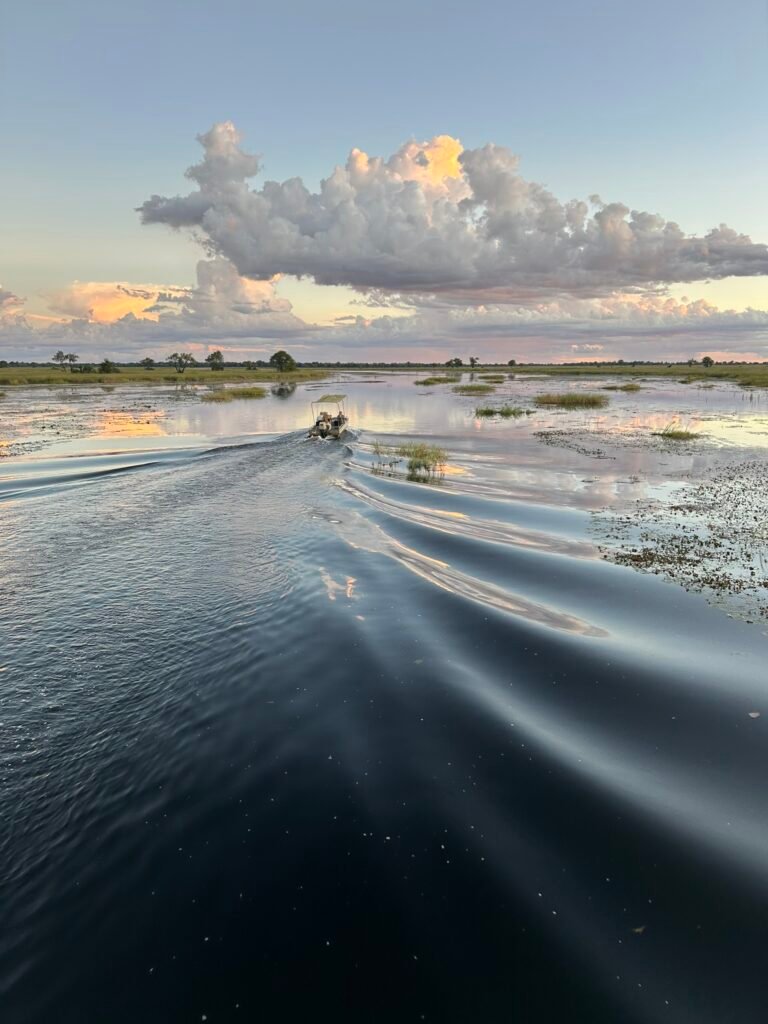
An afternoon exploring the Xakanaxa Lagoon and the Maunachira River became one of the highlights of my entire Botswana journey. This was the iconic Delta I had imagined long before arriving.
Drifting quietly through channels crowded with papyrus and water lilies, with the call of fish eagles overhead, we watched African jacanas delicately picking their way across floating vegetation, earning their wonderfully appropriate nickname: “lily trotters”.
Malachite kingfishers flashed electric blue through the reeds while tiny reed frogs clung to stalks glowing in the late afternoon light.
Robbie, our guide, had a gift for bringing the smaller details of the Delta to life. As we explored the waterways, he pointed out the differences between day and night lilies and explained how the Wayeyi (Bayei) people of the Okavango traditionally harvest and eat tswii, the edible tuber of the day lily. He also showed us how lotus lilies can be used to help filter and purify water. Later, drifting beside towering walls of papyrus, we sampled water chestnut, its texture and flavour surprisingly similar to raw sweet potato.
Throughout the journey, Robbie would regularly cut the engine whenever we stopped to watch birds or simply absorb the landscape around us. Surrounded entirely by water and papyrus, with only the distinct call of a fish eagle carrying across the Delta, we experienced the extraordinary stillness of the waterway.
Eventually we met the camp’s river barge for sundowners.
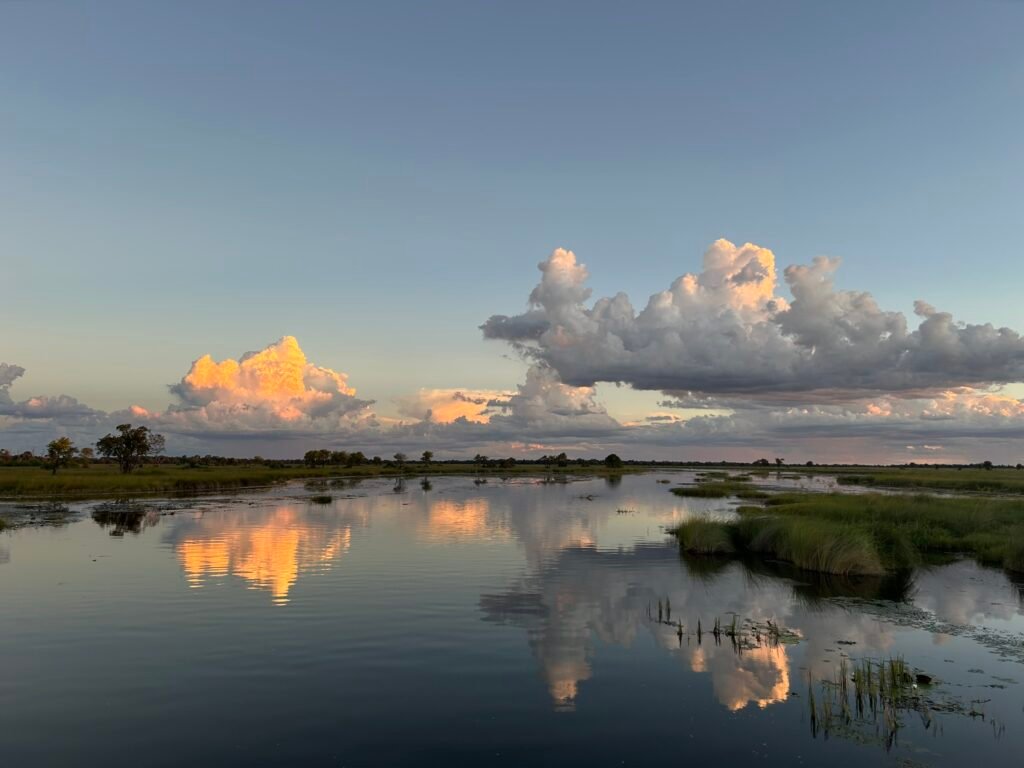
Baby Guinness shots made with amarula appeared first on the upper deck as we toasted the sunset, followed by gin and tonics and generous plates of barbecued chicken wings and other ‘bitings’.
The sky felt impossibly vast.
As the boat drifted slowly back towards camp beneath one of the most extraordinary sunsets imaginable, it became impossible not to understand the enduring romance of the Okavango Delta.
Who Is Okuti Best For?
What makes Okuti particularly appealing is its versatility.
For first-time Botswana visitors, it provides an excellent introduction to the Okavango ecosystem. Comparatively speaking, it represents strong value within the Botswana safari market.
For more experienced safari travellers, the combination of game drives and genuinely enjoyable boating activities creates a broader and more varied safari experience than many dry-land camps can offer.
It also pairs exceptionally well with other regions of Botswana, particularly private Delta concessions, where the landscapes feel markedly different. In contrast to the open floodplains found elsewhere in the Delta, northern Moremi feels more enclosed, wooded and intimate – a landscape where waterways snake quietly through forest rather than dominating vast open horizons.
Final Thoughts on Okuti and Moremi
Ultimately, Okuti succeeds because it understands its setting.
This is not ultra-polished luxury safari designed to insulate guests from the environment, nor is it an old-fashioned rustic bush camp. Instead, it occupies a very comfortable middle ground: stylish, relaxed, atmospheric and deeply connected to the rhythms of Moremi itself.
After long afternoons drifting through lily-filled channels before returning to lanterns glowing beside the river, it felt exactly like the kind of Botswana safari experience I had hoped to find.
If you would like to find out more about safaris to Botswana please click here>>
All bookings support Explorers Against Extinction and its project partners at no additional cost to you.