In an age where most products are designed for convenience and short-term use, true exploration still demands something very different. It requires equipment that can be relied upon in unfamiliar environments, across changing conditions, and over long periods of time. Whether navigating coastlines, crossing time zones, or simply moving between places with purpose, the tools we choose matter.
Mechanical watches have long held a place in that world. Not as status symbols, but as instruments. Before GPS and smartphones, they were essential. Today, they remain relevant for a different reason. They represent durability, independence, and a refusal to rely entirely on disposable technology.
For those drawn to exploration, even in a modern context, certain watches still carry that ethos forward.
Timekeeping Across Borders: The OMEGA Seamaster Aqua Terra Worldtimer
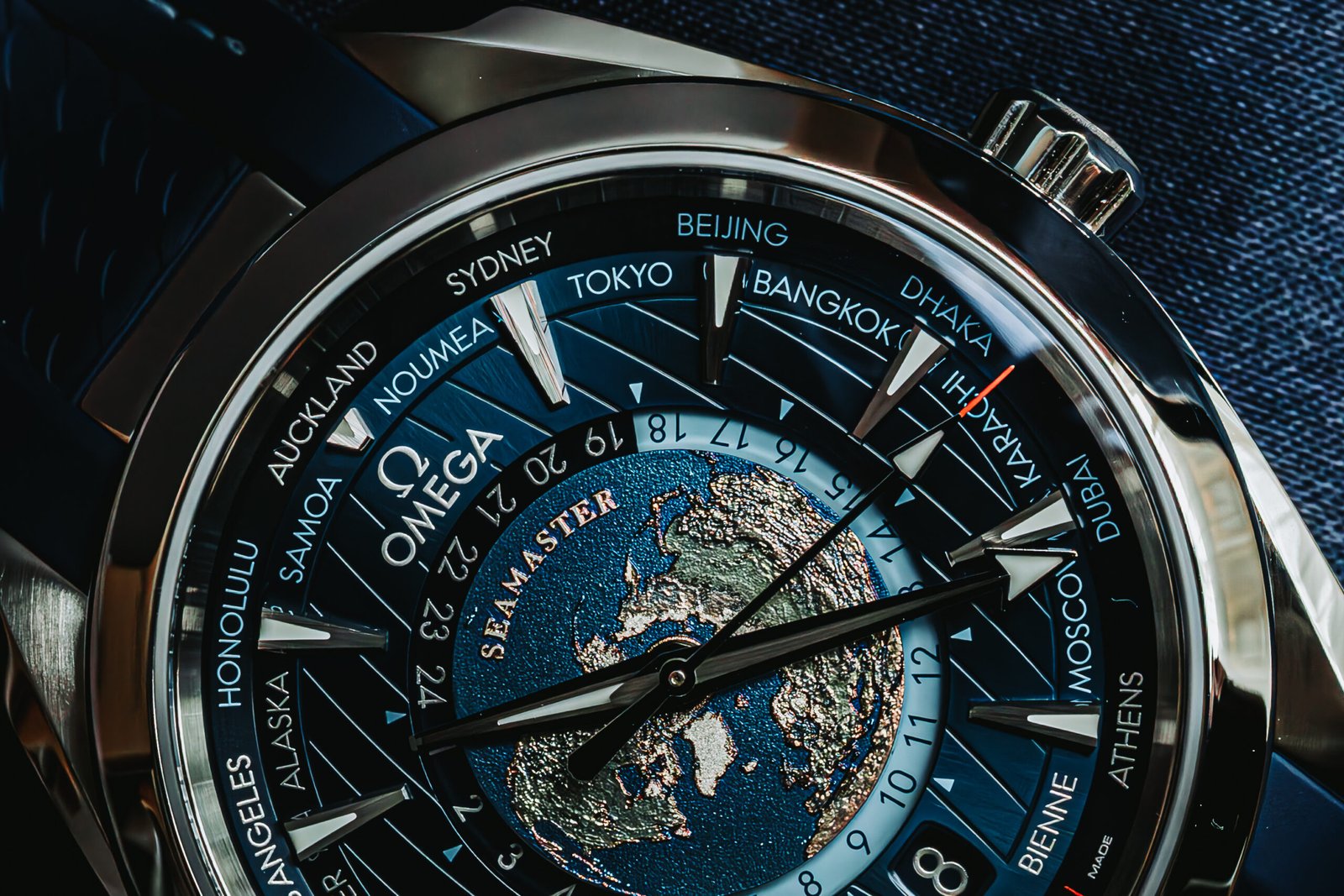
The ability to track multiple time zones has always been tied to travel and global movement. Pilots, sailors, and international operators have relied on it for decades. The OMEGA Seamaster Aqua Terra Worldtimer takes that concept and refines it into something both highly functional and visually distinctive.
At its core, the Worldtimer allows the wearer to read the time in cities across the globe simultaneously. The dial itself is designed around this purpose, with a central map and a surrounding city ring that represents different time zones. It is not just decorative. It is practical, particularly for those moving between regions or coordinating across borders.
What sets it apart is how it balances that functionality with resilience. The Aqua Terra line is known for its robust construction and water resistance, making it suitable for varied environments. It is not a specialist dive tool, nor is it purely a travel piece. It sits somewhere in between, which is exactly where many modern explorers operate.
For someone navigating between locations, whether for work or personal pursuits, it offers a constant reference point. No charging, no signal required. Just a mechanical system doing exactly what it was designed to do.
Built for Purpose: The TUDOR Pelagos FXD GMT
Where the Worldtimer focuses on global awareness, the TUDOR Pelagos FXD GMTis built with a more direct, mission-driven approach. It is a watch designed with military and professional use in mind, where clarity, durability, and reliability take priority over everything else.
The FXD case construction is a key detail. Fixed strap bars are machined into the case itself, increasing strength and reducing potential points of failure. It is a small design choice that speaks to a much larger philosophy. This is not a watch built for occasional wear. It is built to be used, repeatedly, in demanding conditions.
The GMT function allows the tracking of an additional time zone, often referred to as “Zulu time” in military contexts. For coordinated operations, navigation, or simply maintaining a reference to home time while travelling, this becomes essential. Unlike more decorative GMT implementations, here it is stripped back and easy to read.
Its lightweight titanium case, high legibility dial, and practical strap system make it particularly suited to active use. Whether in coastal environments, on expeditions, or in structured fieldwork, it is a watch that prioritises performance over presentation.
Why These Watches Still Matter
It would be easy to argue that mechanical watches are no longer necessary. Smartphones provide more accurate timekeeping, GPS offers navigation, and digital tools can track multiple time zones instantly. On paper, the mechanical watch has been replaced.
But that misses the point.
Exploration has never been purely about efficiency. It is about reliability, independence, and understanding your environment without complete reliance on external systems. Mechanical watches offer that in a way digital devices cannot. They do not need a signal. They do not run out of battery at a critical moment. They simply continue.
There is also a broader shift taking place. More people are stepping away from fast consumption and towards long-term ownership. Choosing fewer, better-made items that last. In that context, a well-built watch is not just a tool. It is part of a wider mindset.
A Different Kind of Sustainability
For organisations focused on conservation and responsible exploration, the idea of sustainability is central. It is not only about protecting environments, but also about how we engage with the things we own.
A mechanical watch, when properly maintained, can last decades. Often longer. It can be serviced, repaired, and passed on. That stands in contrast to much of modern technology, which is designed to be replaced within a few years.
Choosing equipment that endures reduces waste and reinforces a more considered approach to ownership. It aligns, in a small but meaningful way, with the principles of conservation. Buy once, maintain it, and use it for what it was intended to do.
The Modern Explorer
Exploration today does not always mean crossing oceans or charting unknown territory. It can be quieter. Travelling between countries, working in different environments, or simply choosing to spend more time outdoors and less time tied to screens.
The tools may have changed, but the mindset has not.
Watches like the OMEGA Seamaster Aqua Terra Worldtimer and the TUDOR Pelagos FXD GMT reflect that. They are not about excess. They are about purpose. Built to function, designed to last, and capable of supporting those who still value independence in a connected world.
Image: MVS Watches