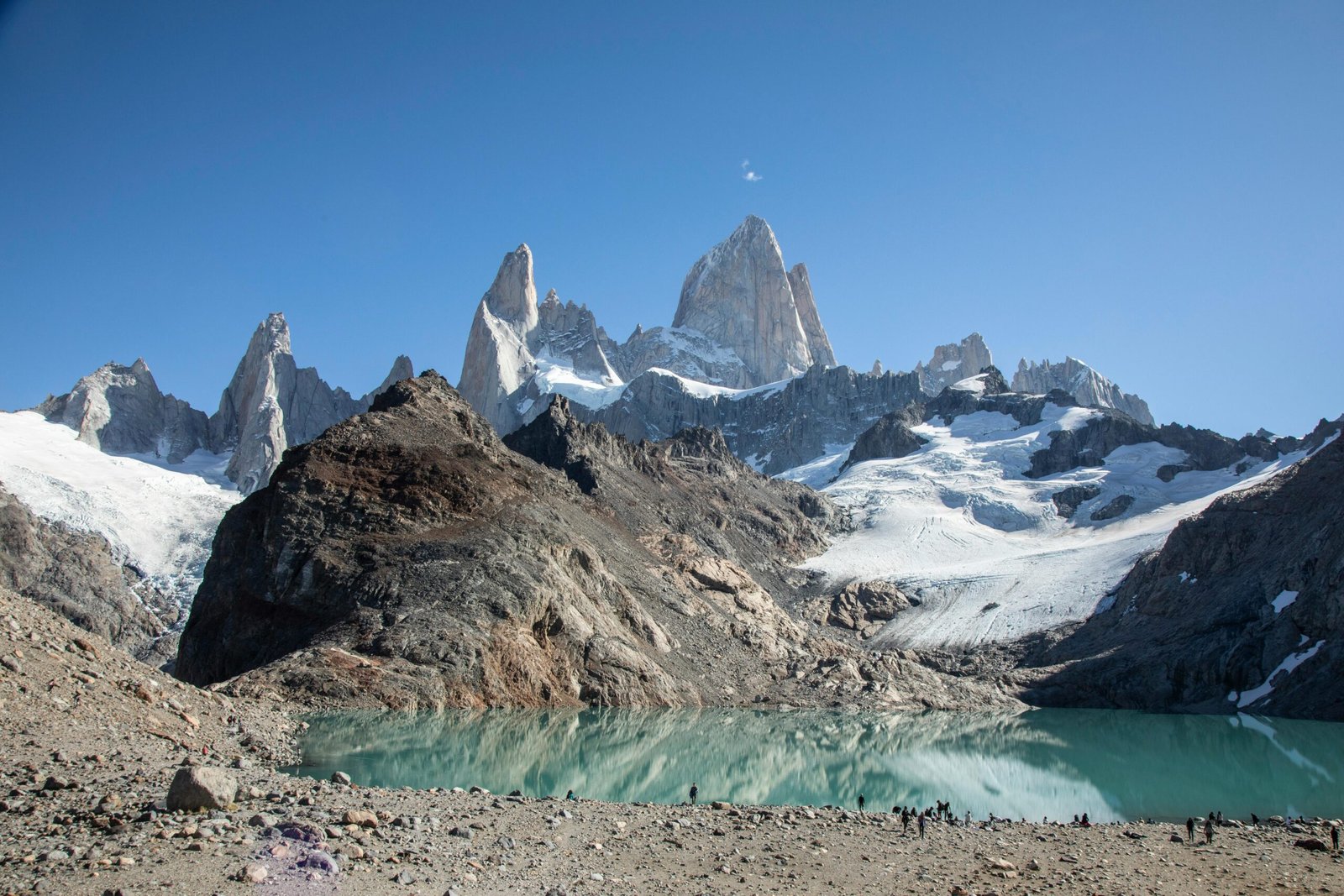
This rugged landscape, where it’s practically windy all the time, offers a unique spectacle full of national parks, volcanoes, glaciers, mountains, fjords, and evergreen forests. It’s no wonder it attracts adventurers from around the world. But when should you go to make the most of your visit?
Where is Patagonia?
Patagonia is an extensive region in South America, situated south of the 36th parallel south latitude and encompassing the territories of both Chile (where the largest part of Patagonia is located) and Argentina. To the north, it is bordered by the Colorado River and a region called Araucanía, while it is surrounded by oceans on the other side. To the south, you’ll find the famous archipelago of Tierra del Fuego, and except for Antarctica, it represents the southernmost landmass on our planet (specifically, it includes the infamous Cape Horn).Patagonia covers an area of approximately 1 million square kilometers and has a population of around 2.5 million people, so it is relatively sparsely populated.
Weather in Patagonia
Patagonia primarily lies within a temperate climate zone, meaning it experiences four distinct seasons. However, because it is located in the southern hemisphere, it has cool summers and mild winters– in other words, the seasons in Patagonia are “reversed” compared to Europe. Therefore, it’s ideal to go hiking during (our) winter and skiing during (our) summer (see the following paragraphs for temperature details). The region is so vast that you can find tropical climates to the north and, conversely, subarctic climates to the south. Additionally, Patagonia is crossed by the world’s longest mountain range, the 2,000-kilometer-long Andes, which contributes to rather unpredictable weather conditions.
Highest temperatures
Maximum temperatures during the winter months typically range from about 12–18°C. The warmest months are November, December, January, and February. Patagonia generally experiences relatively good weather even in March.
If your main goal is tourism and exploring the local landscape, the best months for you are January and February. In November and December, there may be occasional rainfall, but it’s not severe, averaging around 20 mm of precipitation per month. January and February are considered the peak season when prices are also at their highest.
Lowest temperatures
However, if you’re primarily interested in skiing, the most suitable months for you are July and August. The exact location you choose will also play a role in the conditions.
Western and Eastern Patagonia
Chilean Patagonia, located to the west of Andes, has a very cold and humid climate with a high amount of rainfall. The northern part is relatively flat and used for agriculture, with several larger cities situated there. In contrast, the southern part is very mountainous, and the coastline is fragmented into hundreds of islands. The southern region is also characterized by numerous fjords and significant glaciers.
Argentinian Patagonia, located to the east of the Andes, is characterized by a dry and warmer climate with minimal precipitation, which is blocked by the Andes. The region is full of steppes and semi-deserts, and the soil here is not suitable for agriculture. In the north, you can find the largest city in Patagonia, Neuquén.
What to visit
Argentina and Chile both offer captivating destinations that will leave a lasting impression on you during your visit to Patagonia. Since it’s an extensive and sparsely populated region, the most enticing attractions for tourists are the diverse natural landscapes, ranging from the coast to the Patagonian forests, steppes, and immense rock formations and mountains.
Along the coastline, you’ll encounter rare bird species such as cormorants, penguins, and various shorebirds. In the waters, you can spot whales, orcas, and even the elusive sea otter. In the Patagonian forests, you may come across the Andean condor, and if you’re exceptionally fortunate, you might catch a glimpse of the critically endangered pudu, the world’s smallest deer, measuring just 40 cm in height. As for the steppes, you’ll almost certainly encounter guanacos, nandus (ostrich-like birds), flamingos, ibises, and many other animals.
If we were to highlight one or two specific must-visit places in Chile that you shouldn’t miss, they would be:
Torres del Paine
A breathtaking natural national park, incidentally, listed as a UNESCO World Biosphere Reserve, is where you’ll find the iconic granite spires, the Torres del Paine, majestically rising above the steppe (the highest peak reaching an elevation of 3,050 meters). Besides these imposing rock formations, the park boasts other remarkable geological wonders, such as the Cuernos del Paine. However, don’t be fooled; Torres del Paine is not just about barren rocks. In addition to the mentioned steppes, you’ll encounter dense beech forests, monumental glaciers, crystal-clear lakes, swift rivers, and contemplative nooks that entice you to rest in their modest natural beauty.
To explore the most beautiful spots, you can embark on a five-day or more challenging nine-day circuit or choose from countless other hiking trails, all meticulously maintained by the park’s local guardians, who also oversee their campsites for hikers.
Interesting Fact: If you do visit Torres del Paine, you might want to avoid mentioning Czech nationality. In 2005, a Czech tourist named Jiří Šmiták accidentally caused a fire in the park while mishandling a portable gas stove. Due to an exceptionally hot summer and strong winds, the fire quickly spread, consuming an incredible 5,000 hectares of forests and steppe. The Chilean government estimated the total damage at $60 million, making it the worst fire in the last 25 years.
The Switzerland of South America – Los Lagos
At the very least, Chilean Los Lagos is worth mentioning – a region in the temperate zone brimming with lush rainforests and hundreds of glacial lakes. Thanks to its beauty, this area has earned the nickname “Switzerland of South America“. However, it’s also home to one of the oldest American archaeological sites, Monte Verde. You can also visit the private natural park Tantauco, established by Chilean business magnate (and later President of Chile) Sebastián Piñera in 2005 to protect 118,000 hectares of the region’s unique ecosystem. The park features two campsites and approximately 150 kilometers of hiking trails. You can find more information about the area at www.nextleveloftravel.com.
In brief, here are some other interesting places in Chile and Argentina that we recommend:
In Chile, for example:
- Mylodon Cave Natural Monument – several caves and the rock formation Silla del Diablo,
- National parks like Vicente Perez Rosales, or Tantauco Park,
- Petrohué Waterfalls,
- The Carretera Austral region,
- The ensemble of geological formations known as Capilla de Marmol (Marble Caves).
In Argentina, try:
- Lakes near the city of Bariloche,
- Perito Moreno Glacier,
- Nahuel Huapi National Park,
- Valdes Peninsula, where you can see many exotic animals, including seals and penguins,
- La Cueva de las Manos (The Cave of Hands) – a remarkable collection of cave paintings dating back 13,000 to 9,500 years.
In Patagonia, you’ll find a whole host of other amazing places; there’s truly no shortage of them. So, for instance, treat yourself to a trip to Patagonia for Christmas and embark on an unforgettable journey right after the New Year.
Image: Bren Pestelos, Pexels