

“Inspired and inspiring. Heartfelt thanks to all the creatives who generously offer their time and talent to make this competition such a successful event helping many important conservation projects. Each year it just gets better and better!”
2026 Shortlist
Sketch for Survival 100 Artist of the Year
Selecting the Sketch for Survival 100 Artist of the Year shortlist is no easy task. While the whole judging panel enthusiastically joins in the discussions, the final decision falls to our head judge, Gary Hodges.
Congratulations to all ten shortlisted artists.
The winner of the Sketch for Survival 100 Artist of the Year will be publicly announced at Oxo Gallery, London, during the Private View on Wednesday 18 November. The winning artist will receive an engraved trophy.
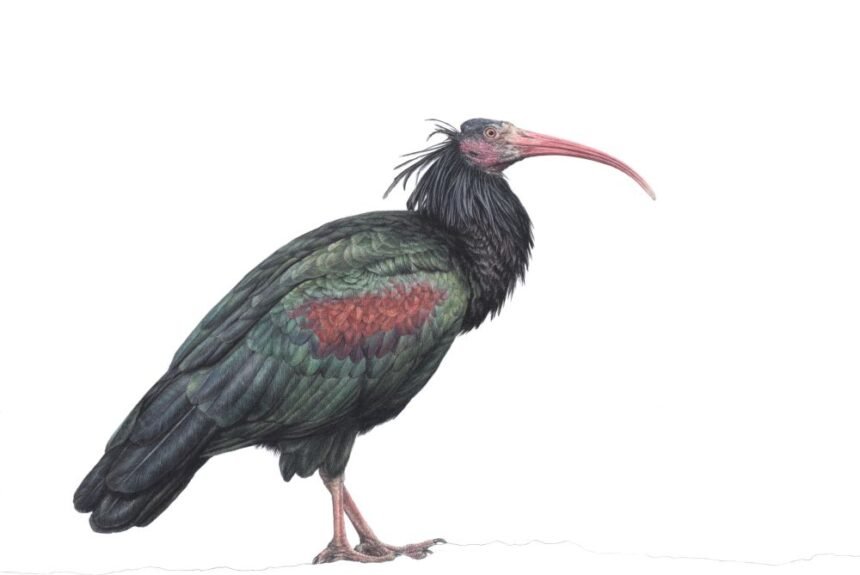
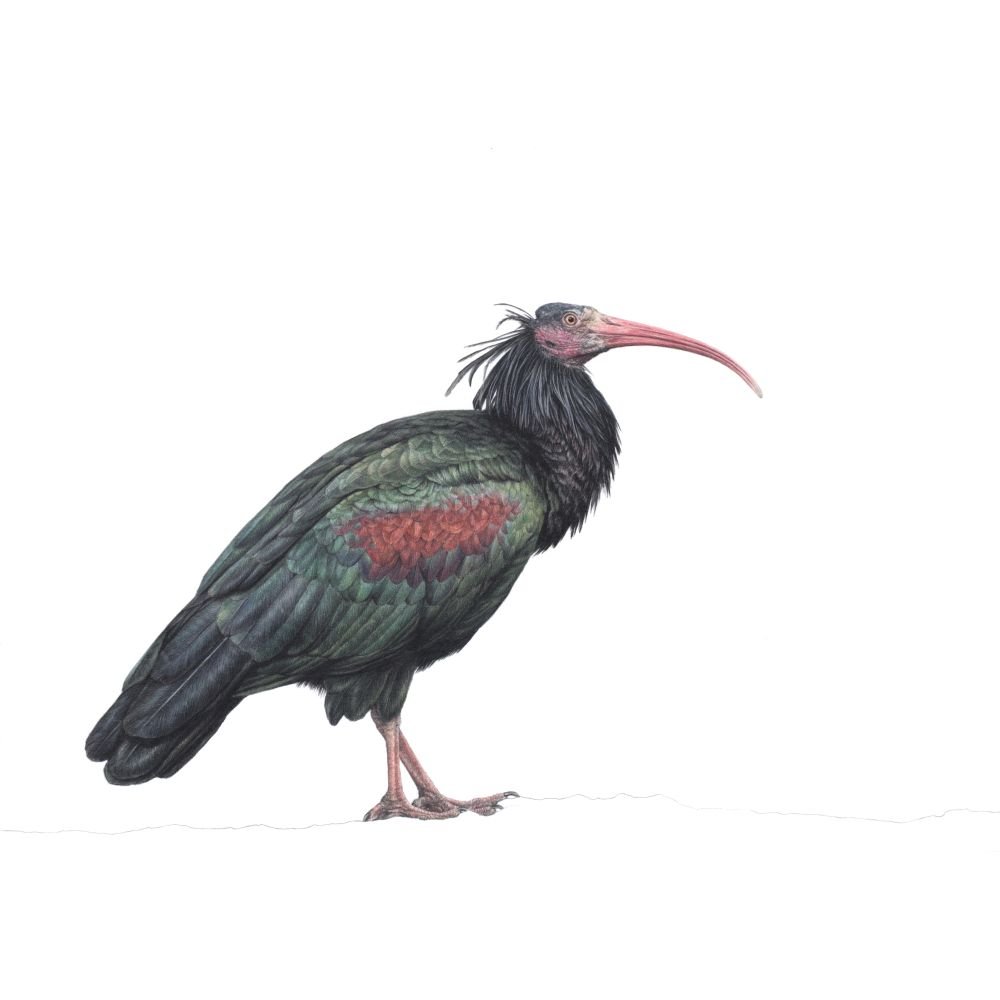
Back Home by Christina Hanke (Germany)
Northern Bald Ibis - IUCN Red List – Endangered
Coloured pencils
“I worked only with colored pencils, using one of my own photos as a reference.The Northern Bald Ibis was extinct in Germany and other parts of Europe. Thanks to conservation projects there are a few hundred individuals back now.” – Christina Hanke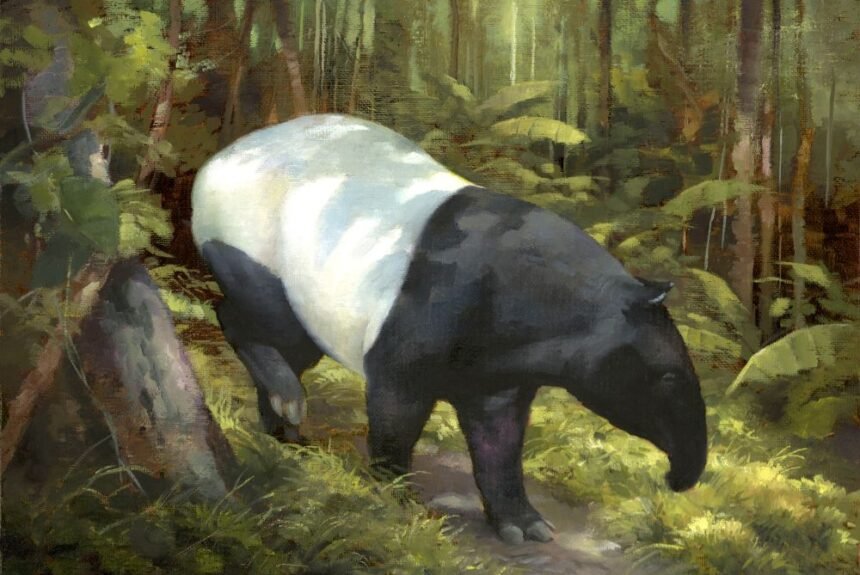
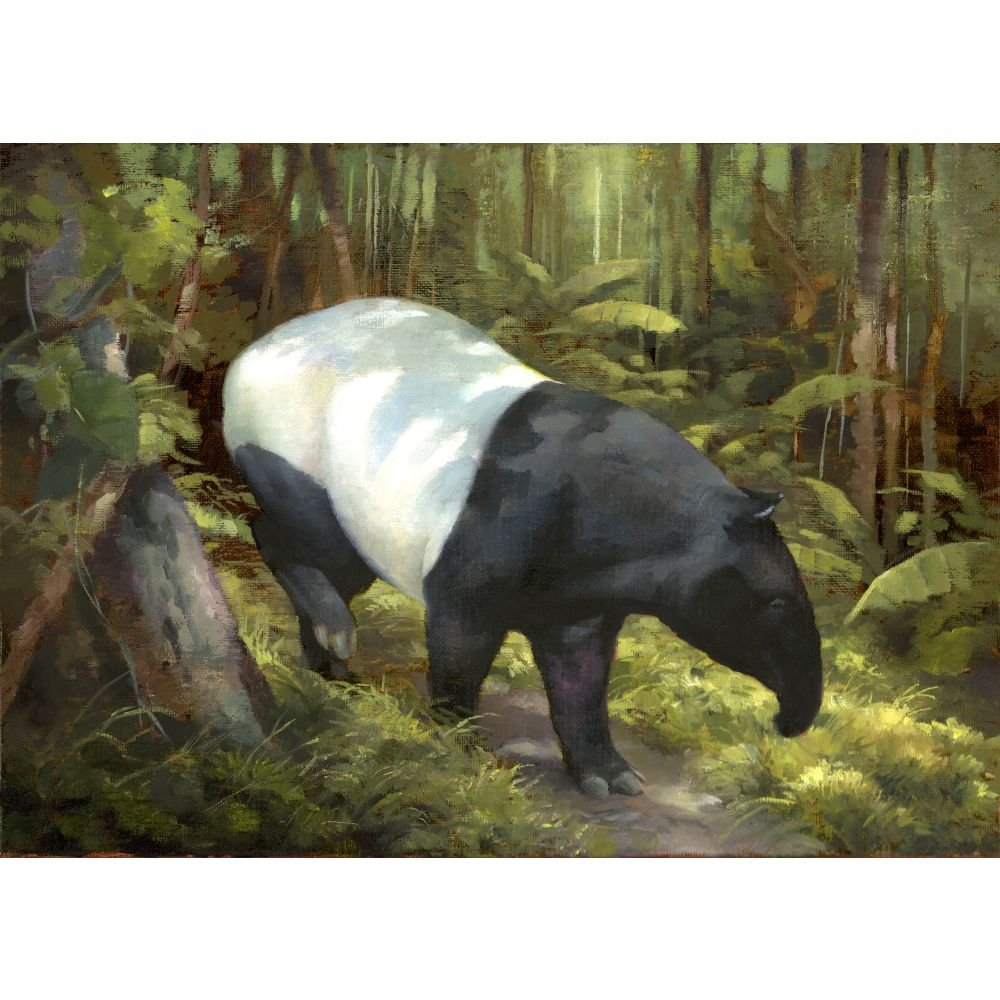
Wanderer by Ellen S. Barkin (Sweden)
Malayan tapir - IUCN Red List – Endangered
Oil on canvas, mounted on board
“This painting was made in oil paint on linen canvas and has been mounted on board to make it easier to handle and frame. Malayan tapirs shape their environment as much as they are shaped by it. Traveling long distances, they carve paths and tunnels through the undergrowth as they move across complex interconnected territories. Despite having few local predators, they are now in danger of extinction from habitat loss, as human infrastructure and roadwork sever the natural networks of their habitat. The disappearance of these magnificent animals threatens far more than a single species, as these living corridors are walked by countless other animals, whose browsing and seed dispersal help sustain forest and swamp regeneration. As the paths vanish, the elaborate web of life that depends upon them begins to unravel.” – Ellen S. Barkin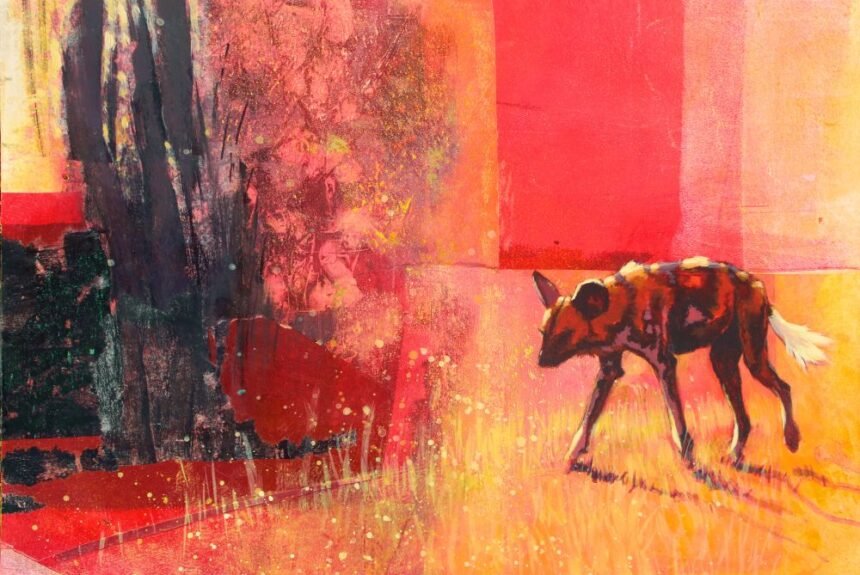
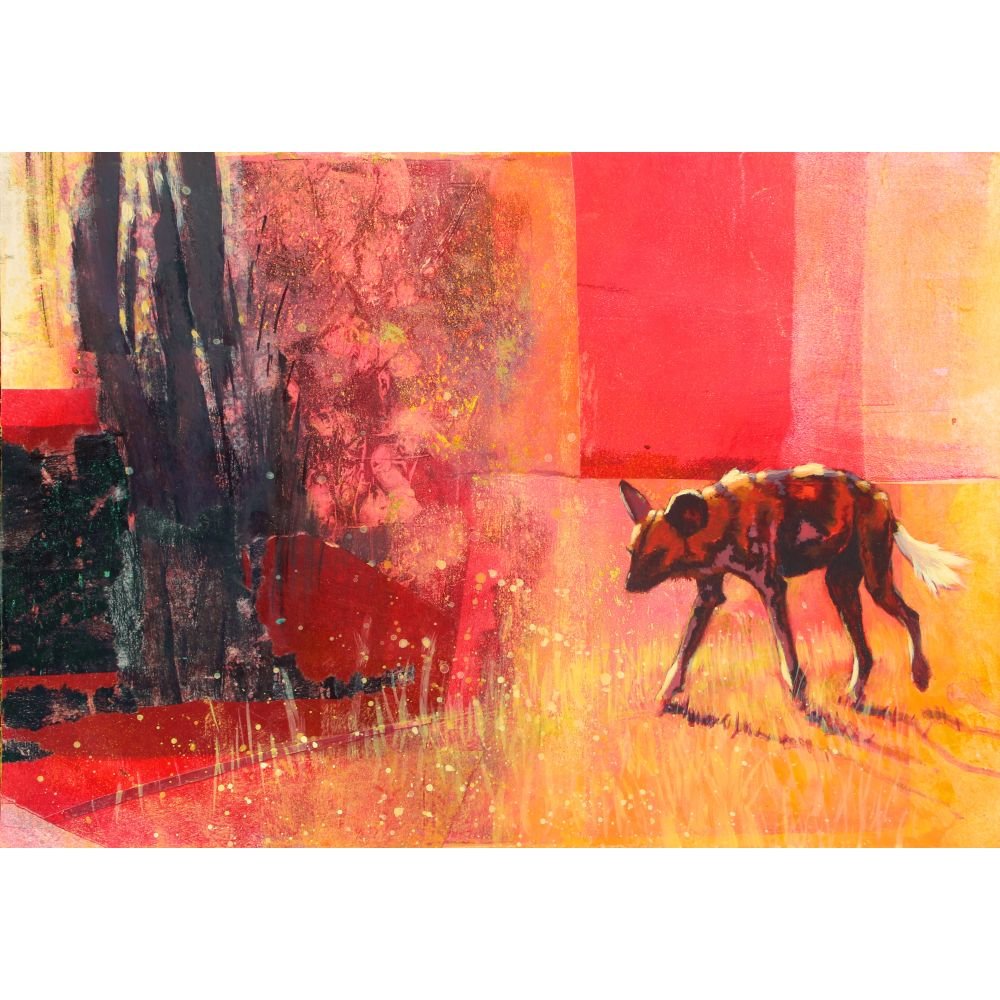
Last Rays by Heather Irvine (UK)
African Painted Dog - IUCN Red List – Endangered
Mixed Media Collage - Gelli Plate printed paper, magazine paper and acrylic
“Gel plate print with printed papers and magazine papers collaged on top alongside acrylic paint. Completely from imagination, this started as a red colour study playing on my Gelli Plate with texture. With extra collaged papers from my own Gel print papers and a few odd magazine cuts, it unwittingly became a hot, dry, Botswanan like landscape - perfect for my favourite subject, the African Wild Dog. I hope it evokes that atmospheric feeling of warmth at the end of the day at sundowner time and as a reminder that we need to do all we can to support this fabulous species.” – Heather irvine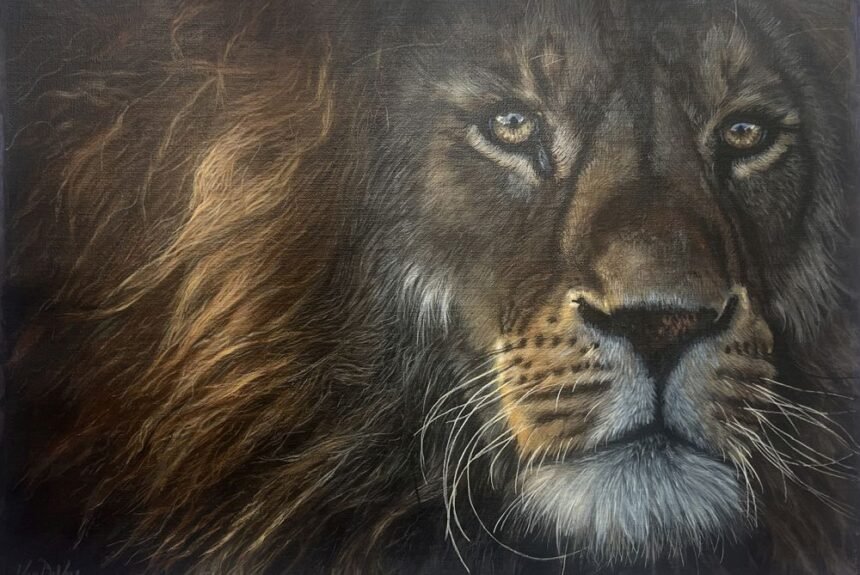
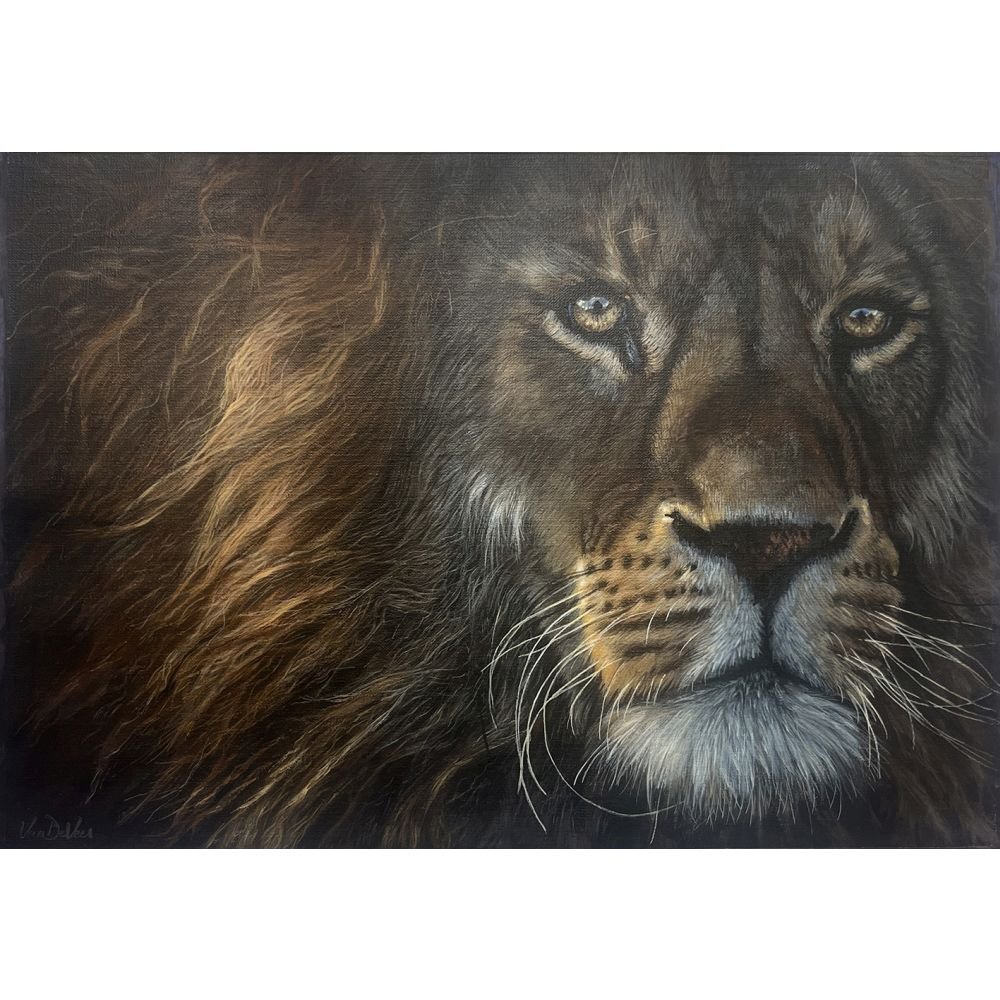
The Watcher by Ingrid Van De Veer (UK)
African Lion - IUCN Red List – Vulnerable
Acrylic and oil
“A number of layers in acrylic paint finished with a layer of oils.Bathed in the last light of day, this watchful lion represents a species under increasing pressure. Once widespread across Africa, lions now survive in fragmented populations as their habitat shrinks and human to wildlife conflict grows. Their future depends on protecting wild landscapes and living alongside them peacefully and sustainably.” Ingrid Van De Veer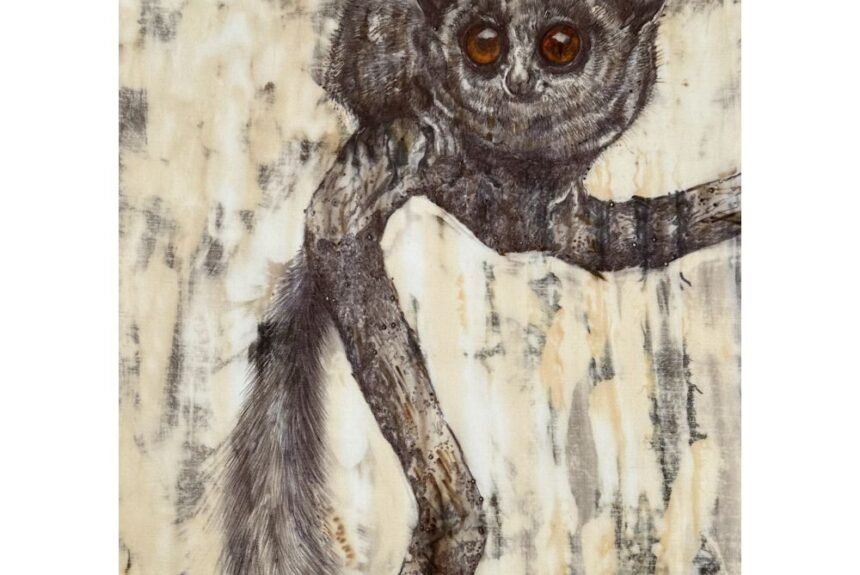
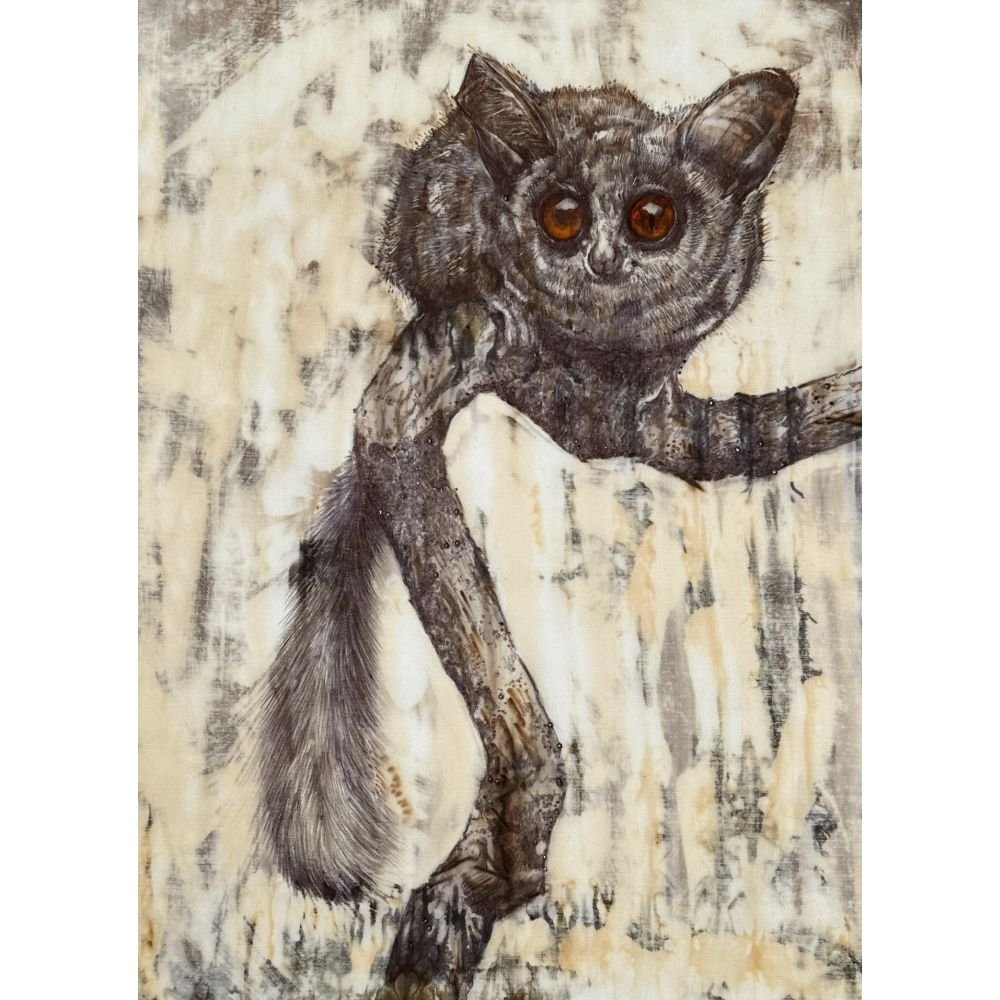
Bijou (something delicate, elegant, or highly prized) by Jane Michelle Habgood (UK)
Rondo Dwarf Galago - IUCN Red List - Endangered
Fabric, biro, dye, bleach and Soldering iron
"Using fabric as a surface, the image is first mapped out. Specific areas and the background are then removed using bleach. The galago is subsequently drawn onto the fabric with biro. Orange dye is added to the eye to enhance detail. Finally, the piece is singed, with certain sections carefully removed using a soldering iron. The tiny Galago often called a Bush Baby, clings to a single fragile branch. Its form is drawn in pen on bleached fabric, a surface already stripped back, echoing the erasure of the forests it depends on. Using a soldering iron, sections of the fabric have been burned away, most notably the branch itself. This deliberate destruction mirrors the real forces threatening the Galago's survival: logging and agricultural expansion. Parts of the animal's own body have been singed or removed, a stark reminder that when habitat disappears, the creatures within it vanish too. A wash of orange dye illuminates the Galago's eyes, drawing the viewer into its alert, vulnerable gaze. This small flare of colour becomes a symbol of resilience, a final ember of hope. The creature clings not only to the branch, but to the possibility that we may still act in time to protect it." - Jane Habgood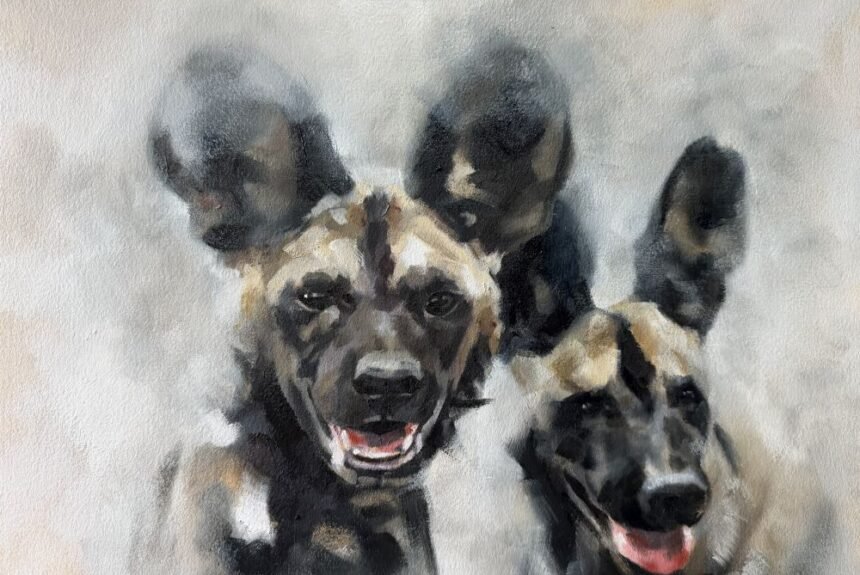
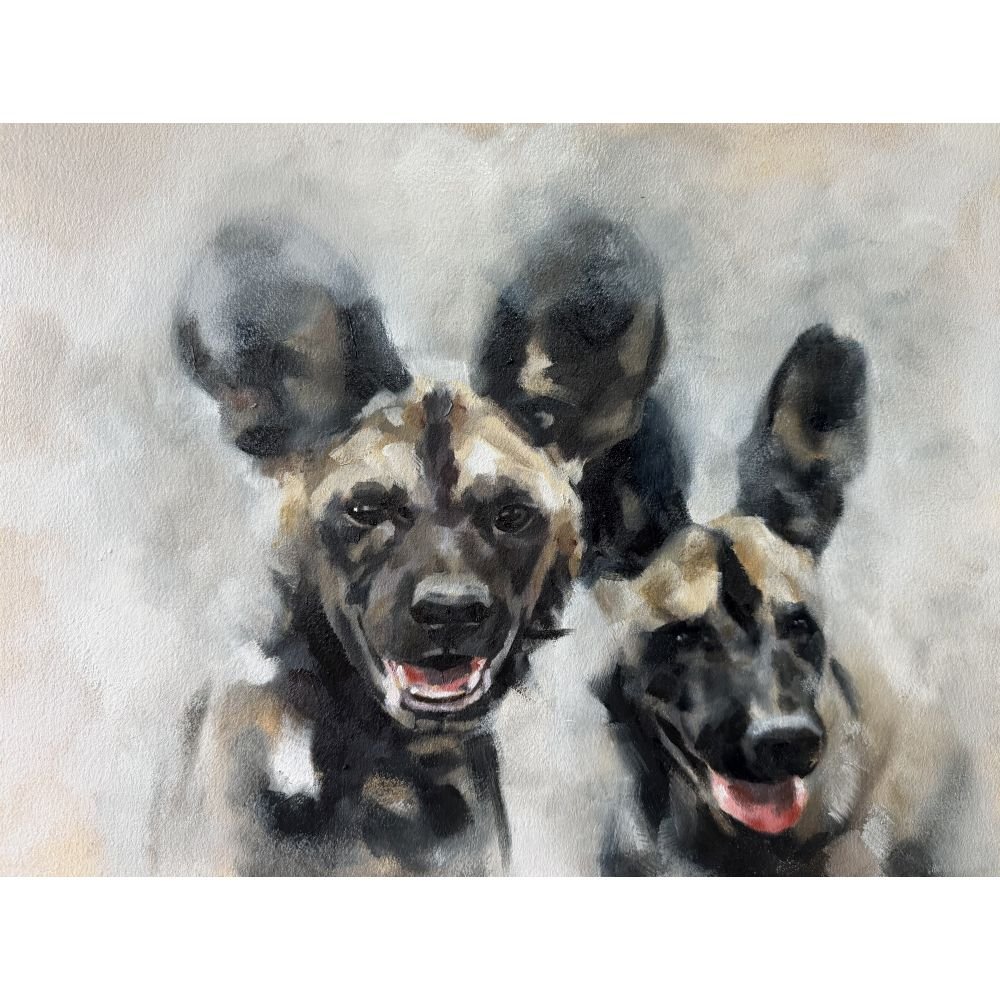
The Young Ones by Julie Brunn (UK)
African Wild Dog - IUCN Red List - Endangered
Oil on paper
"In this painting I wanted to capture the mischievous youth of these two juvenile wild dogs. With expressions of curiosity, intent and the direct gaze of the central dog we can imagine their next move like we are a part of their pack. The soft suggestive brush strokes making reference to their vulnerability whilst giving a still movement like heat rising off the savanna." - Julie Brunn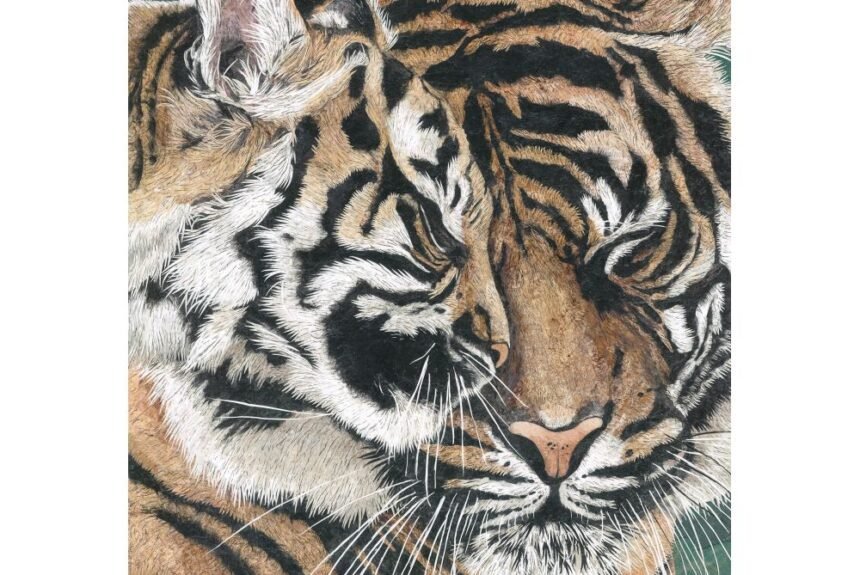
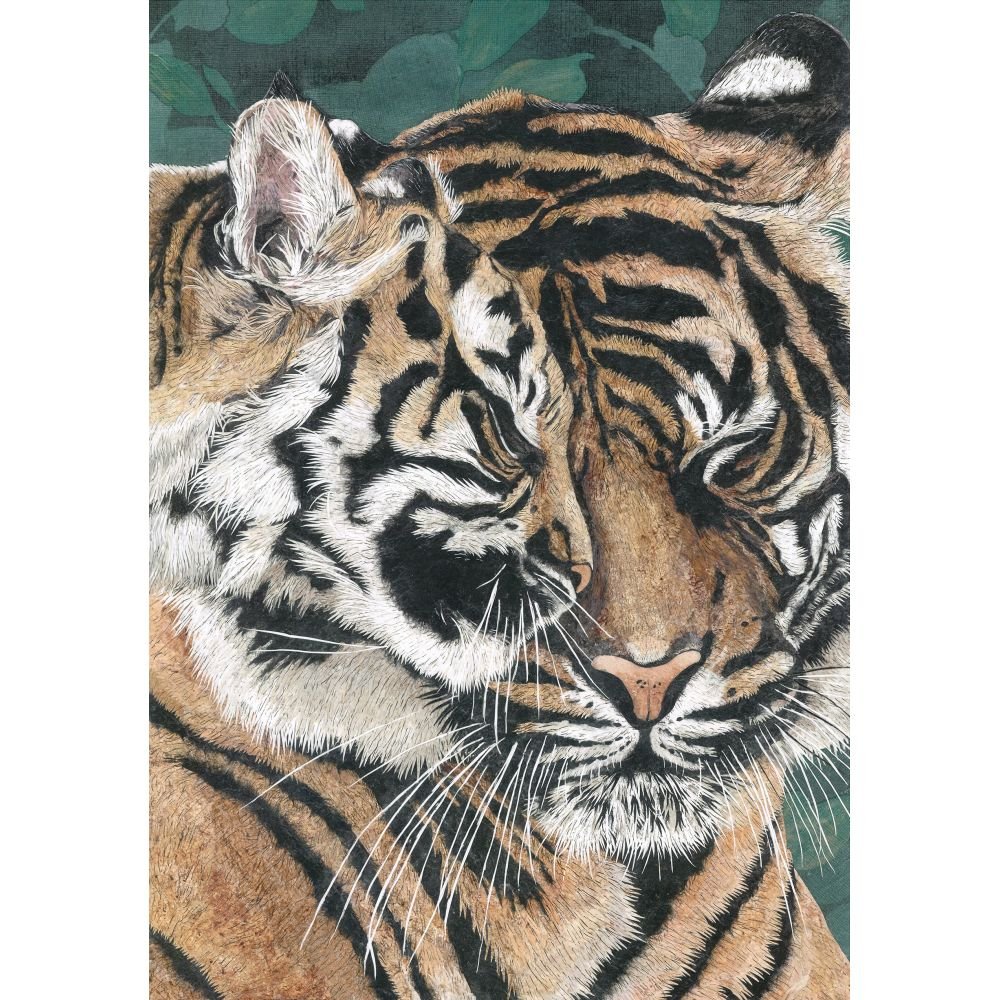
Beside Me by Laura Barley (UK)
Sumatran Tigers - IUCN Red List - Critically Endangered
Paper collage
"Every whisker and tuft of fur has been carefully cut with scissors from a variety of recycled papers, including wallpaper samples. The piece is built up in layers to create depth, intricate detail, and a tactile surface. Beside Me portrays a tender moment between a mother tiger and her cub, capturing the deep bond of love and care between them. As a critically endangered species, this quiet interaction feels especially precious, highlighting the fragility of Sumatran tigers and the importance of conserving future generations. By focusing on their closeness, I hope to remind viewers of what stands to be lost if we fail to protect these remarkable animals and the wild spaces they depend on. The tactile detail created with carefully cut recycled paper helps to gently enhance the tiger's natural beauty and draw you closer to the moment." - Laura Barley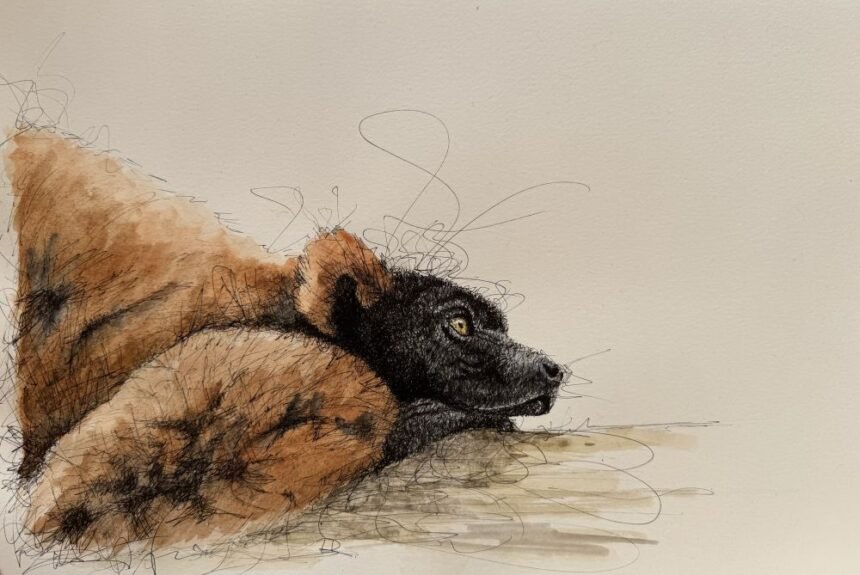
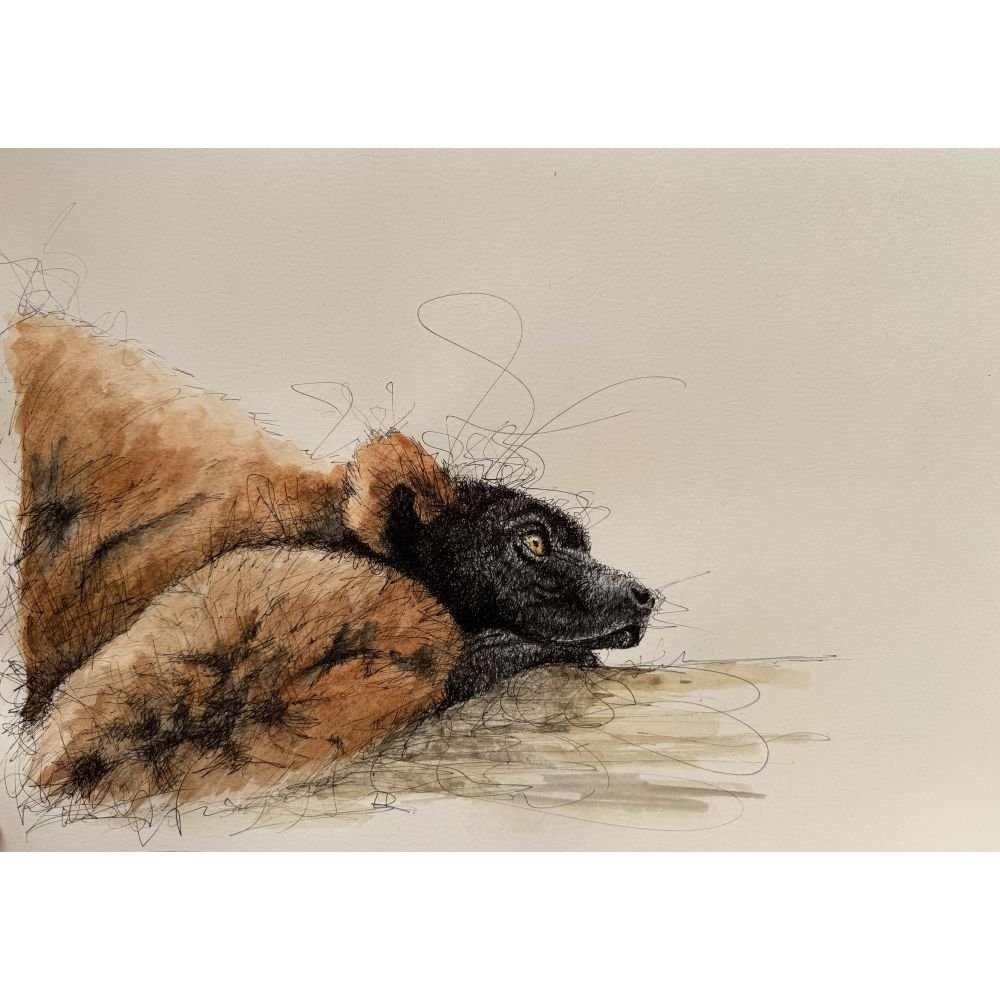
Eyes on the future by Louise Reilly (UK)
Red Ruffed Lemur - IUCN Red List - Critically Endangered
Mixed Media
"The main part of the piece is the line work, as this stage takes the longest. I use fine liner pens of varying tip size to create the form of the animal. I do this using a controlled scribble. I then use watercolour to bring the animal to life. I find Lemurs fascinating and the Red-ruffed lemurs in particular. They are one of the largest living lemurs, and interestingly, the largest pollinators in the world! This is because as they feed, pollen sticks to the fur around their faces and gets transported from tree to tree. Red-ruffed Lemurs are known for their loud vocal calls but in this piece, I wanted to show their quieter side." - Louise Reilly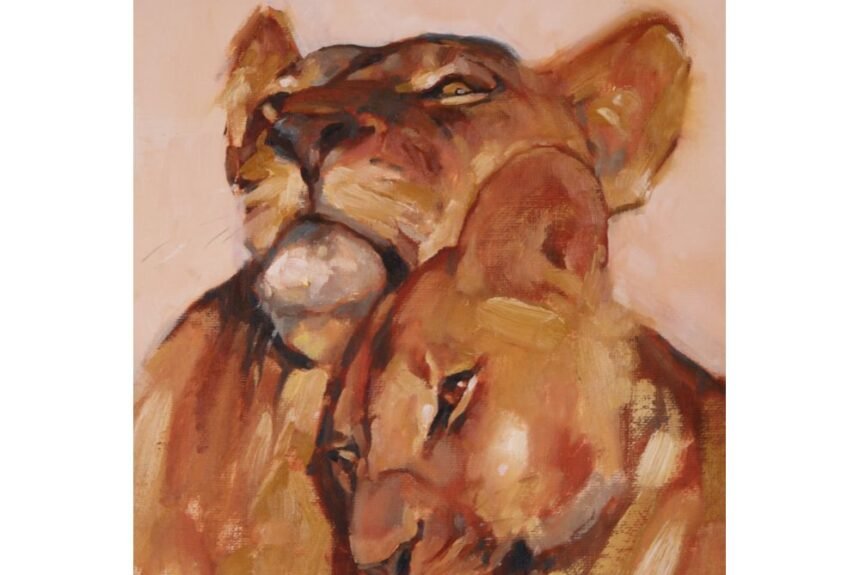
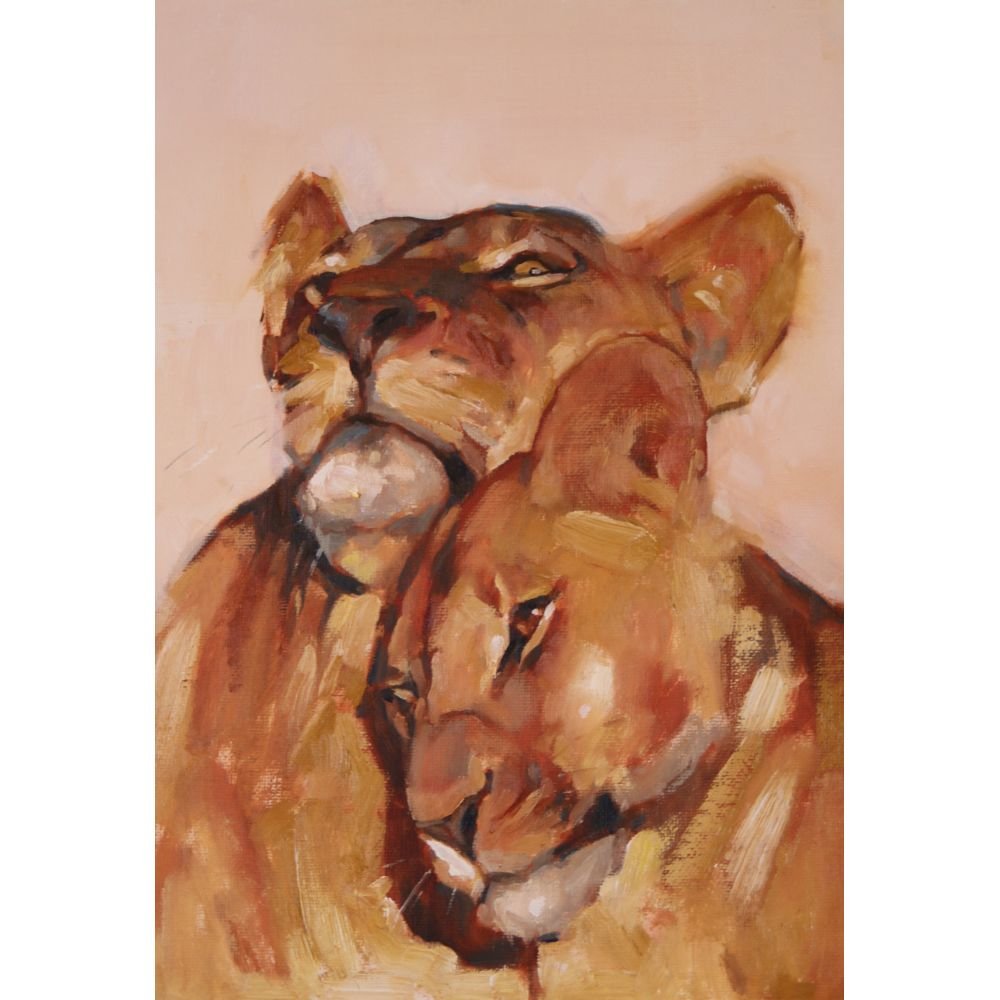
Greetings by Sarah Rhiannon (UK)
African Lion IUCN Red List - Vulnerable
Oil
"Oil painting on canvas board. The greeting captures a tender moment between such powerful predators. Lions are social animals and their bonds are an important aspect to their strength and survival. This painting captures the head rubbing between two lionesses onto canvas." - Sarah Rhiannon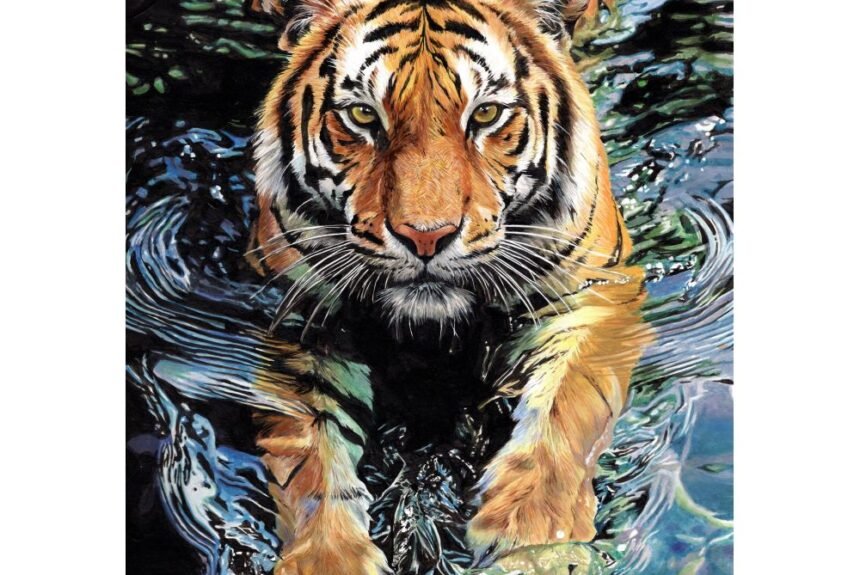
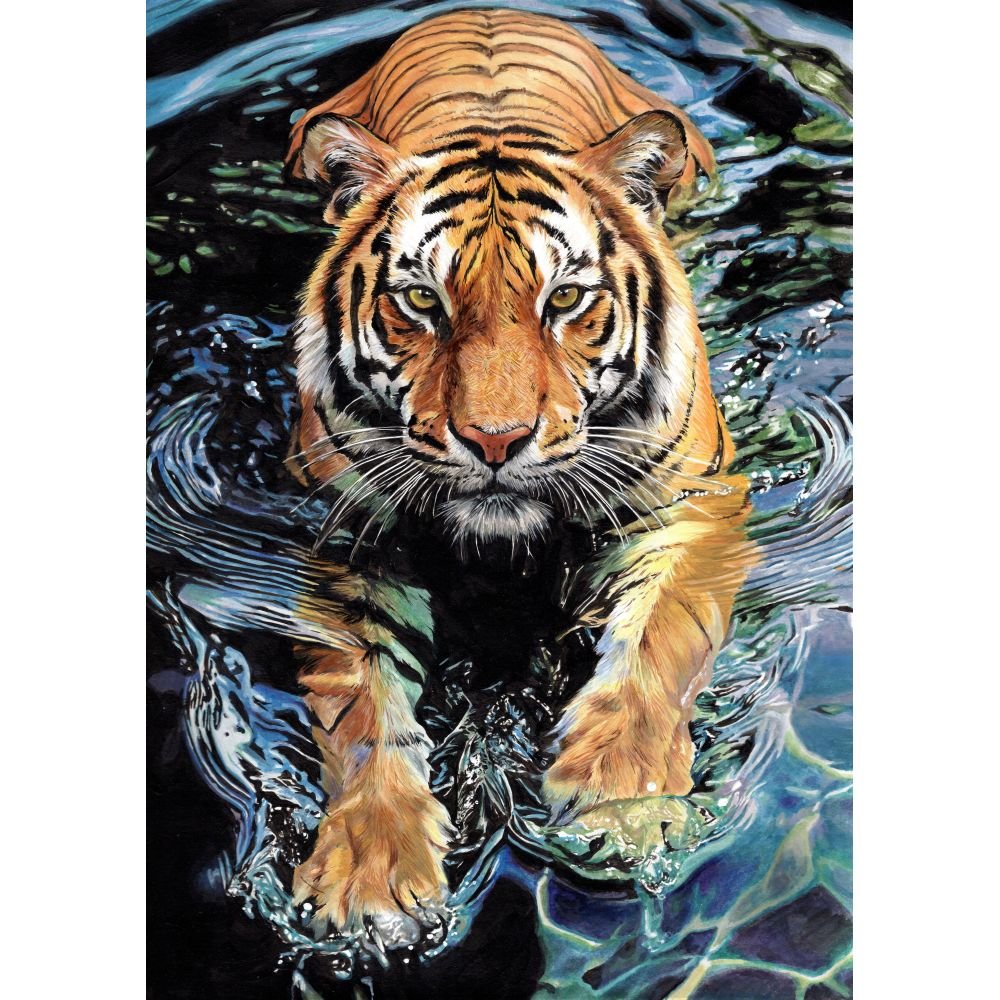
Ripples of Survival by Zion Choi (South Korea)
Sumatran Tiger IUCN Red List - Critically Endangered
Acrylic Paint
"This artwork is a hand-painted acrylic painting of a Sumatran tiger. I began with a light pencil outline to establish the tiger's face, body position, and movement through the water. I then built the painting in acrylic layers, first blocking in the darker water and the orange base of the fur, before adding the white facial markings, black stripes, whiskers, ripples, and reflections. I used thin brushes for the detailed fur texture and water highlights, and stronger layers of acrylic to create contrast between the tiger and the surrounding water. Ripples of Survival depicts a Sumatran tiger moving directly toward the viewer through dark, reflective water. I chose a frontal composition so the tiger's gaze feels immediate and personal, asking the viewer to confront an animal that is disappearing from the wild. The water suggests both strength and vulnerability: although the tiger appears powerful, the surrounding dark reflections create a sense of isolation and uncertainty. I used strong contrast between the warm orange fur and cold blue-green water to emphasise the tiger's presence and the fragile boundary between survival and extinction. As a Critically Endangered species threatened by habitat loss, poaching, and human pressure, the Sumatran tiger represents the wider impact of human activity on wildlife. My painting aims to present the animal not as a distant symbol, but as a living presence worth protecting." - Zion Choi
Congratulations to all the shortlisted artists.
Results will be announced at the private view at Oxo Gallery on Wednesday November 18th, and shared online shortly after.