

Focus for Survival 2025 Shortlist
Just four images have been short-listed for the Focus for Survival Photographer of the Year 2025 award.
The images were put forward by our panel of judges which included photographers Paul Goldstein, Sue Flood and Will Burrard-Lucas, EAE patron, author/photographer and explorer Levison Wood, and trustees Sara White & Rob Ferguson.
The winner will be announced on Wednesday 19 November at the Private View event at the Oxo Gallery in London. The four images will be exhibited at the Oxo exhibition and be available to bid for in our online fundraising auction in support of our Campaign Fund (concludes 23 November).
**You are also invited to pick a winner. Select your favourite from all 12 calendar images for the People’s Choice Award – voting open until 26 October – vote here>>>**
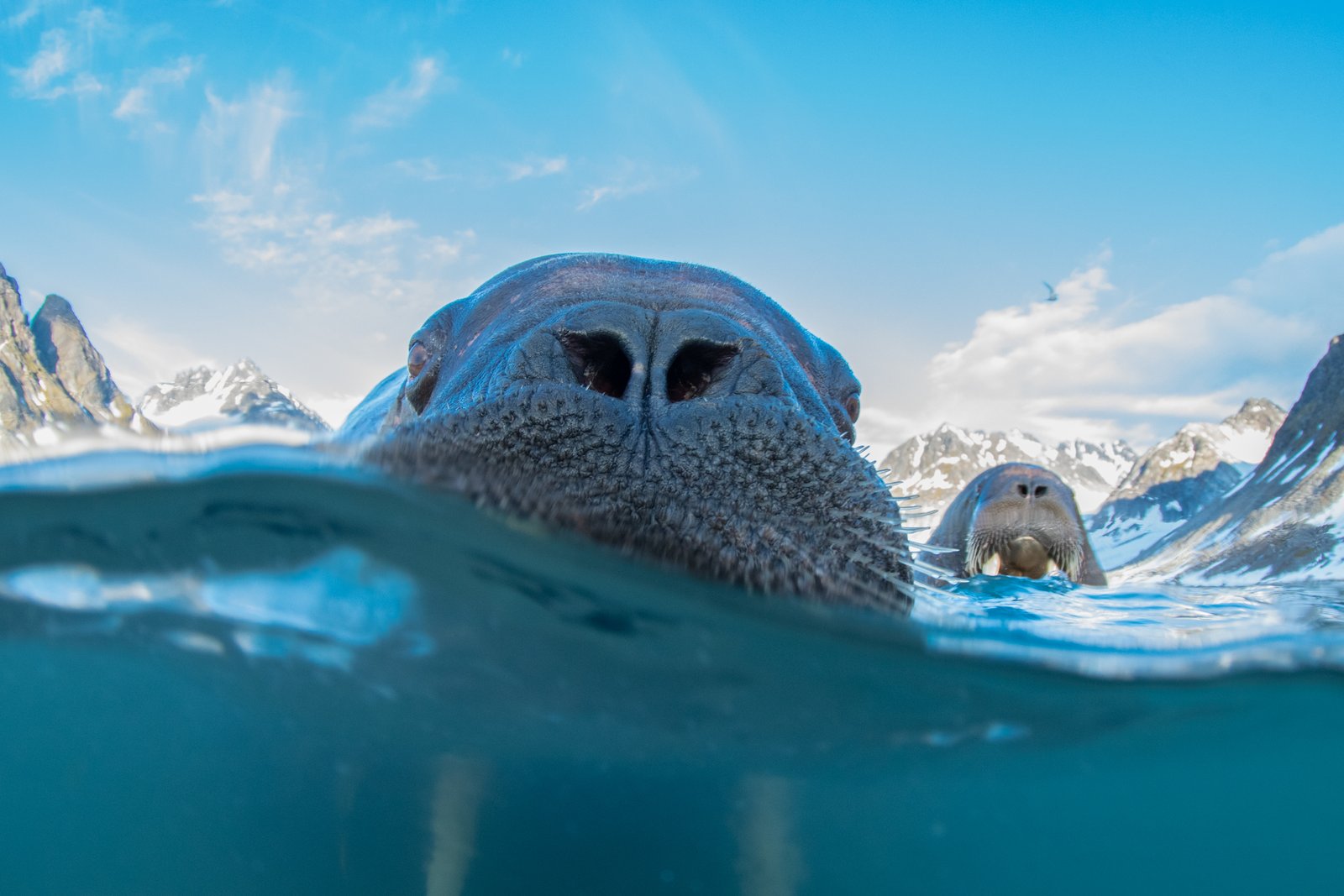
Swimming in the Midnight Sun
Celia Kujala
Svalbard, Norway
“The Atlantic walruses swimming in the light of the midnight sun of Svalbard were so beautiful to watch. At one point, a couple of curious ones decided to swim toward me and I was able to capture this magical moment. The walrus population was once decimated by hunting but has rebounded. However, climate change makes their future uncertain. Atlantic walruses are listed as Near Threatened on the IUCN Red List. I hope this image inspires people to care about this beautiful species and the majestic environment that they live in. This image was taken with a pole-cam.”
Nikon D500, Nauticam housing, Tokina 10-17mm fisheye f/3.5-4.5. f/11, 1/250, ISO 1250.
“Intimate portrait that also conveys the spectacular wild landscape.” Will Burrard-Lucas
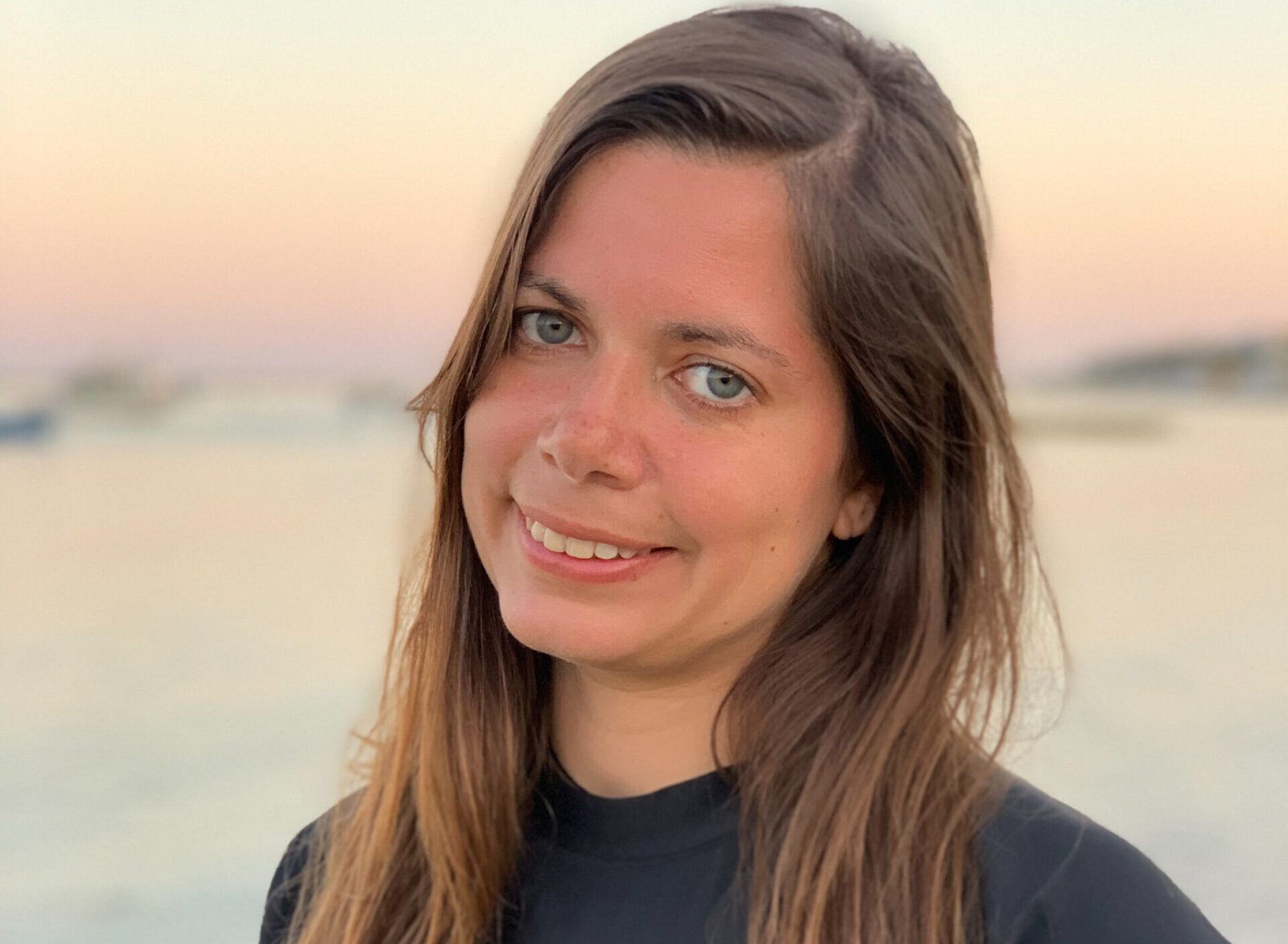
Celia Kujala is an international award-winning wildlife and underwater photographer. From the moment she saw California sea lions for the first time at the Prospect Park Zoo when she was fourteen months old, she felt a special bond with them. However, it wasn’t until she got scuba certified and started underwater photography in 2017 that she found her true calling. She is currently working on a project called Seal Peace about all the species of pinnipeds in the world. Through her photography she hopes to engender an appreciation for each individual species as well as their diverse environments and the challenges those environments are facing. She strives to learn everything she can about her subjects before she meets them in order to most accurately and intimately tell their stories. She is honored to be a member of the Explorers Club and a prior recipient of a Fulbright Fellowship.
Image: Celia Kujala
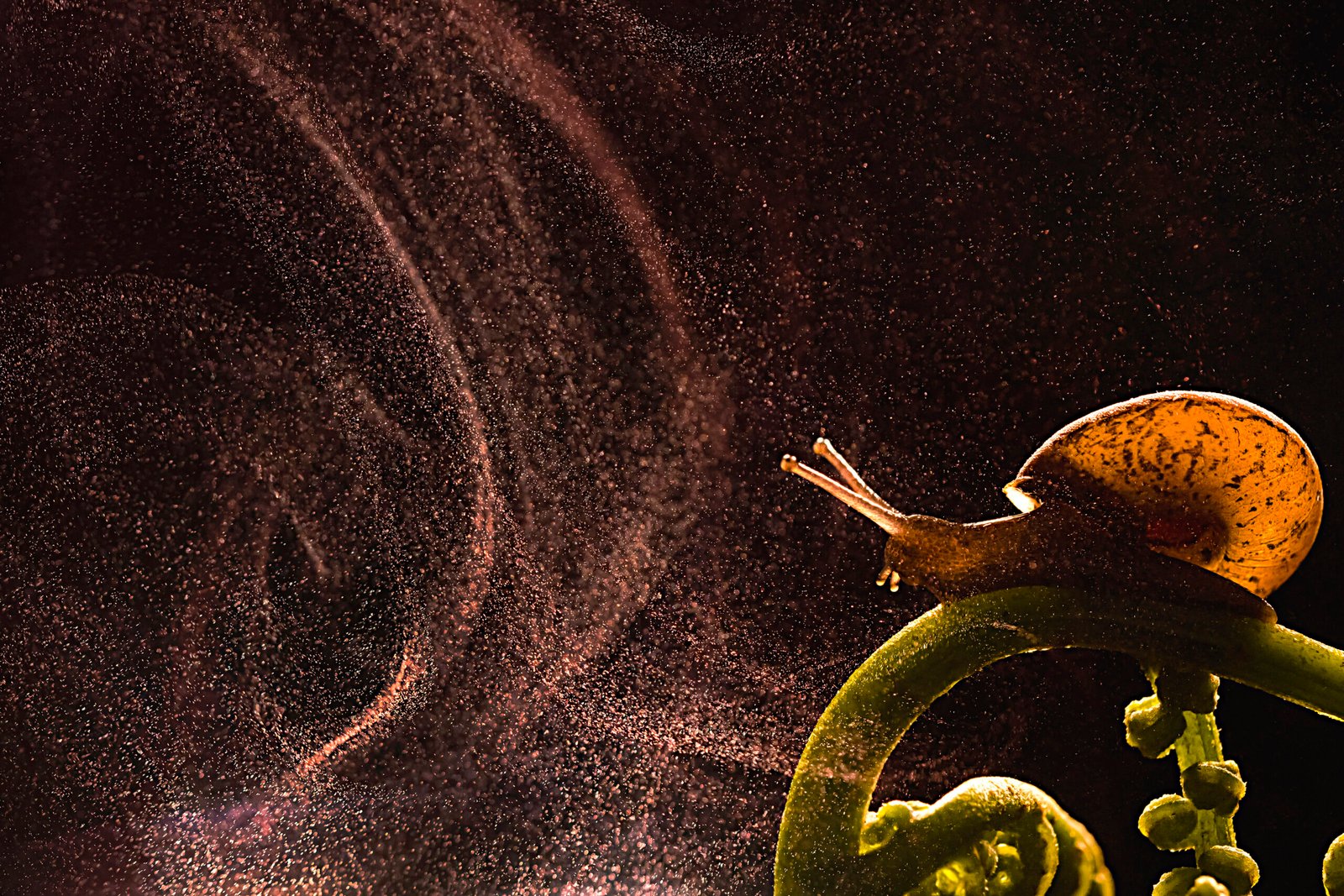
Snail Enjoying Sporulation
Anirban Dutta
Cooch Behar, Tapurhat Forest, West Bengal.
“I know snails can eat mushrooms and may carry and disperse mushroom spores. Snails eat fungi for nutrition and flavor. Snails may promote fungal growth by grazing on leaves and depositing nitrogen-rich feces on wounds. Fungi get benefit from snail grazing by gaining access to nutrients and inner plant tissues. Snails have chemical receptors that help them differentiate between different types of fungi. In this image I have documented a snail enjoying mushroom spores. “
Nikon D500, Tamron 90 mm VC USD, F/14; ISO 500 ; Shutter Speed 1/160
“This is sumptuous. A cross between natural history and a 70’s Roger Dean poster. Composition-wise it utterly rocks and compels the viewer to ask ‘WHAT THE?’ Small is beautiful here as is slow, outstanding work, I’d not mind ‘shelling’ out for this.” Paul Goldstein

Anirban is a passionate wildlife photographer with a particular interest in macro photography. The sounds of egrets-kingfishers-bee eaters, colours of sunbirds, life struggles of various reptiles, green paddy fields and broad green canopy of forest always inspired him. He has many National and International Awards to his name. By profession, Anirban is a High School teacher in Maths.
Image: Anirban Dutta
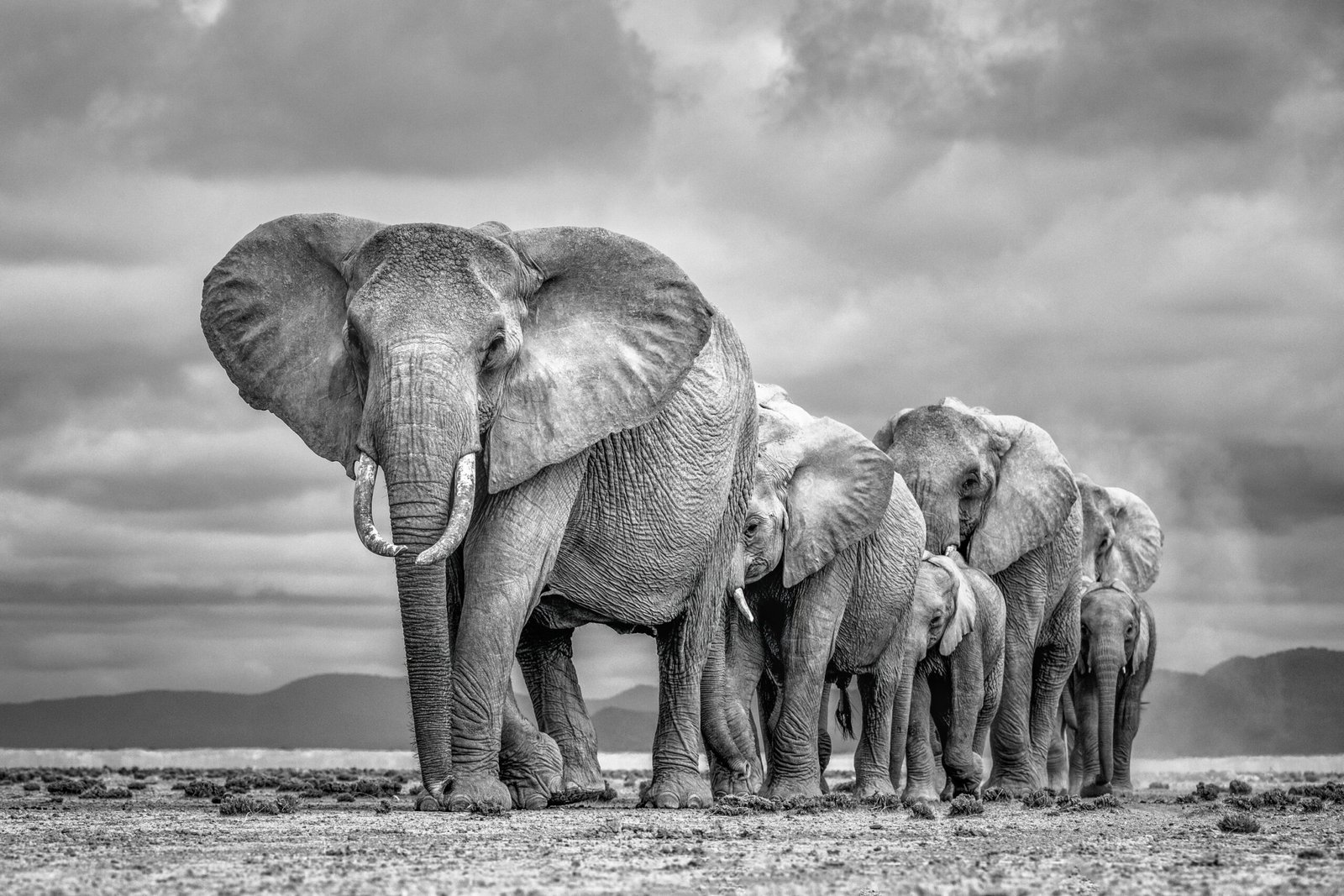
The Crossing
Ria Waugh
Amboseli, Kenya.
“Shortly after we passed a beautiful breeding herd of elephants making their twice-daily crossing of a dry lakebed between the forests at the foot of Mt Kilimanjaro and a water source, our guide stopped the safari vehicle. He encouraged my husband and me to get out and lie on the ground. Apprehensive about the approaching herd, I trusted our knowledgeable guide, who understood elephant behavior. This led to one of the most unforgettable and thrilling photographic experiences of my life. As the herd silently moved within 20 meters of us, they never took their eyes off of us. I held my nerve and clicked the shutter. There’s nothing quite like photographing elephants from a ground level perspective. It’s in that moment you truly realize just how small you are next to these gentle giants. Listed as endangered on the IUCN Red List, elephant populations continue to decline, driven by illegal poaching for ivory, extensive habitat loss from human development, and increasingly severe human-elephant conflicts. Dedicated conservation work, including stronger protections and anti-poaching patrols, are crucial to reversing elephant population declines.”
Fujifilm XT-3 + XF100-400mm: 1/1000 sec at f/6.4 ISO 250
“No, it is not original but if you are going to cliche, it has to be a good one and oh my this is on the money. The low angle amplifies the moment and I can almost hear the creak and crack as those giant feet tread on the parched lake bed.” Paul Goldstein
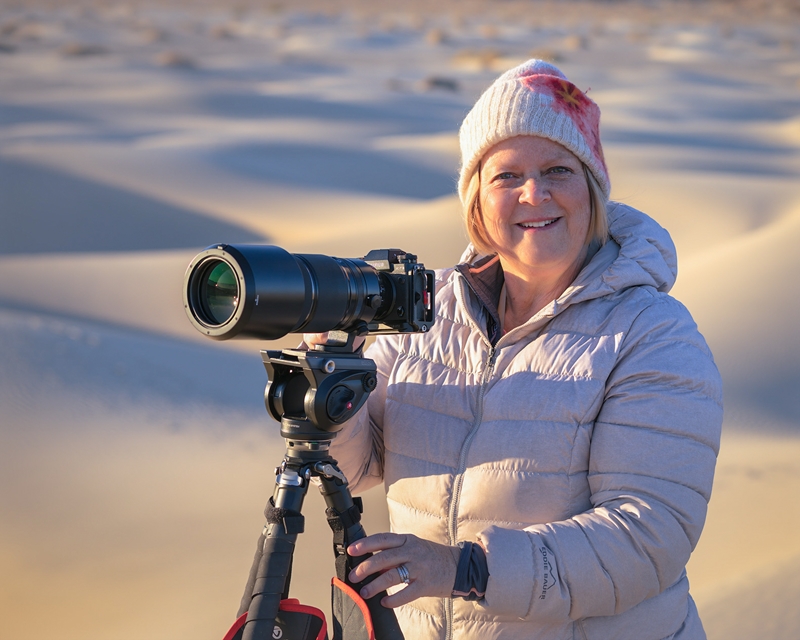
Throughout her life, photographer Ria Waugh has travelled the world and called many different places home. Her parents instilled a sense of adventure in her, moving the family from Southern California to Australia and England for work and sparking Ria‘s passion for exploring new places and cultures. Ria‘s photography showcases her fondness for intimate landscapes, captivating wildlife, and the unique lives of people she has encountered on her journeys. Her desire to capture the diversity and beauty of the world continues to drive her work, whether she’s photographing far-off locations or the everyday beauty closer to home. Presently, she can be found residing in Dublin, Ohio in the United States.
Image: Ria Waugh
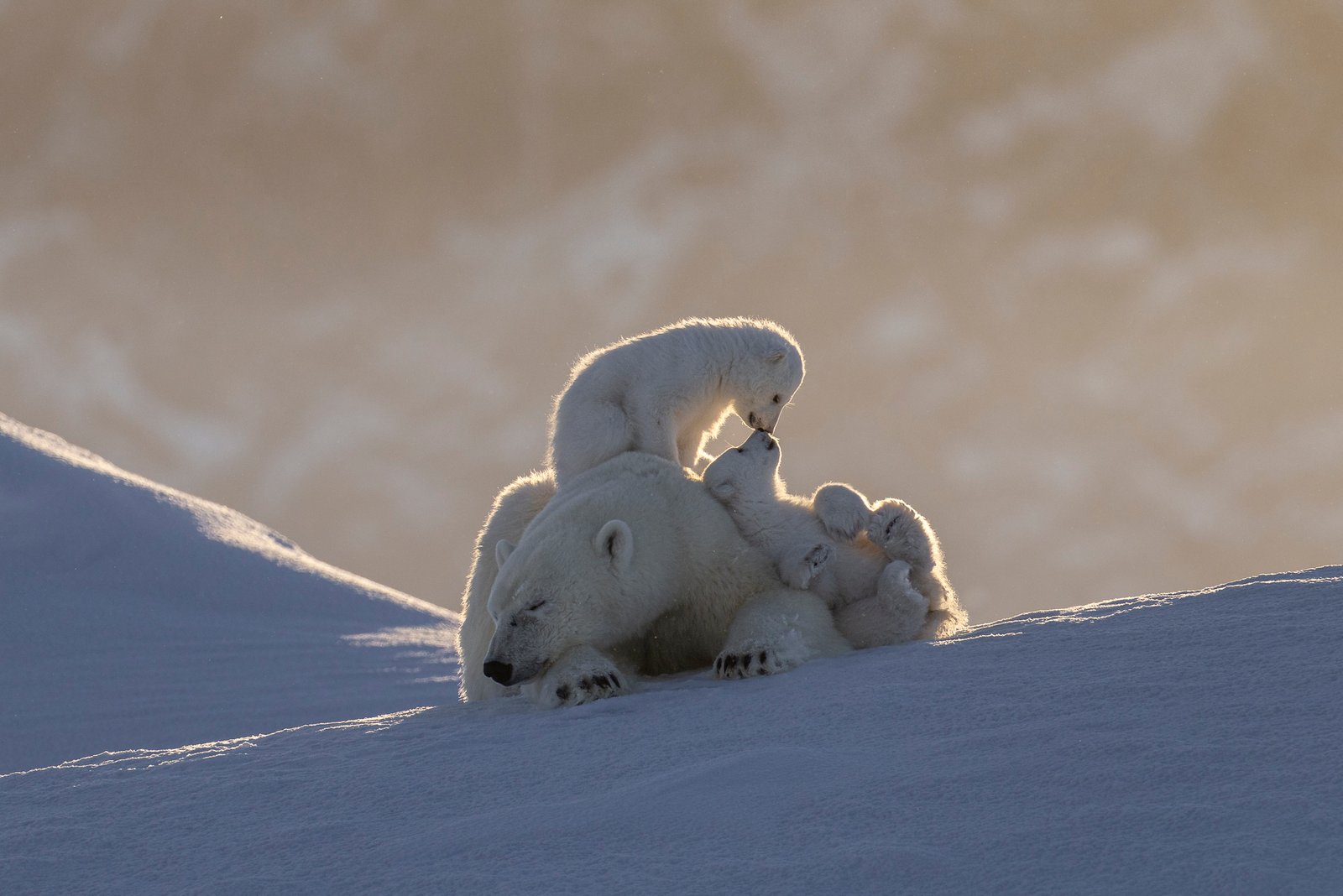
Age of Innocence
Jules Oldroyd
Baffin Island, Canada.
“Baffin Island is one of the most majestic & pristine environments in the world to see polar bears, especially in March & April when the sea ice has frozen. However, with temperatures between-30 to -40 it is also one of the most challenging to ensure you keep your hands warm to press the shutter. We had spent most of the morning & part of the afternoon with this mother & her COYS (Cubs of the year) which were likely a week or so out of their den. However, just as they were settled the mother got spooked & she & the cubs ran off towards a nearby iceberg. We set off to see if we could spot them & when we got to this iceberg I couldn’t believe my eyes. The mother & cubs were huddled together on top of the iceberg. To witness such intimate moments, such as this one, between the cubs whilst their mother rests is something that is a once in a lifetime sighting.”
Canon R5, 1/1250, F9, ISO 400, 600f4
“I’ve always admired polar bears, and the photographer has managed to capture such a tender family moment here.” Levison Wood
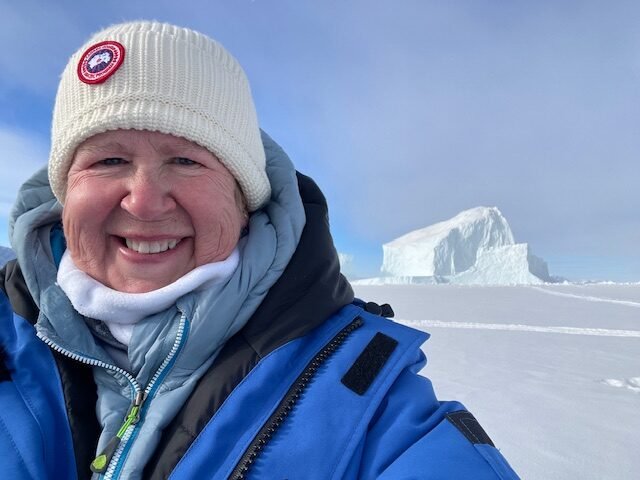
Jules is a multi-award-winning wildlife photographer specialising in fine art imagery that captures the raw beauty and fragility of the natural world. She is passionate about wildlife conservation and feels a strong sense of responsibility to protect the world’s wild animal populations. Through her work, she has proudly support various organizations such as Amboseli Trust for Elephants & Polar Bears International. Jules donates 10% of all print sales and has raised thousands of pounds in recent years.
Image: Jules Oldroyd
To view all 12 finalists please click here>>
All the finalists’ images feature in our 2026 fundraising calendar, on sale now. Sales of the calendar help to support our projects. Buy a calendar here>>