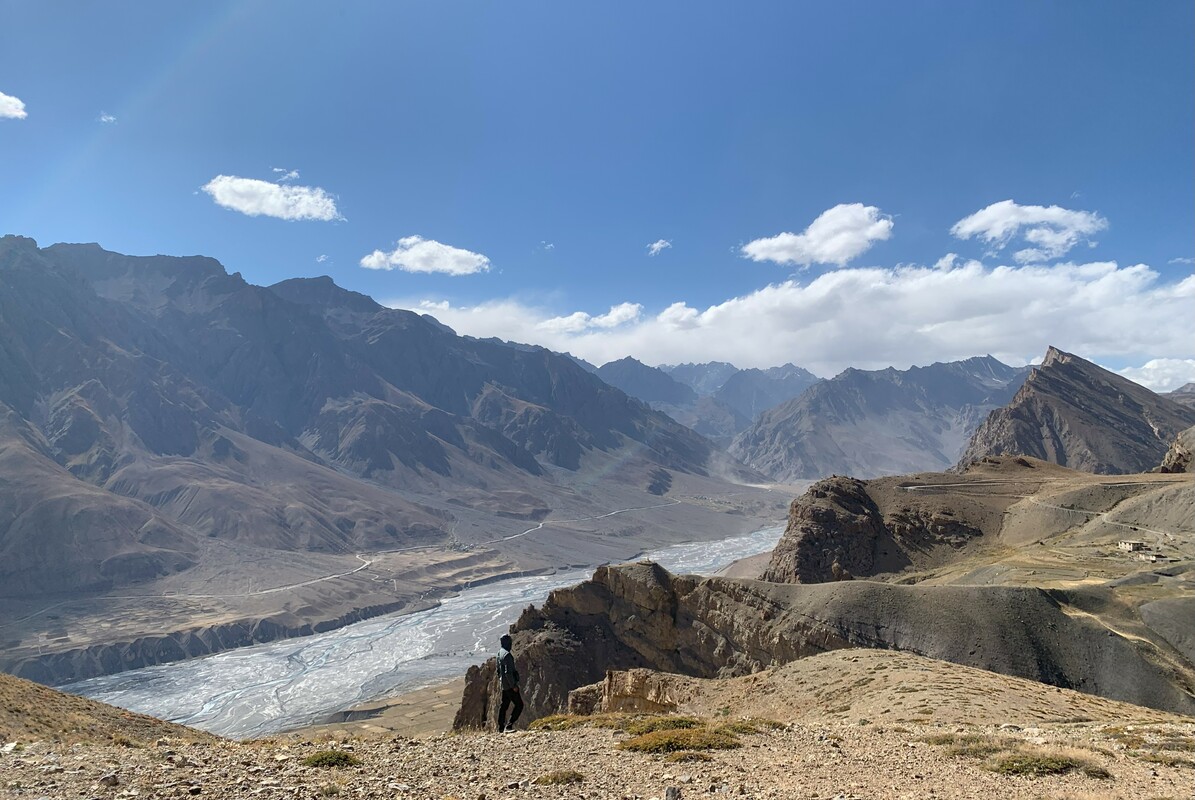
Rob & I have just returned from a project visit to India. We visited the Spiti Valley. Spiti means ‘the middle land’ which refers to its position on the border of India and Tibet.
It is the least populated area of India, and the highest populated region in the world.
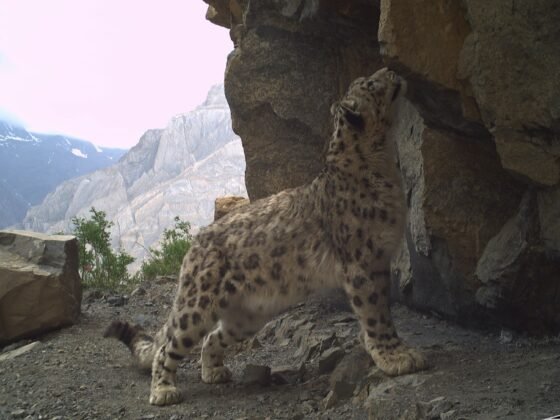
We were hosted by Nature Conservation Foundation, visiting their HQ in Kibber, and exploring the wider project area including a trek to a snow leopard camera trap location.
Nature Conservation Foundation is an NGO based in India. We partnered with NCF throughout 2022, supporting its High Altitude programme which focuses on the Ghost of the Mountains – snow leopards. These elusive big cats have declined in numbers. A global population assessment estimates that fewer than 7,000 remain across the high mountain ranges of 12 Asian countries. India is home to around 10% with Spiti in the state of Himachal Pradesh home to approximately 50.
Threats include human/wildlife conflict, lack of wild prey, loss of habitat, hunting and climate change.
We supported monitoring of predators and prey including a study on the impact of climate change on snow leopards. An important part of this programme involves installing a network of camera traps to build up a more accurate picture of snow leopard movements.
Climate change in Spiti
Glaciers in the Spiti Valley are retreating, and annual snowfall has reduced. This impacts the amount of snow melt flowing into the river system and the volume of water in the valley.
The people living here are mostly farmers, and due to the harsh climate, they can only harvest once a year. They grow barley and black peas on the higher slopes, and potatoes and fruit at lower elevations. There is very little rain in Spiti – it is a cold desert environment, so people rely on the rivers for their water supply.
Due to rising temperatures the snow is melting earlier so the plentiful supply of water needed for agriculture, particularly in June/July, is not always available anymore.
Pressure on the water supply is leading some people away from agriculture into different occupations, in different places, along with changing land use. This in turn impacts the fauna and flora of the Spiti Valley. Snow leopards may be forced higher into the mountains for example, reducing their range.
During our visit it was fascinating to see Kibber and the surrounding villages of Langza, Hikkim and Komic. All the villages are above 4000m. During the winter months, when everything is blanketed in snow, the snow leopards come down from higher elevations and it is commonpace to see them in, around and below the villages – this is their home range.
As well as human activity and land use influencing the health of the snow leopard population in this area, the availability of wild prey is also vitally important. Healthy populations of blue sheep and ibex generally means healthy populations of snow leopards – and we certainly saw lots of blue sheep during our stay!
We also saw a lot of livestock including donkeys, yak, horses and cows. These roam freely around the mountain pastures and during the winter there may be as many as one snow leopard attack on livestock per week.
To mitigate this, NCF are supporting the community by building corrals to keep their livestock safe and they also run a predator compensation scheme. We were able to visit a corral, and meet with the chief of Kibber village and the NCF committee who explained how the predator compensation scheme works.
The community is very supportive of snow leopard conservation – they have seen the benefits, particularly during the long winter season when ecotourism provides a valuable revenue stream through homestays, guiding, snow leopard treks and the sale of handicrafts.
NB. This is the first in a series of trip reports.
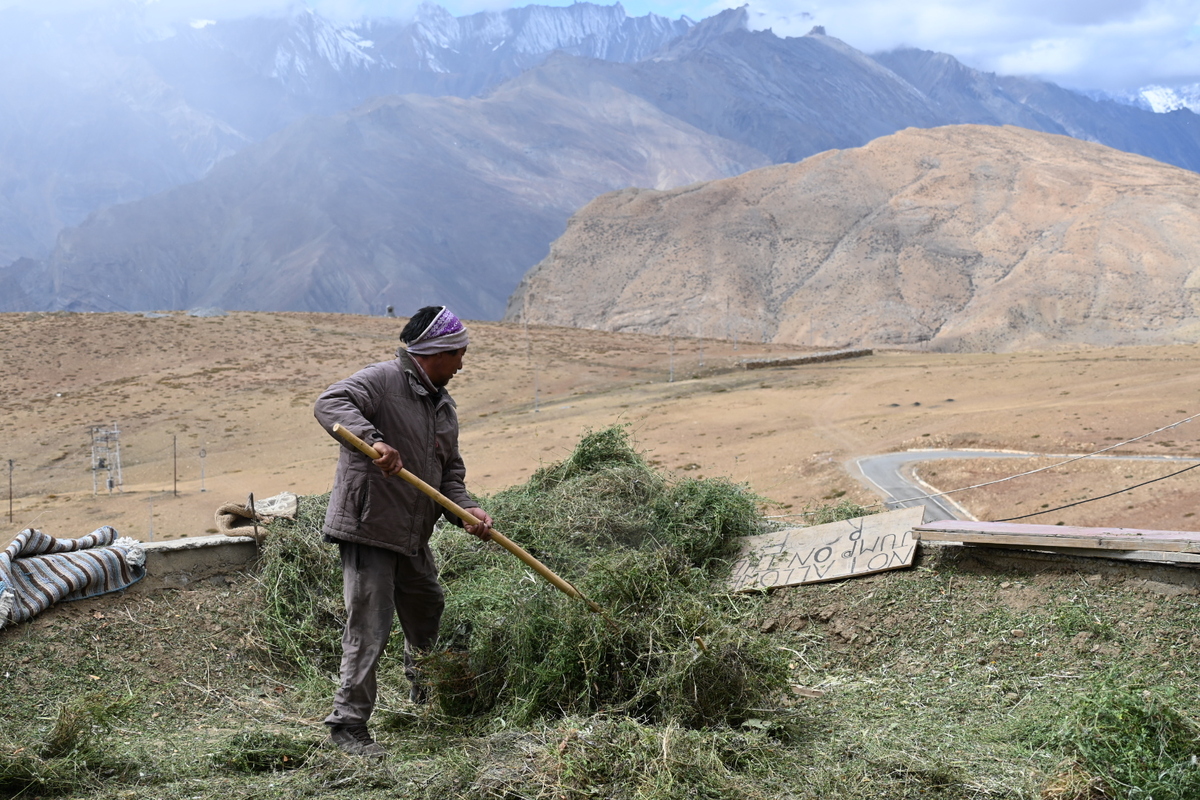
Image: packing the hay away for winter
February and March are the best months for snow leopard sightings.
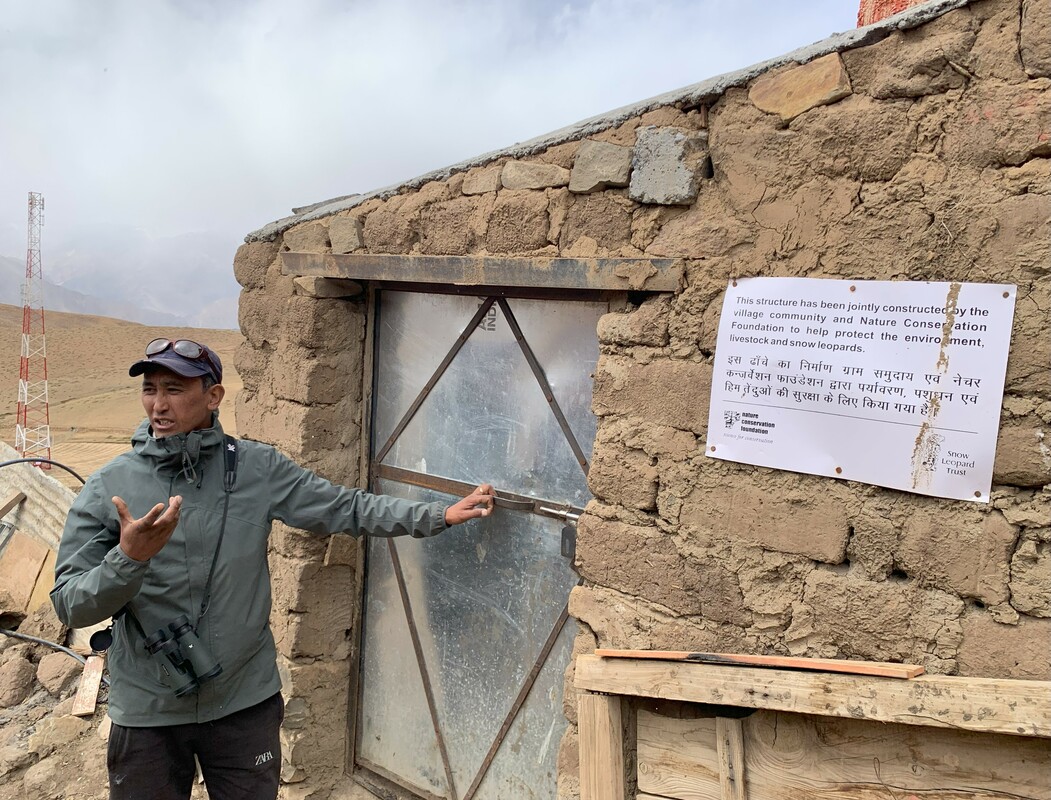
NCF community scout, Thinley, showing us a corral.
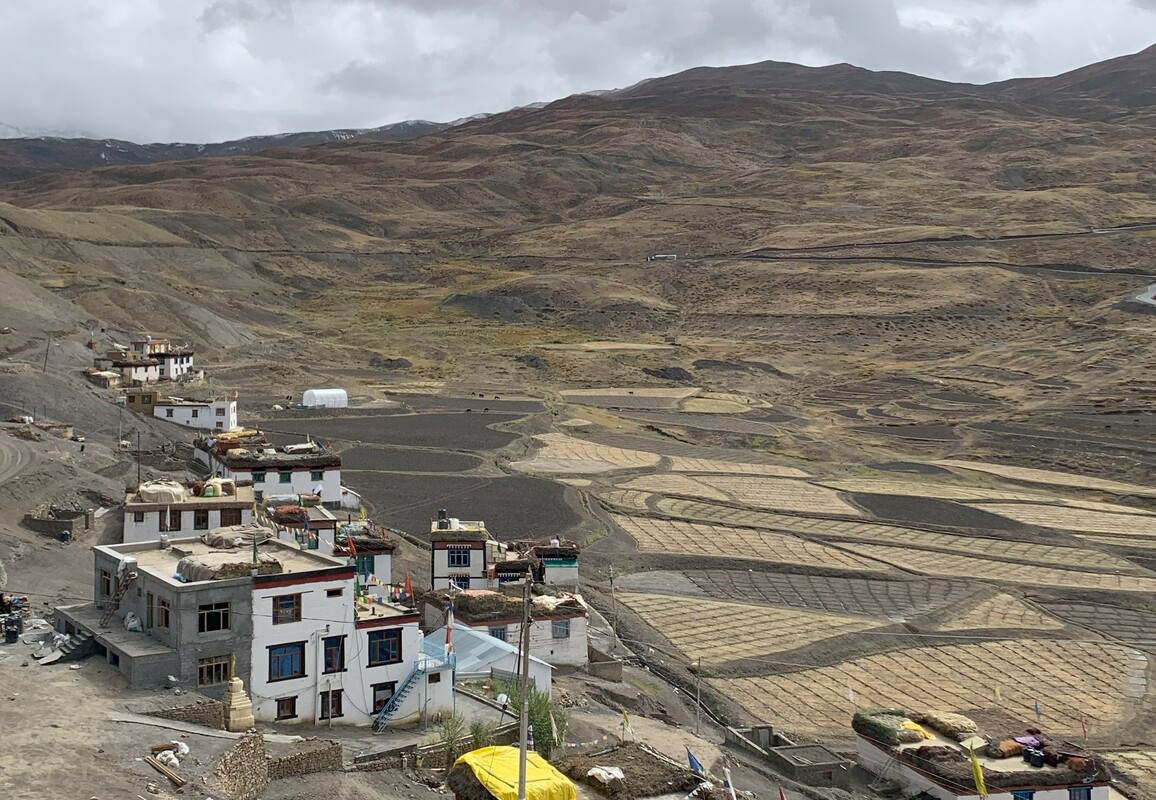
Image: the village of Langza
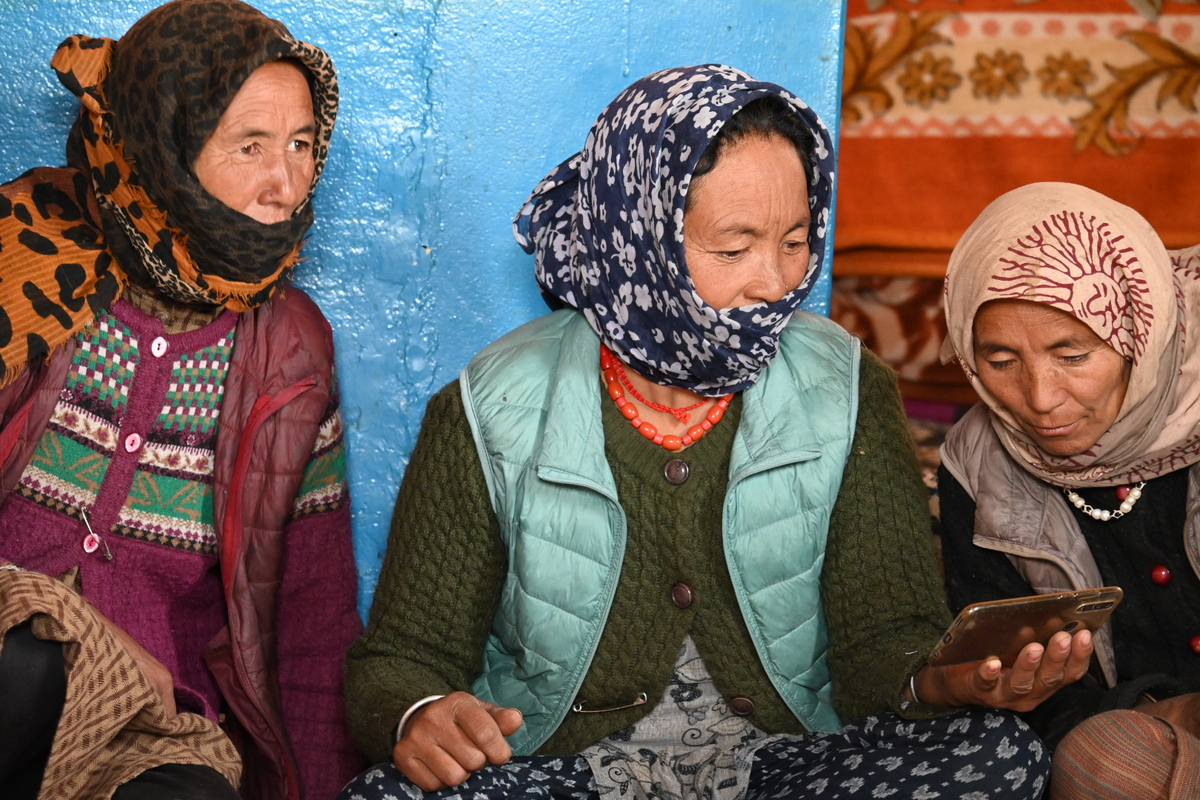
Image: meeting the community – showing them pictures from home
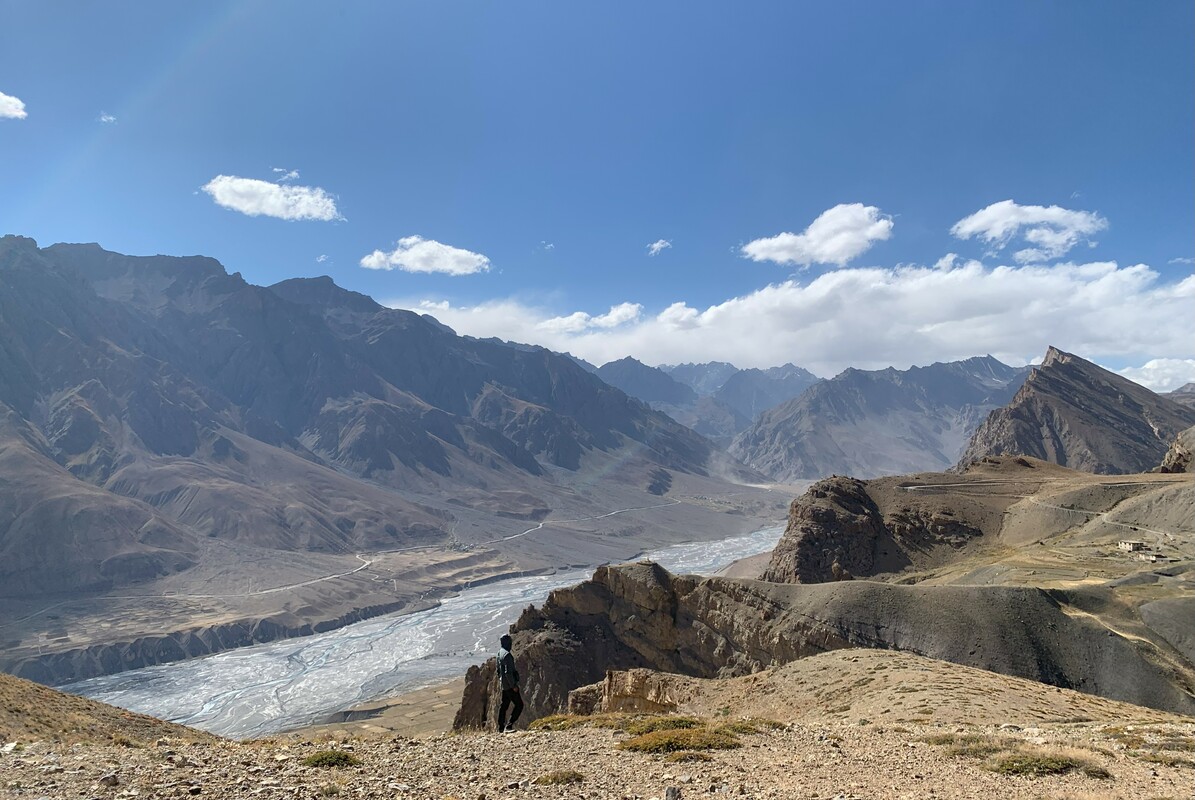
Image: thin air – trekking to a camera trap location at 4,400m.