Explorers Against Extinction
  • Blog
  • Guest Post
  • Travel Resources
  • Wildlife
  • Africa
  • Sketch for Survival
  • Travel
  • 21For21
  • Environment
  • Inspiration
Subscribe
Explorers Against Extinction
  • HOME
  • About
  • Support Us
  • Initiatives
  • Projects
  • Contact
Home Blog Giant Otters in the Pantanal: Progress, Pressure and the Power of Monitoring
  • Conservation
  • Projects
  • Wildlife

Giant Otters in the Pantanal: Progress, Pressure and the Power of Monitoring

  • 13th April 2026
  • Sara
Total
0
Shares
0
0
0

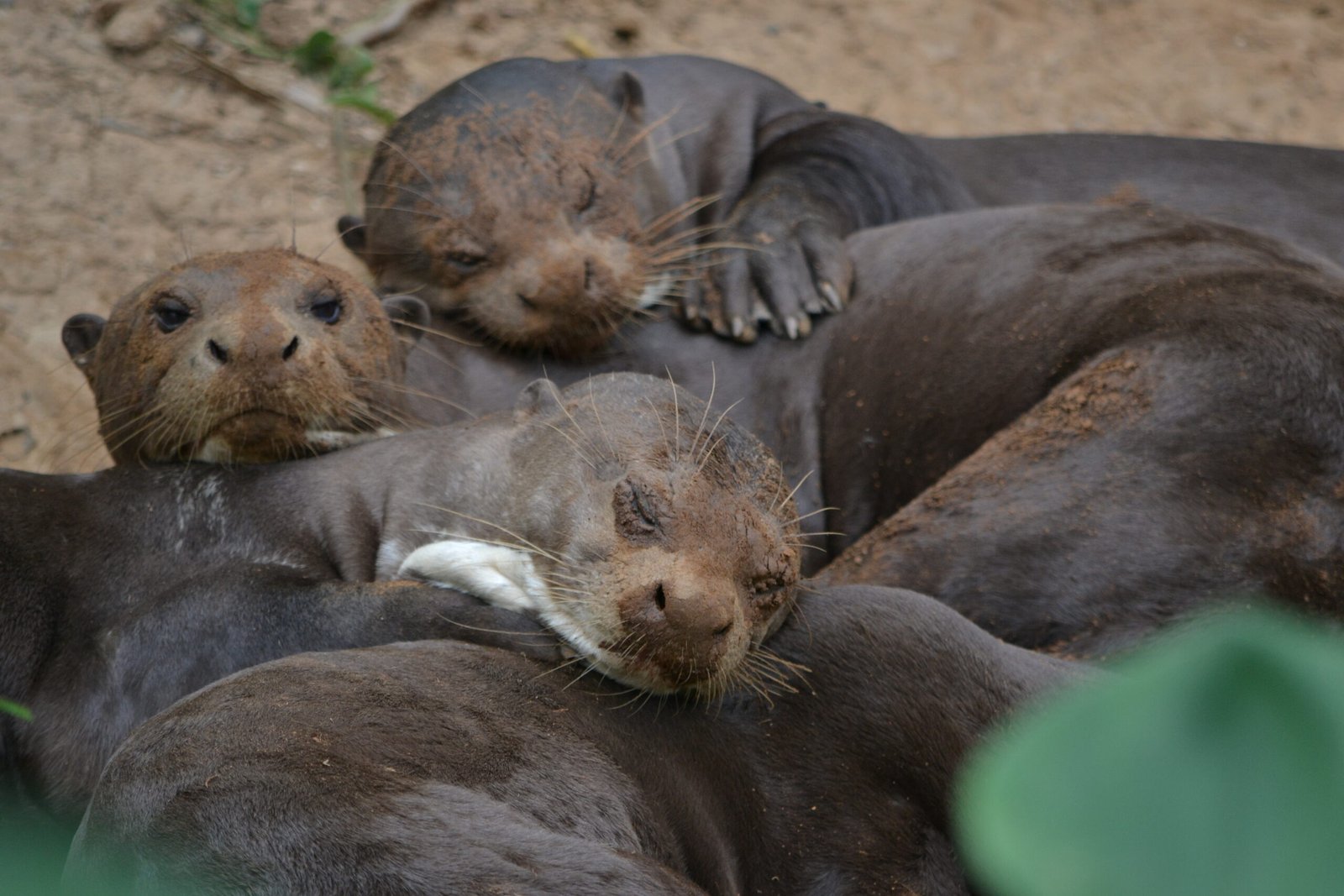
In 2024, Explorers Against Extinction supported a small but important part of the long-term monitoring work carried out by Projeto Ariranhas, the Giant Otter Project, in Brazil’s Pantanal.

Their latest annual report provides a clear snapshot of both progress and ongoing challenges for this Endangered species.

Monitoring in numbers

Fieldwork in 2025 focused on three key regions of the Pantanal, alongside additional work in the Central Amazon. Across these areas, the team carried out 13 field expeditions, monitoring 164 individual giant otters across 31 groups, and surveying over 410 kilometres of river systems.

During this period, 34 new cubs were recorded, providing valuable insight into breeding success and population structure.

This kind of consistent, long-term dataset is critical. Giant otters are highly social and territorial, and understanding how groups form, move and reproduce over time is essential for effective conservation planning.

Signs of progress

One of the most encouraging trends is in cub survival.

Since 2019, the project has tracked a steady improvement, with average cub survival increasing from 0.27% to 0.54% over a six-year period.

While still low, this doubling reflects the impact of sustained monitoring, protection of breeding areas, and improved management of human activity in key habitats.

A fragile system

Despite this progress, the report makes clear that early life remains the most vulnerable stage.

Giant otter pups face multiple pressures, including:

  • Predation, most notably from jaguars
  • Extreme weather events linked to climate change
  • Human disturbance from tourism and boat traffic
  • Habitat degradation and declining water quality

Even small shifts in these factors can have a disproportionate impact on survival rates.

Recent monitoring has also recorded the loss of adult females. While causes vary, these events underline how finely balanced the system remains and how quickly progress can be reversed.

Beyond research
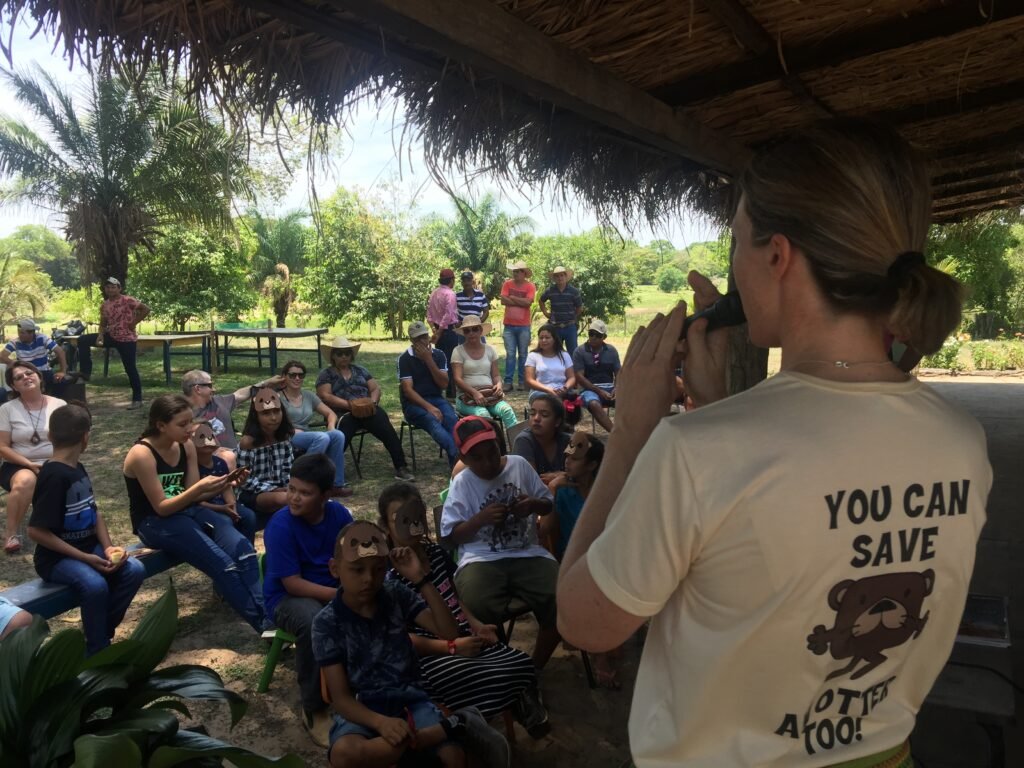
Projeto Ariranhas combines field science with education and community engagement.

In 2025 alone:

  • 50 tourism professionals were trained in responsible wildlife viewing
  • 500 identification guides were distributed to local guides and boat drivers
  • Over 1,100 children were reached through environmental education programmes

These efforts are essential in a landscape where tourism is both an opportunity and a risk. Managed well, it can support conservation. Managed poorly, it can directly impact breeding success.

Why this matters

The giant otter remains an Endangered species, and the Pantanal is one of its last strongholds.

What this report shows is that progress is possible, but it is fragile and dependent on sustained effort. Monitoring, data collection and local engagement all play a critical role in improving outcomes.

Our contribution in 2024 supported a small part of this wider programme, helping to maintain the long-term monitoring that underpins all conservation decisions.

Looking ahead

The trajectory is positive, but far from secure.

With increasing pressure on freshwater ecosystems across South America, continued investment in science-led conservation will be essential to ensure giant otters remain a part of the Pantanal’s future.

For Explorers Against Extinction, this project is a clear example of how targeted support can contribute to measurable, on-the-ground impact.

Images: Projeto Ariranhas

Total
0
Shares
Share 0
Tweet 0
Pin it 0
Related Topics
  • brazil
  • Giant Otters
  • Projects
  • South America
Sara

Previous Article
indian spice market
  • Asia

What are the biggest mistakes travellers make when visiting India in 2026?

  • 9th April 2026
  • Jules
View Post
Next Article
Emperor penguin
  • Environment
  • Wildlife

Antarctic species reclassified as Endangered on the IUCN Red List

  • 14th April 2026
  • Sara
View Post
You May Also Like
Reteti
View Post
  • Africa
  • Conservation
  • Safari
  • Travel

Reteti House Review: Conservation, Community and Kenya’s Wild North

  • Sara
  • 15th April 2026
Emperor penguin
View Post
  • Environment
  • Wildlife

Antarctic species reclassified as Endangered on the IUCN Red List

  • Sara
  • 14th April 2026
Long'Uro
View Post
  • Africa
  • Conservation
  • Projects
  • Safari
  • Travel
  • Wildlife

Reteti, Resilience, and Long’Uro: A Story of Survival and Innovation

  • Sara
  • 6th April 2026
mountain gorilla
View Post
  • Africa
  • Conservation

Another Set of Twin Mountain Gorillas is Born in Virunga

  • Jules
  • 2nd April 2026
snow leopard
View Post
  • Asia
  • Conservation
  • Projects

Snow Leopards of the Spiti Valley: What Your Support Has Made Possible

  • Sara
  • 30th March 2026
Kicheche Mara position
View Post
  • Africa
  • Conservation

Review: Kicheche Mara Camp – A Classic Safari, Done Exceptionally Well

  • Robert
  • 25th March 2026
asian elephants
View Post
  • Asia
  • Conservation
  • Wildlife

Tracking Giants: A New Era for Asian Elephants in Laos

  • Sara
  • 1st March 2026
ban on elephant riding
View Post
  • Asia
  • Blog
  • Conservation
  • Wildlife

Indonesia Bans Elephant Rides: A Landmark Moment for Responsible Wildlife Tourism

  • Sara
  • 18th February 2026
Categories
  • 21For21
  • Africa
  • Americas
  • Art
  • Asia
  • Blog
  • Conservation
  • Environment
  • Focus for Survival
  • Green living
  • Guest Post
  • Information
  • Inspiration
  • Projects
  • Safari
  • Sketch for Survival
  • Travel
  • Travel Resources
  • Travel Writing
  • Wildlife
  • Young Explorers
Explorers Against Extinction
Fighting species extinction & habitat loss worldwide

Input your search keywords and press Enter.

This website uses cookies to improve your experience. We'll assume you're ok with this, but you can opt-out if you wish. Read More.
Accept
Privacy & Cookies Policy

Privacy Overview

This website uses cookies to improve your experience while you navigate through the website. Out of these, the cookies that are categorized as necessary are stored on your browser as they are essential for the working of basic functionalities of the website. We also use third-party cookies that help us analyze and understand how you use this website. These cookies will be stored in your browser only with your consent. You also have the option to opt-out of these cookies. But opting out of some of these cookies may affect your browsing experience.
Necessary
Always Enabled
Necessary cookies are absolutely essential for the website to function properly. This category only includes cookies that ensures basic functionalities and security features of the website. These cookies do not store any personal information.
Non-necessary
Any cookies that may not be particularly necessary for the website to function and is used specifically to collect user personal data via analytics, ads, other embedded contents are termed as non-necessary cookies. It is mandatory to procure user consent prior to running these cookies on your website.
SAVE & ACCEPT