When Rob and I visited the Mara Elephant Project (MEP) headquarters in Kenya earlier this year, one thing quickly became clear: conservation in the Greater Mara increasingly relies on technology and there have been some really exciting developments on that front in recent years.
Inside the operations room, live collar data streams across digital maps via EarthRanger software, allowing teams to monitor elephant movements in near real time across a vast and increasingly pressured landscape.
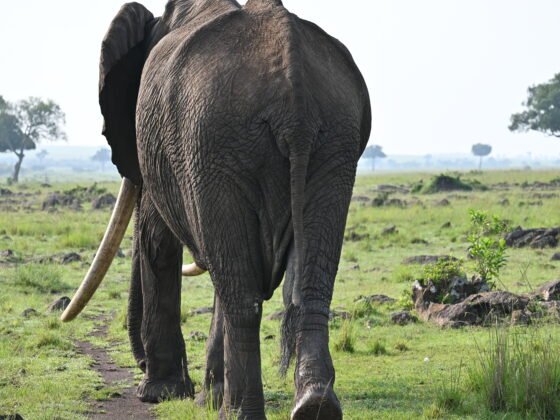
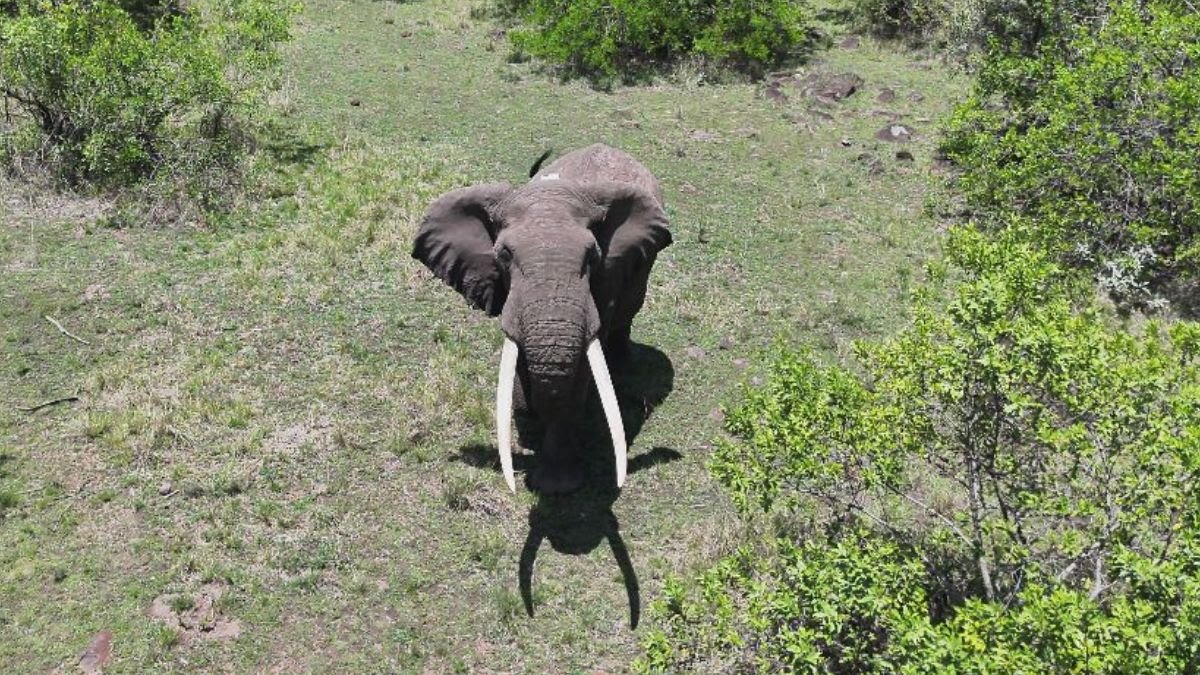
Over the last 18 months, MEP has been monitoring an elephant bull called Edwin using a satellite tracking collar, helping ranger teams better understand how he navigates areas where wildlife habitat and farmland increasingly overlap. By studying his movements over time, the team has been able to identify patterns, anticipate potential flashpoints and respond more quickly when needed.
Like many intelligent bulls living close to people, Edwin has learned to take advantage of easy food sources, occasionally venturing into farmland under cover of darkness. In these situations, the collar technology becomes an important early warning system, helping teams intervene before encounters escalate into dangerous conflict for either people or elephants.
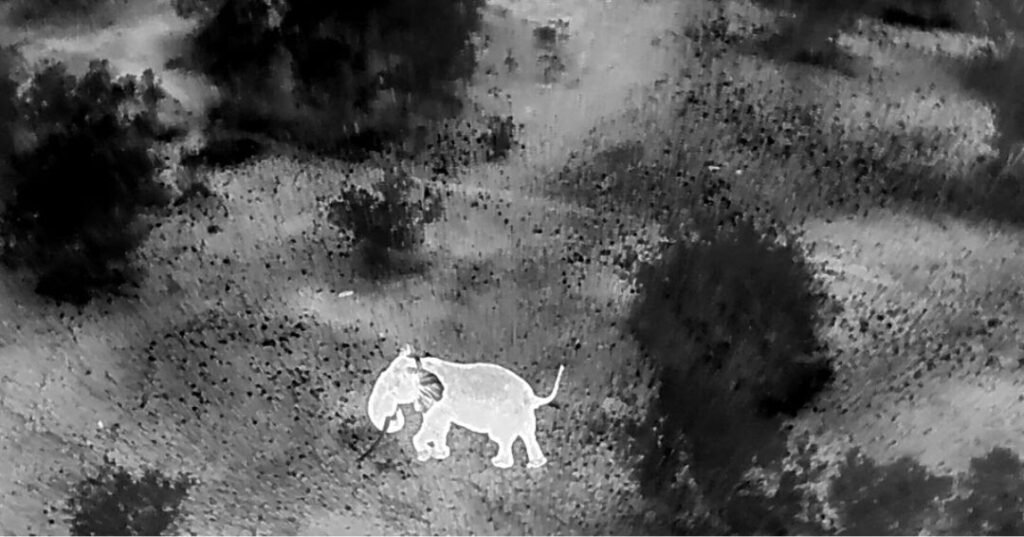
One of the biggest changes in recent years has been the introduction of thermal drones, costing more than $8,000 USD each, which now work alongside GPS tracking, ranger patrols and community reporting as part of MEP’s conservation toolkit. The drones have dramatically reduced the need for costly helicopter deployments during routine incidents and now handle more than 60% of human elephant conflict callouts.
The MEP helicopter remains an essential asset, but it is no longer the first response for most crop raiding incidents. Instead, it is generally reserved for major daylight emergencies, veterinary interventions with the Kenya Wildlife Service, or situations involving large herds in dangerous or heavily fenced areas.
At night, the drones allow teams to safely monitor elephant movements from the air using thermal imaging, helping guide animals away from farms and settlements without creating panic within the herd. Rangers on the ground then combine this aerial intelligence with more traditional deterrents including spotlights, drums, vehicles and firecrackers to carefully encourage elephants back towards safer habitat.
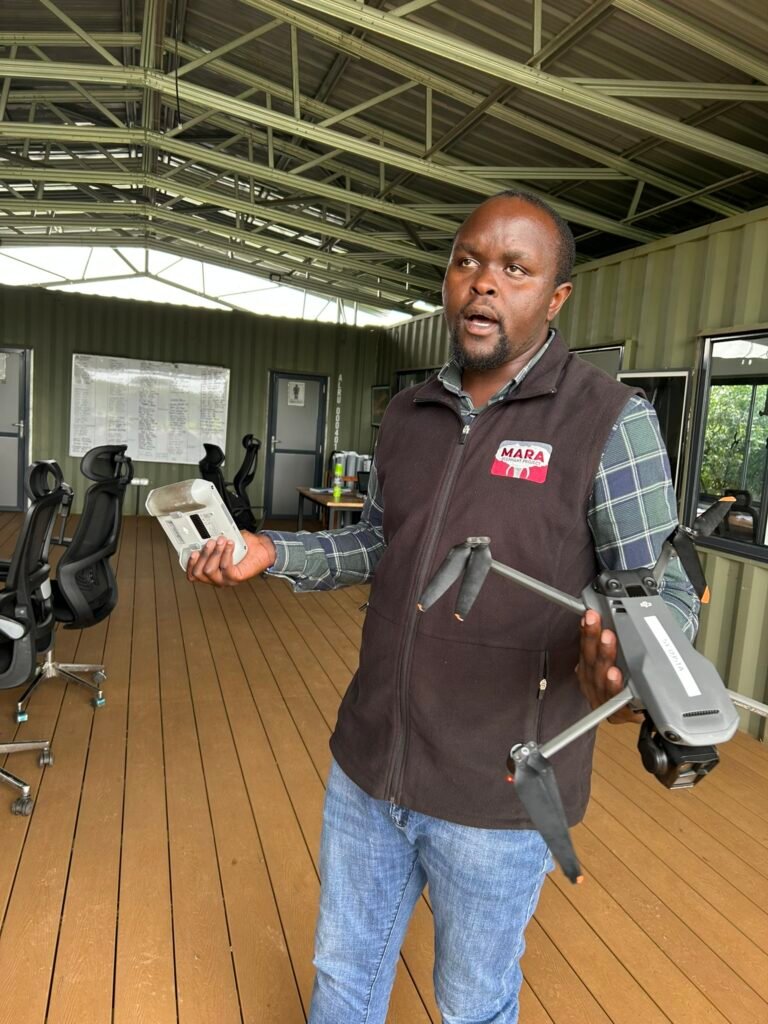
By the end of 2025, MEP had increased the number of trained drone pilots to 28 and is operating a fleet of 22 drones. Drone refresher training is essential to keep them on
the cutting edge of this quickly evolving practice.
The team also spoke to us about future plans to potentially use drones to deploy a form of ‘chilli cloud’ designed to deter particularly persistent crop raiding elephants. Elephants have acute senses and naturally dislike chilli, something already explored through chilli fences and deterrent projects supported by Explorers Against Extinction in coexistence farming areas around the Mara. The idea still requires careful testing, but it reflects the increasingly creative and adaptive thinking now shaping conservation in the region.
Interestingly, when I visited Save the Elephants in Samburu around ten years ago, researchers were already talking about a future where drones might one day operate more like bees, moving intelligently around herds and responding dynamically to elephant behaviour. At the time, it sounded highly futuristic. Seeing how rapidly the technology has now evolved in the Mara, it is exciting to imagine what conservation tools may look like another decade from now.
The collar Edwin currently wears is now nearing the end of its operational life, and MEP hopes to replace it in the coming weeks so monitoring can continue.
For visitors to the Mara, much of this work happens quietly behind the scenes, but it plays a vital role in helping elephants and people continue to coexist across one of Africa’s most iconic wildlife landscapes.
To explore safaris to Kenya please click here>>
Images: MEP