Waiting beside the Xakanaxa airstrip in Moremi, I was scanning the horizon for the familiar shape of a small Safari Air aircraft when the sound of rotor blades cut across the Delta instead.
The late morning heat was already beginning to build when a helicopter appeared low over the lush green floodplains, descending steadily before settling beside the runway in a rush of spinning grass and warm air.
Out strode Adam, barely older than my own children, delivering the safety briefing with calm confidence. As it turned out, he was originally from Bury St Edmunds and, after several years working in hospitality, had retrained as a helicopter pilot before swapping Suffolk for the Okavango Delta.
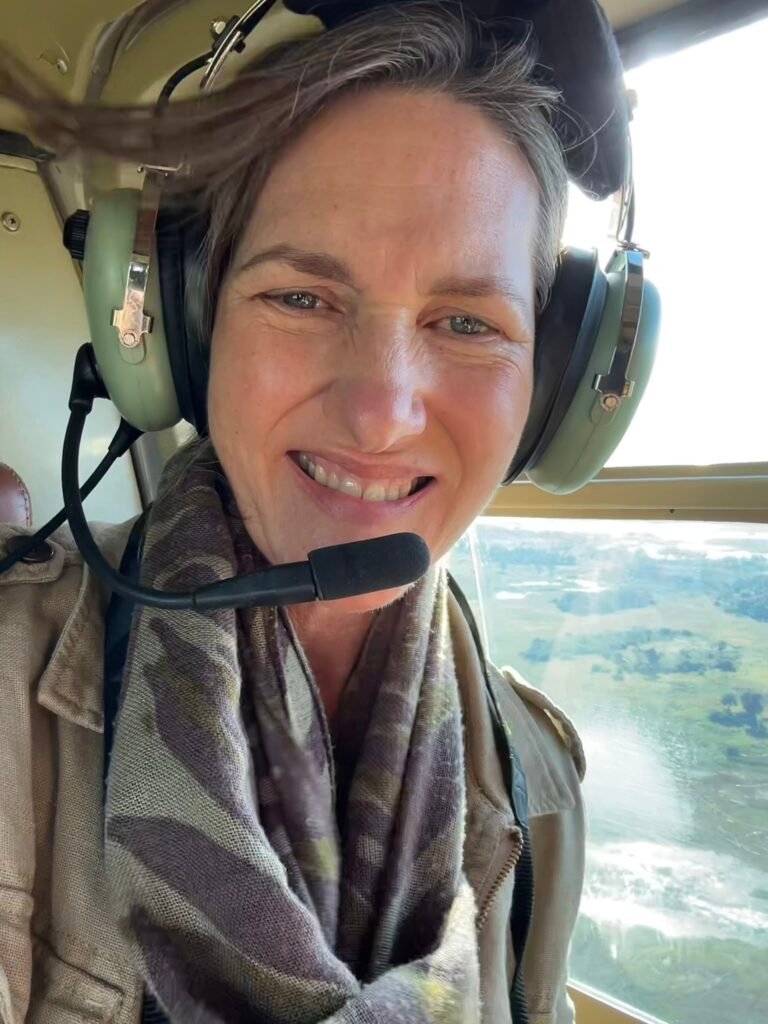
Within minutes we were airborne, lifting effortlessly above Moremi as the Delta unfolded beneath us in every direction. This felt less like a camp transfer and more like an aerial introduction to the Okavango itself.
Bird’s Eye View
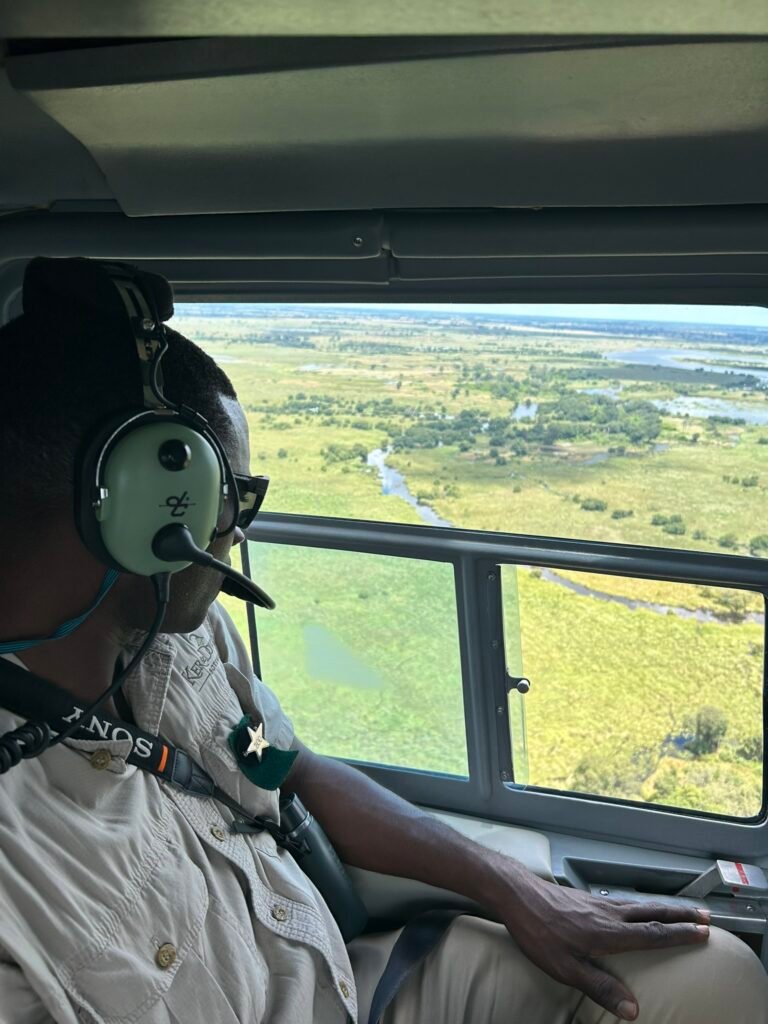
Once airborne, it became immediately obvious why helicopter transfers have become so popular within the Delta. Flying lower and slower than fixed wing aircraft, we followed winding channels, flooded grasslands and palm-dotted islands in a way that felt immersive rather than simply functional. Helicopters also allow access to some of the Okavango’s most remote concessions without the need for lengthy road journeys or additional infrastructure through fragile wetland habitats.
Many operators also play an important conservation role within Botswana. Helicopter Horizons, one of the Delta’s best known aviation companies, regularly partners with conservation organisations to assist with anti-poaching patrols, wildlife collaring and ecological monitoring in areas that would otherwise be difficult to access.
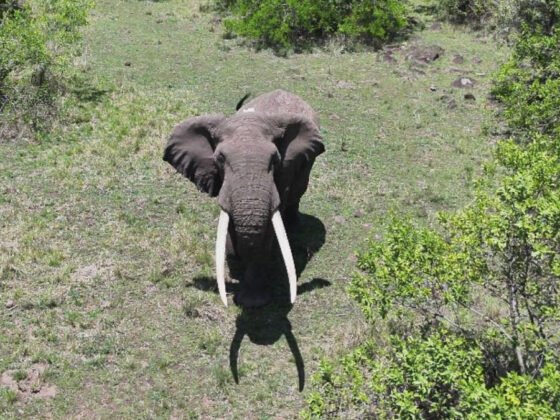
We skimmed low over the floodplains while Adam combined piloting with guiding, pointing out elephants moving through the channels below us and camps almost invisible amongst the trees while the sun turned the water silver and gold. Even before reaching camp, the Okavango had already begun to draw us in.
Bush Lunch
The sense of immersion only intensified after landing. A Ker & Downey vehicle was waiting at the airstrip but, rather than heading directly to camp, we drove past dozens of macabre looking marabou storks picking over bones near the runway before stopping ten minutes later beneath the shade of a large tree.
The Shinde team stood assembled beside a beautifully laid lunch table dressed in crisp linen, waving enthusiastically as we arrived. For a brief moment, it felt like stepping into somebody else’s glamorous safari life.
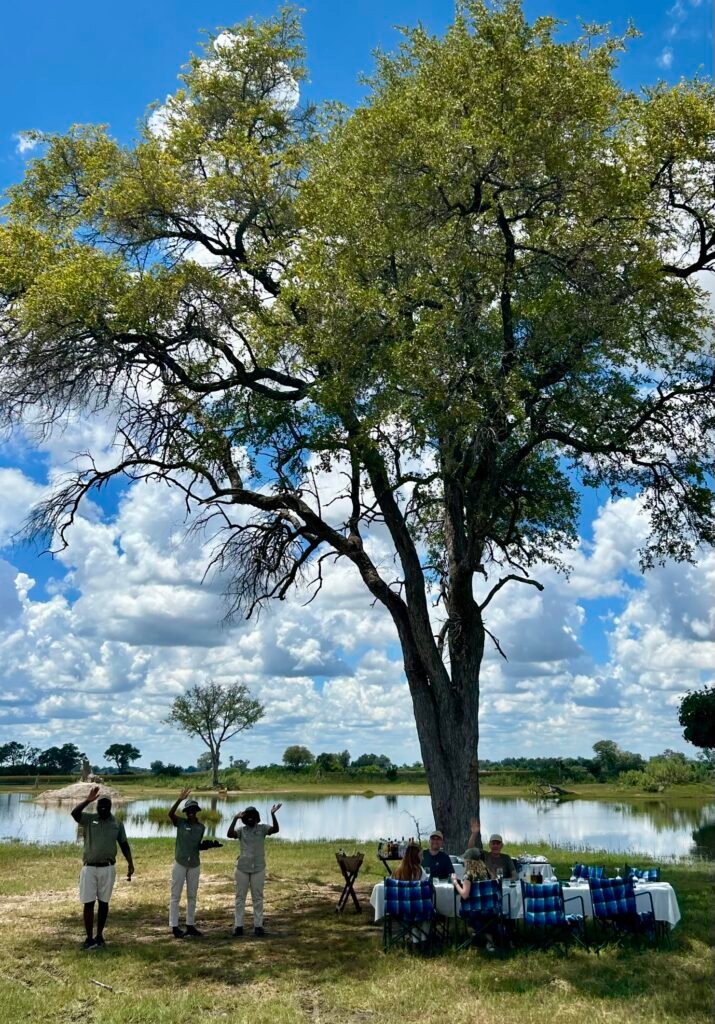
And what a setting it was. The Shinde concession stretched out around us while tsessebe grazed nearby with complete indifference to our arrival. Birds called constantly from the surrounding reeds and trees as drinks were poured and an excellent spread of meats, salads, fresh fruit and cheeses appeared from cool boxes and baskets. Our leisurely lunch was drawn to an end as the sun peeped round the tree, eating into our shade.
Shinde – Location
Set on a private concession overlooking Shinde Lagoon in the heart of the northern Okavango Delta, Shinde is one of Ker & Downey Botswana’s original camps.
Rebuilt in 2020, the camp has just eight raised safari tents linked by wooden walkways winding through ebony and mangosteen trees.
The location itself is exceptionally strong, combining permanent Delta water with extensive dry land habitat, allowing for varied safari activities and consistently rewarding wildlife viewing throughout much of the year. The camp is also Ecotourism Certified, reflecting the increasing emphasis placed on sustainability within Botswana’s high-end safari industry.
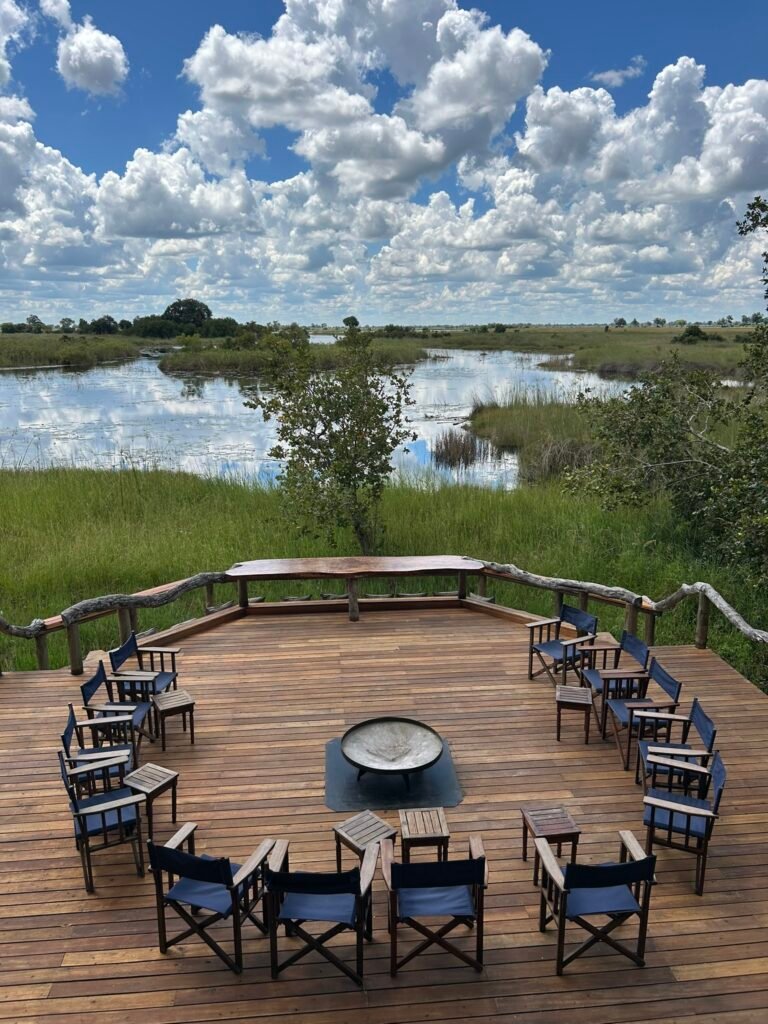
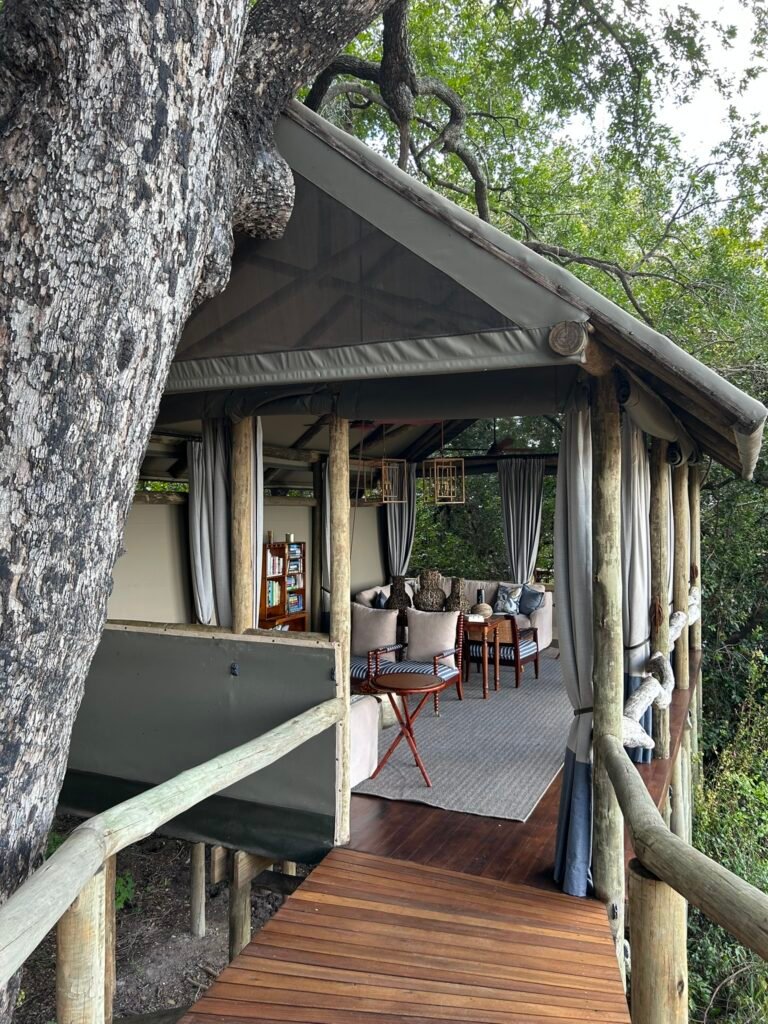
In an era where many safari lodges lean heavily into ultra contemporary design, Shinde retains a more classic safari feel that many long-time Africa visitors increasingly appreciate.
Although water shapes the atmosphere everywhere here, our short stay focused primarily on game drives. With three nights or more, most guests would naturally combine both land and water activities for a broader view of the Delta. Whatever you choose, though, the Okavango is constantly present. Papyrus-lined channels weave around camp and, after dark, the soundtrack of frogs becomes part of the stay itself.
The Okavango feels very different from East Africa’s vast open plains. Here the scenery is more intimate, textured and constantly shifting. Huge jackalberry and ebony trees give way to floodplains, lagoons and palm islands. The Delta feels immersive rather than panoramic, where every turn seems to reveal something unexpected.
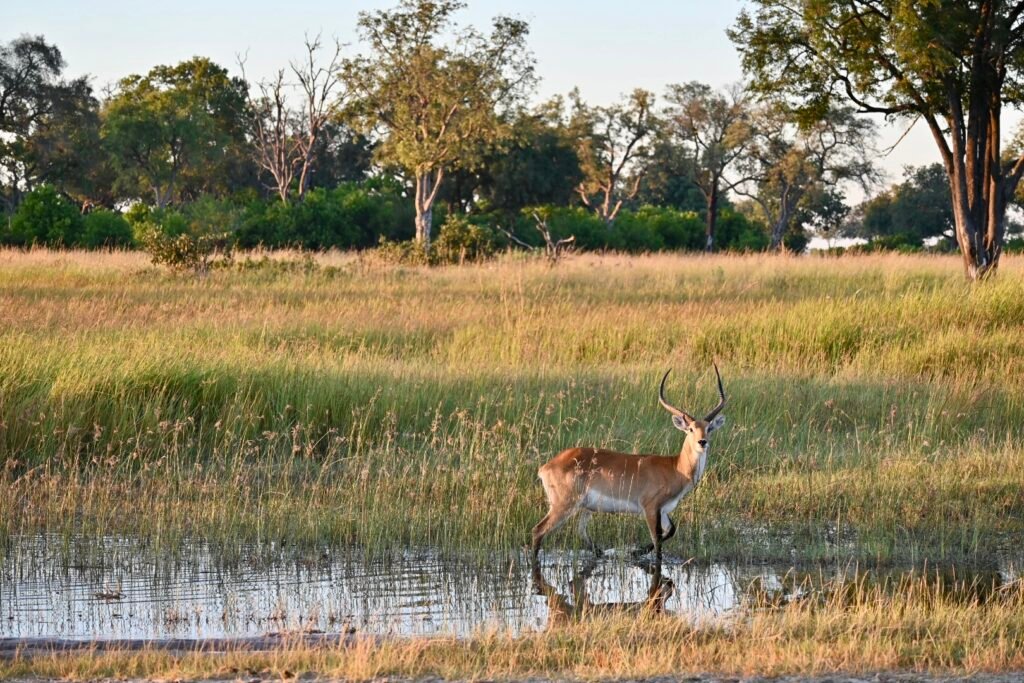
And the wildlife certainly delivered, even within the space of a 24-hour stay. The Shinde concession has developed a particularly strong reputation for predators, especially leopard sightings, and during our visit I experienced one of the finest leopard encounters I have had anywhere in Africa.
Son of Ebony
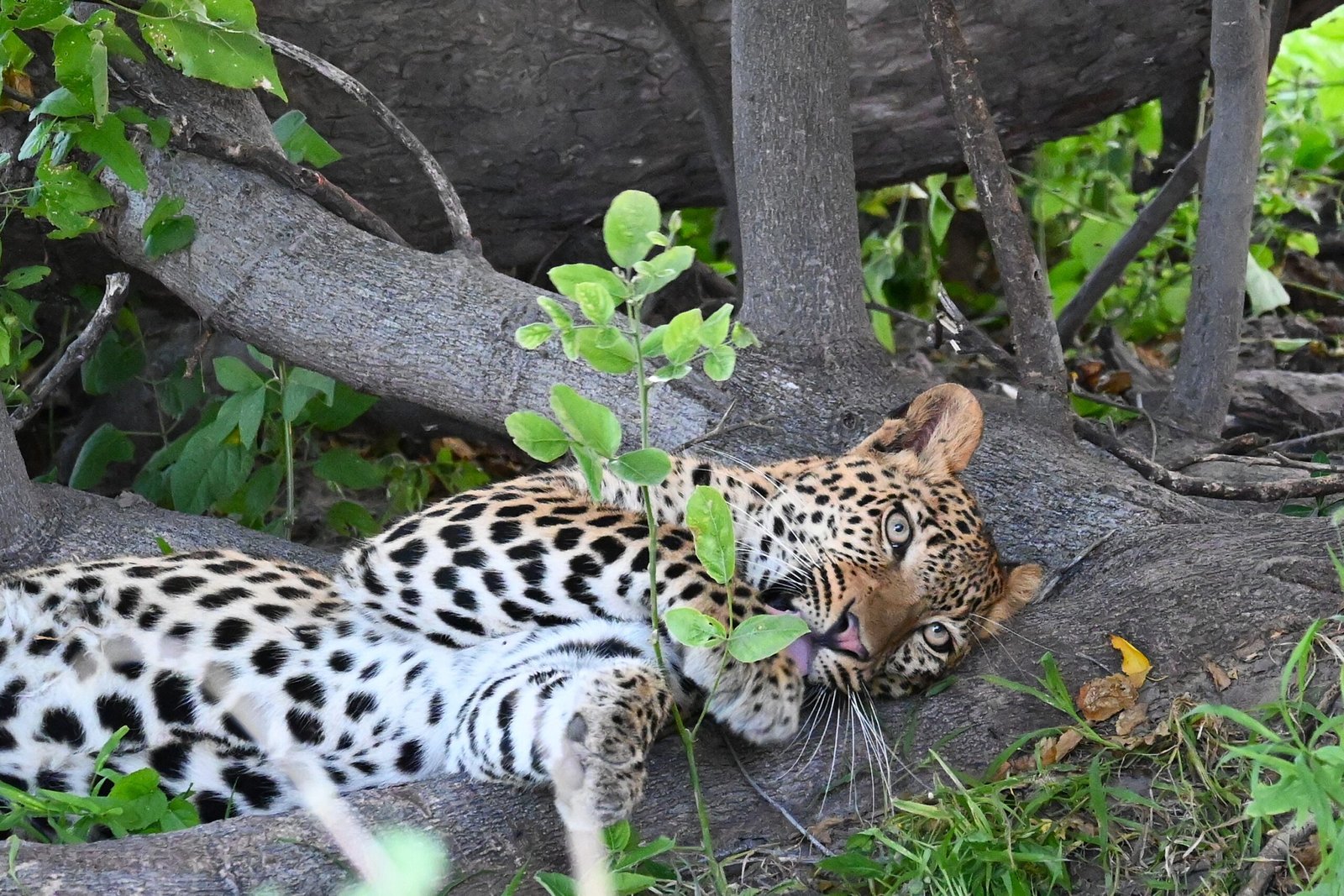
Late one afternoon, as the light began to soften, we came across a female leopard with her adolescent cub. For more than an hour we sat entirely alone watching the pair interact beside the floodplains as the golden light slowly faded around us.
The mother was busy gnawing on a bone and appeared increasingly unimpressed by the persistent attention of her nearly grown son, eventually retreating up a tree to escape him. Naturally, he followed…
Our guide explained that the cub was approaching two years old and would soon begin separating from his mother.
As the sky shifted from gold to deep plum, we finally tore ourselves away for sundowners overlooking a lagoon. It was a powerful reminder of why Botswana, and particularly private concessions such as Shinde, are so highly regarded amongst safari enthusiasts. The emphasis here is often less about chasing sightings and more about the quality of time spent in the bush itself: fewer vehicles, quieter encounters and the feeling of being genuinely immersed in wilderness rather than simply passing through it.
The Shinde Boys
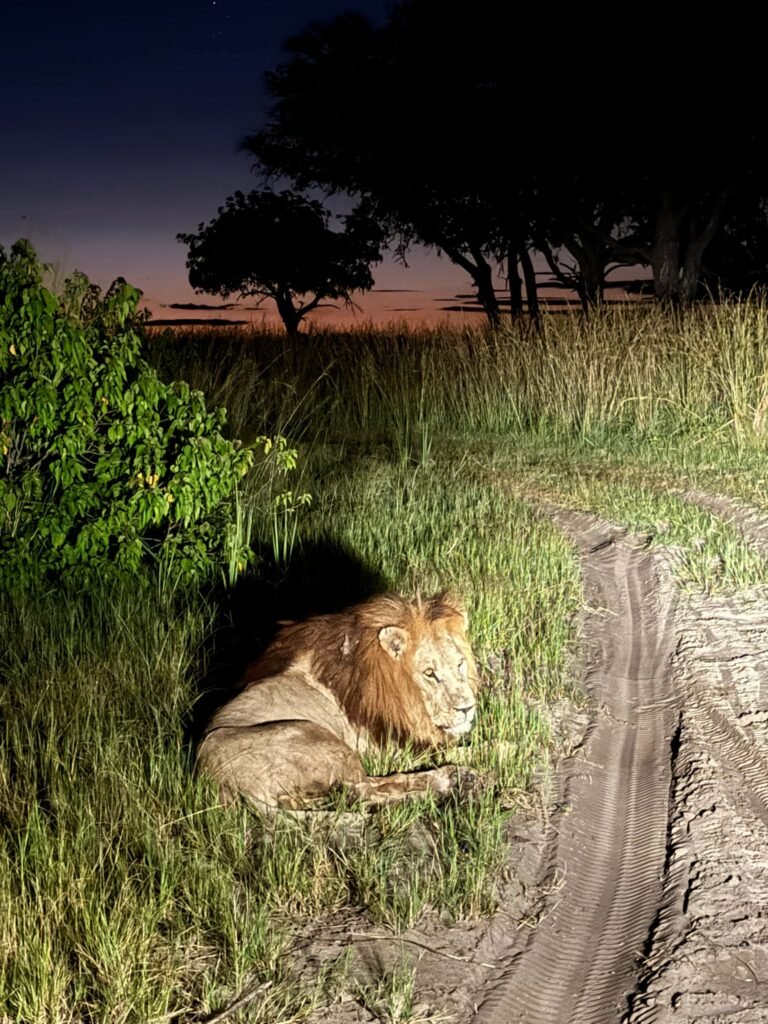
The predators continued to impress throughout our stay. Having heard the so-called “Shinde Boys”, a coalition of large male lions, roaring through the night and seen their enormous paw prints around camp, we eventually encountered them in the flesh under the vehicle spotlights while returning from our leopard sighting. Their slow, unhurried progress along the track created an effective roadblock.
Alongside the predators came regular sightings of elephant, antelope and abundant birdlife, although the elephants here appeared noticeably more cautious around vehicles than in some other safari regions, so we kept respectful distances and avoided close approaches.
The diversity of habitats surrounding Shinde means the game viewing rarely feels repetitive, with each drive revealing different scenery and species combinations.
Shinde Camp
Back in camp, Shinde is designed around a series of raised split-level platforms, with the central firepit and lounge areas overlooking the Delta. It strikes a good balance: comfortable and thoughtfully designed without losing its authentic bush character.
There are plenty of quieter corners to retreat to between activities, something we particularly appreciated during busier periods when camps can sometimes feel more social than secluded. The communal fire and dining areas encourage conversation and shared storytelling in the traditional safari style, yet the atmosphere never feels overly formal or orchestrated.
Our tent was spacious and comfortable, with good privacy and all the essentials expected from a high quality Botswana safari camp, including both indoor and outdoor showers.
In March, the surrounding vegetation was particularly lush and the tent allocated to us, on the left-hand side of the sandy pathway leading away from the main area, felt slightly darker and more enclosed than I would personally prefer. Some of the other tents appeared to enjoy more open views.
That said, many guests will value the additional privacy and shade created by the thicker vegetation, and I suspect the atmosphere changes considerably during the drier winter months when foliage thins out.
My stay at Shinde was very brief, just a single night, so we packed as much as possible into our time there, including a refreshing dip in the plunge pool before the afternoon game drive. Sitting afterwards with a cold drink from the cooler box, drying off while looking out across the reeds and floodplains beyond, felt wonderfully indulgent in the understated way Botswana so often does well.
Afternoon tea brought an enormous chocolate cake alongside iced tea and other refreshing drinks, while the staff throughout our stay were natural hosts: warm, relaxed and quietly efficient without ever feeling intrusive.
What ultimately makes Shinde so memorable, however, is the atmosphere the camp creates so naturally. From the helicopter flight across the Okavango and that unforgettable bush lunch beneath the tree, to the leopard sighting and a starlit evening listening to the sounds of the Delta, Shinde captures much of what makes Botswana safari travel so compelling in the first place.
This is not a safari stay built around spectacle. Instead, it delivers something far harder to manufacture: a genuine sense of place, space and privilege within one of Africa’s most remarkable ecosystems.
Find out more about safaris to Botswana and explore sample itineraries here>>
With thanks to Ker & Downey and Small World Marketing for so generously hosting me in Botswana.