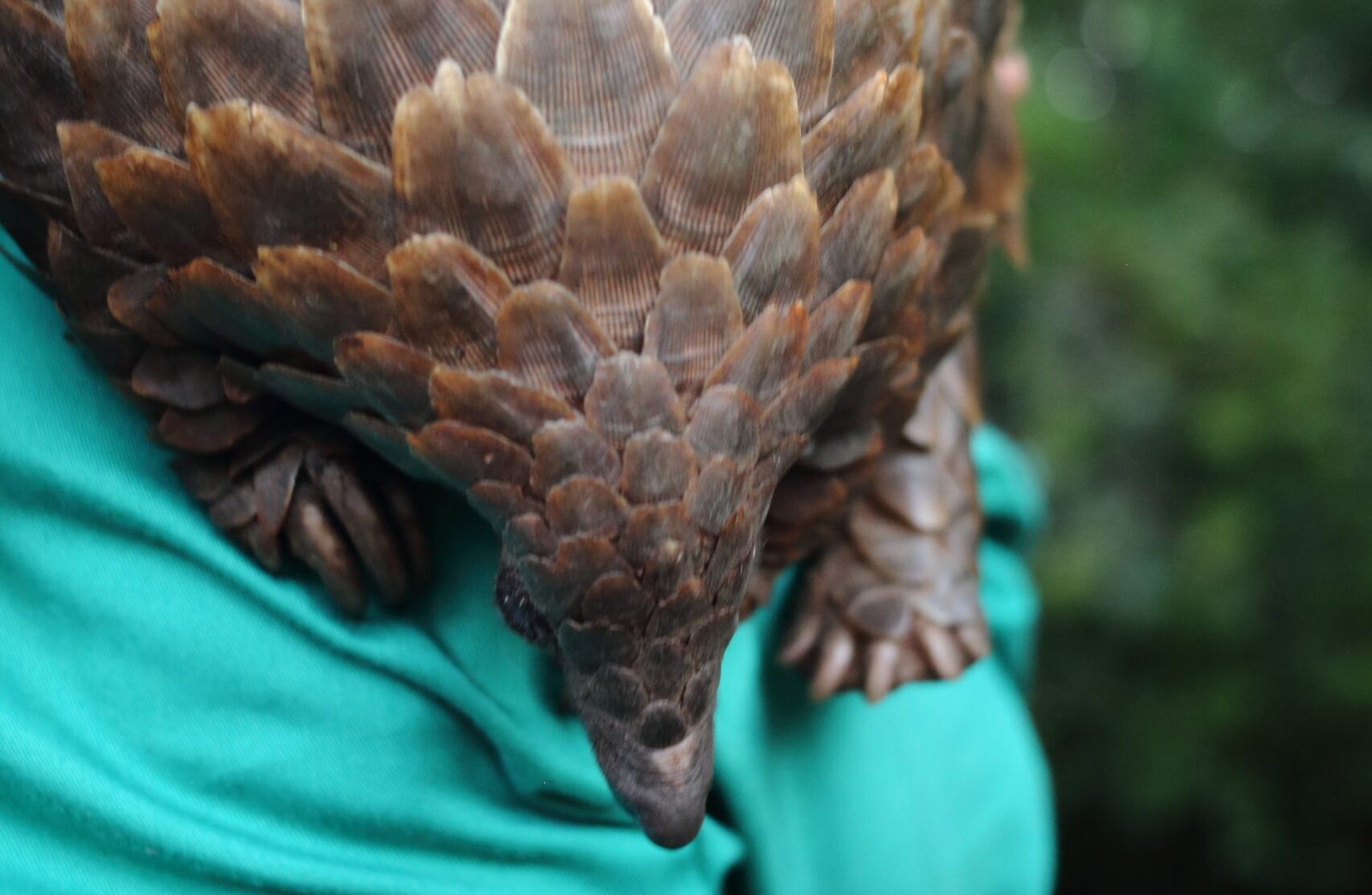
Supporting Pangolin Care in Malawi
Last year, thanks to funds raised through Sketch for Survival 2025, Explorers Against Extinction partnered with Lilongwe Wildlife Trust (LWT) to support its pangolin conservation programme in Malawi.
Pangolins are the only mammals covered in scales. There are eight species of pangolin, four in Asia and four in Africa. All are under pressure from habitat loss and the illegal wildlife trade. Shy, nocturnal, sensitive and notoriously difficult to study, they remain among the world’s least understood mammals.
A Difficult Species to Save
Pangolins are widely recognised as the world’s most trafficked wild mammal. Their keratin scales are used in traditional medicine in parts of Asia, including China and Vietnam, despite there being no proven medical benefit. Their meat is also consumed in some parts of Asia as a luxury item and status symbol. In parts of Africa, pangolins are also hunted for bushmeat, often as a source of local food.
Animals confiscated from the illegal wildlife trade often arrive at rescue centres in an appalling state, having spent days or even weeks in cramped, stressful conditions while traffickers search for a buyer.
By the time they reach safety, many are dehydrated, malnourished, injured and critically ill.
Between June 2025 and June 2026, LWT rescued 21 pangolins, most of them confiscated from the illegal wildlife trade. Twelve have since been successfully rehabilitated and released back into the wild, two remain in care, and seven sadly did not survive.
These figures are a stark reminder of just how difficult pangolin rehabilitation can be. Their care requires specialist veterinary expertise, intensive husbandry and round-the-clock commitment. Every successful release represents months of patient work by an experienced team.
Nthambi
Nthambi is a Temminck’s ground pangolin, one of Africa’s four pangolin species.
Found across southern and eastern Africa, ground pangolins spend much of their lives alone, using their powerful claws to break into termite mounds and ant nests. When threatened, they curl into a tight ball, relying on their armour of kertain scales. Sadly, this defence offers little protection against humans.
This is Nthambi’s story.
Rescue
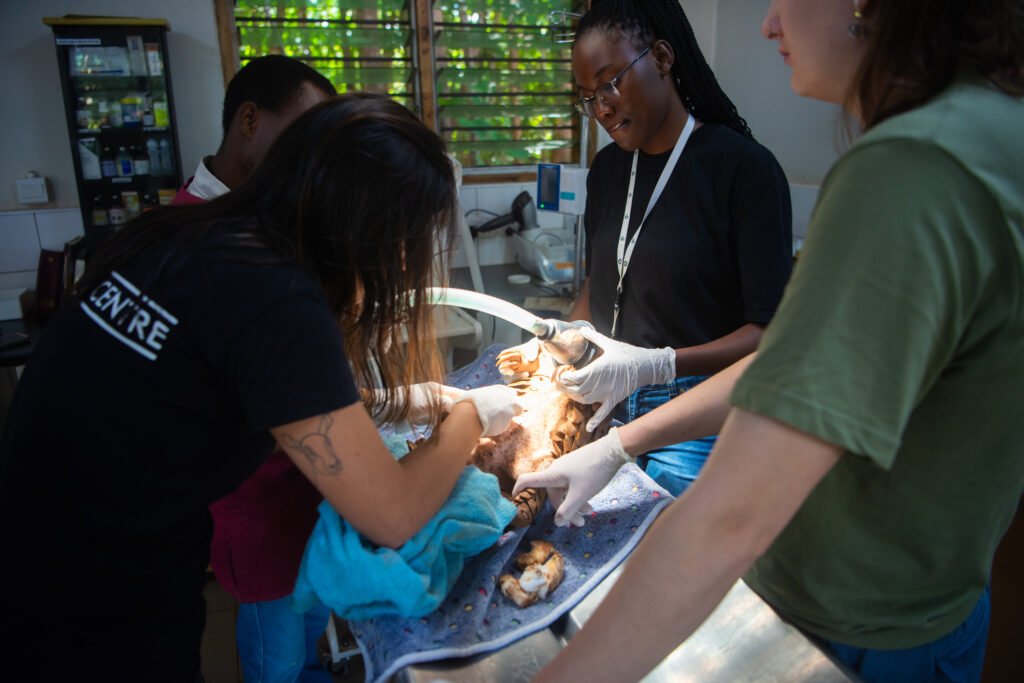
Nthambi, an adult female, was rescued by police officers in southern Malawi after they intercepted wildlife traffickers attempting to sell her.
She had suffered one of the most serious injuries the LWT veterinary team had ever encountered. Part of one of her back legs was missing, with the bone left exposed. The injury was most likely caused by a snare trap.
She was rushed to a nearby veterinary clinic, where vets determined that amputation was the only way to save her life. Afterwards, she was transferred to Lilongwe Wildlife Trust to begin what would become a long and uncertain rehabilitation.
Recovery
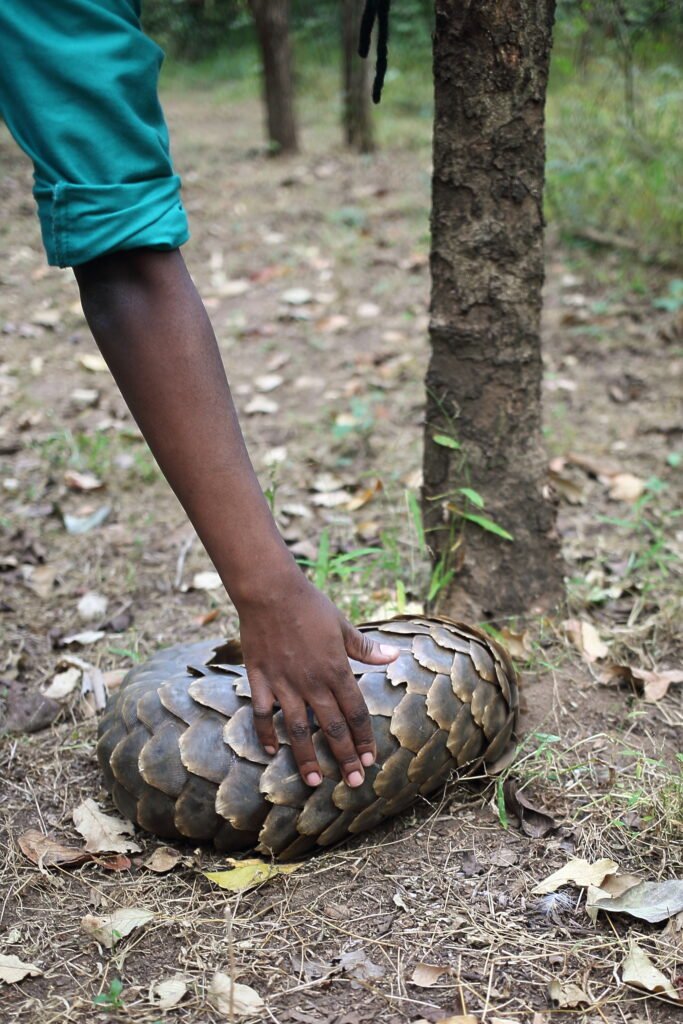
Although pangolins can adapt remarkably well to life on three legs, thanks to their powerful tails, Nthambi’s first days were heartbreaking.
Exhausted, traumatised and in obvious pain, she barely moved during her daily walks. Instead, she curled herself into a tight ball and refused to eat.
For the first two weeks, LWT’s veterinary team sedated her every day so they could tube-feed her and clean her wound, ensuring she received enough nutrition while reducing the risk of infection.
Slowly, over the course of several months, things began to change.
As her strength returned, the team reduced the tube feeding to encourage her to forage for herself. Her caretaker noticed her becoming more curious on walks, sniffing out ant nests and digging for food independently instead of relying on help. Over the next four months, Nthambi adapted incredibly well to her missing limb, using her strong tail to balance as she walked.
Then came an important milestone. She started to play.
Rolling around in the grass may seem like a small thing, but for a traumatised pangolin, this is a clear sign of both physical and behavioural recovery.
Release
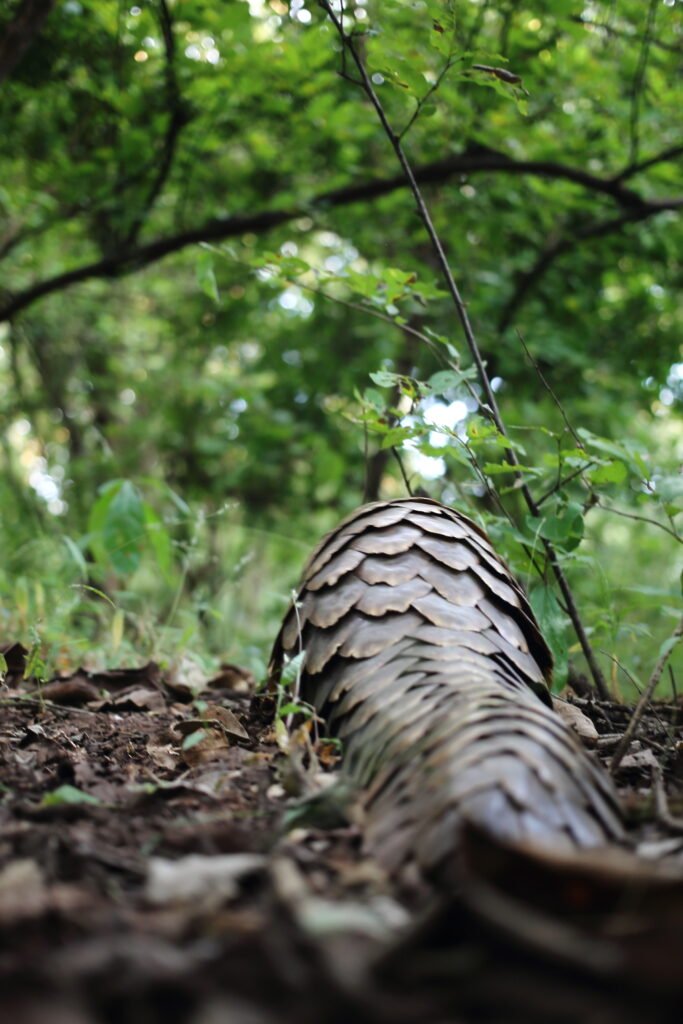
In early June, Nthambi began a carefully managed six-day soft release into a national park.
For the first two days, she was taken out to forage before returning to a secure box each evening. On the third day, once the team had confirmed she had successfully found a burrow, she spent her first night alone, back in the wild.
Over the following days, they continued to monitor her closely, ensuring she was maintaining her weight and finding suitable shelter.
Today, satellite tracking shows that Nthambi has remained close to her release site and is settling into her new home. She will continue to be monitored over the coming months, but the signs are extremely encouraging.
Why This Work Matters
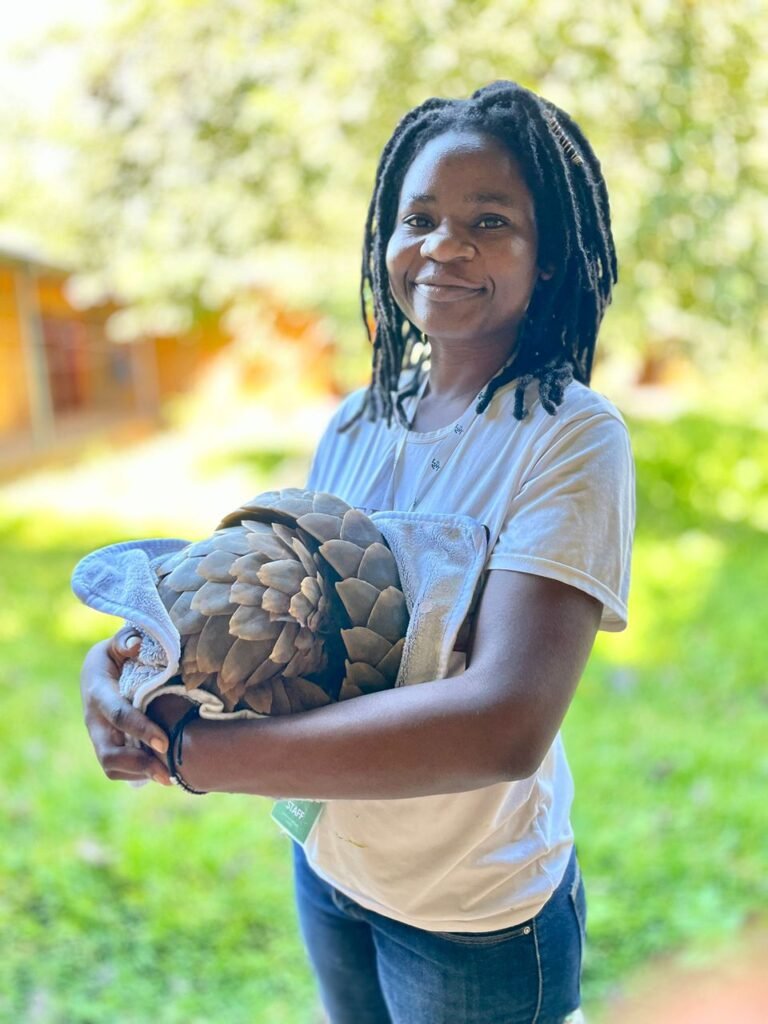
Nthambi’s recovery is remarkable, but it is also a reminder of just how much expertise, patience and dedication wildlife rehabilitation requires.
Behind every successful release is a team of vets, carers and conservationists willing to invest months of specialist care in a single animal, giving it the very best chance of returning to the wild.
We are incredibly proud that Sketch for Survival 2025 fundraising helped support this work, and we thank everyone who has contributed.
Images: LWT