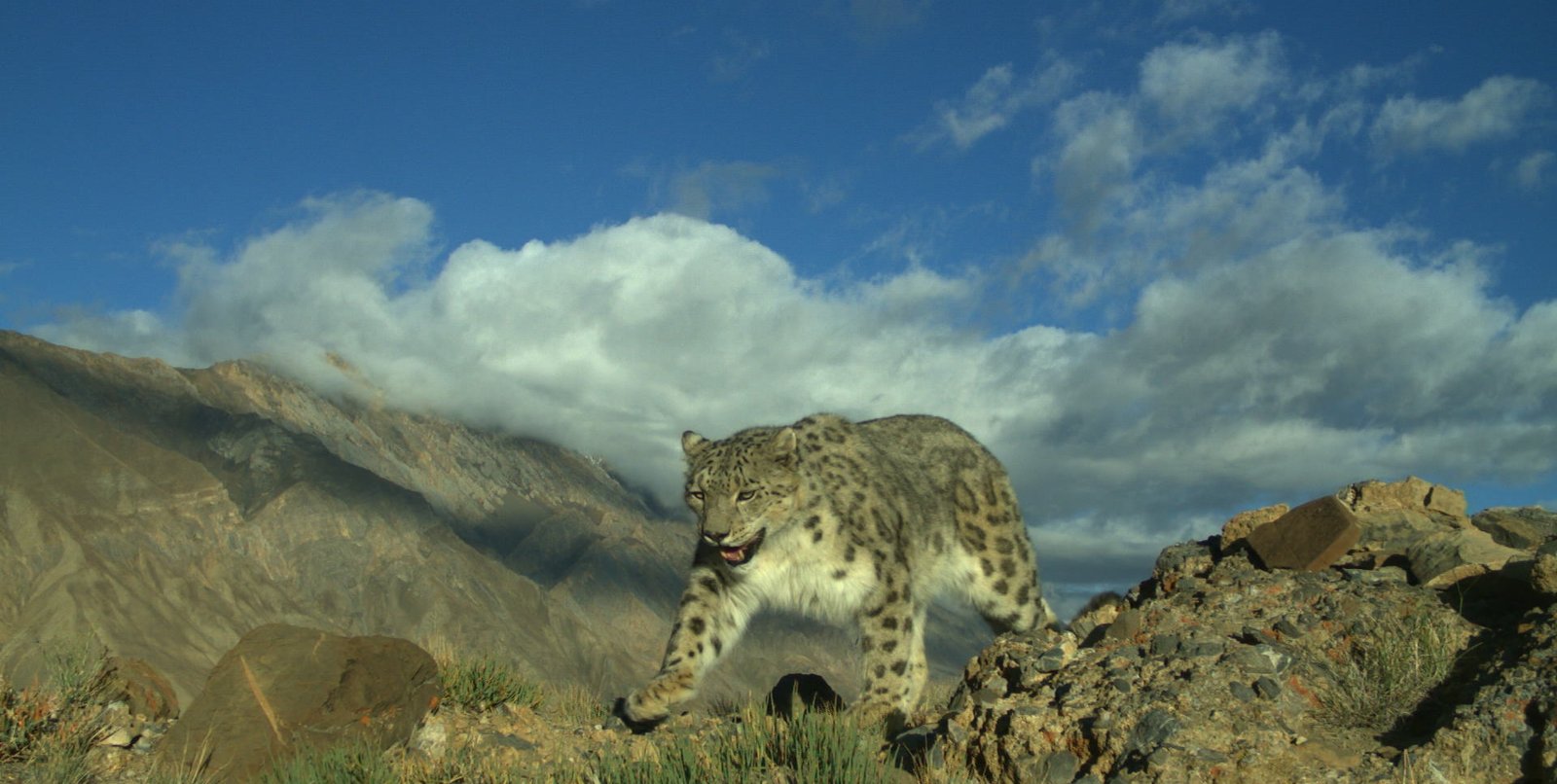
World Snow Leopard Day | 23 October 2026
Seeing a snow leopard in the wild is high on many wildlife enthusiasts’ wish lists, but knowing where to go, when to travel and what to expect can make all the difference. These are notoriously elusive animals, and even in the best locations, sightings require patience, expert local knowledge and a little luck.
To mark World Snow Leopard Day on 23 October, we’re sharing some insights from our own experience in India’s snow leopard country and taking a closer look at a specialist winter expedition to Ladakh, one of the best places in the world to search for them.
The Ghost of the Mountains
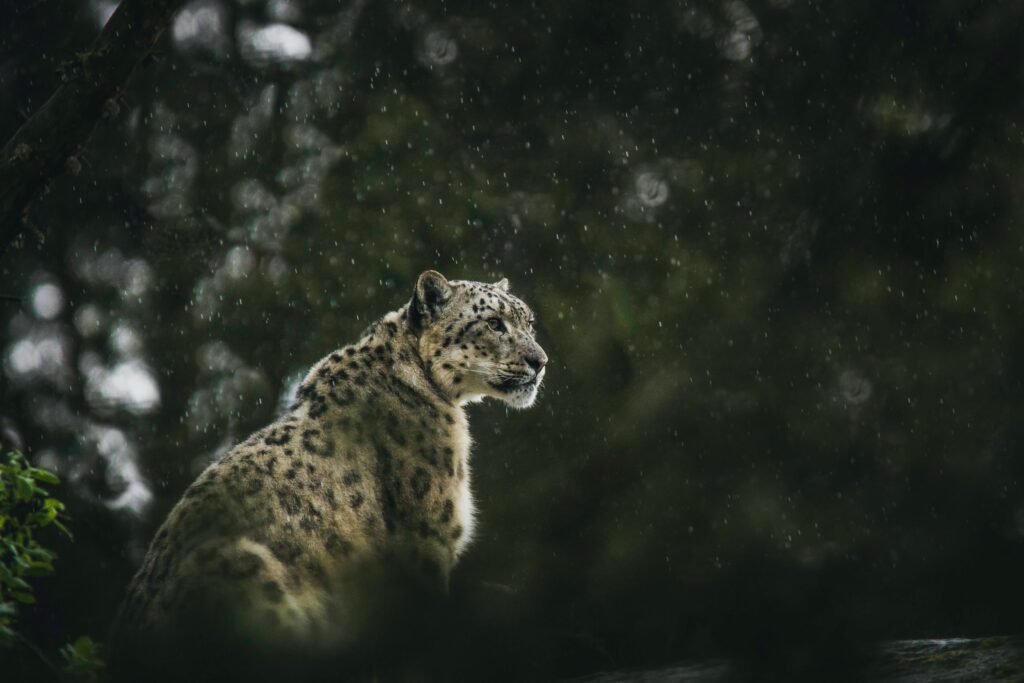
Snow leopards (Panthera uncia) are beautifully adapted to life at altitude. Their thick, smoky-grey coats provide insulation and remarkably effective camouflage, while broad, fur-covered paws help them move across snow and rocky terrain. Their extraordinarily long, bushy tails provide balance on steep slopes and can be wrapped around the body for warmth.
Found across the mountain ranges of 12 Asian countries, snow leopards typically inhabit remote, rocky terrain between 3,000 and 5,500 metres. They are solitary, wide-ranging animals, often active around dawn and dusk, although they can be encountered at any time of day.
Classified as Vulnerable on the IUCN Red List, snow leopards face threats from habitat degradation, declining prey populations, poaching, climate change and conflict with livestock herders.
Protecting them is not simply a question of safeguarding habitat. Across their range, people and snow leopards share the same unforgiving mountain environment. Finding ways for both to thrive is central to their long-term survival.
Our connection with snow leopard conservation
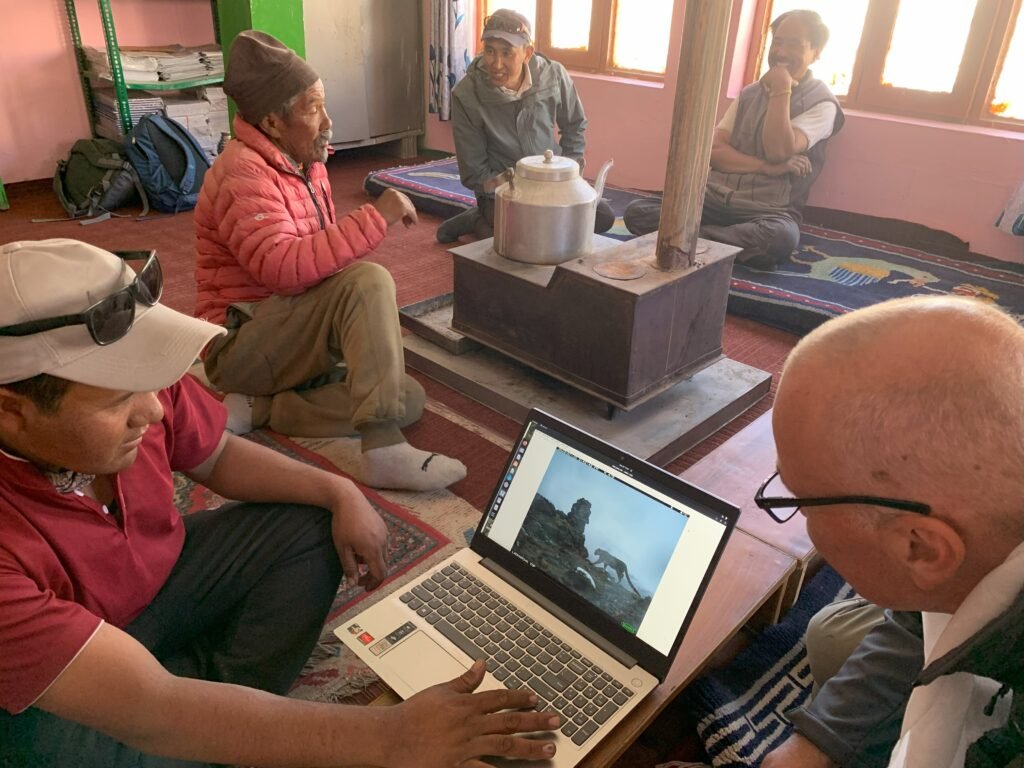
The closest I’ve ever come to seeing a wild snow leopard was sitting in the Nature Conservation Foundation’s office in Kibber, watching camera trap footage.
Explorers Against Extinction partnered with India’s Nature Conservation Foundation (NCF) in 2022, supporting research into snow leopard populations and the impact of climate change on their high-altitude habitat.
In September 2023, we travelled to the remote Spiti Valley in Himachal Pradesh to meet some of the NCF team and see their work first-hand.
We knew we were visiting at the wrong time of year for snow leopard sightings. February and March generally offer better opportunities, when snow leopards and their prey are more likely to move to lower elevations. However, travelling in September made the formidable overland journey more manageable and gave us the freedom to explore the valley, spend time in local villages and learn about the challenges of living at altitude.
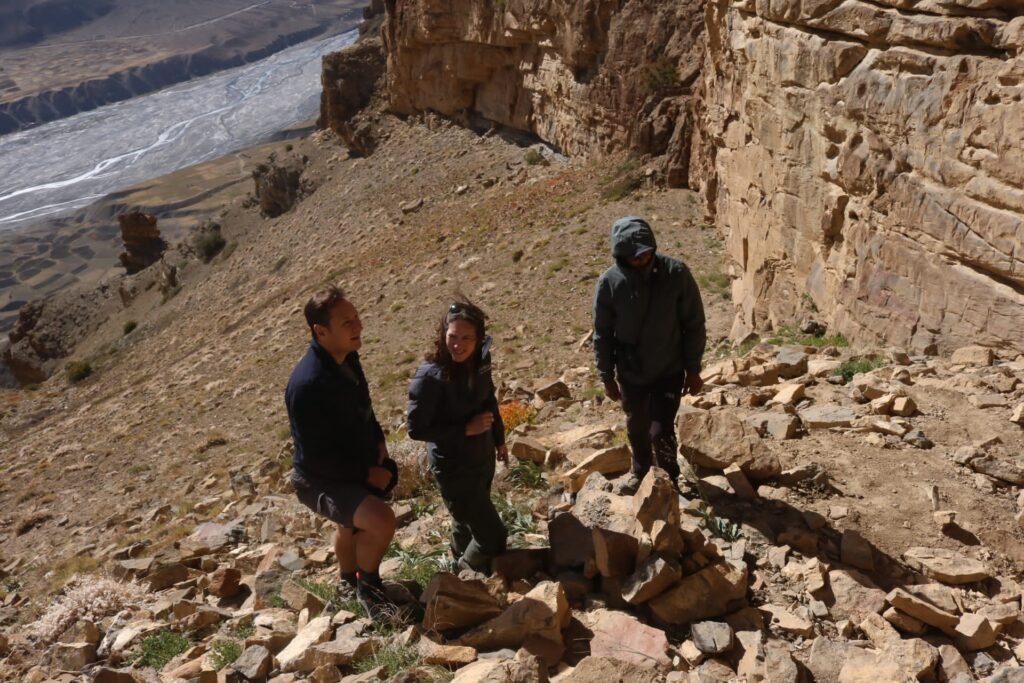
Highlights included trekking with an NCF researcher to a camera trap location at 4,400 metres and visiting the villages of Langza and Kibber. We met people who regularly see snow leopards in and around Kibber during winter, sometimes right in the village.
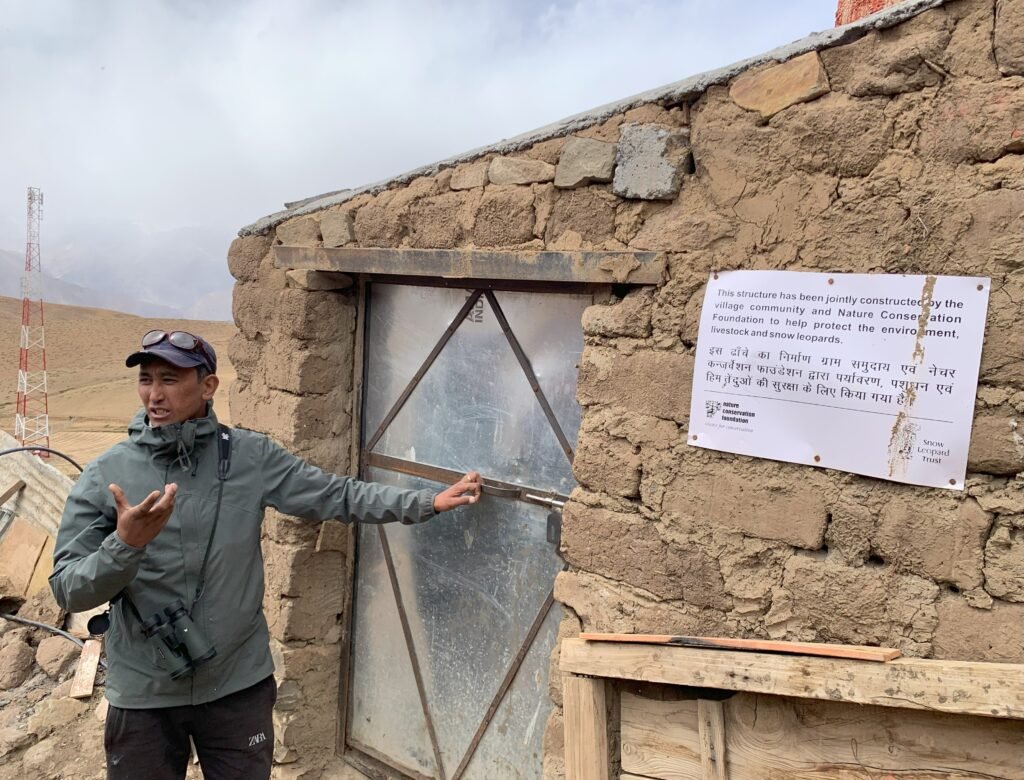
For livestock owners, this is not necessarily good news. Losing a yak can represent a significant financial blow, and we saw how predator-proof corrals and livestock insurance schemes are helping protect livelihoods while reducing the risk of retaliatory killings.
Winter wildlife tourism is another important part of the picture. Local people can earn income through guiding, tracking, homestays and other services, creating a direct economic benefit from conserving snow leopards.
Our visit certainly brought home just how closely the future of snow leopards is tied to the communities living alongside them.
I’ve written more about our experiences in In Search of Ghosts: Snow Leopard Conservation in India’s High Himalaya and explored the relationship between predators, prey and livestock in Counting (Blue) Sheep.
Our partnership with NCF has also produced some encouraging results. Camera trapping work initially supported by EAE contributed to a much wider study of snow leopard distribution across Himachal Pradesh, providing valuable information about the region’s population.
Read about the latest findings and what your support has helped achieve.
Where should you go to see snow leopards?
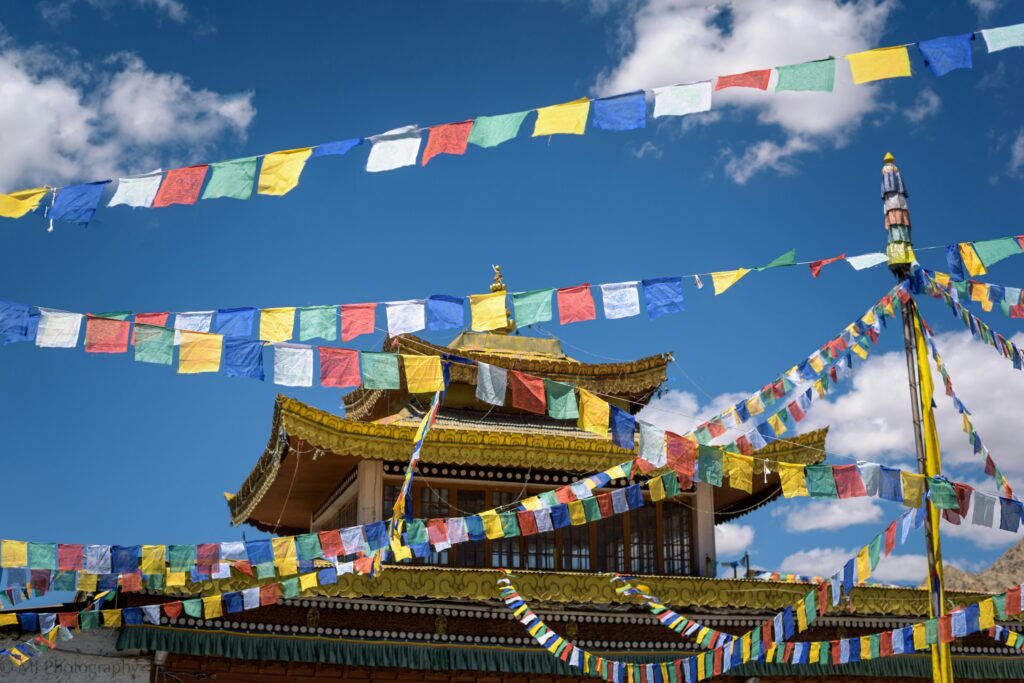
If your main objective is to see a snow leopard in the wild, Ladakh in northern India would be high on my list.
There are other possibilities, including parts of Nepal, Mongolia and Pakistan, but Ladakh has several advantages. Snow leopards are well established in the region, there is a strong network of experienced local trackers, and specialist accommodation has developed around winter wildlife tourism.
Access is another consideration. The journey to Spiti by road was hair-raising enough in September. I cannot imagine attempting those mountain roads in deep snow!
In contrast, Leh, Ladakh’s regional capital, can be reached by air from Delhi. This makes it possible to travel into snow leopard country during the winter months without a lengthy approach through snowbound mountain passes.
When is the best time to go?
The main snow leopard tracking season in Ladakh runs through winter into early spring. February and March are particularly worth considering, when snow leopards may follow wild prey to lower elevations and the breeding season can bring increased activity.
Conditions are cold, often extremely so, but the rewards can be considerable.
The key is to allow sufficient time. A single day or two is unlikely to do justice to the experience. Snow leopard tracking requires patience, and even in a productive area it may take several days to locate an animal.
This is why we particularly like the following itinerary, which includes six days dedicated to tracking.
A 14-day Snow Leopard Expedition to Ladakh
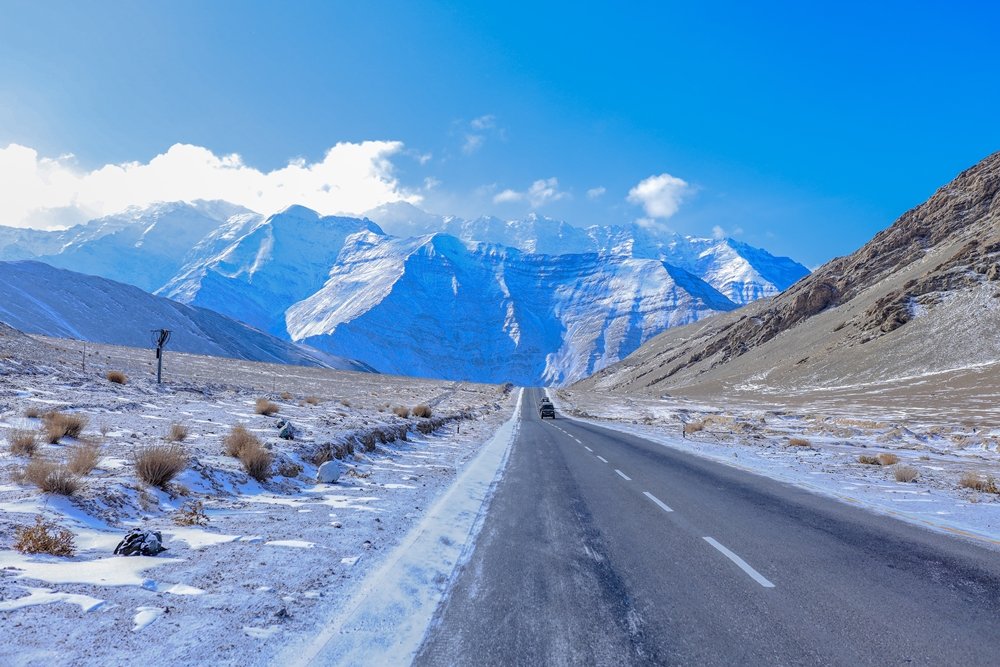
Our specialist travel partner offers a 14-day Snow Leopard Expedition combining an extended stay in prime snow leopard habitat with time to acclimatise in Leh and explore some of Ladakh’s extraordinary cultural heritage.
It’s a thoughtfully paced itinerary, particularly important when travelling at altitude, and includes a week based at Snow Leopard Lodge in Ulley. Arrangements are tailor-made but this will give you a good idea of what local experts recommend.
First stop: Leh

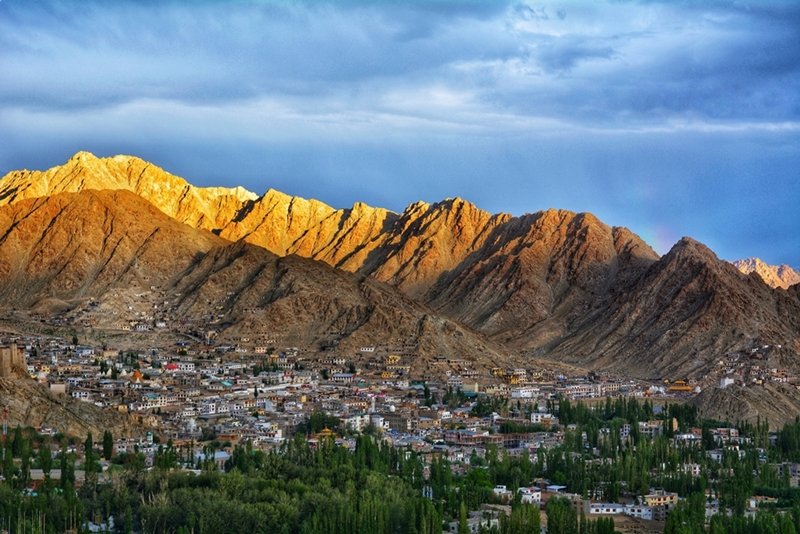
The journey begins with an overnight stay in Delhi before an early morning flight across the Himalayas to Leh, at approximately 3,475 metres.
The views on a clear day can be spectacular, but arriving by air at this altitude demands some respect. Acute mountain sickness is a real consideration, and allowing time for acclimatisation is essential.
Three nights are spent at The Grand Dragon, a well-appointed hotel in Leh, providing a comfortable base while you adjust to the altitude.
There is time to explore the old town and its markets, visit Thiksey Monastery and travel east towards Taglang La and the villages of Gya, Lhato and Meru. Wildlife possibilities include blue sheep, golden eagles, bearded vultures and Himalayan partridges.
A meeting with the Snow Leopard Conservancy provides an introduction to conservation in Ladakh, including the role of local communities and wildlife tourism.
On to Ulley: seven days in snow leopard country
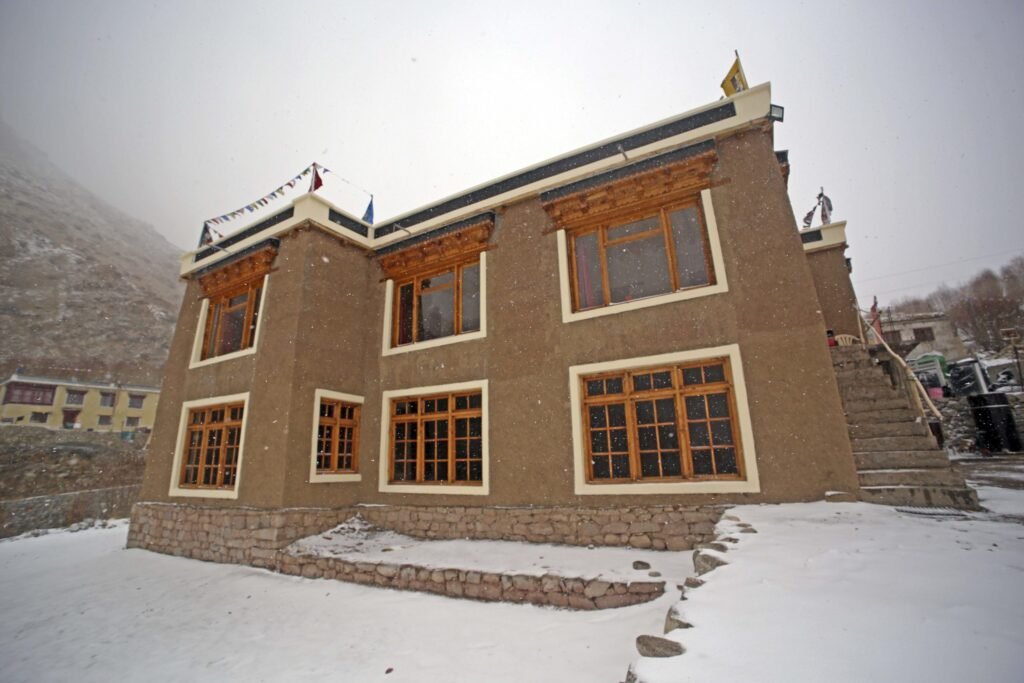
From Leh, the route follows the Indus River westwards, passing the confluence with the Zanskar River near Nimmu before turning north towards Likir and the remote valley of Ulley.
This is rugged country, with steep rocky slopes, deep valleys and high ridgelines. It’s excellent terrain for Himalayan ibex and, importantly, the snow leopards that prey on them.
Your base for seven nights is Snow Leopard Lodge, a small, dedicated wildlife lodge in Ulley. It is associated with a programme supported by the Snow Leopard Conservancy, using wildlife tourism to create economic opportunities for local people.
The focus here is firmly on wildlife, with six days spent searching the surrounding mountains alongside experienced local trackers and an English-speaking naturalist.
Tracking is undertaken on foot and by vehicle, with plenty of time spent scanning distant ridges and cliffs through binoculars and spotting scopes.
A good tracker is worth their weight in gold. Local guides know where snow leopards have been seen, understand the movement of prey species and can pick out signs of activity that most visitors would never notice.
It’s important, however, to have realistic expectations.
Snow leopard watching is very different from a conventional safari. You may spend hours watching a distant mountainside, waiting for movement, and any sighting could be a considerable distance away. Good binoculars are essential.
Expect cold conditions, time spent scanning the slopes and some walking over uneven ground at altitude. The amount of walking can vary, so it’s worth discussing your fitness and mobility with the operator before booking if you have concerns.
And of course, there’s no guarantee of a sighting. But with six dedicated tracking days, you’re giving yourself a much better opportunity than on a shorter visit.
What else might you see?
Although snow leopards are the principal attraction, there’s plenty of other wildlife to look for.
Himalayan ibex are a particular highlight. The males, with their magnificent curved horns, are wonderfully photogenic, especially when silhouetted against a rocky skyline.
Blue sheep, or bharal, are another important prey species, while other possibilities include wolves, Himalayan foxes, golden eagles, griffon vultures and bearded vultures.
For photographers, the landscapes are almost as rewarding as the wildlife. The stark beauty of Ladakh in winter, with its snow-covered mountains, deep valleys and extraordinary light, provides endless opportunities.
Returning to Delhi
After a week in Ulley, the expedition returns to Leh, with an opportunity to visit the historic Alchi Monastery if time permits.
Following a final night at The Grand Dragon, it’s back to Delhi by air for an overnight stay at the stylish and conveniently located Roseate House before travelling home.
Snow Leopard Expedition: essential details
14 days | Ladakh, India | From £4,190 per person sharing
Price based on travel between November and March, excluding peak holiday dates. Correct at the time of publication, October 2026.
- Travel season: November to May, with February and March particularly worth considering.
- Snow leopard tracking: Six days with experienced local trackers and an English-speaking naturalist.
- Accommodation: Roseate House, Delhi; The Grand Dragon, Leh; Snow Leopard Lodge, Ulley.
- Meals: Full board in Ladakh; bed and breakfast in Delhi.
- Included: Return domestic flights between Delhi and Leh, airport transfers, accommodation, specified guiding and sightseeing, monastery entrance fees and required permits.
- International flights: Not included, but can be arranged by our specialist travel partner.
The itinerary is a starting point and can be tailored to individual interests and requirements.
A few practical considerations: Temperatures in winter can fall well below freezing, especially when stationary for long periods. Warm clothing, good insulated boots and suitable equipment are essential. The altitude also needs to be taken seriously, and anyone with relevant medical concerns should seek professional advice before booking.
Travel that supports conservation
One of the things I took away from our Spiti visit was just how important local support is to successful snow leopard conservation.
Protecting livestock, supporting livelihoods and creating opportunities for people to benefit from wildlife tourism all help make coexistence possible. Seeing this approach in practice adds another dimension to a snow leopard expedition.
This particular journey offers the chance to learn about conservation directly from those involved, while your stay in Ulley supports a local tourism initiative associated with the Snow Leopard Conservancy.
If seeing a snow leopard in the wild is on your wish list, we’d love to help you plan your journey. Our specialist travel partner can tailor the itinerary to your requirements and help you prepare for the challenges of winter travel in Ladakh.
By enquiring and booking through Explorers Against Extinction, you’ll also be supporting our conservation work at no additional cost to you. We receive a donation from our specialist travel partner for every confirmed booking referred through us.
Explore the Snow Leopard Expedition
VIEW THE 14-DAY ITINERARY & MAKE YOUR ENQUIRY »
Images: Camera trap images of snow leopards courtesy of NCF India