Explorers Against Extinction
  • Blog
  • Guest Post
  • Travel Resources
  • Wildlife
  • Africa
  • Sketch for Survival
  • Travel
  • 21For21
  • Environment
  • Inspiration
Subscribe
Explorers Against Extinction
  • HOME
  • About
  • Support Us
  • Initiatives
  • Projects
  • Contact
Home Blog 2 Legs for 4: Walking for Tigers
  • Asia
  • Conservation
  • Projects

2 Legs for 4: Walking for Tigers

  • 30th April 2026
  • Sara
Total
0
Shares
0
0
0

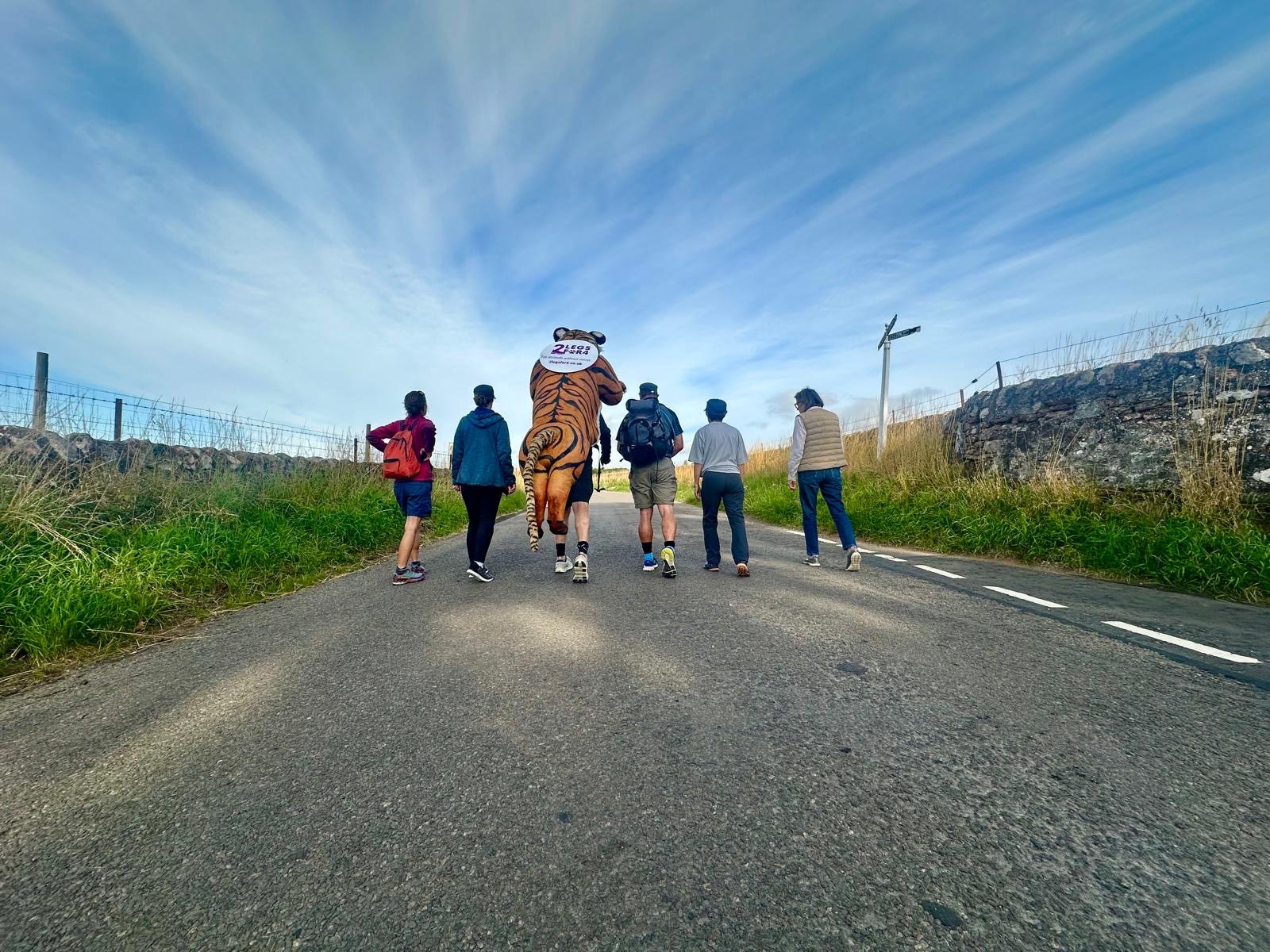
It’s official, Paul Goldstein and his tiger suit will return this summer. But this time, he is going even further.

From July, Paul will take on a 1,000 mile walk in just 40 days, pushing himself to the limit to raise funds and awareness for tiger conservation.

The question is, will you walk too?


What is 2 Legs for 4?

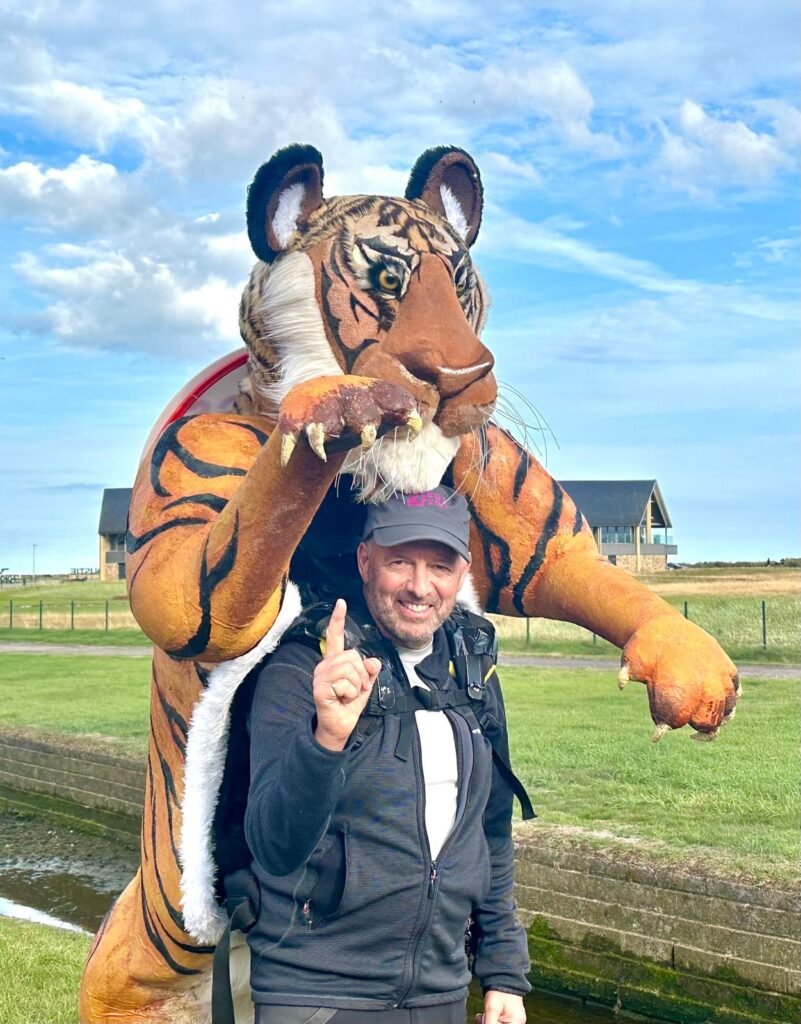
Paul has a long history of endurance challenges. He has completed 25 marathons around the world, including the Everest Marathon, nearly always in a tiger suit.

We thought the suit had finally been retired to a tea house in Kathmandu. But in 2025, in the unassuming countryside of Tigerton in Scotland, it made an unlikely comeback. Paul and the long suffering tiger walked 25 marathons in 25 days, finishing in Tigermouth and raising over £40,000.

The now iconic suit does exactly what it is meant to do. It stops people, starts conversations, and brings both scale and a sense of absurdity to the challenge. On the flat terrain of East Anglia, perhaps manageable, but have you seen the elevation of the South West Coast Path?

This summer’s route will be split into two legs, taking in some of the UK’s most spectacular walking landscapes. Leg one from Anglesey to Southend-on-Sea (7th – 28th July 2026) and Leg 2 Southend to Land’s End (20th Aug – 11th Sept 2026).


Why walk?

Because tigers still need space, protection and long term support.

Because conservation does not happen in isolation. It relies on awareness, funding and people choosing to get involved.

And because this is something anyone can be part of, so why not?

Whether you are walking the dog, heading to the pub, or joining for a full marathon length day, you are welcome. Five miles or five days, we would love you to turn up, tune in and be part of the challenge.

And let’s be honest, the chances of Paul getting to the finish line entirely unscathed are fairly slim. He is going to need all the encouragement he can get.

Why tigers?

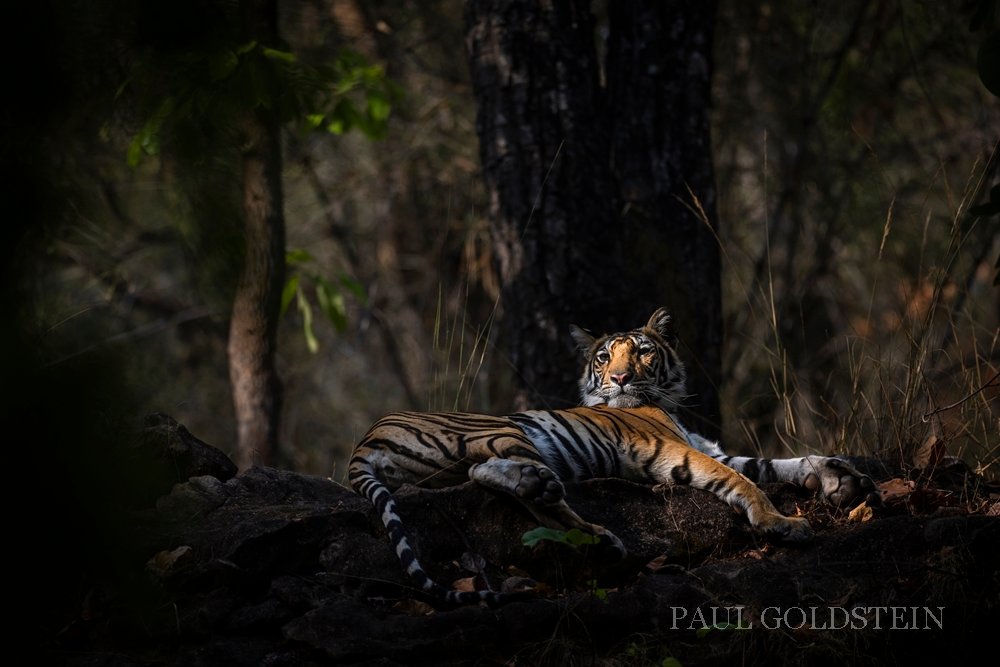
Tigers may be recovering in parts of their range, but the overall picture remains fragile. Habitat loss continues to fragment landscapes, isolating populations and increasing pressure on both wildlife and people.

Human wildlife conflict is a growing issue, particularly in areas where communities live alongside tigers. As space and resources become more limited, encounters increase, often with serious consequences.

India is home to over 70 percent of the world’s wild tigers, with landscapes such as Bandhavgarh National Park playing a vital role. But the future of tigers depends not only on protected areas, but also on the surrounding buffer zones and community lands.


Supporting conservation on the ground

Funds raised through 2 Legs for 4 will support a partnership with the Corbett Foundation in and around Bandhavgarh, a key tiger landscape in India.

Their work focuses on practical, on the ground solutions. Reducing human wildlife conflict, supporting local communities, and protecting habitats beyond park boundaries. It is this kind of targeted action that makes long term coexistence possible.


Not just about legs
While walkers are central to the success of this challenge, it will take more than miles to make it happen. From accommodation along the route to food, logistics and physio support, there are many ways to get involved.

If your business is interested in supporting the challenge, and benefiting from the visibility it will generate, we would love to hear from you.


Join the challenge

This is where it starts.

Sign up, set your own challenge, and be part of something bigger.

Or support the campaign directly and help fund conservation work on the ground:

Total
0
Shares
Share 0
Tweet 0
Pin it 0
Related Topics
  • 2 lEGS FOR 4
  • india
  • Tiger
  • tiger conservation
  • Tigers
  • Walking
Sara

Previous Article
Nyungwe National Park
  • Africa
  • Conservation
  • Environment

Into the Mist: A Journey to Nyungwe National Park

  • 28th April 2026
  • Robert
View Post
You May Also Like
Nyungwe National Park
View Post
  • Africa
  • Conservation
  • Environment

Into the Mist: A Journey to Nyungwe National Park

  • Robert
  • 28th April 2026
Reteti
View Post
  • Africa
  • Conservation
  • Safari
  • Travel

Reteti House Review: Conservation, Community and Kenya’s Wild North

  • Sara
  • 15th April 2026
View Post
  • Conservation
  • Projects
  • Wildlife

Giant Otters in the Pantanal: Progress, Pressure and the Power of Monitoring

  • Sara
  • 13th April 2026
indian spice market
View Post
  • Asia

What are the biggest mistakes travellers make when visiting India in 2026?

  • Jules
  • 9th April 2026
Long'Uro
View Post
  • Africa
  • Conservation
  • Projects
  • Safari
  • Travel
  • Wildlife

Reteti, Resilience, and Long’Uro: A Story of Survival and Innovation

  • Sara
  • 6th April 2026
mountain gorilla
View Post
  • Africa
  • Conservation

Another Set of Twin Mountain Gorillas is Born in Virunga

  • Jules
  • 2nd April 2026
snow leopard
View Post
  • Asia
  • Conservation
  • Projects

Snow Leopards of the Spiti Valley: What Your Support Has Made Possible

  • Sara
  • 30th March 2026
Kicheche Mara position
View Post
  • Africa
  • Conservation

Review: Kicheche Mara Camp – A Classic Safari, Done Exceptionally Well

  • Robert
  • 25th March 2026
Categories
  • 21For21
  • Africa
  • Americas
  • Art
  • Asia
  • Blog
  • Conservation
  • Environment
  • Focus for Survival
  • Green living
  • Guest Post
  • Information
  • Inspiration
  • Projects
  • Safari
  • Sketch for Survival
  • Travel
  • Travel Resources
  • Travel Writing
  • Wildlife
  • Young Explorers
Explorers Against Extinction
Fighting species extinction & habitat loss worldwide

Input your search keywords and press Enter.

This website uses cookies to improve your experience. We'll assume you're ok with this, but you can opt-out if you wish. Read More.
Accept
Privacy & Cookies Policy

Privacy Overview

This website uses cookies to improve your experience while you navigate through the website. Out of these, the cookies that are categorized as necessary are stored on your browser as they are essential for the working of basic functionalities of the website. We also use third-party cookies that help us analyze and understand how you use this website. These cookies will be stored in your browser only with your consent. You also have the option to opt-out of these cookies. But opting out of some of these cookies may affect your browsing experience.
Necessary
Always Enabled
Necessary cookies are absolutely essential for the website to function properly. This category only includes cookies that ensures basic functionalities and security features of the website. These cookies do not store any personal information.
Non-necessary
Any cookies that may not be particularly necessary for the website to function and is used specifically to collect user personal data via analytics, ads, other embedded contents are termed as non-necessary cookies. It is mandatory to procure user consent prior to running these cookies on your website.
SAVE & ACCEPT