Explore how farming, mining, energy production and global supply chains can place pressure on biodiversity, and what more responsible sourcing can do.
A morning coffee, a chocolate bar, a new phone or an electric vehicle may seem far removed from a rainforest, savanna or wetland. Yet the materials behind these products often begin their journey in places that support some of the world’s most vulnerable wildlife.
Commodity demand does not automatically destroy habitat. The connection runs through production decisions, land use, infrastructure, regulation and sourcing. But when farms, plantations, mines or energy projects expand into natural ecosystems, the consequences can include habitat loss, pollution, fragmentation and long-term wildlife decline.
How Demand Reaches Distant Ecosystems
Commodity markets connect consumers, producers and industries across the world. Prices respond to changes in demand, supply, weather, transport costs, political events and expectations about future availability.
Higher expected prices can make additional production more attractive. That may mean planting more crops, expanding grazing land, opening mines or building roads, pipelines and processing facilities.
However, prices are only part of the picture. Environmental rules, access to finance, land rights, governance and the availability of already-cleared land all influence whether expansion reaches wildlife habitat.
It is therefore misleading to suggest that every commodity trade causes environmental damage. The strongest connection lies in the physical economy, where purchasing, financing and production decisions determine what is grown, extracted and transported.
Agriculture and Habitat Conversion
Agricultural expansion is one of the clearest ways commodity demand can affect wildlife.
A 2025 review published in Nature Reviews Earth & Environment attributed around 86% of global deforestation between 2001 and 2022 to crop and cattle production.
That does not mean every farm or livestock operation has the same impact. It does show how strongly agricultural expansion can shape forests and other natural landscapes.
The 2026 DeDuCE study, published in Nature Food, examined deforestation linked to 184 agricultural and forestry commodities across 179 countries. Its model attributed approximately 42% of commodity-driven deforestation to pasture expansion, mainly associated with cattle meat.
Oil crops and oleaginous fruits, especially palm oil and soy, accounted for a further 16%.
These are global modelling estimates rather than precise measurements for every country or individual producer. The researchers noted that only a portion of the attribution was based on spatially explicit commodity data, with broader agricultural statistics used elsewhere.
Even with that limitation, the overall pattern is clear. When pasture or cropland replaces forests, native savannas, wetlands or grasslands, wildlife loses feeding areas, nesting sites and migration routes.
Soy, Cattle and Changing Landscapes
Soy is found in some food products, but much of the crop also enters livestock supply chains as animal feed. Where new production replaces natural habitat, the impact can extend beyond the planted area.
Roads, silos, ports and transport links can divide landscapes and make previously remote areas easier to access. The same is true of cattle production when pasture expands into forests or native savannas.
The important distinction is between production on land that has already been cleared and expansion into intact or recovering ecosystems. A tonne of soy grown on existing farmland is not ecologically equivalent to one produced following recent habitat conversion.
Cattle production also varies widely. Its effects depend on climate, stocking levels, land condition and whether the site was naturally open grassland or recently cleared forest.
The commodity name alone does not reveal the full impact. Location and management matter.
Palm Oil and Tropical Biodiversity
Palm oil is highly productive and used in food, cosmetics and industrial products. The central environmental issue is not simply that palm oil exists, but where plantations are established and what they replace.
A 2026 study published in Nature Food estimated that oil-crop cultivation was associated with potential long-term species loss equivalent to around 1.5% of assessed global plant and terrestrial-vertebrate species.
Oil palm, coconut and soy were responsible for approximately three-quarters of that modelled effect.
This does not mean 1.5% of global species have already become extinct. The figure is a potential long-term species-loss indicator based on habitat occupation and conversion under the study’s modelling assumptions.
The researchers also found that tropical regions contained slightly less than half of the harvested area but experienced nearly four-fifths of the estimated biodiversity impact. More than half of the footprint was linked to international trade.
When oil-palm plantations replace complex tropical forest, the result is not simply a change in tree cover. A diverse habitat becomes a more uniform landscape, with fewer nesting sites, food sources and movement routes.
Avoiding palm oil altogether is not necessarily a straightforward solution. Replacing it with less productive oil crops could require more land. Credible traceability and protection of natural ecosystems are more useful than assuming every source carries the same footprint.
Coffee, Cocoa and the Importance of Production Methods
Coffee and cocoa show why commodity impacts cannot be judged by product name alone.
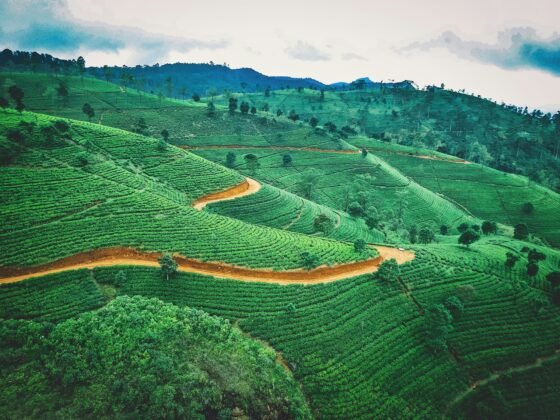
Both can be grown in systems that retain shade trees and some structural diversity. They can also be produced in intensive monocultures established after natural vegetation has been cleared.
A shaded farm is not equivalent to an intact forest, but it may provide more cover, food and movement opportunities for wildlife than a simplified landscape. Outcomes also depend on pesticide use, water management and whether farms continue to expand into nearby habitat.
This is why broad country-of-origin labels are often insufficient. Environmental risk can differ considerably between farms in the same region.
Responsible sourcing needs to identify where a product was grown, what ecosystem was present before production and whether environmental commitments are independently verified.
Copper and the Conservation Challenge of Mining
Demand for copper is growing as countries invest in power networks, electronics, renewable energy and electric transport.
Its sensitivity to industrial activity has also given it a reputation as an economic signal, which explains why it is sometimes called Doctor Copper.
For wildlife, the more important question is where and how copper is extracted.
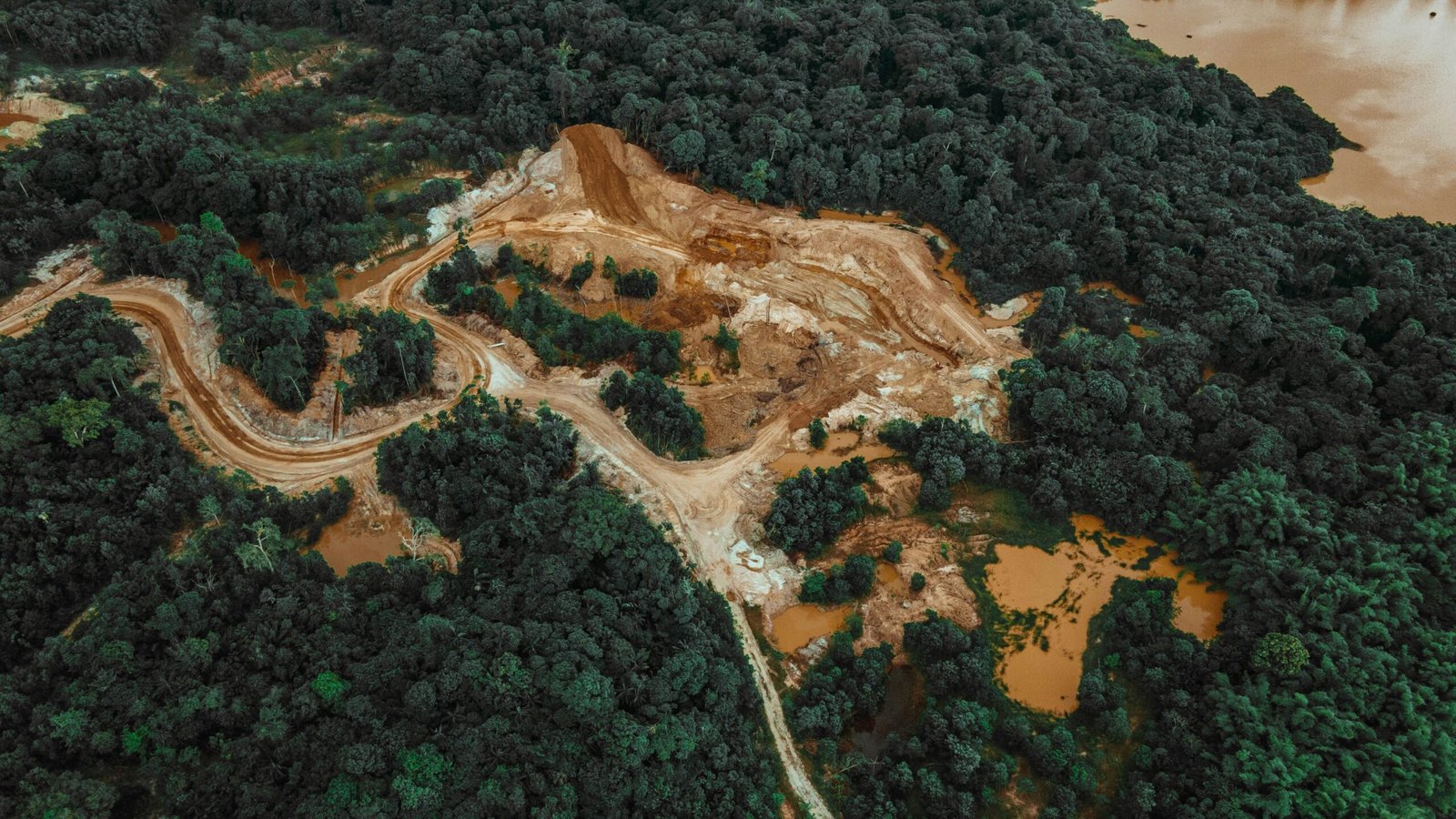
A 2025 scientific review of mining and biodiversity identified several direct and indirect pressures, including habitat alteration, water disruption and pollution. Mining can remove habitat at the extraction site, but its wider footprint may be considerably larger.
Roads, railways, power lines, worker settlements and waste-storage areas can fragment landscapes and open previously remote places to further development. Tailings, sediment, heavy metals and changes to rivers or groundwater may affect wildlife beyond the mine boundary.
This creates a genuine conservation dilemma. Copper and other transition minerals are important to lower-carbon technologies, but poorly planned extraction can still damage sensitive habitats.
The answer is not to treat mining as environmentally harmless because the material supports renewable technology. Better outcomes depend on careful site selection, stronger safeguards, greater recycling and the avoidance of irreplaceable habitats.
Energy Commodities and Layered Impacts
Oil, gas and coal can affect wildlife locally and globally.
At the local level, extraction sites, mines, pipelines, spills, water use, noise and vehicle traffic can disturb habitats and alter animal behaviour. Infrastructure may also cut across migration routes or divide breeding populations.
At the global level, fossil-fuel use contributes to climate change.
The IPCC’s Sixth Assessment Report found that, among endemic species studied in biodiversity hotspots, projected extinction risk was approximately ten times higher at 3°C of warming than at 1.5°C. The IPCC classified this estimate as carrying medium confidence.
The broader conclusion is more important than the precise multiplier. Risks of extinction, local disappearance and ecosystem collapse increase as warming intensifies.
Climate pressure also interacts with habitat loss. A species living in a large, connected ecosystem may have some ability to shift its range as conditions change. A population confined to small fragments has far fewer options.
International Trade Can Move Environmental Pressure Elsewhere
The environmental cost of consumption is often felt far from the place where the finished product is bought.
Research led by Manfred Lenzen and published in Nature in 2012 estimated that, excluding invasive species, approximately 30% of recorded global species threats were associated with international trade.
The study connected economic supply chains and consumption with threat records from the IUCN Red List.
This figure should not be interpreted as meaning that international trade caused 30% of recorded extinctions. It refers to modelled associations between trade and documented threats to species.
Trade in wildlife or plants can remove organisms directly from the wild. Trade in soy, palm oil, timber, metals or fossil fuels usually affects wildlife indirectly through habitat conversion, pollution, infrastructure and climate change.
Financial trading is another step removed. Futures, funds and retail derivatives may influence prices or expectations in some circumstances, but there is no credible basis for claiming that one ordinary retail transaction directly causes a species to disappear.
Why Traceability Matters
Commodity risk is highly specific to location.
Knowing only the country of origin may not reveal whether production took place on existing farmland, beside a protected area or within recently converted habitat.
Effective traceability should therefore reach the farm, plantation, concession or mine. It should also include indirect suppliers rather than stopping with the company that sold the final shipment.
Useful systems can help answer practical questions:
- Was natural habitat recently converted?
- Is production close to a protected or high-biodiversity area?
- Are rivers or migration routes at risk?
- Are environmental commitments independently checked?
- Can suppliers demonstrate where the commodity originated?
Satellite monitoring, field inspections and supply-chain mapping can make these questions easier to answer. Monitoring, however, only matters when companies act on what it reveals.
Beyond Deforestation
Forests receive much of the attention, for good reason. But other ecosystems can be equally important.
Savannas, wetlands and natural grasslands support specialised species and provide breeding, feeding and migration areas. A policy that prevents forest loss but permits expansion into other natural habitats may simply move the damage elsewhere.
A stronger approach is therefore based on “no conversion”, not only “no deforestation”.
The aim should be to protect valuable natural ecosystems regardless of whether they contain dense tree cover.
What More Responsible Commodity Systems Look Like
Commodity production will remain part of the global economy. The conservation challenge is to meet demand without treating wild habitats as empty land waiting to be used.
More responsible systems include:
- Traceability to farms, plantations and extraction sites
- Protection of forests, savannas, wetlands and grasslands
- Avoidance of critical wildlife habitats
- Independent environmental monitoring
- Support for producers improving their practices
- Greater recycling and material efficiency
- Clear consequences when sourcing rules are broken
Consumers influence demand, but responsibility cannot rest on shoppers alone. Companies choose suppliers, lenders choose projects and governments set the rules under which expansion takes place.
Commodity markets are not automatically destructive. The greatest risks arise when demand, finance and weak oversight combine to make natural habitat appear cheaper to convert than to protect.
Understanding that connection is the first step. The next is ensuring that the true cost of production includes the landscapes and species that might otherwise disappear from view.
Image: Unsplash, Renaldo Metamoro