Have you ever found yourself staring at the ceiling of a tent at 3:00 AM, listening to the rhythmic, wet slapping of rain-soaked fabric against your forehead? Or perhaps you’ve experienced that sinking realization that your waterproof oasis has slowly transformed into a shallow, muddy pond? I certainly have. Over decades of traversing remote ridgelines and establishing semi-permanent basecamps, I’ve come to realize that a tent is far more than a simple nylon enclosure; it is your psychological anchor in the unpredictable wild. Choosing the right one is a sophisticated dance between understanding structural physics, material geometry, and your own personal threshold for roughing it.
The architecture of space and the illusion of capacity
The label 2-person on a tent bag is perhaps one of the most creative works of fiction in the modern consumer world. In the outdoor industry, capacity traditionally refers to how many standard-sized sleeping pads can be tiled across the floor like sardines in a tin, leaving exactly zero room for elbows, backpacks, or a restless dog. If you actually want to enjoy your morning coffee without inadvertently kicking your partner in the ribs, the professional’s secret is the plus-one rule. For those who refuse to settle for cramped quarters, a family tent easy set up becomes less of a luxury and more of a sanity-preserving necessity, turning a standard campsite into a genuine outdoor residence.
Livable space is fundamentally about volume, not just square footage. Imagine a family of four, complete with a mountain of duffel bags and a high-energy golden retriever; in a standard low-profile tent, they will reach a breaking point of claustrophobia within hours of the first rainstorm. This is where the best tent for family camping changes the dynamic entirely by prioritizing verticality, allowing you to actually stand upright while changing your clothes. Remember, modern car camping is meant to be an exercise in comfort, not a survivalist penance, so don’t hesitate to size up if your vehicle has the storage capacity to accommodate a larger footprint.
Beyond the internal sleeping area, one must consider the mudroom of the camping world: the vestibule. When selecting a high-quality family camping tent, a generous vestibule is a non-negotiable feature for storing saturated boots and damp outer layers away from your sleeping bags. Think of it as your tactical transition zone; without this architectural buffer, the line between the great outdoors and your clean sanctuary becomes dangerously blurred the moment the weather turns. A well-designed vestibule doesn’t just store gear – it protects the integrity of your living space from the encroaching elements.
Structural physics: geometry vs the elements
Most casual weekend warriors gravitate toward 3-season models, which I often call the all-season tires of the camping world. They are engineered to handle the typical conditions of spring, summer, and fall, relying heavily on mesh panels to facilitate airflow and prevent condensation. However, a true professional looks past the mesh and examines the skeletal integrity. While 3-season tents are built to shed rain, 4-season (or extended season) models are engineered like bunkers, designed to withstand the static load of heavy snow and the shear force of high-altitude winds that would collapse a standard summer shelter in minutes.
Why does shape matter so much when the wind begins to howl? Consider the classic cabin-style tent with its near-vertical walls; it’s a beautiful, airy apartment during a calm sunset, but those walls act like giant sails the moment a storm rolls in. Conversely, dome-style geometry uses curved surfaces to deflect wind and prevent snow from accumulating on the roof. If you find yourself camping in exposed environments – like a coastal beach or a high-elevation plateau – the dome is your most reliable ally, whereas the cabin belongs in the sheltered protection of the timberline where the trees break the wind’s power.
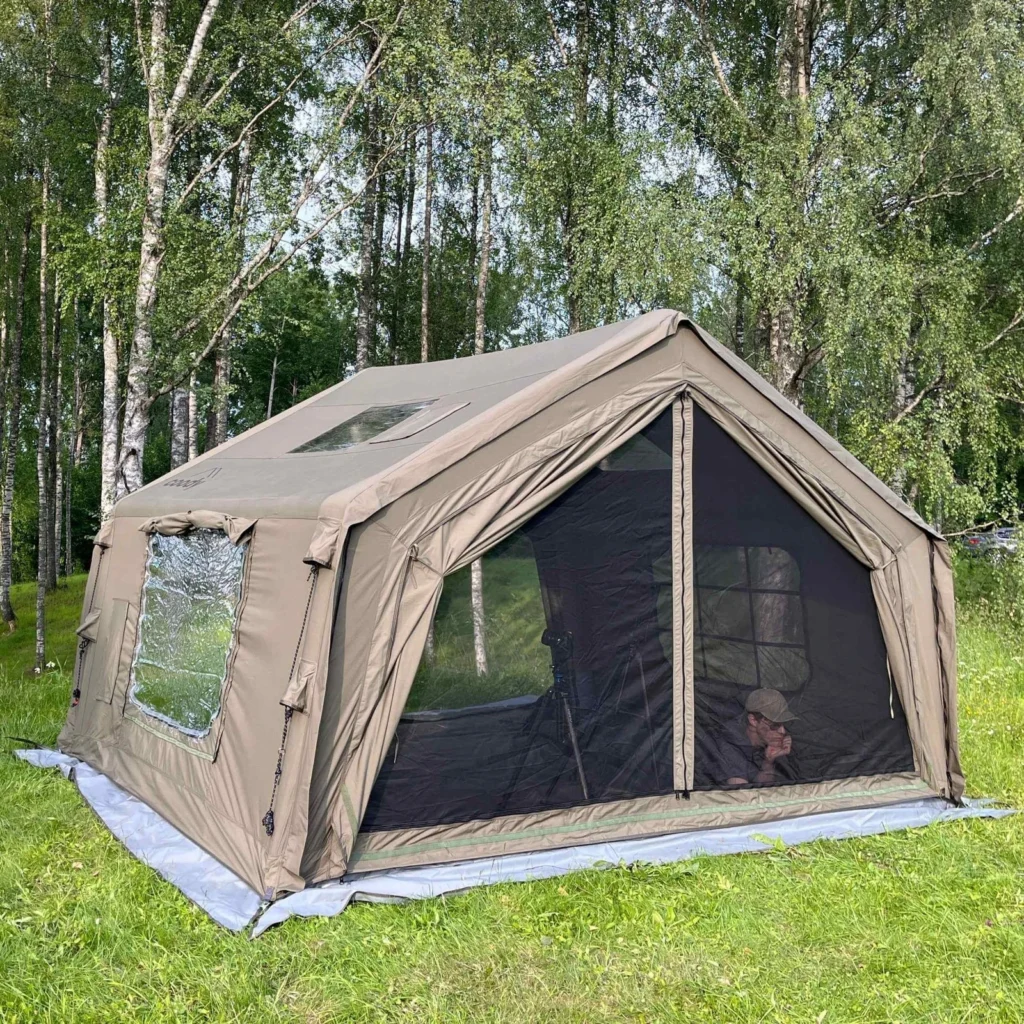
We are also witnessing a significant technological shift in how we perceive ground camping. Historically, we were tethered to whatever flat (or not-so-flat) piece of dirt we could find, but the future is looking increasingly elevated. Rooftop tents and advanced inflatable air-beam structures are revolutionizing the setup process. Inflatable frames, in particular, offer a fascinating glimpse into future tech; by replacing traditional poles with high-pressure air tubes, these tents can be deployed in minutes and possess a unique memory – if a massive gust of wind flattens the tent, it simply pops back into shape rather than suffering a snapped pole.
The technical edge: denier, polymers, and coatings
Let’s talk shop about fabrics, because this is where the amateurs usually end up getting soaked. The primary metric you need to master is Denier (D), which measures the thickness and weight of the individual fibers in the weave. A 150D floor is a rugged, puncture-resistant barrier against rocks and roots, whereas a 20D ultralight floor is as delicate as a luxury scarf. If you are camping with kids who treat the tent floor like a wrestling mat or pets with sharp claws, high-denier fabrics are your best insurance policy against a ruined trip and a very expensive repair bill.
Waterproofing is another technical hurdle that requires a keen eye. Most modern rainflies are treated with either Polyurethane (PU) or Silicone (Silnylon) coatings to repel moisture. However, the industry is currently undergoing a massive shift regarding Durable Water Repellent (DWR) treatments. Historically, these coatings relied on forever chemicals (PFAS), but the move toward eco-friendly, non-fluorinated alternatives is now the gold standard for responsible brands. As a pro, I always insist on factory-taped seams; it’s the difference between a dry, restorative night’s sleep and a maddening, slow drip landing directly on your nose at 2:00 AM.
Finally, we must address the bones of the shelter: the poles. While big box store tents often use cheap fiberglass, aluminum remains the undisputed king of the campsite for a reason. Aluminum is lighter, significantly stronger, and possesses a crucial yield factor – it can bend under extreme stress and often be straightened back out. Fiberglass, by contrast, tends to shatter into thousands of tiny, needle-like shards that can easily shred your tent fabric and your hands. While carbon fiber is making inroads for the ultralight crowd, high-grade aluminum alloys still provide the best balance of durability and weight for the serious camper.
Pro-tips: accessories that define the experience
If you want your investment to last more than a handful of seasons, you must buy a footprint. This is a simple ground cloth that acts as a sacrificial layer between your expensive tent floor and the abrasive reality of the earth. It is much more cost-effective to replace a $40 footprint than to patch a $600 tent. One vital tip: ensure the footprint is slightly smaller than the tent floor itself. If it sticks out even an inch, it will act as a collection tray for rainwater, funneling a literal river directly underneath you and creating an accidental waterbed by midnight.
Inside the tent, organizational geometry is the key to maintaining your sanity. Look for tents equipped with gear lofts – mesh hammocks that hang from the ceiling – to keep your headlamps, car keys, and smartphones off the floor where they are prone to being stepped on. I also recommend upgrading your stakes immediately. The flimsy silver pegs that come in the box are generally useless in anything other than perfect backyard soil. Investing in a set of heavy-duty steel stakes or specialized sand anchors ensures that your tent stays in your current zip code when the wind starts to pick up.
Ultimately, the best tent is the one that removes the friction from your outdoor experience. Whether it’s a high-tech model with integrated LED lighting or a traditional canvas structure that breathes in the summer heat, your gear should work for you, not against you. Being prepared with a small repair kit and the right structural knowledge allows you to stop worrying about the weather and start focusing on why you went outside in the first place: the smell of the pines, the crackle of the fire, and the rare gift of silence. Happy trails, and may your tent always be dry and your coffee always be hot.
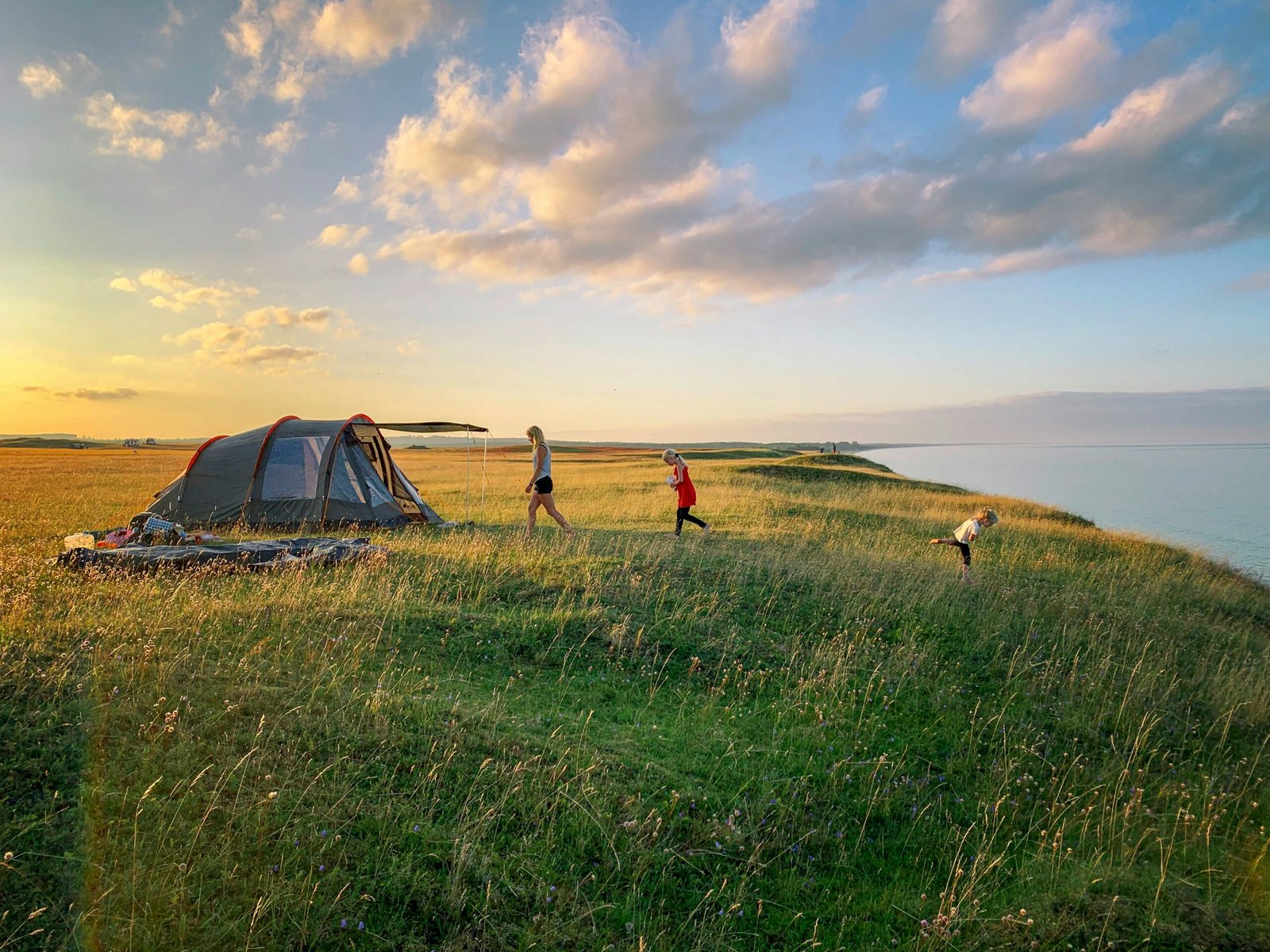
Image at top: Unsplash, Mattias Helge