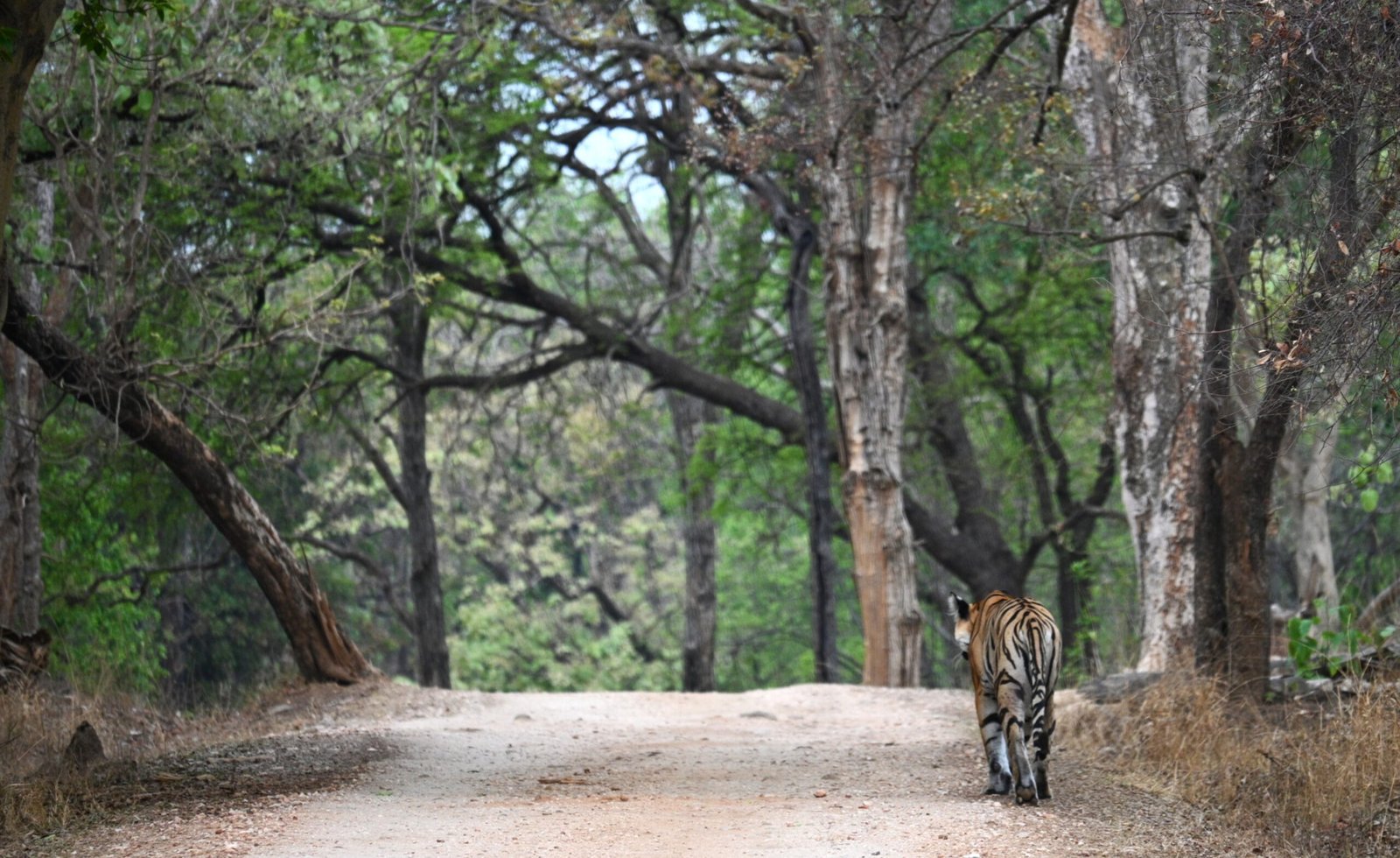
In December 2025, several tiger reserves in the Indian state of Madhya Pradesh introduced restrictions on mobile phone use during safaris. The aim was to reduce disturbance, prevent the sharing of tiger locations between vehicles and encourage a more respectful wildlife viewing experience.
The ban raises a much broader question.
In an age of smartphones, social media and constant connectivity, are we missing the moment?
The issue is not confined to India’s tiger reserves. Attend a concert today and much of the audience experiences it through a screen held aloft. Visit a famous landmark and you’ll often see visitors taking selfies before moving on without really looking at the view. Sit in a restaurant, board a train or walk through a national park and it is increasingly rare to find people who are not connected to a device.
Technology has undoubtedly enriched our lives. Smartphones help us navigate unfamiliar places, capture memories, stay safe and share experiences with friends and family. For conservation organisations, photography and social media are powerful tools that raise awareness and inspire action.
Yet there is another side to the story.
Anyone who has seen social media promotions for Albania as the “Maldives of Europe” will understand how selective an online narrative can be. There are certainly beautiful places in Albania. The medieval streets of Gjirokastër are a delight to explore and the ancient ruins of Butrint are among the most impressive archaeological sites in the Balkans. Along the coast there are pockets of crystal-clear water and secluded beaches.
But social media has a habit of editing out the noise. The traffic, the construction, the crowds and the less photogenic reality often disappear from view. We are presented with a carefully curated moment rather than the complete experience.
The same applies to how we travel.
Faced with a spectacular sunset, or an unexpected wildlife encounter, my instinct is often to reach for my phone. It has become second nature. A behaviour learned gradually over the last twenty years as smartphones and social media have become woven into everyday life.
Yet I sometimes wonder what is lost in the process.
There was a time when seeing a tiger was enough.
The excitement began long before the sighting itself. Fresh pugmarks on a dusty track. The alarm call of a spotted deer. The chatter of langurs high in the trees. Then, perhaps, a glimpse of orange and black emerging from the undergrowth.
The experience unfolded slowly, engaging all the senses.
Today, a sighting is often accompanied by a flurry of activity. Cameras and phones are raised. Images are reviewed instantly. Videos are uploaded. Messages are sent. Sometimes the focus shifts from experiencing the encounter to documenting it.
Somewhere along the way, the experience itself risks becoming secondary to proving that it happened.
The magic is not lost entirely, but it can easily be diluted.
This is not a criticism of photography. Many of the most important conservation stories of our time have been told through powerful images. Photography can connect people with places and species they may never have the opportunity to see for themselves. It can inspire wonder, empathy and action.
The challenge comes when the screen becomes a barrier rather than a window.
One of the greatest joys of safari is its unpredictability. Long periods of apparent stillness can suddenly give way to extraordinary moments. A leopard emerging from a thicket. A herd of elephants crossing a river. A lion calling into the darkness after sunset.
These are experiences that reward patience and attention.
The same is true beyond the safari world. Whether watching a musician perform live, standing before a great work of art or witnessing a sunrise, there is often a temptation to reach for a phone before fully absorbing what is happening.
The irony is that many of our most vivid memories come not from photographs but from moments when we were completely present.
Some experiences deserve our full attention.
The forests of Madhya Pradesh are among the best places on Earth to see a wild tiger. Yet the principle applies just as readily to a walk in a local nature reserve, a day on the coast or an evening spent with friends and family.
In a world that constantly competes for our attention, being fully present has become a rare and valuable skill.
India’s tiger reserves may not have found the perfect solution. Mobile phones are now woven into almost every aspect of modern life and travel. Few people would argue for abandoning them altogether.
But perhaps the question is not whether phones should be banned.
Perhaps it is whether we can occasionally choose to put them away.
Because if a tiger crossing the road in front of your vehicle is not enough to hold your attention, what is?
Are we recording our lives, or are we living them?