This weekend we’ll be at the Global Birdfair at Rutland Water.
Over the years, Birdfair has grown into a fantastic event, bringing together people who love wildlife, conservation and responsible travel. And despite the name, it isn’t just for serious birders. You don’t need to know your warblers from your wagtails, or own a camera lens the size of a small telescope, to enjoy it.
At home or away, birds have a wonderful way of slowing you down. They make you look up, listen more carefully and notice things you might otherwise miss. For me, birds are also one of the clearest signs of a healthy landscape. Where birds are thriving, the environment around them usually is too: the rivers, forests, wetlands, grasslands and all the quieter connections between them. Perhaps that’s why these moments are so enduring. It’s never just the bird itself that stays with you, but the whole scene around it.
It might be the haunting call of an African Fish Eagle drifting across a still river at sunrise. It could be another impossibly colourful Lilac-breasted Roller posing perfectly on an acacia branch – you’ve got to appreciate the reliable sightings as much as the hard-earned ones. Or perhaps it’s finally laying eyes on a Shoebill after hours of searching through Uganda’s papyrus swamps.
Here are five birds from my travels that have left a lasting impression.
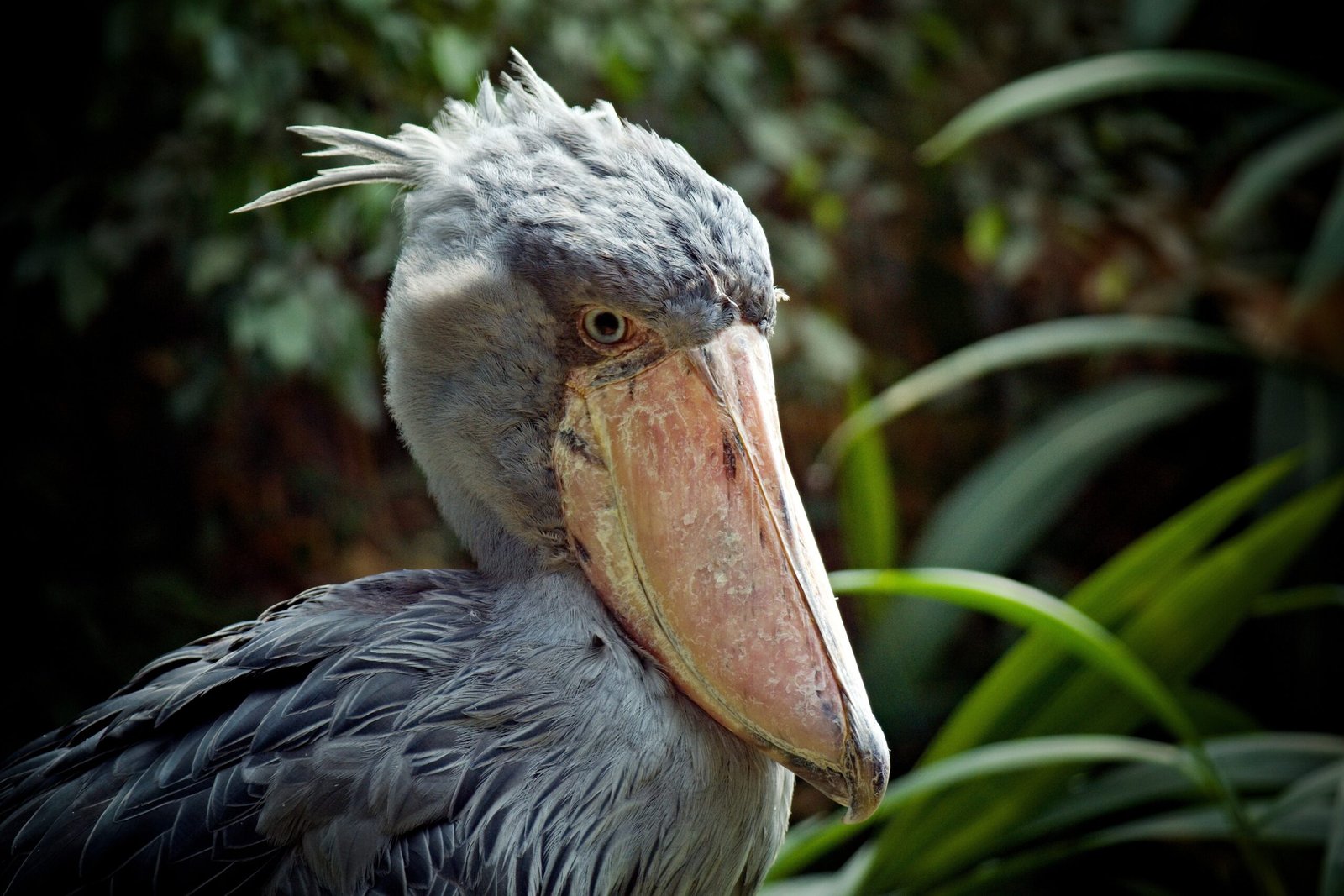
Shoebill – Uganda
If there’s one bird that tops almost every birdwatcher’s wish list, it’s the Shoebill.
Standing over a metre tall, with its enormous shoe-shaped bill and an expression that suggests it has seen several million years of history unfold, it looks almost prehistoric.
The wonderful thing about Shoebills is that they never come easily. You earn them.
The papyrus channels of Mabamba Swamp in Uganda are one of the best-known places to lock eyes with a Shoebill.
Southern Carmine Bee-eaters – South Luangwa, Zambia
Sometimes it’s a single bird that leaves an impression.
Sometimes it’s hundreds: a sea of Red-billed Quelea, flamingos stretching into the distance, or Southern Carmine Bee-eaters filling the sky with colour.
Every year, Southern Carmine Bee-eaters gather along the sandy banks of the Luangwa River, excavating nesting burrows before filling the air with flashes of crimson and turquoise.
One moment they’re perched neatly on a branch, the next they’re wheeling overhead, constantly chattering as the late afternoon light catches their feathers.
It’s one of Africa’s great wildlife spectacles, and proof that some of the best safari moments happen above eye level.
Great Hornbill – India
India’s wildlife is deservedly famous for its tigers, but its birdlife deserves just as much attention.
I saw my first Great Hornbills at Amangarh last year, and I was completely captivated.
Long before I spotted them, I could hear them. Their wingbeats were surprisingly loud. Then a pair emerged from the forest canopy, their oversized yellow bills and casques making them impossible to mistake for anything else.
These birds are full of expression and personality, and they are a joy to watch. They also need mature forest, choosing nesting sites in large trees with natural cavities, often in emergent trees rising above the canopy. It is that combination of cathedral-like forest and majestic bird that makes the encounter so magical.
African Fish Eagle
If I had to choose one sound that sums up Africa, it would probably be the call of the African Fish Eagle.
It’s wonderfully evocative. Once you’ve heard it echoing across a river at sunrise, it becomes part of every safari memory.
I also love watching them sitting high in the trees against a brilliant blue sky, or cheekily stealing fish from Saddlebilled Storks whenever the opportunity presents itself. They have a confidence that seems entirely fitting for one of Africa’s most iconic birds.
Beautiful in black, white and rich chestnut, they’re certainly photogenic. But it’s their unmistakable call that lingers in your mind long after you’ve returned home.
Lilac-breasted Roller
If there were an award for the bird most likely to make first-time safari guests reach for their camera, the Lilac-breasted Roller would win it every time.
Thankfully, it’s also one of the more reliable sightings. While so much of safari relies on patience and a little luck, rollers usually seem more than happy to pose for a photograph.
The Lilac-breasted Roller is often described as Africa’s most colourful bird, and it’s hard to argue with that. Lilac, turquoise, emerald, deep blue – it’s an absolute beauty when it’s wings unfold.
But it’s also worth remembering that the roller family stretches far beyond Africa. There are around a dozen species worldwide, and the Abyssinian Roller and India’s own Indian Roller run their famous cousin very close when it comes to looks.
Common doesn’t mean ordinary. No matter how many you see, when you get a glimpse of those brilliant colours, it is always a joy.
Come and Say Hello
If you’re visiting the Global Birdfair this weekend, we’d love to see you.
You’ll find us in the Puffin Tent from Friday to Sunday. Whether you’re planning your first safari, searching for your next great wildlife adventure or simply fancy a chat about responsible travel and conservation then we’d love to see you.