Ten years ago, I visited Ol Pejeta Conservancy in Kenya. It’s a visit that left a lasting impression on me.
It was there that I came face to face with Sudan, the last male northern white rhino. Sudan died in 2018, leaving just two northern white rhinos in the world – Najin and Fatu, both female.
I wasn’t actually supposed to be seeing Sudan that day.
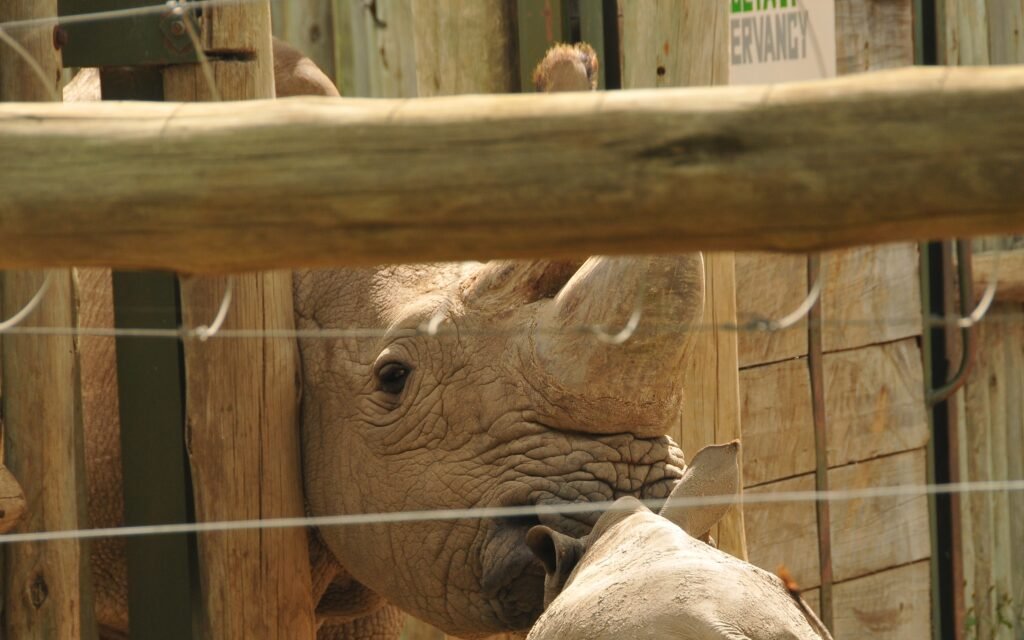
I had gone to meet some of the rangers and caregivers. The team at Ol Pejeta had recently taken in an orphaned white rhino called Ringo, and my visit overlapped with his feeding time. Ringo had been rescued in October 2015 after being found severely dehydrated and unable to stand, and was being hand-reared by the team. He was full of mischief.
As Ringo charged around the yard, I don’t think anyone expected the lumbering shadow of Sudan to suddenly appear at the gate.
Here was an animal whose story had become inseparable from the fate of an entire subspecies, and there he was, standing right in front of me, nuzzling little Ringo.
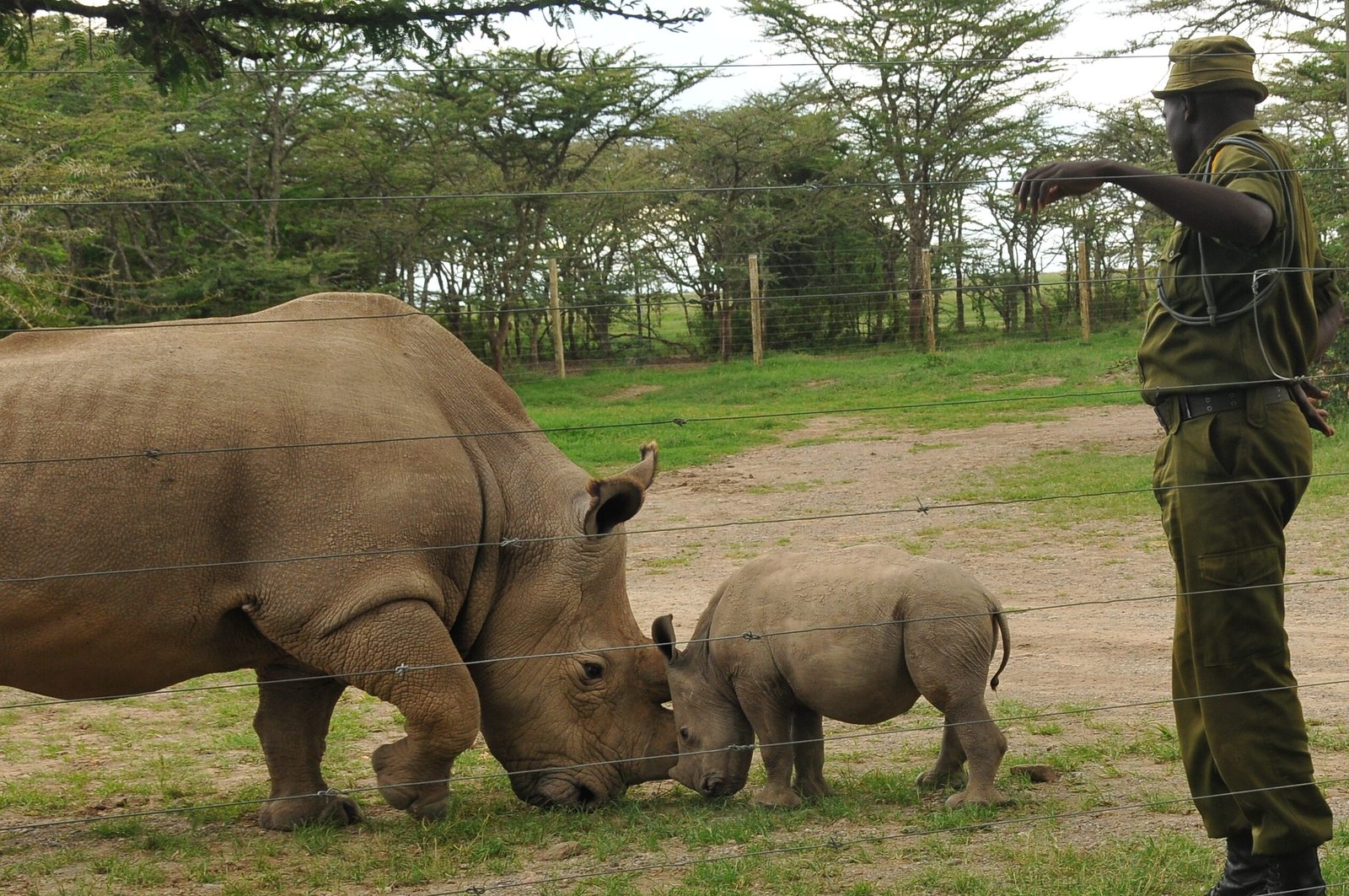
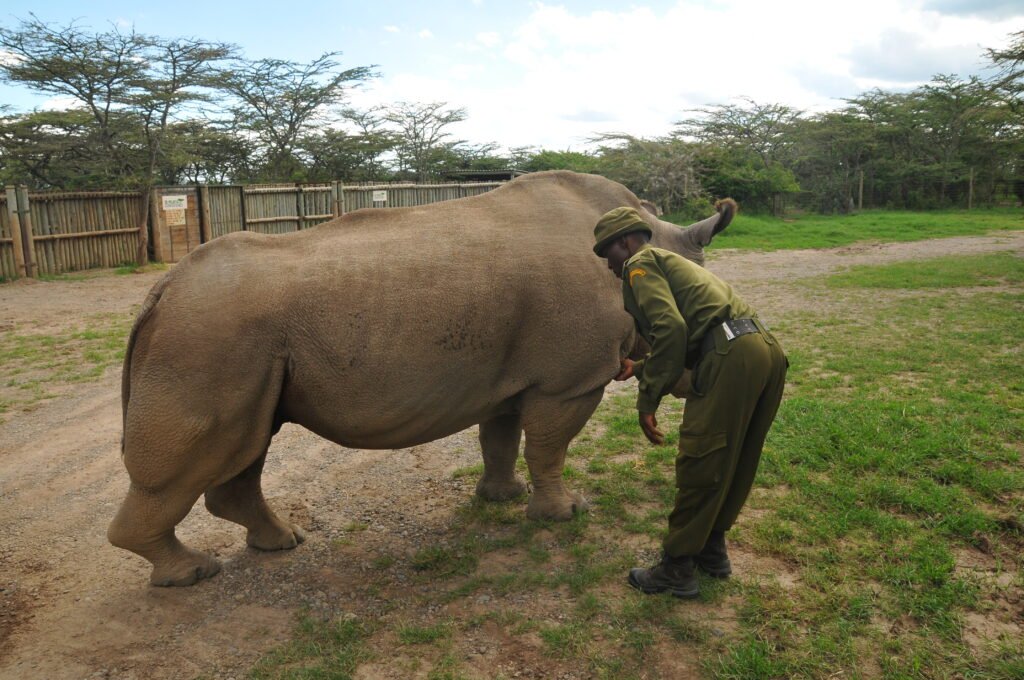
“He likes a scratch, just here,” one of the rangers told me, demonstrating the spot.
It was such an ordinary, intimate moment with an animal whose significance was anything but ordinary.
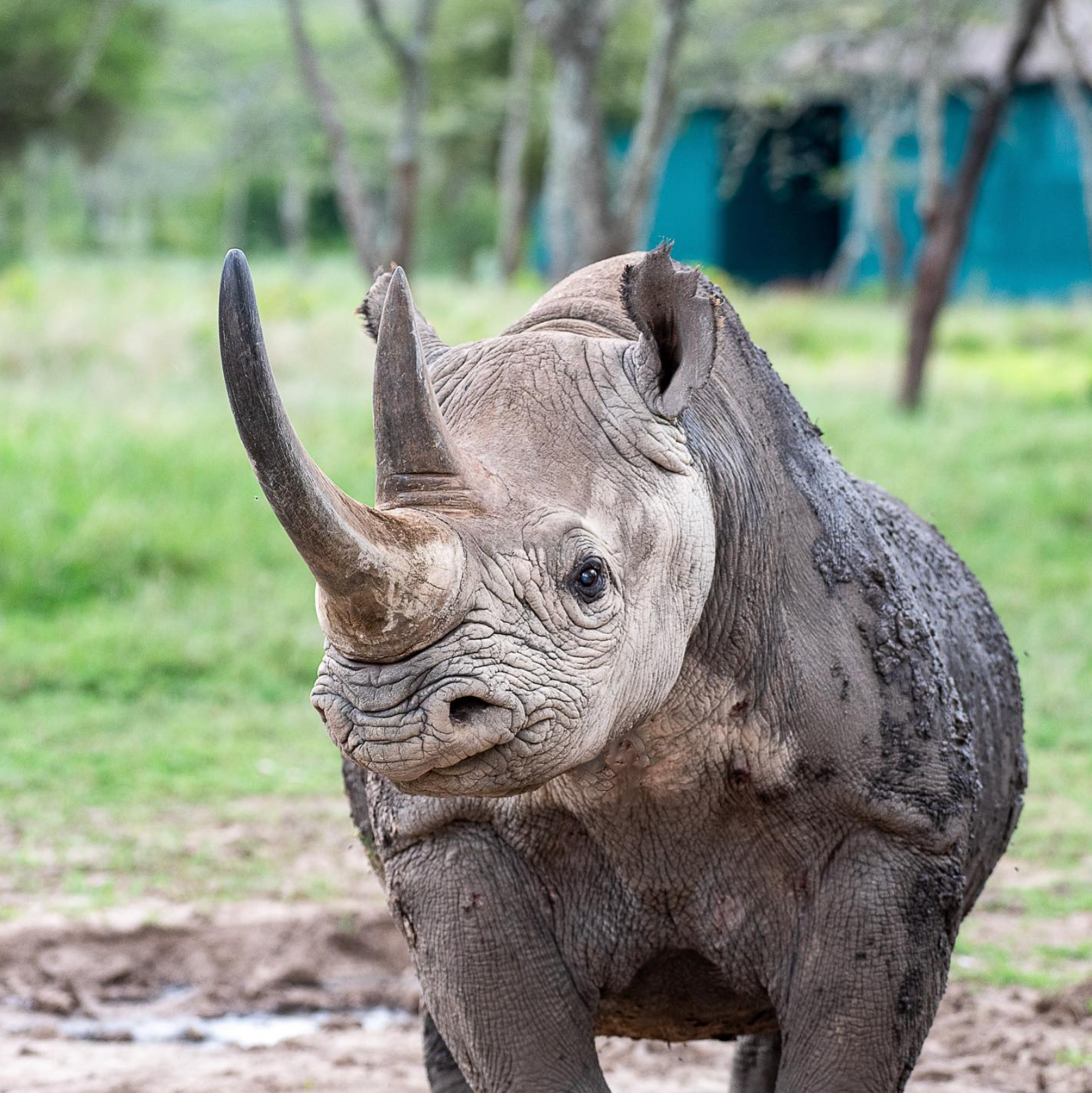
For many visitors to Ol Pejeta, however, it was another rhino who became one of the conservancy’s most memorable residents: Baraka, the blind black rhino.
On 16 August this year, Ol Pejeta said goodbye to Baraka, who died at the age of 31.
A rhino who became an ambassador
Baraka was born at Ol Pejeta in November 1994 to his mother, Carol, and was one of the first black rhinos born on the conservancy.
For the early part of his life, he lived much as any wild black rhino would, establishing and defending his territory.
Then, in 2008, a fight with another male cost him his right eye. Cataracts later took the sight in his remaining eye, leaving him completely blind. Survival in the wild would have been extremely difficult, so Baraka was moved into a protected 100-acre enclosure where he could receive round-the-clock care.
Ranger Esogon Ekale spent days helping Baraka adjust to his new surroundings, and that early relationship developed into years of dedicated care from Esogon and the wider Ol Pejeta team.
Because visitors could encounter him at close quarters, Baraka became an extraordinary ambassador for his species. Ol Pejeta says he became the only adult black rhino in Kenya that visitors could safely approach.
In an ideal world, people would build that same affection for rhinos by watching them on safari from a respectful distance. But there is something about being physically close to an animal like Baraka that seems to deepen the connection.
As a conservationist, I do feel a certain discomfort about any wild animal being effectively ‘on show’ for people, even when welfare is paramount and the animal has space to withdraw from public view. But in Baraka’s case, that closeness also created something powerful.
Thousands of people met him over the years and, for many, he transformed conservation from an abstract statistic into something tangible and personal. Maxwell at the Sheldrick Wildlife Trust’s Nairobi Nursery has a very similar effect on people.
Beyond the numbers
On World Rhino Day, the numbers remain sobering.
The latest estimates put the global black rhino population at around 6,788, while approximately 15,752 white rhinos remain. In Asia, the situation is even more precarious: there are around 50 Javan rhinos, just 34–47 Sumatran rhinos, and approximately 4,075 Greater one-horned rhinos.
Three of the world’s five rhino species are Critically Endangered.
At the same time, there are important signs of progress. Black rhino numbers have increased over the past decade, showing that sustained protection can work.
The pressure has not gone away. Across Africa, rhinos continue to be killed for their horns. Save the Rhino International reports that at least one rhino is still lost to poaching every day.
Our connection with Ol Pejeta
Explorers Against Extinction has supported rhino conservation in Kenya and elsewhere.
In 2017, we partnered with Ol Pejeta to support the conservancy’s anti-poaching work, funding K9 team member Drum. During the pandemic in 2021, when tourism revenues and conservation budgets were under enormous pressure, our supporters again helped raise funds for the K9 unit.
We have also worked with Save the Rhino to support rhino conservation across the Lewa/Borana landscape, and with Rhino Conservation Botswana to help protect rhinos there.
Ol Pejeta today protects around 170 Eastern black rhinos, alongside Najin and Fatu, the last two remaining northern white rhinos. Its rhino protection programme includes specialist ranger teams, veterinary care, monitoring and conservation science.
A blessing
There is something especially poignant about Baraka’s name. Baraka means “blessing” in Swahili.
It seems difficult to imagine a more appropriate name for an animal who spent so much of his life helping people connect with rhino conservation.
He had lost his sight, but in a strange way he helped thousands of other people see rhinos differently.
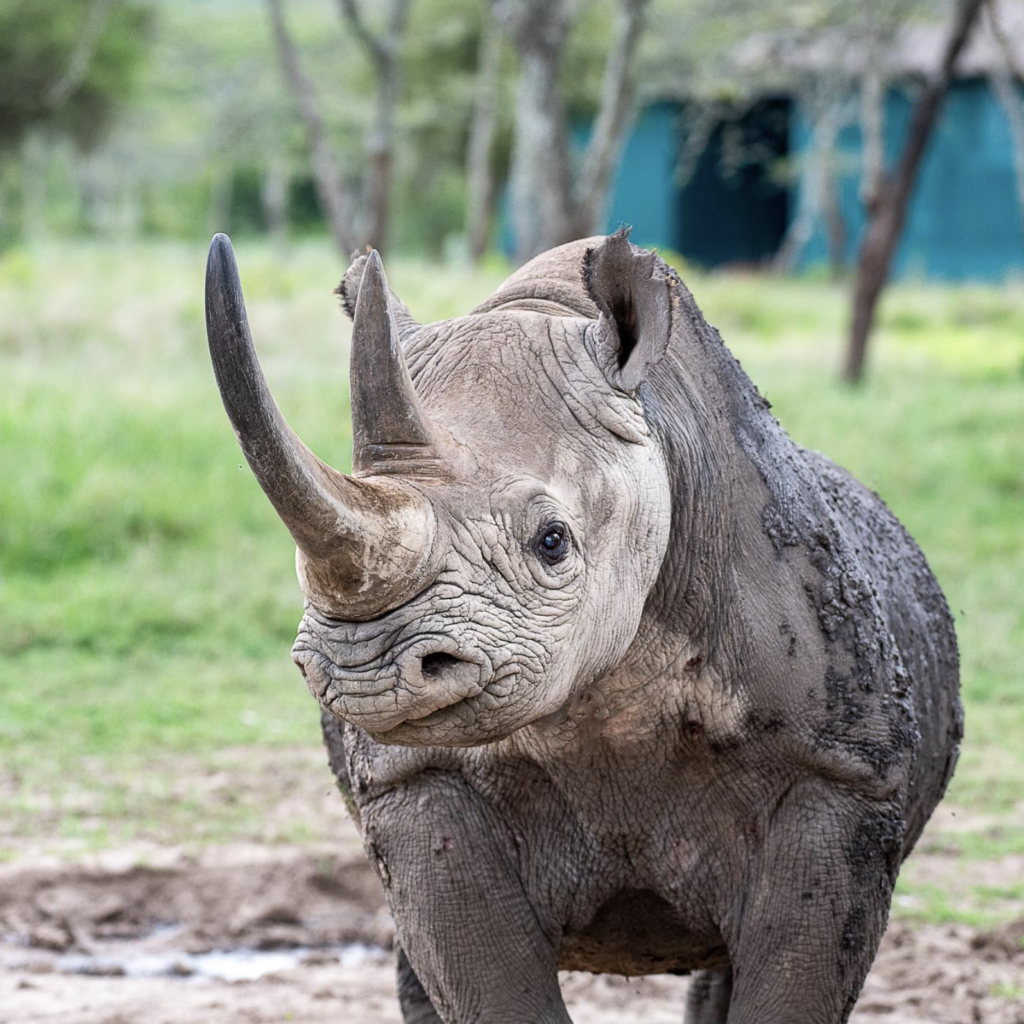
Baraka, 1994–2026 (credit: Ol Pejeta Conservancy)